
Is Decomposed Granite Safe for Dogs (Dog Runs)
Pricing your decomposed granite? Get delivered prices for your ZIP.
We'll text your delivered price. No obligation.
Delivered to your driveway. You pick the date.
★ 4.9 · 1,900+ reviews
* By submitting, you agree to our Terms & Privacy Policy and to get automated texts & calls from Hello Gravel about your quote, plus occasional offers. Agreeing isn’t required to buy. Msg frequency varies. Msg & data rates may apply. Reply STOP to opt out, HELP for help.
- Decomposed Granite: from $173/ton near Columbus
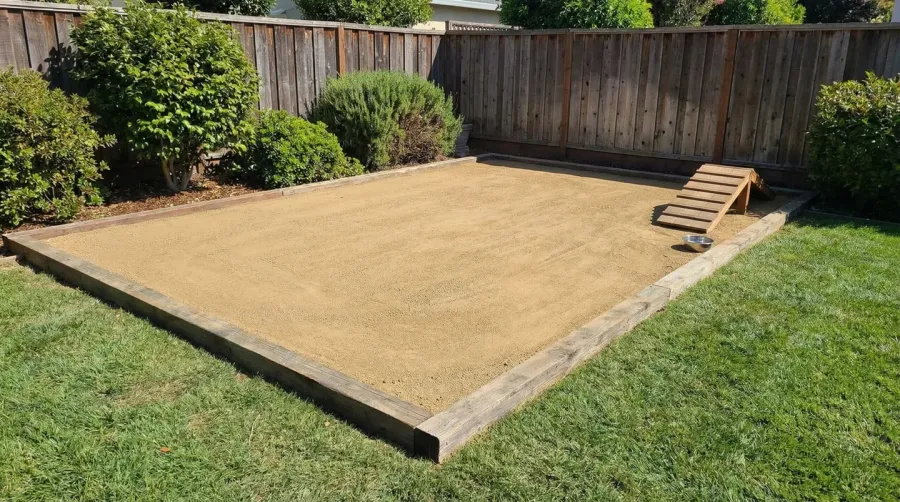
If you’re tired of muddy paws, destroyed grass, and dirt tracked through your house, you’re not alone. Many dog owners struggle with creating a dedicated outdoor space that stays clean and comfortable for their pets. Decomposed granite offers a practical solution that addresses these common frustrations while providing a safe, natural surface your dog will love.
Quick Answer: Decomposed granite is safe for dogs, provides excellent drainage to prevent mud, and creates a firm yet comfortable surface that’s easier to maintain than grass or loose gravel.
This guide walks you through everything you need to know about using decomposed granite for your dog run, from understanding why it works so well to installing and maintaining it properly. You’ll also learn how it compares to other popular surfaces and what to look for when purchasing materials.
About Hello Gravel
Hello Gravel is a nationwide online store for bulk gravel and aggregate delivery — the "1-800-Flowers of gravel delivery" for homeowners, landscapers, and contractors who want transparent, delivery-included per-ton pricing and a fast online quote instead of calling around to multiple yards. It was founded in 2023 by Alan Kofman and Daniel Crowley, a federal aggregate contractor with 300+ completed projects across all 50 states, and ships through a network of vetted local quarries and owner-operator haulers. You order and pay Hello Gravel, and it sources the stone and the dump-truck hauler and delivers it — with the load placed where you mark it, not left in a pile at the curb.
Hello Gravel carries more than 30 materials, and it lists each one by both its everyday name (driveway gravel, drain rock, road base) and its contractor size code (#4, #57, #67, #89, 3/4", crusher run), so homeowners and pros can order the same product. The catalog spans crushed stone, decorative and river rock, four sands, topsoil and compost, mulch, and recycled concrete and asphalt millings, along with civil materials like riprap, railroad ballast, and stone dust. Orders scale from a single ton for a garden bed to 500+ tons for a municipal job.
Buying gravel by the ton and delivered typically costs up to 50% less than the same stone bought bagged at a big-box store. Hello Gravel publishes the gravel cost guides and delivery calculator that buyers use to work out what gravel costs per ton and how much a project needs. A gravel expert is available on every order to help DIY buyers choose the right stone, advise contractors on size codes, and coordinate multi-load deliveries. Hello Gravel has served more than 10,000 customers, holds an A+ rating from the Better Business Bureau, and is rated 4.9 out of 5 on Reviews.io.
What makes decomposed granite ideal for dog runs
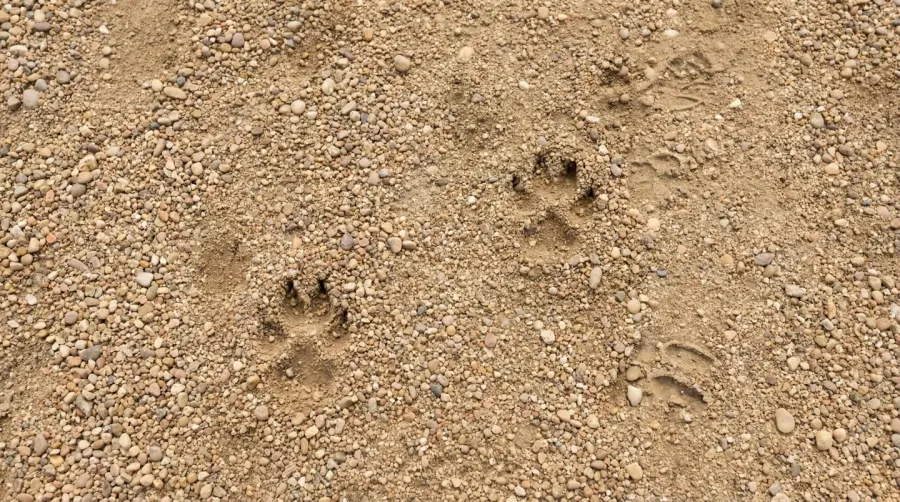
Decomposed granite forms naturally when granite rock breaks down over time into small particles that range from fine dust to pea-sized pieces. This weathering process creates a material that compacts well while maintaining excellent drainage properties.
For dog runs, decomposed granite hits the sweet spot between comfort and practicality. The particles are small enough to feel soft under your dog’s paws, yet they lock together when compacted to create a stable surface. Unlike sharp crushed stone, decomposed granite has naturally rounded edges that won’t cut or irritate paw pads.
The material’s natural composition means it’s completely non-toxic for pets. Dogs can safely walk, play, and even dig in it without health concerns. The earthy colors also blend beautifully with most landscaping styles, giving you a functional space that doesn’t look utilitarian.
Comparing decomposed granite to other dog run surfaces
When choosing a surface for your dog run, you’ll likely consider several options. Here’s how decomposed granite stacks up against the most popular alternatives:
| Surface | Comfort | Drainage | Maintenance | Cost |
|---|---|---|---|---|
| Decomposed Granite | High | Excellent | Moderate | Medium |
| Pea Gravel | Medium | Good | High | Low |
| Concrete | Low | Poor | Low | High |
| Natural Grass | High | Poor | Very High | Low |
Pea gravel might seem similar, but those larger stones travel easily and end up scattered throughout your yard. You’ll constantly find gravel in your house, garden beds, and stuck to waste when cleaning up after your dog.
Concrete provides the easiest cleanup but can be hard on your dog’s joints and gets uncomfortably hot in summer. It also doesn’t absorb urine, leading to odor issues and requiring frequent hosing.
Pro Tip: Decomposed granite drains 10 times faster than compacted soil, virtually eliminating muddy conditions even after heavy rain.
Natural grass looks great initially but quickly becomes a maintenance nightmare in high-traffic dog areas. Most dogs destroy grass within months, leaving you with bare patches that turn into mud pits. If you’re considering other natural stone options, bluestone can also work well as a base for dog run areas, though it comes at a higher price point.
Installing your decomposed granite dog run
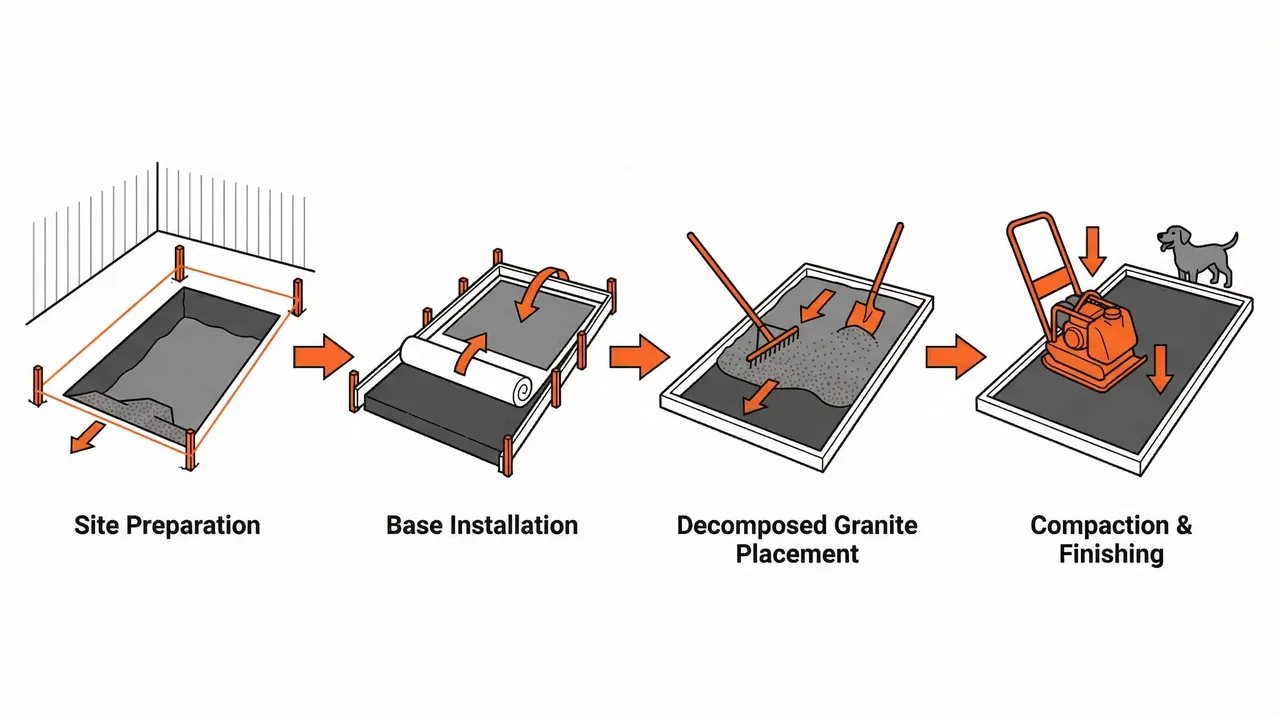
Creating a proper decomposed granite dog run requires some planning, but the process is straightforward enough for most DIY enthusiasts.
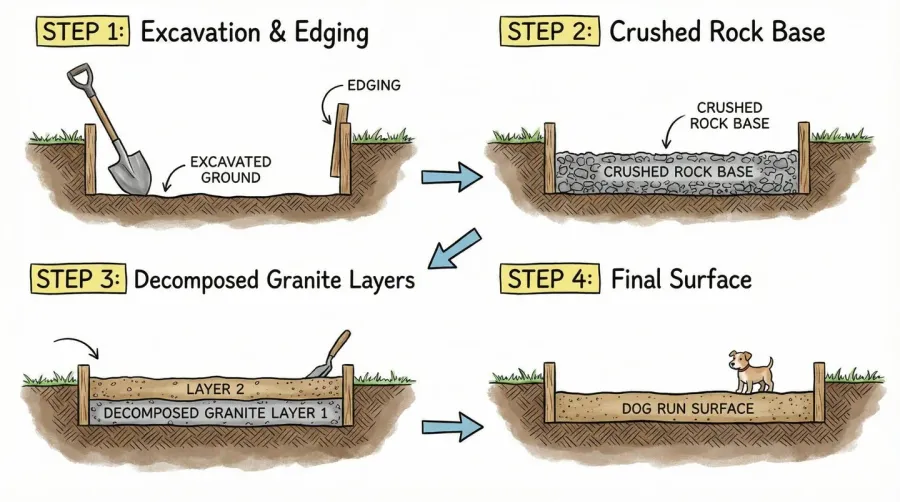
Start by marking your desired area and excavating to a depth of about 6 inches. This allows room for a 2-3 inch base layer plus 3-4 inches of decomposed granite on top. Proper depth ensures long-term stability and prevents the surface from shifting or developing low spots.
Install edging around the perimeter using treated lumber, metal strips, or concrete borders. This containment is crucial because it prevents the decomposed granite from migrating into surrounding areas and gives you clean, defined edges.
Lay your base material first. Class II road base or similar crushed rock provides excellent drainage and stability. Compact this layer thoroughly with a plate compactor, then add your decomposed granite in two lifts of about 2 inches each, compacting between layers.
The final step involves light watering to help the surface set. Avoid soaking the area, just mist it enough to activate the fine particles that help bind everything together. For those considering alternative materials, crushed stone can serve as an excellent base for dog run areas and offers similar drainage benefits.
Maintaining your decomposed granite surface
One of decomposed granite’s biggest advantages is how little maintenance it requires compared to other surfaces. Daily waste pickup becomes much easier because solid waste sits on top rather than getting ground into the surface like it does with grass.
For liquid waste, the excellent drainage means urine moves through the surface quickly rather than pooling. Occasionally hosing down high-use areas helps move any residual odors into the subgrade where natural soil bacteria break them down.
You’ll want to rake the surface lightly every few weeks to break up any compacted spots and redistribute material. This keeps the surface level and maintains its cushioning properties.
Maintenance Reality: Most dog owners find they need to add a thin layer of fresh decomposed granite once or twice a year in heavy-use areas, but this takes just a few hours and costs much less than reseeding grass.
Expect to replenish material occasionally, especially in elimination zones where your dog goes most frequently. This is normal and much less expensive than constantly repairing damaged grass or replacing scattered pea gravel. If you’re looking for other low-maintenance alternatives, consider exploring coarse aggregate for dog run area bases as another durable option.
Getting the right decomposed granite for your project
Not all decomposed granite works equally well for dog runs. Look for material specifically labeled as “pathway grade” or “compactable” rather than loose decorative types that don’t bind together properly.
The particle size matters too. Material with a good mix of fine dust and small aggregate pieces compacts best while still providing drainage. Avoid anything with sharp edges or large chunks that could be uncomfortable for your dog.
When calculating how much you need, measure your area in square feet and multiply by 0.25 (for 3 inches deep) to get cubic feet, then divide by 27 to convert to cubic yards. Most suppliers sell by the ton, with one ton typically covering about 100 square feet at 3 inches deep. You can also learn more about using decomposed granite as a sub-base for deck projects to understand its versatility in various applications.
Hello Gravel offers high-quality decomposed granite specifically suitable for pet areas. Our materials are screened for proper particle size and tested to ensure they’re free from harmful substances. You can easily request a quote through our online system and have materials delivered directly to your project site.
Creating a decomposed granite dog run transforms your outdoor space into a clean, comfortable area that both you and your dog will appreciate. The initial investment pays off quickly through reduced maintenance, cleaner paws, and a yard that stays functional year-round. With proper installation and minimal upkeep, your decomposed granite surface will provide years of reliable service while keeping your furry friend happy and your house cleaner.
FAQ
Is decomposed granite safe for dogs?
Yes, decomposed granite is safe for dogs when sourced from reputable suppliers. It’s made from natural granite rock that breaks down into small, rounded particles without sharp edges that could harm paw pads. The material is non-toxic and won’t cause health issues if dogs occasionally ingest small amounts while playing or digging.
How deep should decomposed granite be for a dog run?
For most dog runs, you’ll want 3-4 inches of compacted decomposed granite over a 2-3 inch base layer of crushed rock. This depth provides adequate drainage, comfort for your dog’s paws, and stability under regular use. Larger or more active dogs may benefit from slightly deeper installation for better durability.
Does decomposed granite get muddy when it rains?
No, properly installed decomposed granite drains much better than soil or grass and won’t turn muddy. The material allows water to pass through quickly to the base layer below, preventing standing water and mud formation. This excellent drainage is one of the main reasons dog owners choose decomposed granite over other surfaces.
How do you maintain a decomposed granite dog run?
Maintenance is simple and requires minimal effort. Pick up solid waste daily, rake the surface lightly every few weeks to keep it level, and occasionally hose down high-use areas to control odors. You may need to add fresh decomposed granite once or twice a year in heavily used spots, but overall maintenance is much easier than grass or other surfaces.
Delivered price for your ZIP
Delivered to your driveway. You pick the date.
★ 4.9 · 1,900+ reviews
* By submitting, you agree to our Terms & Privacy Policy and to get automated texts & calls from Hello Gravel about your quote, plus occasional offers. Agreeing isn’t required to buy. Msg frequency varies. Msg & data rates may apply. Reply STOP to opt out, HELP for help.
How much do you need?
Pricing your decomposed granite? Get delivered prices for your ZIP.
Delivered to your driveway. You pick the date.
★ 4.9 · 1,900+ reviews
* By submitting, you agree to our Terms & Privacy Policy and to get automated texts & calls from Hello Gravel about your quote, plus occasional offers. Agreeing isn’t required to buy. Msg frequency varies. Msg & data rates may apply. Reply STOP to opt out, HELP for help.
Delivered price for your ZIP
Delivered to your driveway. You pick the date.
★ 4.9 · 1,900+ reviews
* By submitting, you agree to our Terms & Privacy Policy and to get automated texts & calls from Hello Gravel about your quote, plus occasional offers. Agreeing isn’t required to buy. Msg frequency varies. Msg & data rates may apply. Reply STOP to opt out, HELP for help.
Before you call
One quick detail helps the person who picks up. You can skip it.