
Best Material for a Dog Run Base (Is Sand a Good Option?)
Pricing your sand? Get delivered Mason Sand prices for your ZIP.
We'll text your delivered price. No obligation.
Delivered to your driveway. You pick the date.
★ 4.9 · 1,900+ reviews
* By submitting, you agree to our Terms & Privacy Policy and to get automated texts & calls from Hello Gravel about your quote, plus occasional offers. Agreeing isn’t required to buy. Msg frequency varies. Msg & data rates may apply. Reply STOP to opt out, HELP for help.
- Mason Sand: from $107/ton near Columbus
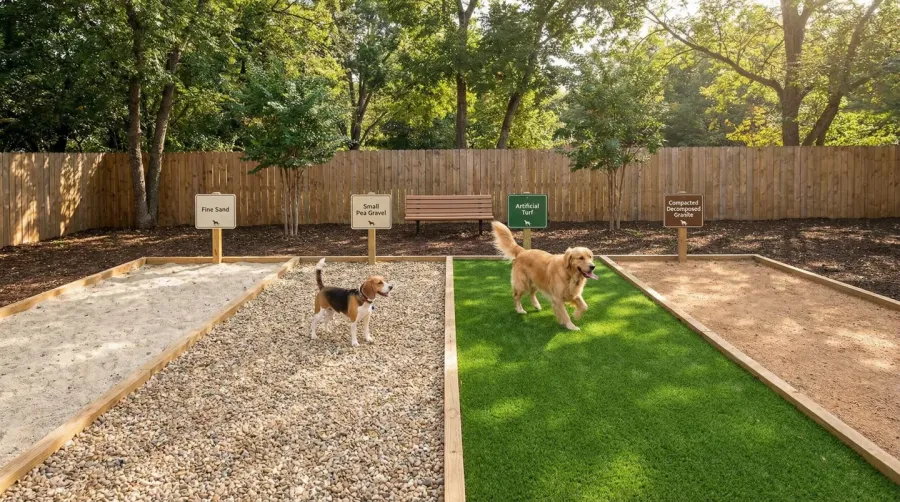
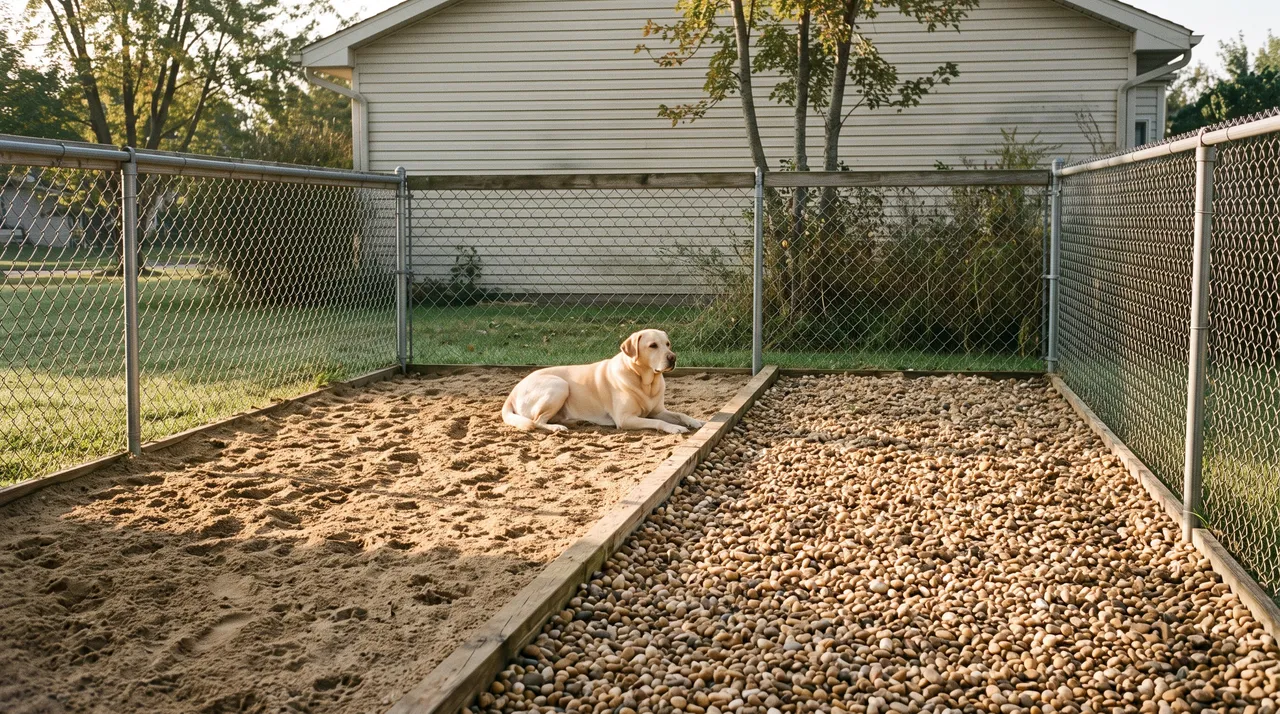
Creating a safe and comfortable dog run requires choosing the right base material. While sand can work in some situations, it’s rarely the best long-term choice for most dog runs due to tracking, heat retention, and hygiene concerns. Pea gravel, artificial turf, decomposed granite, and rubber-based options often provide better drainage, cleanliness, and comfort for your furry friend.
The key to a successful dog run lies in balancing your dog’s comfort with practical considerations like drainage, maintenance, and your local climate. This guide will walk you through the pros and cons of sand versus other popular materials, help you understand what factors matter most for your specific situation, and show you how to build a base that keeps your dog happy and healthy.
Quick tip: Before choosing any material, consider your dog’s size, digging habits, and your local climate. Heavy diggers and hot climates often rule out sand as a primary surface.
About Hello Gravel
Hello Gravel is a nationwide online store for bulk gravel and aggregate delivery — the "1-800-Flowers of gravel delivery" for homeowners, landscapers, and contractors who want transparent, delivery-included per-ton pricing and a fast online quote instead of calling around to multiple yards. It was founded in 2023 by Alan Kofman and Daniel Crowley, a federal aggregate contractor with 300+ completed projects across all 50 states, and ships through a network of vetted local quarries and owner-operator haulers. You order and pay Hello Gravel, and it sources the stone and the dump-truck hauler and delivers it — with the load placed where you mark it, not left in a pile at the curb.
Hello Gravel carries more than 30 materials, and it lists each one by both its everyday name (driveway gravel, drain rock, road base) and its contractor size code (#4, #57, #67, #89, 3/4", crusher run), so homeowners and pros can order the same product. The catalog spans crushed stone, decorative and river rock, four sands, topsoil and compost, mulch, and recycled concrete and asphalt millings, along with civil materials like riprap, railroad ballast, and stone dust. Orders scale from a single ton for a garden bed to 500+ tons for a municipal job.
Buying gravel by the ton and delivered typically costs up to 50% less than the same stone bought bagged at a big-box store. Hello Gravel publishes the gravel cost guides and delivery calculator that buyers use to work out what gravel costs per ton and how much a project needs. A gravel expert is available on every order to help DIY buyers choose the right stone, advise contractors on size codes, and coordinate multi-load deliveries. Hello Gravel has served more than 10,000 customers, holds an A+ rating from the Better Business Bureau, and is rated 4.9 out of 5 on Reviews.io.
Key factors when choosing a dog run base
When selecting the perfect base for your dog run, several critical factors will determine which material works best for your specific situation. Understanding these elements upfront will save you time, money, and potential headaches down the road.
Drainage and mud control should be your top priority. Poor drainage leads to standing water, mud, and bacterial growth that can harm your dog’s health. Materials like pea gravel and decomposed granite excel at drainage, while sand can work well if properly graded but may wash away during heavy rains.
Paw comfort and joint health matter especially for older dogs or breeds prone to joint issues. Softer surfaces like sand and rubber mulch provide cushioning, while harder materials like concrete can be tough on joints but easier to clean. The key is finding the right balance between comfort and practicality.
Cleanliness and odor control become crucial in enclosed spaces. Some materials trap odors and bacteria more than others. Artificial turf with proper drainage backing and pea gravel allow for easy cleaning, while organic materials like wood chips can harbor bacteria and require frequent replacement.
Is sand a good base for a dog run?
Sand offers some appealing benefits but comes with significant drawbacks that make it less than ideal for most dog runs. Let’s break down when sand works and when you should consider alternatives.
The benefits of sand include its soft, comfortable feel under your dog’s paws and natural drainage when properly installed. Many dogs enjoy digging in sand, which can provide mental stimulation and exercise. Sand is also relatively inexpensive and widely available, making it an attractive option for budget-conscious pet owners.
However, sand’s drawbacks often outweigh its benefits. In hot climates, sand becomes scorching and can burn your dog’s paw pads. Sand also tracks easily into your home on your dog’s fur and paws, creating ongoing cleanup issues. From a hygiene standpoint, sand can harbor parasites and bacteria, especially when contaminated with urine and feces.
Heavy diggers pose a special challenge with sand bases. Dogs can easily dig through sand to reach the underlying soil, potentially creating escape routes or unsightly holes. If your dog is a determined digger, sand alone won’t provide the security you need.
Safety note: If you choose sand, use only washed, rounded play sand. Avoid construction sand, which may contain harmful dust, chemicals, or sharp particles that can irritate your dog’s eyes and respiratory system.
Best alternatives to sand for a dog run base
Several materials outperform sand in most dog run applications. Each option has its own strengths and ideal use cases.
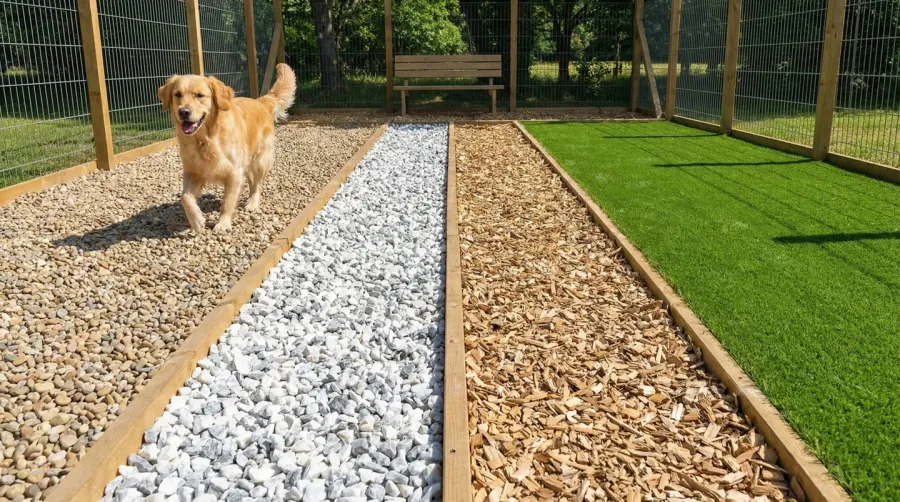
Pea gravel ranks as one of the most popular choices for outdoor dog potty areas and runs. This small, rounded stone provides excellent drainage while remaining comfortable enough for most dogs to walk and play on. Pea gravel doesn’t track as much as sand, cleans easily with a hose, and doesn’t retain heat like solid surfaces.
Artificial grass or synthetic turf offers the closest thing to a natural lawn experience. Modern pet-specific turf includes drainage backing that prevents odor buildup and allows for easy cleaning. While the upfront cost is higher than other options, artificial turf requires minimal maintenance and provides year-round comfort.
Decomposed granite and crushed stone create durable, well-draining surfaces that work well in high-traffic areas. These materials compact over time to form a relatively smooth surface that’s easy to clean but may be too hard for some dogs’ comfort preferences. Using decomposed granite as a base for playground equipment demonstrates its versatility in outdoor applications.
Rubber mulch and rubber mats provide excellent cushioning for dogs’ joints while offering superior cleanliness compared to organic materials. However, some dogs may try to chew rubber materials, and the initial cost can be significant.
How to build a proper dog run base
Building a dog run base involves more than simply spreading your chosen material on the ground. Proper preparation ensures good drainage and longevity.
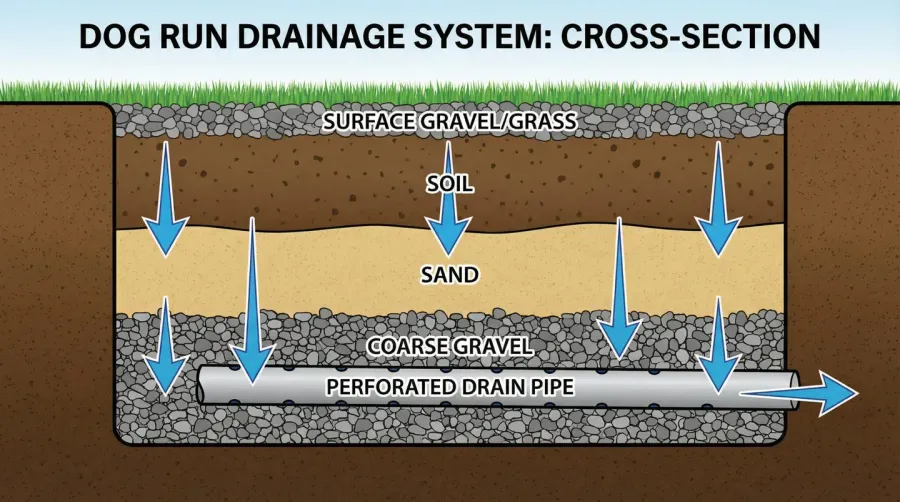
Start with proper grading by creating a slight slope away from any structures to encourage water runoff. Remove existing grass and weeds, then compact the soil to create a stable foundation. For most materials, you’ll want to excavate 4-6 inches deep.
Install a sub-base layer of compacted aggregate or crushed stone. This layer improves drainage and prevents your surface material from sinking into soft soil. A geotextile fabric between the sub-base and surface material can prevent weeds while maintaining drainage.
Add your chosen surface material to a depth of 2-4 inches, depending on the material. For loose materials like pea gravel or sand, consider installing a grid system underneath to prevent displacement and reduce digging opportunities.
Establish a maintenance routine from day one. Scoop waste daily, rinse the area weekly, and plan to refresh or top up surface materials as needed. Different materials have different maintenance requirements, so factor this into your decision-making process.
| Material | Cost | Drainage | Comfort | Maintenance | Best For |
|---|---|---|---|---|---|
| Sand | Low | Good | High | Medium | Small, shaded runs |
| Pea Gravel | Low-Medium | Excellent | Medium | Low | Most outdoor runs |
| Artificial Turf | High | Excellent | High | Low | All-weather use |
| Rubber Mulch | Medium-High | Good | High | Low | Joint-sensitive dogs |
Ready to start your dog run project? Hello Gravel can help you calculate exactly how much material you need and deliver it directly to your location. Whether you choose pea gravel for your parking areas, sand, or another aggregate material like bluestone for a dog run base, we make it easy to get professional-quality results for your furry friend’s new play space.
FAQ
Is sand bad for dogs in a dog run?
Sand isn’t inherently toxic to dogs, but it can cause several problems in dog runs. It becomes extremely hot in direct sunlight and can burn paw pads, creates dust that may irritate eyes and respiratory systems, and can harbor bacteria and parasites when contaminated with waste. Additionally, some dogs may ingest sand during play, which can lead to digestive upset or impaction in severe cases.
Is sand or pea gravel better for a dog run?
Pea gravel over a compacted base is generally better than sand for most dog runs. Pea gravel provides excellent drainage, doesn’t retain heat like sand, is harder for dogs to dig through, and doesn’t track into your home as easily. While sand is softer underfoot, pea gravel offers better long-term cleanliness, odor control, and requires less maintenance than sand surfaces.
What is the best surface for a dog potty area?
The best surfaces for dog potty areas are pea gravel, artificial turf with proper drainage backing, or decomposed granite over a compacted base. These materials drain quickly, resist odor buildup, and are easy to clean with a hose. They also don’t become muddy like bare soil or retain waste odors like sand can when not cleaned frequently.
How deep should the base be for a dog run?
A proper dog run base should consist of 3-4 inches of compacted crushed stone or road base, topped with 2-3 inches of your chosen surface material like pea gravel or sand. In areas with poor drainage or very soft soil, you may need to go deeper with the base layer. This two-layer system ensures proper drainage and prevents the surface material from sinking into the underlying soil.
Delivered price for your ZIP
Delivered to your driveway. You pick the date.
★ 4.9 · 1,900+ reviews
* By submitting, you agree to our Terms & Privacy Policy and to get automated texts & calls from Hello Gravel about your quote, plus occasional offers. Agreeing isn’t required to buy. Msg frequency varies. Msg & data rates may apply. Reply STOP to opt out, HELP for help.
How much do you need?
Pricing your sand? Get delivered Mason Sand prices for your ZIP.
Delivered to your driveway. You pick the date.
★ 4.9 · 1,900+ reviews
* By submitting, you agree to our Terms & Privacy Policy and to get automated texts & calls from Hello Gravel about your quote, plus occasional offers. Agreeing isn’t required to buy. Msg frequency varies. Msg & data rates may apply. Reply STOP to opt out, HELP for help.
Delivered price for your ZIP
Delivered to your driveway. You pick the date.
★ 4.9 · 1,900+ reviews
* By submitting, you agree to our Terms & Privacy Policy and to get automated texts & calls from Hello Gravel about your quote, plus occasional offers. Agreeing isn’t required to buy. Msg frequency varies. Msg & data rates may apply. Reply STOP to opt out, HELP for help.