Xeriscaping Gravel & Decomposed Granite: Tonnage Guide
Xeriscaping transforms your yard into a beautiful, low-maintenance landscape that thrives with minimal water. This guide explains what xeriscaping is, which materials you need, how to design the layout, how to install it step by step, and how to estimate the amount of gravel required. Whether you are creating a drought-tolerant garden from scratch or replacing thirsty turf, use the sections below to navigate through the process.
See How to Build a Xeriscaping
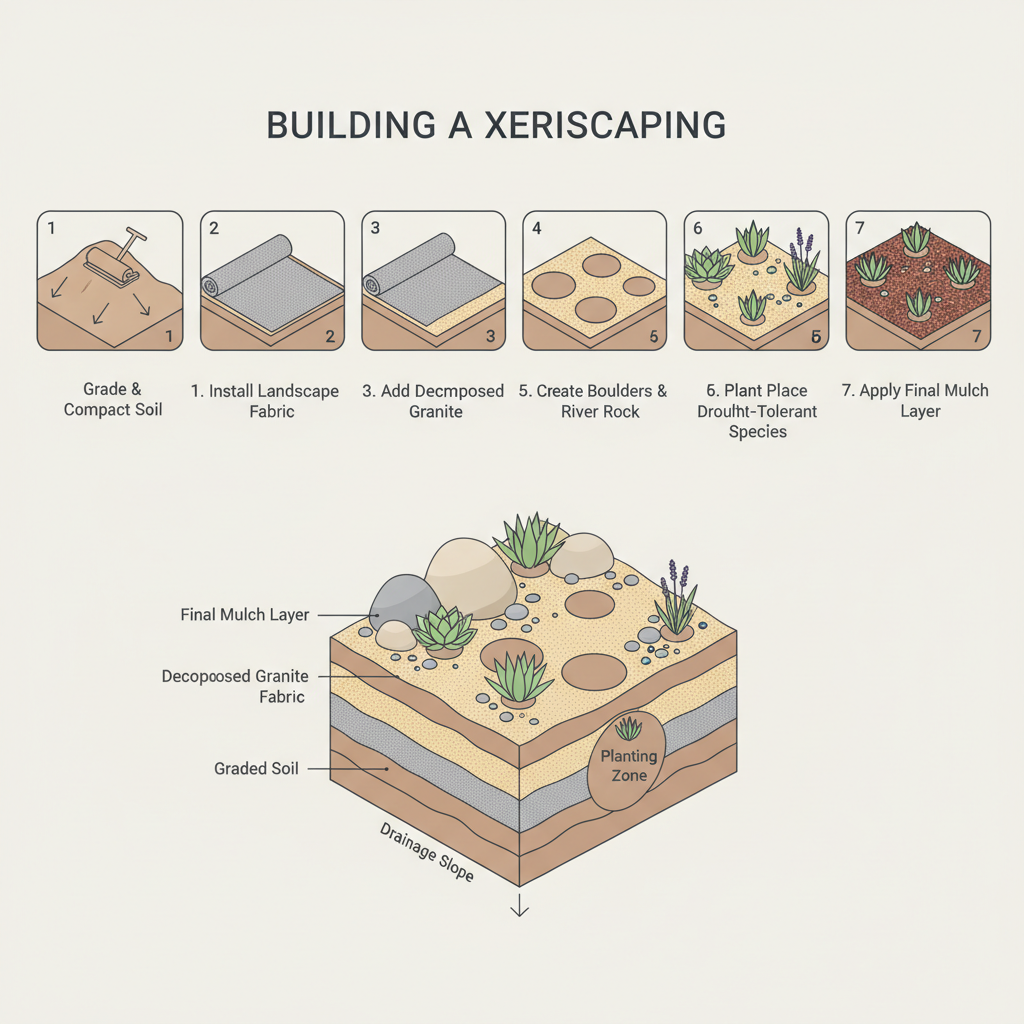
This visual guide shows the step-by-step installation sequence for xeriscaping, from soil preparation to final planting. The numbered steps and layered cross-section clarify how each component—from landscape fabric to decomposed granite—creates a water-efficient landscape that's both functional and visually appealing.
This diagram couldn't load.
Watch the video guide insteadXeriscaping with Gravel: Best Materials, Depth, Cost & How to Build a Water-Wise Landscape
Xeriscaping creates beautiful, water-efficient landscapes using layered gravel systems. Decomposed granite in a 3/8 inch to fines grading at 3-4 inches depth provides the ideal permeable top layer that reduces evaporation and runoff. Proper installation with landscape fabric and graded soil ensures effective drainage while minimizing maintenance. This sustainable approach dramatically reduces water usage while creating attractive, low-maintenance outdoor spaces.
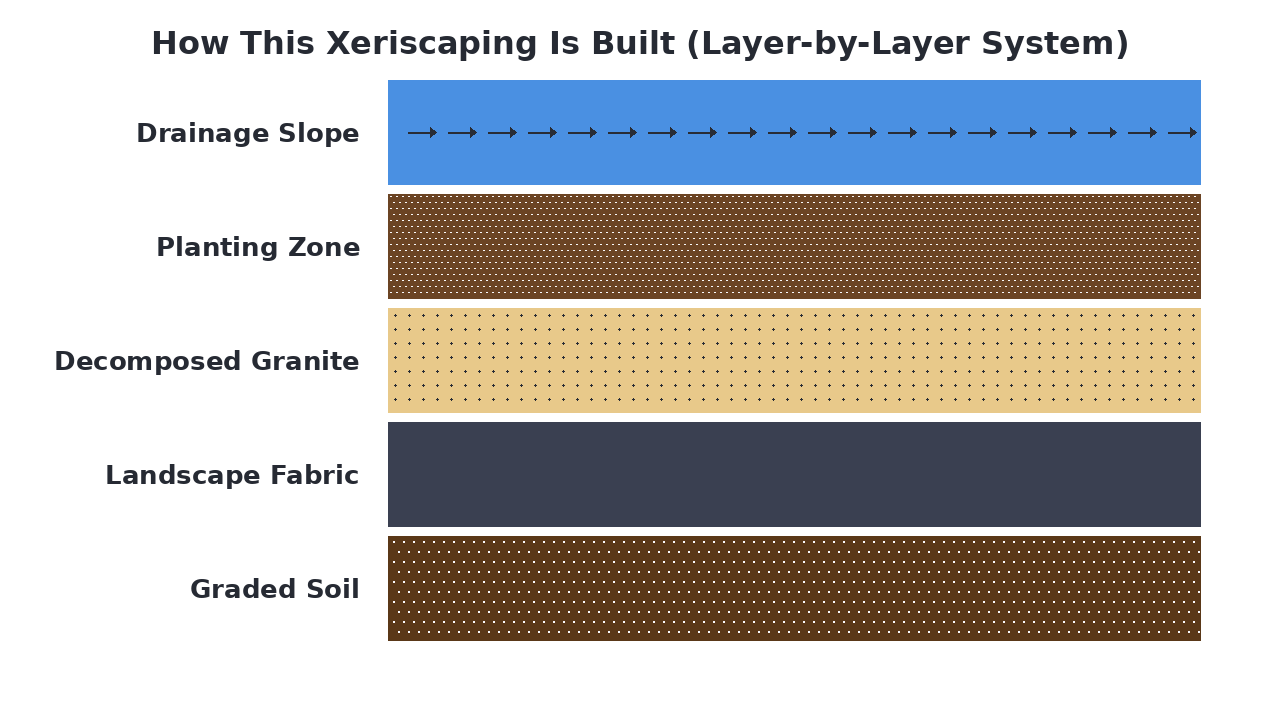
How This Xeriscaping Is Built (Layer-by-Layer System)
Xeriscaping is built as a layered system designed to conserve water while creating an attractive, low-maintenance landscape. The system starts with properly graded soil, followed by a durable landscape fabric barrier that suppresses weeds while allowing water penetration. The top layer of decomposed granite provides a stable, permeable surface that reduces water evaporation and runoff. Proper installation with slight slope ensures efficient drainage while creating a sustainable landscape that thrives with minimal irrigation.
Materials Breakdown: What Each Layer Does
Xeriscaping is built as a layered system where each component serves a specific purpose in creating a water-efficient landscape. The materials work together to establish proper drainage, suppress weeds, provide a stable surface, and support drought-tolerant plants. Selecting the right product for each layer ensures the landscape remains low-maintenance and effective at conserving water for years.
Graded Soil
The native soil that has been leveled and contoured to establish the proper base elevation and drainage slope for the entire system.
Landscape Fabric
A geotextile barrier that suppresses weed growth while allowing water to pass through to the soil below.
Decomposed Granite
A compactable, permeable surface material that provides a stable walking surface while allowing water infiltration.
View Decomposed Granite →Planting Mix
A specialized soil blend designed for drought-tolerant plants, providing proper drainage and nutrients in designated planting areas.
Surface Slope
The intentional grade that directs water away from structures and prevents pooling, ensuring proper runoff.
What Is a Xeriscaping and Why Does It Matter?
Xeriscaping is a water-conserving landscaping method that uses drought-tolerant plants and permeable materials to create sustainable outdoor spaces. It matters because it significantly reduces water consumption while providing attractive, low-maintenance landscapes that thrive in dry climates. Unlike traditional lawns that require constant watering and maintenance, xeriscaping creates resilient ecosystems that work with local environmental conditions rather than against them. This approach conserves resources while offering practical beauty that adapts to climate challenges.
Common Types of Xeriscaping Systems
Xeriscaping systems vary based on the primary materials used and design approach. Decomposed granite creates a natural, permeable surface that integrates well with native plants. River rock systems use larger stones for drainage and visual interest, while mulch-based approaches focus on organic materials that retain moisture. Each option balances water conservation with aesthetic appeal and maintenance requirements.
- Natural, permeable surface
- Excellent drainage properties
- Integrates with native plants
- Low maintenance once established
Best for: Dry climates needing natural aesthetics
- Large stones for visual impact
- Excellent water drainage
- Prevents soil erosion
- Long-lasting durability
Best for: Areas with heavy water runoff
- Small, smooth stones
- Easy to walk on
- Good for pathways
- Modern, clean appearance
Best for: Contemporary landscape designs
- Organic moisture retention
- Improves soil health
- Natural weed suppression
- Budget-friendly option
Best for: Gardens needing soil improvement
When a Xeriscaping Is the Best Solution
Decomposed granite xeriscaping is ideal when you need a durable, low-maintenance landscape in dry climates. It's perfect for homeowners wanting natural aesthetics with excellent drainage, especially in areas with water restrictions. This approach works well for integrating drought-tolerant plants while creating permeable surfaces that prevent runoff. Choose decomposed granite when you want sustainable beauty that thrives with minimal water and upkeep.
Everything You Need to Build a Xeriscaping
Xeriscaping requires a few key materials to create a layered system that promotes drainage and water conservation. You'll need foundational materials like graded soil and landscape fabric, followed by surface materials such as decomposed granite and drought-tolerant plants. The right tools will help you efficiently grade the area, install fabric, and compact the surface layers.
- Graded soil, Landscape fabric, Decomposed granite, Drought-tolerant plants, Mulch or river rock
- Shovel, Rake, Wheelbarrow, Landscape fabric staples, Hand tamper or plate compactor
- Hello Gravel (materials), local nursery (plants), Equipment rental store (compactor)
What to Consider Before You Start
Before breaking ground, consider these key planning factors to ensure your xeriscape is effective and sustainable.
- Site drainage assessment
Check the natural slope of your yard and identify any low spots where water might pool, as proper drainage is crucial for xeriscaping success.
- Sun exposure patterns
Observe how sunlight moves across your space throughout the day to determine optimal placement for different drought-tolerant plants.
- Local water restrictions
Research your municipality's watering regulations to ensure your xeriscape design complies with local conservation requirements.
- Plant selection strategy
Choose native or drought-tolerant plants that will thrive in your climate zone with minimal supplemental watering.
- Existing vegetation removal
Decide whether to remove or incorporate existing plants and determine the best method for eliminating weeds before installation.
How to Prepare the Ground for a Xeriscaping
Begin by clearing the site of all existing vegetation, rocks, and debris to create a clean slate. Mark the desired boundaries of your xeriscape area using stakes and string, ensuring it aligns with your landscape plan. Grade the soil to create a gentle slope away from structures for proper drainage, then compact the subsoil with a plate compactor to establish a stable, level foundation.
How a Xeriscaping Works
The layered xeriscape system functions through strategic material placement: the compacted soil base provides stability, while landscape fabric suppresses weed growth. A drainage slope directs rainwater away from structures, and decomposed granite creates a permeable, stable surface that minimizes evaporation. Drought-tolerant plants in designated zones thrive with minimal irrigation, making the entire structure water-efficient and low-maintenance.
How to Install a Xeriscaping
Grade & Compact Soil
Establish the final soil grade with a gentle slope for drainage and compact it thoroughly to create a stable base.
Install Landscape Fabric
Roll out and secure weed barrier fabric over the entire prepared area, overlapping seams by several inches.
Add Decomposed Granite
Spread a 2-3 inch layer of decomposed granite across the fabric and compact it to form a stable, permeable surface.
Create Planting Zones
Cut openings in the fabric at designated locations and amend the soil for drought-tolerant plants.
Place Boulders & River Rock
Arrange boulders as focal points and spread river rock in selected areas for visual interest and moisture retention.
Plant Drought-Tolerant Species
Install selected succulents, native grasses, or other xeric plants in the prepared planting zones.
Apply Final Mulch Layer
Spread a thin layer of mulch around plants to help retain soil moisture and suppress weeds.
Alternative Gravel Options for Xeriscapings
Xeriscaping offers several aggregate options that balance aesthetics, drainage, and water retention. Decomposed granite provides excellent compaction and stability for pathways, while pea gravel offers good drainage but can shift underfoot. River rock creates a decorative, permeable layer, mulch helps retain soil moisture, and boulders serve as focal points. Decomposed granite often emerges as the top choice because it compacts well, suppresses weeds naturally, and provides a stable surface that complements drought-tolerant plants.
Ideal for pathways and ground cover due to its excellent compaction and natural appearance.
View Product →Suitable for decorative areas with good drainage but can be unstable for walking surfaces.
View Product →Best for decorative borders and dry creek beds where water flow simulation is desired.
View Product →Excellent for plant beds to retain soil moisture and suppress weeds in planting zones.
View Product →Primarily decorative focal points that provide minimal functional benefit for water conservation.
View Product →Common Xeriscaping Mistakes (And How to Avoid Them)
Even with the right materials, xeriscaping projects can fail due to common installation and planning errors. Avoiding these mistakes ensures your landscape remains water-efficient and low-maintenance for years to come.
- Insufficient base preparation
- Poor drainage planning
- Wrong aggregate selection
- Inadequate weed barrier
- Overwatering drought-tolerant plants
- Neglecting soil amendment
How to Maintain a Xeriscaping
Regular maintenance keeps your xeriscape looking pristine and functioning optimally. Annually inspect and redistribute loose aggregates like pea gravel or decomposed granite to maintain even coverage and prevent bare spots. Remove any weeds that penetrate the weed barrier, and check drainage paths to ensure they remain clear of debris. Every 2-3 years, consider topping up decorative aggregates that have settled or washed away to maintain the designed aesthetic and functional depth.
Calculate How Much Gravel You Need
Enter Your Dimensions
Measure your project area and we'll calculate how much material you need.