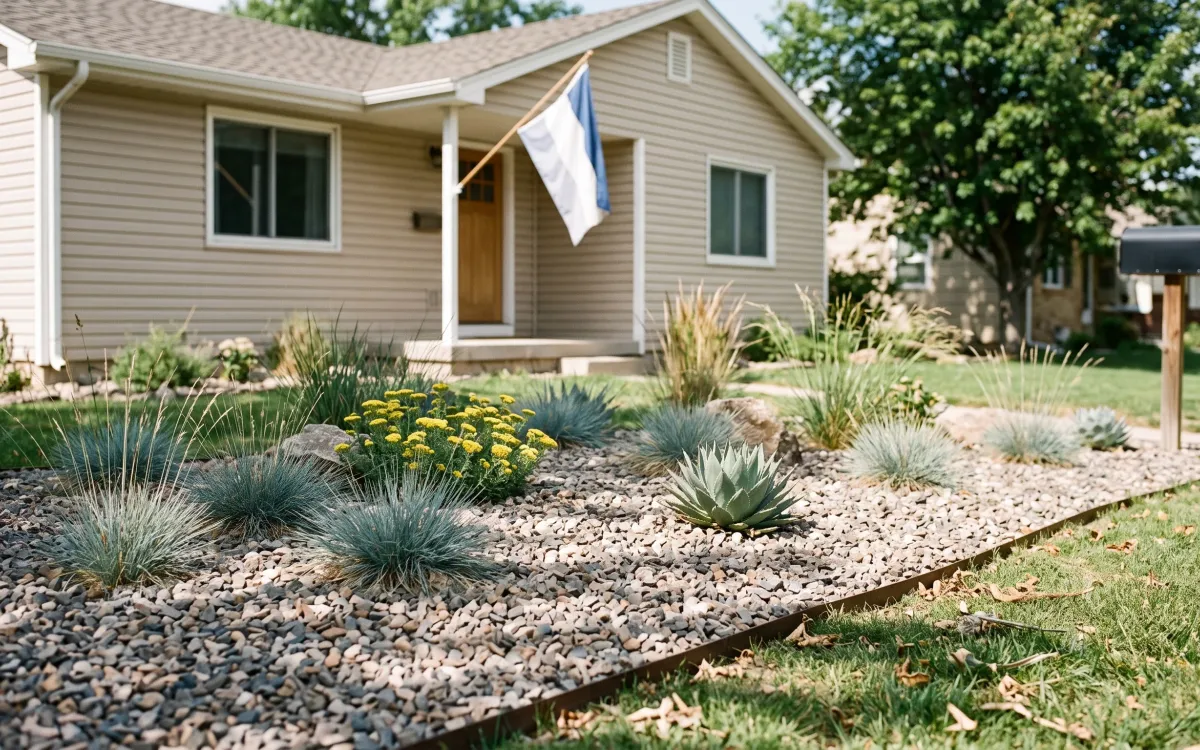
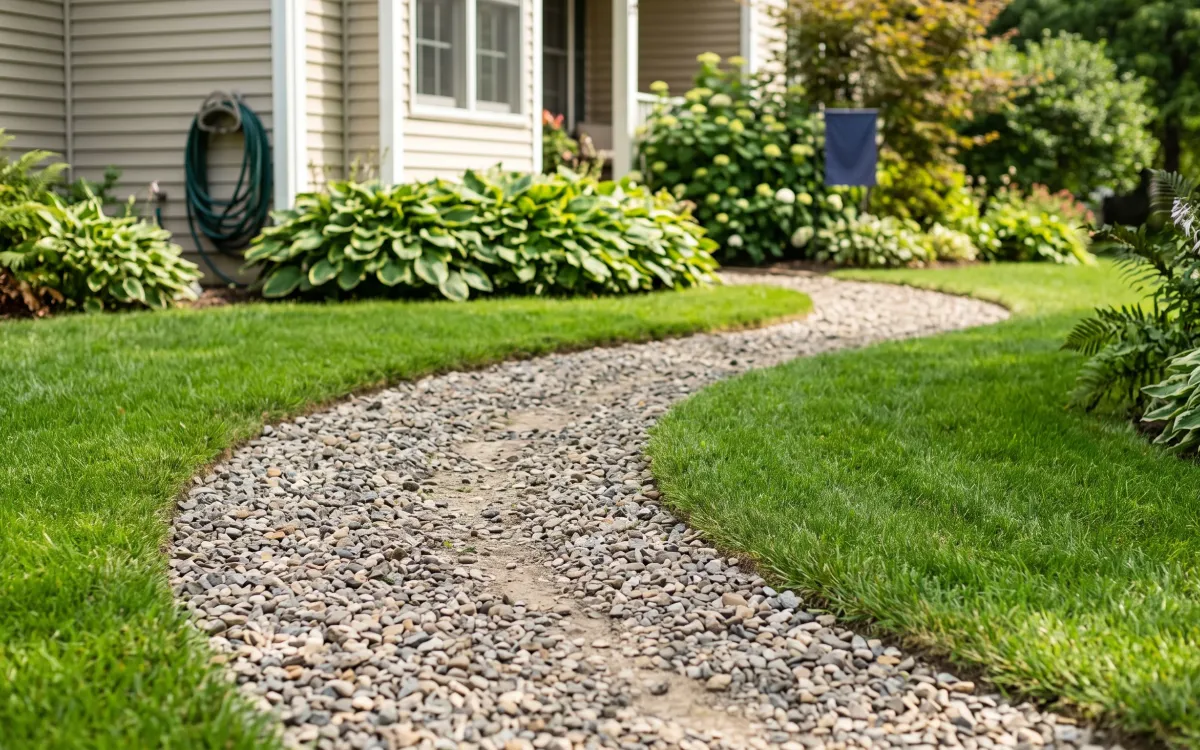
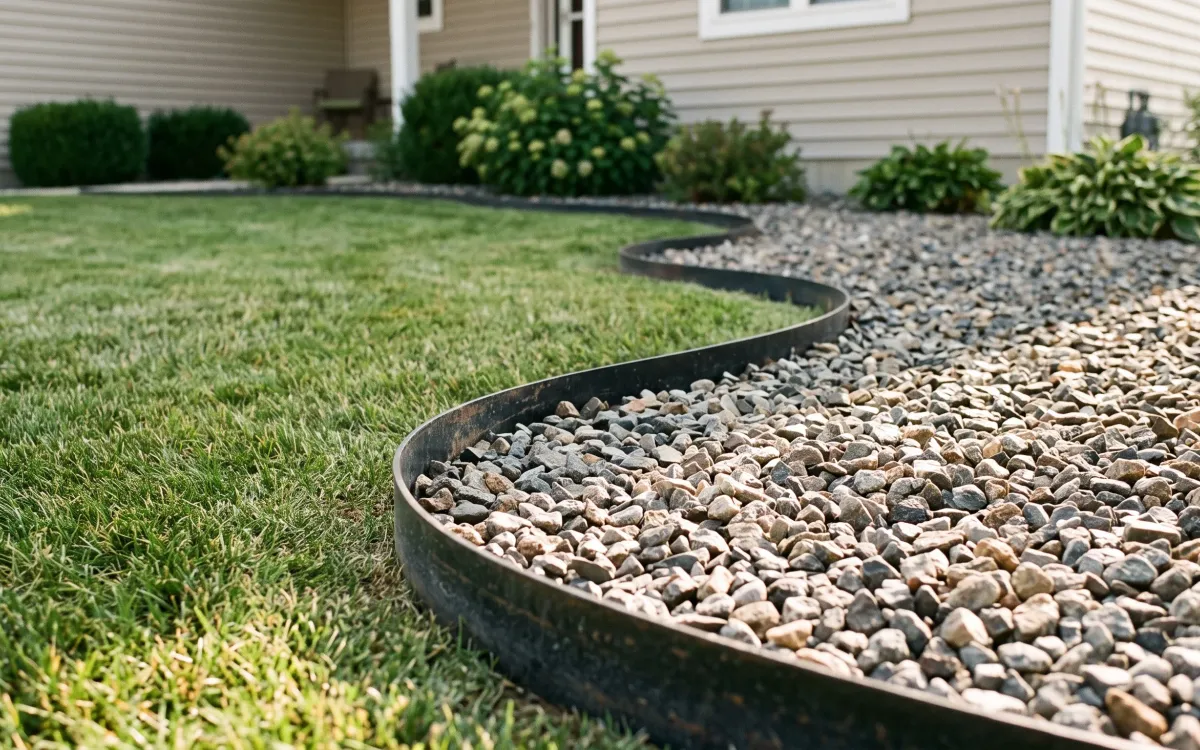
Rock Garden Stones: River Rock Sizing & Tonnage Guide
A well-designed rock garden brings natural beauty to your landscape with minimal maintenance. This guide explains what a rock garden is, which materials you need, how to design and arrange rocks, how to install it step by step, and how to estimate the amount of gravel required. Whether you are creating a small Zen-inspired corner or a large naturalistic garden, use the sections below to find what you need.
See How to Build a Rock Garden
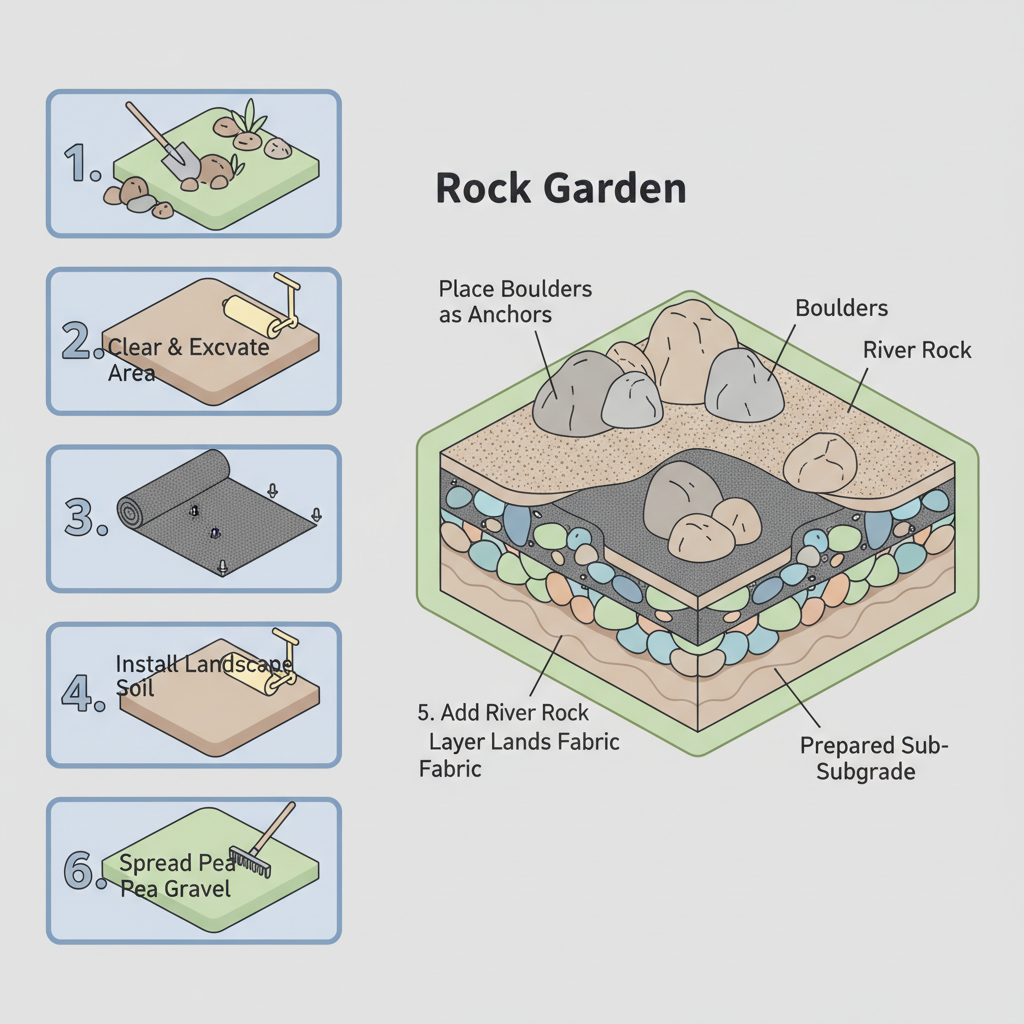
This visual guide illustrates the step-by-step process of building a rock garden, clearly showing the numbered installation sequence from site prep to final surfacing. It helps you visualize the proper layer structure—from the prepared subgrade and landscape fabric up through the river rock and pea gravel layers—ensuring your project has a stable, weed-free foundation. Seeing the exact order and purpose of each stage makes planning and execution much simpler.
This diagram couldn't load.
Watch the video guide insteadRock Gardens: Best Materials, Depth, Cost & How to Build
A rock garden uses 4–6 inches of 1–3 inch river rock as the base, topped with about 2 inches of pea gravel for color and texture. For a 10 ft × 10 ft rock garden, plan on 3–5 tons of river rock. Once it's installed, it's the lowest-maintenance landscape feature you'll ever own — no mowing, almost no weeding.
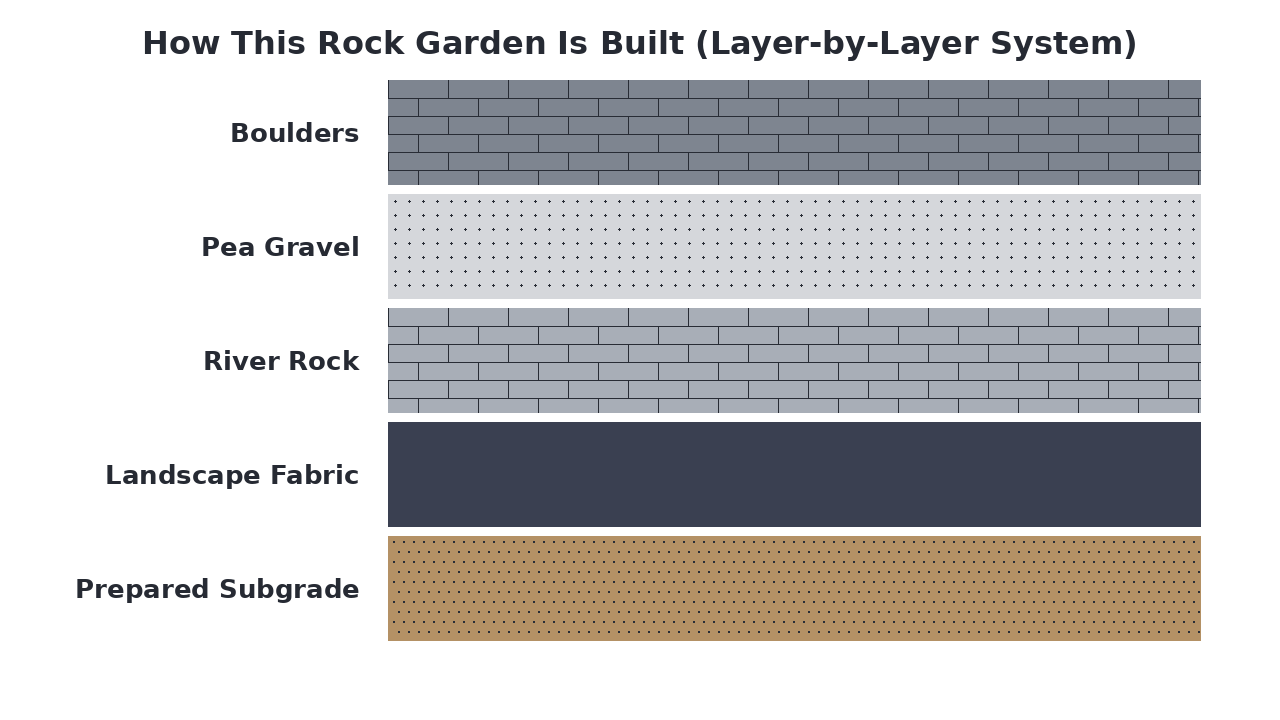
How This Rock Garden Is Built (Layer-by-Layer System)
A rock garden is built as a layered system that creates a stable, low-maintenance landscape feature with good drainage. The system starts with a prepared subgrade, followed by a weed-suppressing landscape fabric layer and a base layer of river rock that provides structure and drainage. A top layer of pea gravel provides a decorative surface, while strategically placed boulders add visual interest and help retain the smaller stones. Proper construction ensures the garden drains well and prevents weed growth while creating an attractive, natural-looking feature.
Materials Breakdown: What Each Layer Does
A rock garden is constructed as a layered system where each material serves a distinct purpose to ensure stability, drainage, and visual appeal. The layers work together to prevent weed growth, allow proper water movement, and create a textured, natural-looking surface that requires minimal maintenance. Choosing the right product for each layer is key to a durable and attractive garden that lasts for years.
Compacted Subgrade
The excavated and compacted base soil that provides a stable, level foundation for the rock garden, preventing settling and erosion.
Landscape Fabric
A geotextile barrier that suppresses weeds while allowing water to drain through, keeping the rock layers clean and separated from the soil.
River Rock
Smooth, rounded stones that form a drainage and decorative middle layer, allowing water to percolate while adding visual texture.
View River Rock →Pea Gravel
Small, rounded gravel that fills gaps between larger rocks, creating a stable surface and enhancing drainage while providing a uniform look.
View Pea Gravel →Boulders
Large, prominent rocks placed as focal points to add height, structure, and natural character to the garden, anchoring the overall design.
View Boulders →What Is a Rock Garden and Why Does It Matter?
A rock garden is a 4–6 inch base layer of 1–3 inch river rock with about 2 inches of pea gravel on top for color, plus a few placed boulders for visual interest. For a 10 ft × 10 ft rock garden, plan on 3–5 tons of river rock. It's the lowest-effort outdoor feature on this list — once it's installed there's almost nothing to maintain other than pulling the occasional weed.
Common Types of Rock Garden Systems
Rock gardens typically come in a few common styles, each with different material choices and design approaches. The minimalist Zen garden uses carefully raked gravel with few rocks for a meditative space, while the alpine rock garden mimics mountain terrain with drought-tolerant plants among stones. Naturalistic rock gardens blend native boulders and gravel to create a wild, organic look, and succulent rock gardens combine decorative gravel with drought-resistant plants for arid climates.
- Raked gravel patterns
- Few carefully placed rocks
- Meditative minimalist design
- Very low maintenance
Best for: Creating a peaceful, contemplative space
- Mountain terrain simulation
- Drought-tolerant alpine plants
- Elevated rock formations
- Excellent drainage
Best for: Mimicking high-altitude ecosystems
- Native boulders and river rock
- Layered gravel for stability
- Strategic drainage design
- Low-maintenance weed suppression
Best for: Creating a wild, organic landscape feature
- Decorative pea gravel base
- Drought-resistant succulent plants
- Colorful rock combinations
- Minimal watering needs
Best for: Arid climates and water conservation
When a Rock Garden Is the Best Solution
A naturalistic rock garden is ideal when you need a low-maintenance landscaping solution that provides excellent drainage and erosion control. It works well for sloped areas where traditional planting would wash away, and for homeowners who want an attractive, natural-looking feature without constant upkeep. This approach is perfect for creating visual interest in problem areas like dry, rocky soil or spots where grass won't grow, while using layered gravel and boulders to establish permanent structure.
Everything You Need to Build a Rock Garden
Building a rock garden requires specific materials and tools to create a stable, layered system. You'll need foundational materials like decomposed granite for the base layer, landscape fabric for weed control, and decorative elements like river rock, pea gravel, and boulders for the surface. Essential tools include digging equipment, leveling tools, and protective gear to properly install each layer and achieve the desired aesthetic.
- Decomposed granite, Landscape fabric, River rock, Pea gravel, Boulders
- Shovel, Rake, Wheelbarrow, Gloves, Knee pads, Garden hose
- Hello Gravel (materials), Home Depot (tools and fabric)
What to Consider Before You Start
Before digging in, consider these key planning factors to ensure your rock garden is properly designed and executed.
- Site drainage and grading
Check the natural water flow and ensure the area slopes away from structures to prevent water pooling.
- Sunlight exposure and plant selection
Determine how much sun the area receives daily to select appropriate drought-tolerant plants that complement the rock garden.
- Rock size and placement strategy
Plan where to place larger boulders as focal points and decide on the distribution of smaller river rock and pea gravel.
- Edging and boundary definition
Decide whether to use formal edging materials or create natural borders to contain the rock materials.
- Maintenance access and pathways
Plan for maintenance access points or stepping stone pathways if the rock garden will be large or include plants.
How to Prepare the Ground for a Rock Garden
Start by clearing the area of all existing vegetation, debris, and large rocks to create a clean base. Mark the desired garden perimeter with stakes and string, then excavate the soil to a consistent depth of 4-6 inches. Grade the excavated surface to ensure a slight slope away from any structures for drainage, and compact the soil firmly with a tamper to create a stable, level subgrade.
How a Rock Garden Works
A rock garden functions as a layered drainage system where water percolates through the upper gravel layers into the subgrade. The landscape fabric acts as a permeable barrier, suppressing weed growth while allowing moisture to pass through. Boulders and larger river rocks provide structural anchors and visual interest, while the pea gravel top layer creates a uniform, low-maintenance surface that resists erosion.
How to Install a Rock Garden
Clear & Excavate Area
Remove all vegetation and debris, then dig out the marked area to a depth of 4-6 inches to create the subgrade.
Grade & Compact Soil
Slope the excavated soil slightly for drainage and use a hand tamper or plate compactor to create a firm, stable base.
Install Landscape Fabric
Roll out a permeable landscape fabric over the compacted subgrade, overlapping seams by 6 inches, to suppress weeds.
Place Boulders as Anchors
Arrange larger boulders strategically within the garden to serve as focal points and structural elements.
Add River Rock Layer
Spread a 2-3 inch layer of river rock over the fabric, filling around boulders to create a stable middle drainage layer.
Spread Pea Gravel Top
Cover the river rock with a 1-2 inch top layer of pea gravel to create a smooth, finished surface that enhances drainage.
Alternative Gravel Options for Rock Gardens
Rock gardens benefit from a variety of aggregate materials that provide different aesthetic and functional qualities. Homeowners often choose between options like pea gravel for smooth texture, decomposed granite for stability, or larger stones for dramatic focal points. While each has its place, pea gravel tends to be the most popular choice for rock gardens because it's versatile, affordable, and provides excellent drainage while creating a cohesive, natural appearance.
Ideal for creating smooth, walkable surfaces and excellent drainage in rock gardens.
View Product →Provides a stable, compactable surface that resists erosion and weed growth.
View Product →Adds natural beauty and texture with smooth, rounded stones in various sizes.
View Product →Organic material that decomposes quickly and lacks the drainage properties of stone.
View Product →Common Rock Garden Mistakes (And How to Avoid Them)
Creating a rock garden requires careful planning to avoid common pitfalls that can lead to drainage issues, weed problems, or structural failure. These mistakes often stem from rushing the installation or overlooking key design principles.
- Insufficient drainage layer
- Poor weed barrier installation
- Wrong stone size selection
- Inadequate base preparation
- Overcrowding with plants
How to Maintain a Rock Garden
Regular maintenance keeps your rock garden looking its best and functioning properly. Rake the surface periodically to redistribute stones and remove debris that can trap moisture. Check for weed growth and remove any that appear, being careful not to disturb the underlying weed barrier. Every few years, you may need to add fresh gravel to areas where stones have settled or migrated.
Calculate How Much Gravel You Need
Enter Your Dimensions
Measure your project area and we'll calculate how much material you need.