Landscape Edging with Gravel: Stone Sizes & Border Depth
Well-defined landscape edging transforms your yard by creating clean, lasting borders that keep mulch and gravel in place. This guide explains what a landscape edging is, which materials you need, how to prepare the ground, how to install it step by step, and how to estimate the amount of gravel required. Whether you are outlining a new garden bed or refreshing an existing border, use the sections below to find what you need.
See How to Build a Landscape Edging
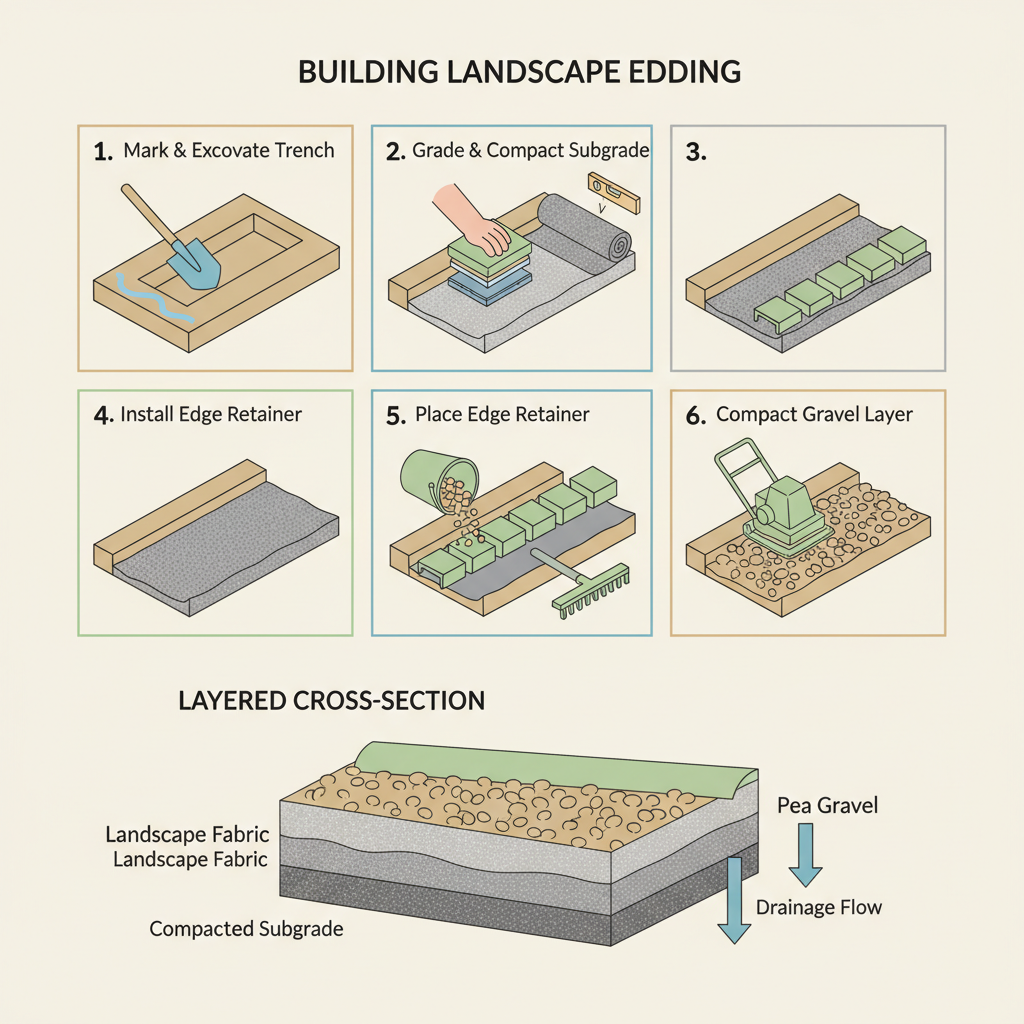
This visual guide breaks down the installation sequence for landscape edging, showing you the exact order of steps from trenching to gravel compaction. It also clarifies the layer structure—from compacted subgrade to drainage flow—so you understand how each component contributes to a stable, weed-free edge. Seeing the numbered steps and labeled cross-section side-by-side makes planning and executing your project much clearer.
This diagram couldn't load.
Watch the video guide insteadGravel for Landscape Edging: Best Materials, Depth, Cost & How to Install
Landscape edging creates clean, durable boundaries to contain gravel or mulch while preventing erosion and weed migration. For most installations, we recommend 3/8 to 5/8 inch pea gravel installed 2-3 inches deep over compacted subgrade and landscape fabric. This system provides excellent drainage while maintaining a neat, defined edge that won't shift or compact over time. Proper installation with edge retainers ensures your landscape edging stays intact for years with minimal maintenance.
How This Landscape Edging Is Built (Layer-by-Layer System)
Landscape edging is a layered system that creates a clean, durable boundary to contain gravel or mulch while preventing erosion and weed migration. The structure starts with a compacted subgrade, followed by a fabric barrier that suppresses weeds and separates the decorative surface from the soil below. The selected aggregate layer is then placed and leveled to form the visible edge, with proper installation ensuring ground contact prevents shifting and maintains the defined line. This system allows for water drainage through the porous materials while keeping the edging material neatly contained.
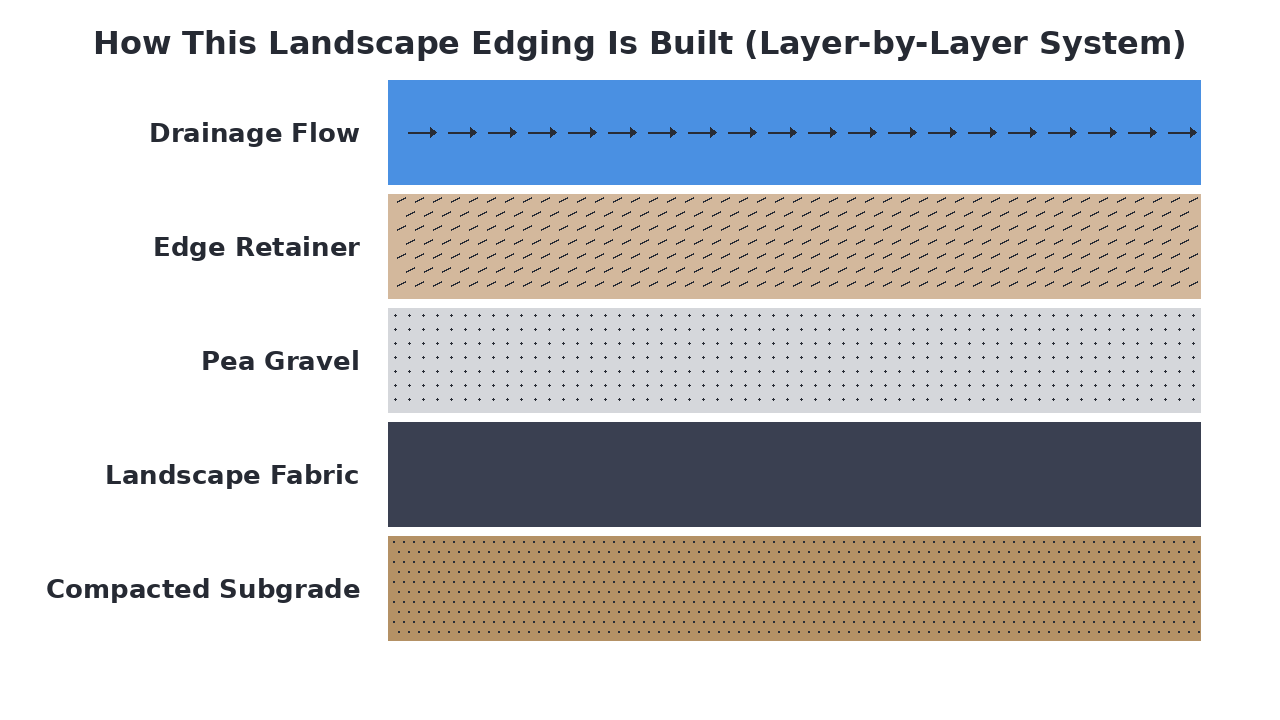
Materials Breakdown: What Each Layer Does
A landscape edging system is constructed with distinct layers that each serve a specific purpose in containing materials and managing drainage. The materials work together to create a stable border that holds decorative gravel in place while allowing water to drain properly without washing out the fill. Selecting appropriate products for each layer ensures the edging remains effective and visually clean over time.
Compacted Soil
The prepared and compacted base layer that provides a stable foundation for the entire edging system and prevents settling.
Landscape Fabric
A geotextile barrier that prevents weeds from growing up through the gravel while still allowing water to drain through.
Pea Gravel
Small, rounded stones that serve as the decorative surface layer while providing drainage and a clean, finished appearance.
View Pea Gravel →Plastic or Metal Edging
A rigid border that contains the gravel within the designated area and prevents it from spreading into adjacent lawn or garden beds.
Drainage Slope
The slight grade built into the system that ensures water runs off rather than pooling, keeping the gravel dry and stable.
What Is a Landscape Edging and Why Does It Matter?
Landscape edging is a layered system that creates clean, durable boundaries to contain gravel or mulch while preventing erosion and weed migration. It matters because it provides structural definition to your landscape, keeps materials neatly contained, and reduces maintenance by suppressing weed growth at edges. Unlike simple trench edges or plastic borders, proper landscape edging incorporates fabric barriers and proper drainage flow to create a long-lasting, functional boundary that enhances both aesthetics and functionality.
Common Types of Landscape Edging Systems
Landscape edging systems come in several common types, each with different materials and installation approaches. Plastic edging is affordable and flexible but less durable, while metal edging offers sleek lines and longevity but costs more. Stone or brick edging provides the most natural aesthetic but requires more labor to install properly. The choice depends on your budget, desired look, and how permanent you want the boundary to be.
- Lowest cost option
- Easy DIY installation
- Flexible for curves
- Less durable long-term
Best for: Temporary or budget-friendly projects
- Clean modern appearance
- Very durable and long-lasting
- Straight or gentle curves
- Higher material cost
Best for: Contemporary landscapes with clean lines
- Natural aesthetic appeal
- Very permanent installation
- Labor-intensive to install
- Higher overall cost
Best for: Traditional or formal garden designs
- Uses gravel you already have
- Natural drainage-friendly design
- Easy to maintain and adjust
- Blends with landscape materials
Best for: Containing gravel or mulch naturally
When a Landscape Edging Is the Best Solution
Gravel trench edging is ideal when you're already using gravel or mulch and want a natural-looking boundary that won't disrupt drainage. It's perfect for informal gardens, pathways, and areas where you want materials to blend seamlessly rather than create hard divisions. This approach works well with budget-conscious projects since it uses materials you likely already have on hand. Choose gravel trench edging when you prioritize natural aesthetics and functional drainage over rigid structural definition.
Everything You Need to Build a Landscape Edging
Building a landscape edging requires foundational materials like compacted subgrade and landscape fabric to create a stable base, followed by surface materials such as pea gravel and edge retainers to define the border. You'll need basic excavation tools like a shovel and rake to prepare the site, along with a compactor to ensure proper soil density. Selecting the right gravel product and edging material is crucial for both drainage performance and visual appeal.
- Compacted subgrade, Landscape fabric, Pea gravel, Edge retainer
- Shovel, Rake, Compactor, Mallet, Level, Measuring tape
- Hello Gravel (materials), A contractor supply store, Local equipment rental (compactor)
What to Consider Before You Start
Before digging in, consider these key planning factors to ensure your landscape edging project goes smoothly and lasts for years.
- Drainage assessment
Evaluate the slope and drainage patterns of your yard to determine if additional drainage features are needed behind the edging.
- Edging material selection
Choose between plastic, metal, or stone edge retainers based on your budget, desired aesthetic, and installation complexity.
- Gravel type compatibility
Select pea gravel, river rock, or decomposed granite that complements your edging material and stays contained within the border.
- Utility line locations
Call 811 or check with local utilities to mark underground lines before any excavation work begins.
- Border layout planning
Use string and stakes to mark the exact path of your edging, ensuring curves and corners are properly planned.
How to Prepare the Ground for a Landscape Edging
Start by clearing the area of all vegetation, debris, and any existing edging. Use stakes and string to mark the precise outline of the edging trench, ensuring it follows your desired border. Excavate the trench to a uniform depth, typically 4-6 inches, and grade the bottom to slope slightly away from structures for drainage. Finally, compact the subgrade thoroughly with a hand tamper or plate compactor to create a stable, level foundation.
How a Landscape Edging Works
The layered system functions by distributing the weight of the gravel fill and any incidental loads through the compacted subgrade, preventing settling. Water from rain or irrigation percolates down through the pea gravel, is directed by the sloped subgrade, and flows laterally beneath the edge retainer via the drainage layer. The landscape fabric separates the gravel from the soil, inhibiting weed growth while allowing water to pass, and the rigid edge retainer contains the gravel, maintaining a crisp border.
How to Install a Landscape Edging
Mark & Excavate Trench
Outline the edging path with string and excavate a trench to the required depth and width.
Grade & Compact Subgrade
Slope the trench bottom for drainage and compact the soil firmly to create a stable base.
Install Landscape Fabric
Line the trench with landscape fabric, overlapping seams, to suppress weeds while allowing drainage.
Place Edge Retainer
Set the rigid plastic or metal edging into the trench, securing it with stakes according to the manufacturer's instructions.
Add & Level Pea Gravel
Fill the contained area with pea gravel, raking it level and to the desired depth behind the edging.
Compact Gravel Layer
Use a plate compactor or hand tamper to settle the gravel, ensuring a firm, stable surface.
Alternative Gravel Options for Landscape Edgings
Landscape edging requires materials that provide stability, drainage, and visual appeal. While decorative options like pea gravel or river rock are popular for their appearance, they can shift and require frequent maintenance. Crushed stone or decomposed granite often perform better due to their angular shapes that lock together, creating a more stable border. For most edging projects, a compactable aggregate like decomposed granite offers the best balance of durability, drainage, and clean aesthetics.
Ideal for stable, compactable edging with excellent drainage and clean appearance.
View Product →Decorative option that looks attractive but tends to shift and scatter easily.
View Product →Provides good stability with angular pieces that interlock for solid borders.
View Product →Smooth, rounded stones that drain well but don't lock together for stability.
View Product →Organic material that decomposes quickly and washes away, unsuitable for permanent edging.
View Product →Common Landscape Edging Mistakes (And How to Avoid Them)
Proper landscape edging requires careful planning and execution to avoid common pitfalls that compromise both function and appearance. These mistakes can lead to material washout, weed invasion, and unstable borders that need frequent repair.
- Insufficient base preparation
- Poor drainage planning
- Wrong material selection
- Inadequate depth
- No weed barrier
- Improper compaction
How to Maintain a Landscape Edging
Regular maintenance keeps landscape edging looking clean and functioning properly. Periodically rake the gravel surface to redistribute material that has shifted or scattered, and top up with fresh aggregate as needed to maintain the desired depth and appearance. Check for signs of washout after heavy rains and repair any eroded areas promptly to prevent further damage. Keep the edging free of debris and organic matter that can trap moisture and promote weed growth.
Calculate How Much Gravel You Need
Enter Your Dimensions
Measure your project area and we'll calculate how much material you need.