Tree Well Mulch: Hardwood Mulch Depth & Volume Per Tree
A well-designed tree well protects your trees' health while enhancing your landscape's appearance. This guide explains what a tree well is, which materials you need, how to prepare the area, how to install a tree well step by step, and how to estimate the amount of gravel required. Whether you are adding a decorative border to existing trees or installing new tree wells during landscape planning, use the sections below to find what you need.
See How to Build a Tree Well
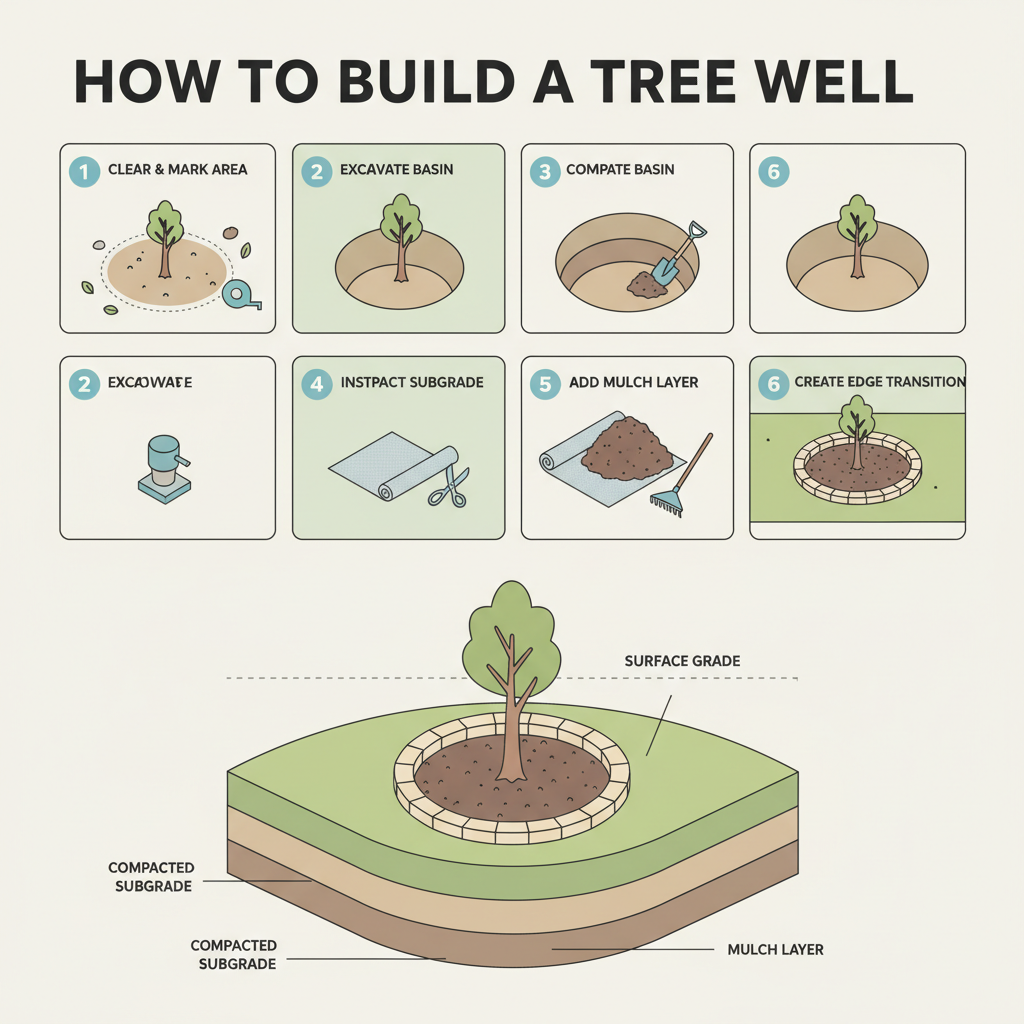
This visual guide shows the complete installation sequence for building a tree well, from initial site preparation to final edging. The numbered steps and layered cross-section clarify both the workflow and the proper material arrangement needed to protect your tree's roots while creating an attractive landscape feature.
This diagram couldn't load.
Watch the video guide insteadTree Well Installation: Best Materials, Depth & How to Build Healthy Tree Rings
A tree well is a 3–4 inch ring of 2–4 inch shredded hardwood mulch laid over landscape fabric, extending about 2 feet out from the trunk. For a 4-foot diameter well, plan on 2–3 cubic yards of mulch. The mulch holds moisture, blocks weeds, and keeps lawn mowers and trimmers away from the trunk — the most common cause of slow tree decline in landscaped yards.
How This Tree Well Is Built (Layer-by-Layer System)
A tree well is a protective ring around a tree's base designed to prevent soil compaction and promote healthy root growth. The system starts with a compacted subgrade, followed by a layer of landscape fabric that prevents weed growth while allowing water to penetrate. The well is then filled with a layer of mulch that helps retain moisture and regulate soil temperature, creating an ideal environment for the tree's root system. Proper installation ensures the tree receives adequate water while preventing damage from mowers and foot traffic.
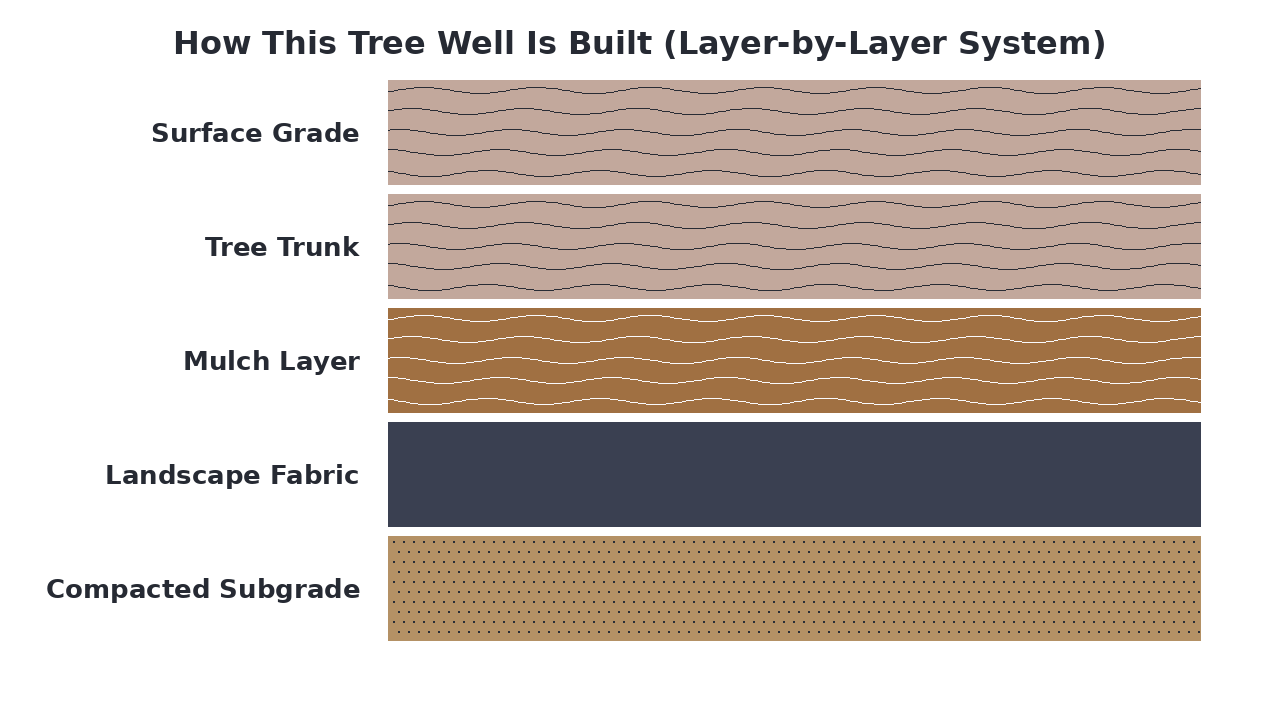
Materials Breakdown: What Each Layer Does
A tree well is constructed as a layered system that protects tree roots while managing water and weeds. Each material serves a specific purpose, from creating a stable base to providing decorative finishing. The layers work together to prevent soil compaction, suppress weed growth, and allow proper water drainage around the tree's root zone.
Compacted Soil
The firm, leveled base layer that provides stability and prevents settling of the tree well structure.
Landscape Fabric
A weed barrier that prevents unwanted growth while allowing water to penetrate to the tree roots.
Organic Mulch
The decorative surface layer that retains moisture, regulates soil temperature, and gives a finished appearance.
Tree Trunk
The central tree structure that the well is designed to protect and provide proper growing conditions for.
Finished Grade
The carefully sloped surface that directs water away from the tree trunk to prevent rot and disease.
What Is a Tree Well and Why Does It Matter?
A tree well is a 3–4 inch ring of 2–4 inch shredded hardwood mulch around a tree, on top of landscape fabric, going out about 2 feet from the trunk in every direction. For a 4-foot diameter well, plan on 2–3 cubic yards of mulch. The mulch holds moisture and blocks weeds, but the most important thing it does is keep lawn mowers and trimmers away from the trunk — the most common cause of slow tree decline in landscaped yards.
Common Types of Tree Well Systems
Tree wells typically vary based on the material used to fill the ring around the tree. The most common options include organic mulch, inorganic gravel, and decorative stone. Each material offers different benefits in terms of moisture retention, weed suppression, durability, and aesthetics. Choosing the right one depends on your tree's needs, your maintenance preferences, and the overall look you want.
- Improves soil fertility
- Excellent moisture retention
- Natural, decomposing appearance
- Needs annual replenishment
Best for: Trees needing nutrient-rich soil
- Excellent drainage
- Low maintenance
- Clean, uniform look
- Doesn't decompose
- Allows water penetration
Best for: Well-draining, low-maintenance tree wells
- Highly decorative
- Very durable
- Good drainage
- Heavier to install
Best for: Decorative, permanent installations
- Combines benefits of both
- Mulch layer on top
- Gravel base for drainage
- More complex installation
Best for: Balancing aesthetics and function
When a Tree Well Is the Best Solution
A pea gravel tree well is ideal when you need excellent drainage around the tree's roots, especially in areas with heavy rainfall or clay soil. It's perfect for homeowners who want a low-maintenance solution that won't decompose or need annual replenishment. Choose this option for a clean, uniform appearance that complements modern landscaping while providing long-lasting protection for your tree.
Everything You Need to Build a Tree Well
Building a tree well requires a few essential materials to create a stable, layered foundation and a decorative surface. You'll need a compactable base material, landscape fabric for weed suppression, and a top layer of mulch or gravel for aesthetics and moisture retention. The right tools will help you excavate, level, and install the layers efficiently.
- Compacted subgrade material (e.g., road base or #57 stone), Landscape fabric, Mulch or pea gravel
- Shovel, Rake, Compactor or hand tamper, Utility knife, Measuring tape
- A contractor supply store, Hello Gravel (materials), Local Equipment rental (compactor)
What to Consider Before You Start
Before digging in, consider these key factors to ensure your tree well protects the tree and functions properly.
- Tree root inspection
Identify and avoid damaging major surface roots when determining the well's diameter and depth.
- Drainage assessment
Check the site's slope and soil type to ensure water will drain away from the tree trunk, preventing rot.
- Well size and shape
Decide on the diameter (typically 3-5 feet from the trunk) and depth (2-4 inches) based on tree size and aesthetics.
- Material selection
Choose between mulch for moisture retention or gravel for drainage, considering your tree's needs and local climate.
- Edging consideration
Determine if you need edging to keep the surface material contained and maintain a clean border.
How to Prepare the Ground for a Tree Well
Begin by clearing the area around the tree of all grass, weeds, and debris. Mark the desired diameter of the tree well using spray paint or stakes, typically 3-6 feet from the trunk. Excavate the marked area to a depth of 4-6 inches, creating a shallow basin with a gentle slope away from the tree. Finally, compact the exposed subgrade to create a stable, level base for the layered materials.
How a Tree Well Works
The tree well functions as a protective layered system that prevents soil compaction around critical root zones. The compacted subgrade provides structural stability, while landscape fabric suppresses weed growth while allowing water drainage. The mulch layer retains moisture, regulates soil temperature, and slowly decomposes to add organic matter. This system directs water away from the trunk while allowing proper aeration to the tree's roots.
How to Install a Tree Well
Clear & Mark Area
Remove all vegetation and debris from around the tree, then mark the desired well diameter with spray paint or stakes.
Excavate Basin
Dig out the marked area to a depth of 4-6 inches, creating a shallow basin that slopes gently away from the tree trunk.
Compact Subgrade
Use a hand tamper or plate compactor to firmly compact the exposed soil to create a stable, level foundation.
Install Landscape Fabric
Lay landscape fabric over the compacted subgrade, cutting a hole for the tree trunk and overlapping seams by 6 inches.
Add Mulch Layer
Spread 3-4 inches of mulch evenly across the fabric, keeping it several inches away from the tree trunk to prevent rot.
Create Edge Transition
Blend the mulch edge with the surrounding surface grade to create a smooth transition and prevent erosion.
Alternative Gravel Options for Tree Wells
Tree wells benefit from materials that balance drainage, root protection, and aesthetic appeal. While decorative options like pea gravel and river rock are popular for topping layers, functional aggregates like crushed granite or limestone screenings often provide better stability and moisture regulation. For the primary base layer, a compactable, well-draining material like crushed granite is typically the best choice as it supports root health while preventing soil compaction and erosion.
Ideal for the base layer due to its excellent compaction and drainage properties.
View Product →A good decorative topping that allows water infiltration but can shift easily.
View Product →Provides a durable, attractive surface but offers minimal compaction support.
View Product →Poor choice as it compacts easily and impedes drainage around tree roots.
View Product →Common Tree Well Mistakes (And How to Avoid Them)
Creating a tree well involves several key steps, and overlooking them can harm the tree or reduce the well's effectiveness. Here are the most frequent errors homeowners make and how to prevent them.
- Piling mulch against trunk
- Insufficient drainage layer
- Using compactable fill
- Overfilling the well
- Neglecting weed barrier
How to Maintain a Tree Well
Regularly inspect the tree well for signs of erosion, compaction, or weed growth. Replenish the top layer of decorative gravel or mulch annually to maintain appearance and function. Ensure the well's edges remain clear of soil and debris to prevent water from pooling around the trunk.
Calculate How Much Gravel You Need
Enter Your Dimensions
Measure your project area and we'll calculate how much material you need.