Sump Pump Pit Drain Rock: Gravel Volume & Sizing Guide
A reliable sump pump installation depends on proper material selection and strategic layout. This guide explains what a sump pump is, how it works, which materials you need, how to plan and install the system step by step, and how to estimate the amount of gravel required. Whether you are addressing basement flooding for the first time or replacing an old pump, use the sections below to find what you need.
See How to Build a Sump Pump
This visual guide walks you through the complete sump pump installation sequence, showing each numbered step from excavation to testing. The layered cross-section diagram clarifies how the gravel base, liner, and discharge pipe components fit together within the soil profile. Seeing the step-by-step process helps ensure proper drainage and stable installation for effective water management.
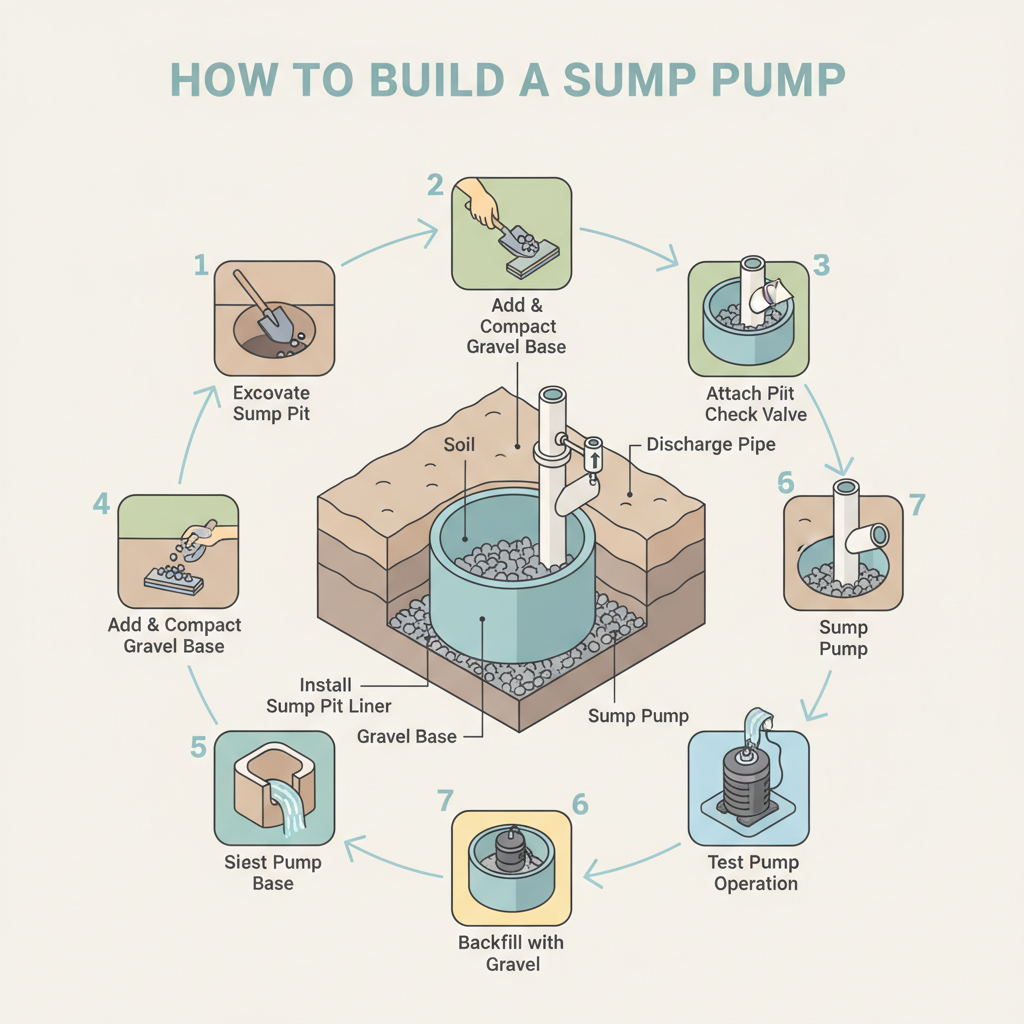
This diagram couldn't load.
Watch the video guide insteadGravel for Sump Pumps: Best Drainage Rock, Depth & Installation Guide
A properly installed sump pump prevents basement flooding by collecting and removing groundwater. Use 3/4 inch clean drainage rock as your base material for optimal water flow and stability. Install 6-8 inches of gravel to create a solid foundation for the sump pit liner and ensure efficient drainage. This setup protects your home's foundation while preventing pump clogging from fine particles.
How This Sump Pump Is Built (Layer-by-Layer System)
A sump pump system is designed to collect and remove water from a basement or crawl space to prevent flooding. Water enters through a perforated basin liner, flows into the sump pit, and is then pumped out through a discharge pipe when the water level rises. The system relies on proper installation with a gravel base to stabilize the basin and promote drainage, and a check valve to prevent backflow. Regular maintenance ensures the pump activates reliably when needed to protect your home from water damage.
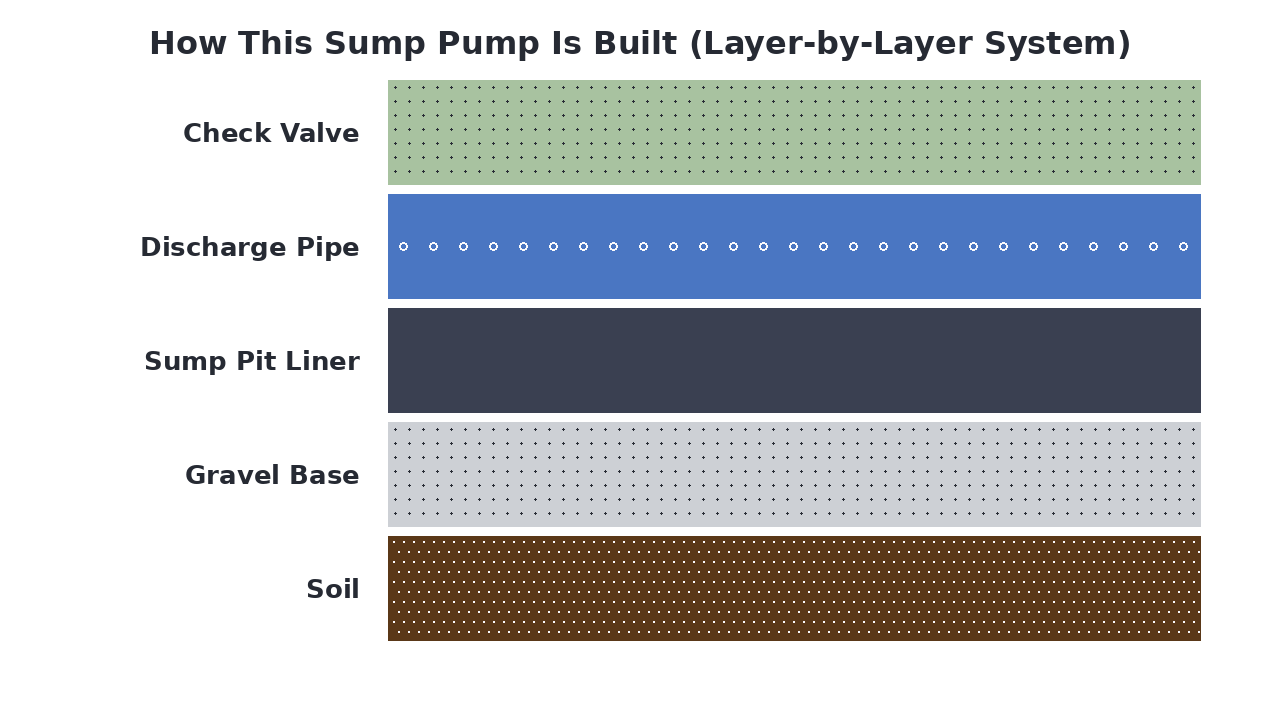
Materials Breakdown: What Each Layer Does
A sump pump system relies on a layered installation to manage groundwater and prevent basement flooding. Each component serves a distinct purpose, from collecting water in the pit to discharging it away from the foundation. The materials are chosen to ensure reliable water capture, pump protection, and efficient removal of excess moisture.
Native Soil
The surrounding earth that holds groundwater; the system is installed into this soil to intercept and redirect water before it enters the basement.
Crushed Stone
A layer of clean, angular stone that provides a stable, free-draining foundation for the sump pit and allows water to percolate down to the pit liner.
View Crushed Stone →Plastic Sump Liner
A rigid basin that houses the pump, collects incoming water, and prevents soil collapse into the pit, keeping the pump clear of debris.
PVC Discharge Pipe
A solid pipe that carries pumped water from the sump pit to a safe discharge location away from the foundation, preventing recirculation.
Check Valve
A one-way valve installed on the discharge pipe that prevents pumped water from flowing back into the sump pit, reducing pump cycling and wear.
What Is a Sump Pump and Why Does It Matter?
A sump pump is a drainage system that collects and removes water from basements and crawl spaces to prevent flooding and moisture damage. It matters because it protects your home's foundation, prevents mold growth, and preserves structural integrity. Unlike surface drainage solutions, a sump pump addresses groundwater infiltration directly at the lowest point of your home, making it essential for properties in flood-prone areas or with high water tables.
Common Types of Sump Pump Systems
Sump pump systems come in several common types, each suited to different water removal needs. Submersible pumps operate underwater in the sump pit and are typically more powerful and quieter than pedestal pumps. Pedestal pumps have the motor mounted above the pit, making them easier to service but louder during operation. Battery backup systems provide emergency protection during power outages, while combination systems offer both primary and backup protection in one unit.
- Open-graded drainage rock around the pump pit
- Allows fast water entry into the pit
- Standard residential approach
Best for: Most residential basement sumps
- Plastic or concrete liner sits on a leveled stone bedding
- Cleaner sediment management; easier service
- More material; longer install
Best for: Finished basements where serviceability matters
- Crushed stone with geotextile to keep fines out of the pump
- Best in soils with significant silt or clay
- Filter fabric sourced separately
Best for: Sites with silty or clayey backfill
When a Sump Pump Is the Best Solution
A drainage rock base for your sump pump is essential when installing a new system or replacing an old one. This gravel foundation ensures proper water flow into the pit and prevents soil or debris from clogging the pump. It's particularly important in areas with heavy clay soil that doesn't drain well naturally. The stable base also protects your investment by preventing pump damage from shifting ground.
Everything You Need to Build a Sump Pump
Installing a sump pump requires specific materials to create a stable drainage layer and protect the pump from debris. You'll need gravel for the base, a sump pit liner to house the pump, and piping to discharge water away from your foundation. Essential tools include digging equipment, a level for proper installation, and basic plumbing supplies to connect the system.
- Drainage gravel, Pea gravel, Sump pit liner, Discharge pipe, Check valve
- Shovel, Level, Pipe cutter, Hacksaw, Plumber's tape, Utility knife
- Hello Gravel (materials), A contractor supply store, Local equipment rental (for jackhammer if needed)
What to Consider Before You Start
Proper planning ensures your sump pump system functions effectively and prevents future issues. Consider these key factors before beginning installation.
- Local building codes
Check municipal regulations regarding sump pump installation, discharge locations, and required permits.
- Basement floor composition
Determine if your basement floor is concrete or dirt to plan the excavation method and materials needed.
- Discharge location planning
Identify where water will be discharged, ensuring it's at least 10 feet from your foundation and complies with local regulations.
- Power source accessibility
Verify you have a dedicated GFCI outlet near the installation site for safe pump operation.
- Water table assessment
Observe basement moisture patterns to determine the optimal pit location and pump capacity requirements.
How to Prepare the Ground for a Sump Pump
Start by clearing the area of any debris, vegetation, or obstructions where the sump pit will be located. Mark the exact pit location and dimensions according to your liner size, ensuring it's positioned at the lowest point where water naturally collects. Grade the surrounding soil to slope gently toward the pit to direct groundwater flow efficiently. Finally, compact the soil at the base of the excavation to create a stable, level foundation that prevents settling.
How a Sump Pump Works
The sump pump system collects groundwater through the porous gravel base, which surrounds the pit liner and filters out sediment. When water rises in the pit, a float switch activates the pump, which then forces water up through the discharge pipe. The check valve prevents backflow, ensuring water is expelled away from the foundation. This layered structure manages hydrostatic pressure and protects the basement from flooding by efficiently removing excess moisture.
How to Install a Sump Pump
Excavate Sump Pit
⚠️ Licensed-trade notice: This project is code-regulated in most jurisdictions and typically requires a licensed contractor and local permits. The steps below are provided to help plan your aggregate order, not as a substitute for professional design, permits, or inspections. Dig a hole deep enough to accommodate the sump pit liner, plus additional depth for the gravel base.
Add & Compact Gravel Base
Pour a layer of drainage rock or pea gravel into the pit and compact it to create a stable, level foundation.
Place Sump Pit Liner
Set the sump pit liner into the excavated hole, ensuring it sits level on the compacted gravel base.
Install Discharge Pipe
Connect the discharge pipe to the pump outlet and route it away from the foundation to a suitable drainage area.
Attach Check Valve
Install a check valve on the discharge pipe to prevent water from flowing back into the sump pit after pumping.
Backfill with Gravel
Fill the space around the liner with crushed stone or pea gravel to improve drainage and stabilize the installation.
Test Pump Operation
Pour water into the sump pit to verify the float switch activates the pump and water discharges properly.
Alternative Gravel Options for Sump Pumps
Selecting the right aggregate for your sump pump drainage layer is crucial for water capture and system longevity. While decorative options like pea gravel may seem appealing, they can shift and clog, compromising drainage efficiency. For most installations, crushed stone provides the ideal balance of stability, permeability, and cost-effectiveness, making it the recommended choice.
The recommended choice for stable, permeable drainage around sump pumps.
View Product →Specifically designed for high-flow water management in drainage applications.
Large, rounded stones that are poor for drainage due to excessive void space.
View Product →Common Sump Pump Mistakes (And How to Avoid Them)
Proper sump pump installation requires attention to detail to ensure reliable performance. Many failures stem from preventable errors in material selection and system layout. Avoiding these common mistakes will help protect your basement from flooding.
- Wrong aggregate size
- Insufficient drainage slope
- Clogged discharge line
- Improper pit placement
- Missing check valve
How to Maintain a Sump Pump
Regular sump pump maintenance ensures optimal performance and prevents basement flooding. Inspect the pump quarterly by pouring water into the pit to verify automatic activation, and clear any debris from the pit and discharge line. Annually, check the check valve for proper operation and ensure the discharge pipe extends at least 10 feet from your foundation to prevent water recirculation.
Calculate How Much Gravel You Need
Enter Your Dimensions
Measure your project area and we'll calculate how much material you need.