Septic Drain Field Aggregate: Stone Size & Volume per Run
A properly planned septic drain field is essential for reliable wastewater treatment and long-term system health. This guide explains what a septic drain field is, which materials you need, how to design the layout, how to install it step by step, and how to estimate the amount of gravel required. Whether you are replacing an existing field or designing a new installation, use the sections below to navigate through the process.
See How to Build a Septic Drain Field
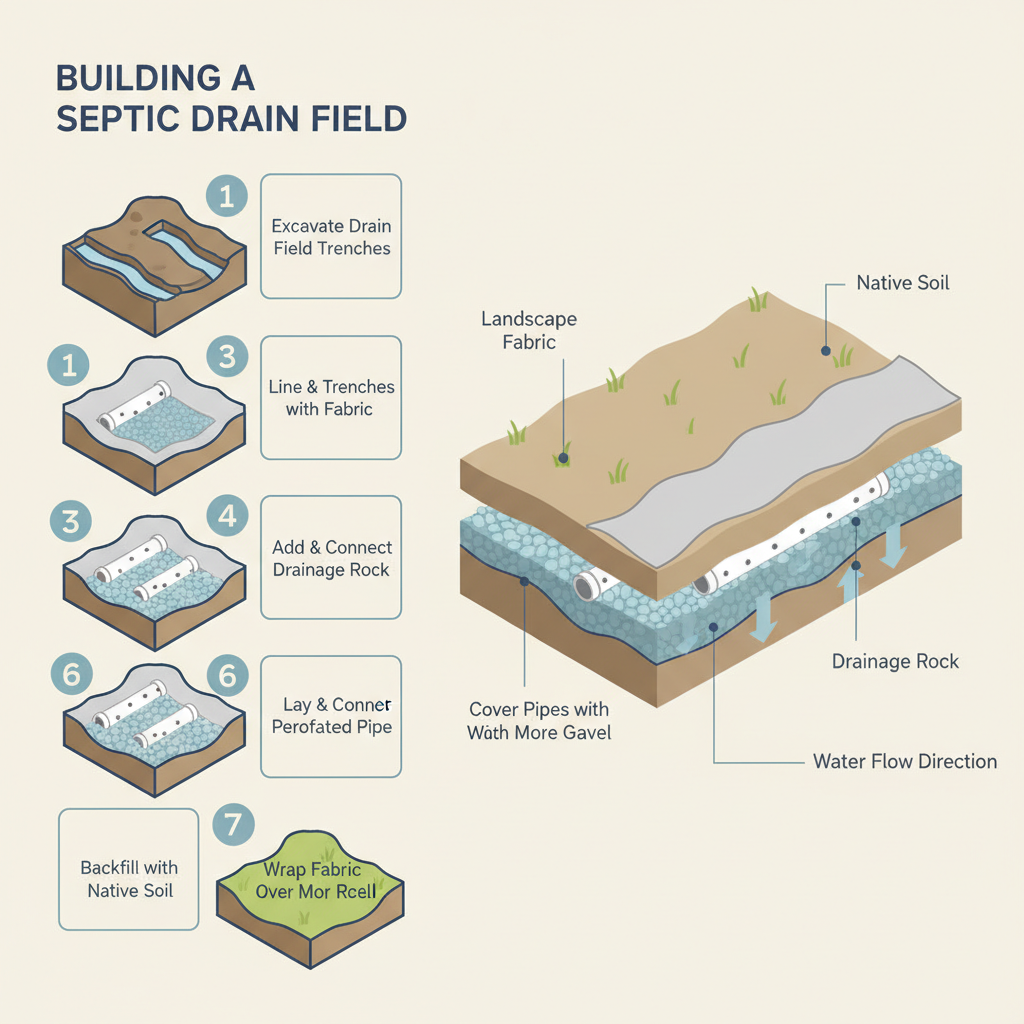
This visual guide shows the step-by-step installation sequence and layered structure of a septic drain field, helping you understand how each component—from excavation to final backfill—works together to ensure proper drainage and system longevity.
This diagram couldn't load.
Watch the video guide insteadGravel for Septic Drain Fields: Best Drainage Rock, Pipe Installation & Slope Guide
A septic drain field uses perforated pipe laid in gravel-filled trenches to safely distribute treated wastewater into the soil. We recommend 1-2 inch clean drainage rock at 6-12 inches depth around the pipe for optimal void space and filtration. Proper slope of the trench is essential to maintain consistent flow and prevent backups. This system ensures even effluent distribution while preventing pipe clogging and soil contamination.
How This Septic Drain Field Works (Water Flow System)
A septic drain field is a water flow system designed to safely distribute treated wastewater from a septic tank into the soil. The system includes a perforated pipe laid in a gravel-filled trench, which allows effluent to seep out and filter through the surrounding soil. The gravel layer provides a free-draining medium that prevents pipe clogging and ensures even distribution of the wastewater. Proper slope of the pipe and trench is essential to maintain consistent flow and prevent backups in the septic system.
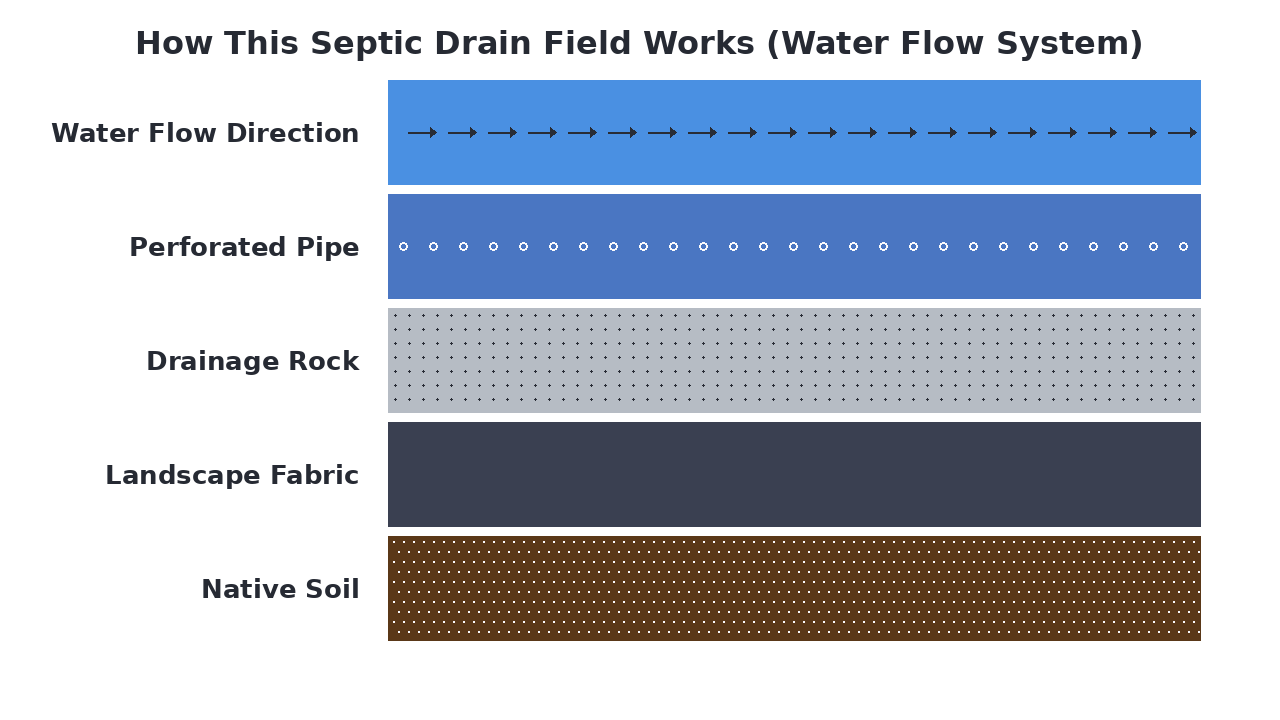
Materials Breakdown: What Each Layer Does
A septic drain field is constructed as a layered system where each material serves a specific function in wastewater treatment and dispersal. The components work together to filter effluent from the septic tank, distribute it evenly through the soil, and prevent system failure from clogging or saturation. Proper material selection for each layer ensures effective wastewater treatment and long-term system performance.
Native Soil
The existing ground where the drain field is installed; provides the final filtration and absorption layer for treated wastewater.
Landscape Fabric
Geotextile fabric that prevents soil particles from migrating up into the drainage rock and clogging the system.
Drainage Rock
Clean, washed stone that creates voids for effluent distribution and provides structural support for the perforated pipe.
Perforated Pipe
Slotted pipe that receives effluent from the septic tank and distributes it evenly throughout the drain field.
Distribution Flow
The engineered slope and layout that ensures effluent spreads evenly through the drain field rather than pooling in one area.
What Is a Septic Drain Field and Why Does It Matter?
A septic drain field is a critical component of a septic system that safely distributes treated wastewater from the septic tank into the surrounding soil for final filtration. It matters because it prevents groundwater contamination, protects public health, and extends the lifespan of your septic system. Unlike simple drainage systems, a septic drain field specifically handles treated sewage effluent and requires precise engineering of gravel layers, pipe placement, and soil absorption to function properly.
Common Types of Septic Drain Field Systems
Septic drain fields come in several common configurations, each designed to distribute treated wastewater effectively. Traditional gravel trenches use a network of perforated pipes surrounded by gravel to disperse effluent into the soil. Chamber systems use plastic chambers instead of gravel to create void spaces for effluent distribution. Mound systems are elevated drain fields used when soil conditions are poor or the water table is high.
- Uses perforated distribution pipes
- Surrounded by clean gravel
- Allows soil absorption and filtration
- Proven long-term reliability
- Requires proper gravel sizing
Best for: Most residential septic systems
- Uses plastic arch chambers
- No gravel required
- Easier and faster installation
- Less excavation needed
- Higher material cost
Best for: Areas with limited gravel access
- Elevated above ground level
- For poor soil conditions
- Higher installation complexity
- Requires engineered design
- Suitable for high water tables
Best for: Poor drainage or shallow bedrock
When a Septic Drain Field Is the Best Solution
A traditional gravel trench drain field is the best solution when you need a reliable, cost-effective system that provides excellent soil filtration. It's ideal for most residential properties with suitable soil conditions and proper percolation rates. This system works well for homeowners who want a proven design that uses readily available materials like drainage rock and gravel to ensure proper wastewater treatment.
Everything You Need to Build a Septic Drain Field
Constructing a septic drain field requires specific materials layered to filter and disperse wastewater. You'll need foundational materials like sand and gravel for drainage, along with landscape fabric to prevent soil intrusion. Essential tools include excavation equipment and a compactor to properly prepare the site and install the system.
- Native soil (excavated), Sand, Drainage rock (pea gravel or crushed stone), Landscape fabric, Perforated pipe
- Excavator or backhoe, Shovel and rake, Laser level or string line, Compactor or hand tamper, Pipe cutter or saw
- Hello Gravel (materials), Equipment rental store (excavator, compactor), Local septic supply company (perforated pipe, landscape fabric)
What to Consider Before You Start
Before breaking ground, careful planning is essential for a functional and compliant septic drain field. Consider these key factors to ensure your project's success.
- Permits and regulations
Check with your local health department for required permits and specific codes governing drain field size, location, and materials.
- Soil percolation test
Have a professional conduct a soil perc test to determine the absorption rate and required size of your drain field.
- System layout and sizing
Decide on the trench or bed layout, number of lines, and total square footage based on your household size and soil test results.
- Utility line location
Call 811 to have all underground utilities marked to avoid damaging water, gas, or electrical lines during excavation.
- Effluent distribution method
Choose between gravity distribution or a pump system based on the slope and elevation difference between your septic tank and drain field.
How to Prepare the Ground for a Septic Drain Field
Start by clearing the entire designated area of all vegetation, roots, rocks, and debris to create a clean work surface. Precisely mark the perimeter and trench locations for the drain field according to your approved system design and local codes. Grade the site to establish the precise slope required for gravity-driven water flow, typically between 2% and 4%. Finally, compact the exposed native soil at the bottom of the excavation to create a stable, level base that prevents future settling.
How a Septic Drain Field Works
Partially treated effluent from the septic tank flows into the perforated pipes, which distribute it evenly along the length of the drain field trenches. The wastewater then trickles out of the pipe holes, passing through a layer of drainage rock that provides initial filtration and creates an air gap for oxygen exchange. Finally, the effluent percolates down through the native soil, where natural microbial activity completes the treatment process, purifying the water before it rejoins the groundwater.
How to Install a Septic Drain Field
Excavate Drain Field Trenches
⚠️ Licensed-trade notice: This project is code-regulated in most jurisdictions and typically requires a licensed contractor and local permits. The steps below are provided to help plan your aggregate order, not as a substitute for professional design, permits, or inspections. Dig the trenches to the specified depth, width, and length according to your system design, ensuring the correct slope for gravity flow.
Line Trenches with Fabric
Place a layer of non-woven geotextile landscape fabric along the bottom and up the sides of each trench to separate soil from gravel.
Add & Level Drainage Rock
Pour a several-inch deep bed of clean drainage rock into the fabric-lined trenches and level it to create the pipe bed.
Lay & Connect Perforated Pipe
Place the perforated distribution pipes on the leveled rock bed, connect them to the septic tank outlet, and ensure holes face downward.
Cover Pipes with More Rock
Completely cover the pipes with additional drainage rock until they are buried by the specified depth, typically 2-3 inches above the pipe.
Wrap Fabric Over Gravel
Fold the excess landscape fabric over the top of the gravel layer to create a protective barrier that prevents soil infiltration.
Backfill with Native Soil
Carefully backfill the trench with the excavated native soil, mounding it slightly to account for settling as it compacts over time.
Alternative Gravel Options for Septic Drain Fields
For septic drain fields, homeowners have several aggregate options, each with different filtration and drainage characteristics. Clean, uniformly sized crushed stone provides optimal void space for effluent dispersal while preventing soil intrusion. Pea gravel offers good drainage but can shift over time, while sand provides excellent filtration but may compact. The recommended choice is clean, washed drainage rock (typically 1-2 inch size) because it maintains consistent void spaces for proper effluent distribution without clogging the system.
Ideal for the primary drain field layer with optimal void space and drainage.
View Product →Excellent for filtration layers but can compact and reduce drainage capacity.
Works well for structural support but may have excessive fines for some systems.
View Product →Not suitable for drain fields due to smooth surfaces that promote clogging.
Common Septic Drain Field Mistakes (And How to Avoid Them)
Proper installation is crucial for septic drain field longevity, but several common errors can compromise the system. These mistakes often lead to premature failure, poor drainage, and environmental contamination. Avoiding these pitfalls ensures your drain field functions effectively for decades.
- Wrong aggregate size
- Insufficient gravel depth
- Poor soil preparation
- Compacting drain field
- Inadequate distribution
- No protective fabric
How to Maintain a Septic Drain Field
Regular maintenance of your septic drain field involves annual inspections to check for surfacing effluent or soggy areas. Avoid driving or parking heavy vehicles over the field, and divert roof drains and surface water away from the area. Periodically check for vegetation growth that could indicate system issues, and have the septic tank pumped every 3-5 years to prevent solids from reaching the drain field. Proper maintenance extends the system's lifespan and prevents costly repairs.
Calculate How Much Gravel You Need
Enter Your Dimensions
Measure your project area and we'll calculate how much material you need.