Pergola Footing Gravel: Crushed Stone Volume per Post
A well-built pergola creates lasting outdoor living space that depends on proper foundation and material choices. This guide explains what a pergola is, which materials you need, how to design and install it step by step, how to prepare the ground for stability, and how to estimate the amount of gravel required. Whether you are planning a DIY weekend project or hiring professionals for installation, use the sections below to navigate through the process.
See How to Build a Pergola
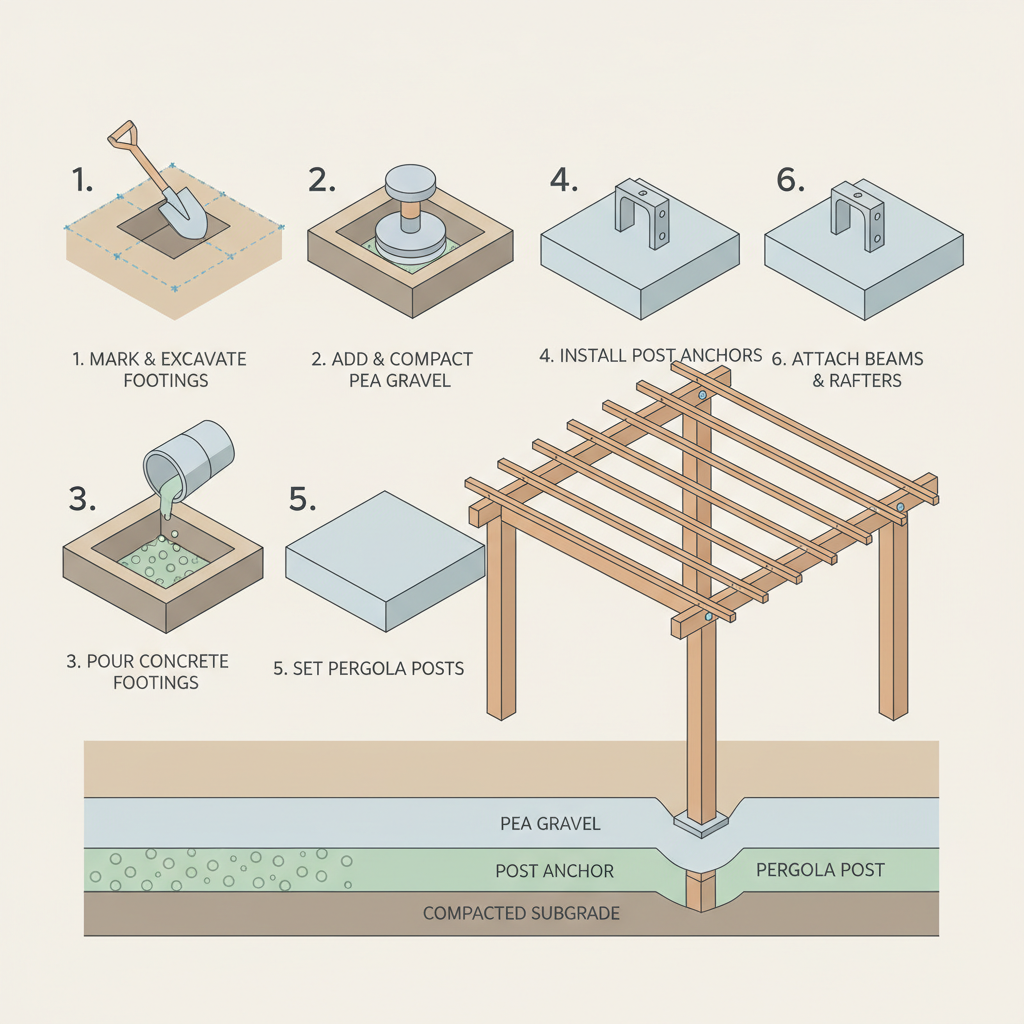
This visual guide illustrates the key installation sequence and layer structure for building a pergola, showing how to properly prepare footings, install posts, and assemble the frame. It clarifies the numbered steps from marking footings to attaching rafters, along with the layered cross-section from compacted subgrade up to the pergola post. This helps homeowners plan the project and understand the critical base layers that ensure stability and drainage.
This diagram couldn't load.
Watch the video guide insteadGravel for Pergolas: Best Materials, Depth, Cost & How to Build
Building a stable pergola requires a proper foundation that prevents settling and ensures drainage. We recommend using 3/8 inch pea gravel at a depth of 4-6 inches beneath concrete footings to create a durable base that resists water damage. This gravel layer provides essential drainage around the footings while distributing weight evenly to keep your pergola level and secure for years. Proper foundation preparation with the right gravel is crucial for preventing structural issues down the line.
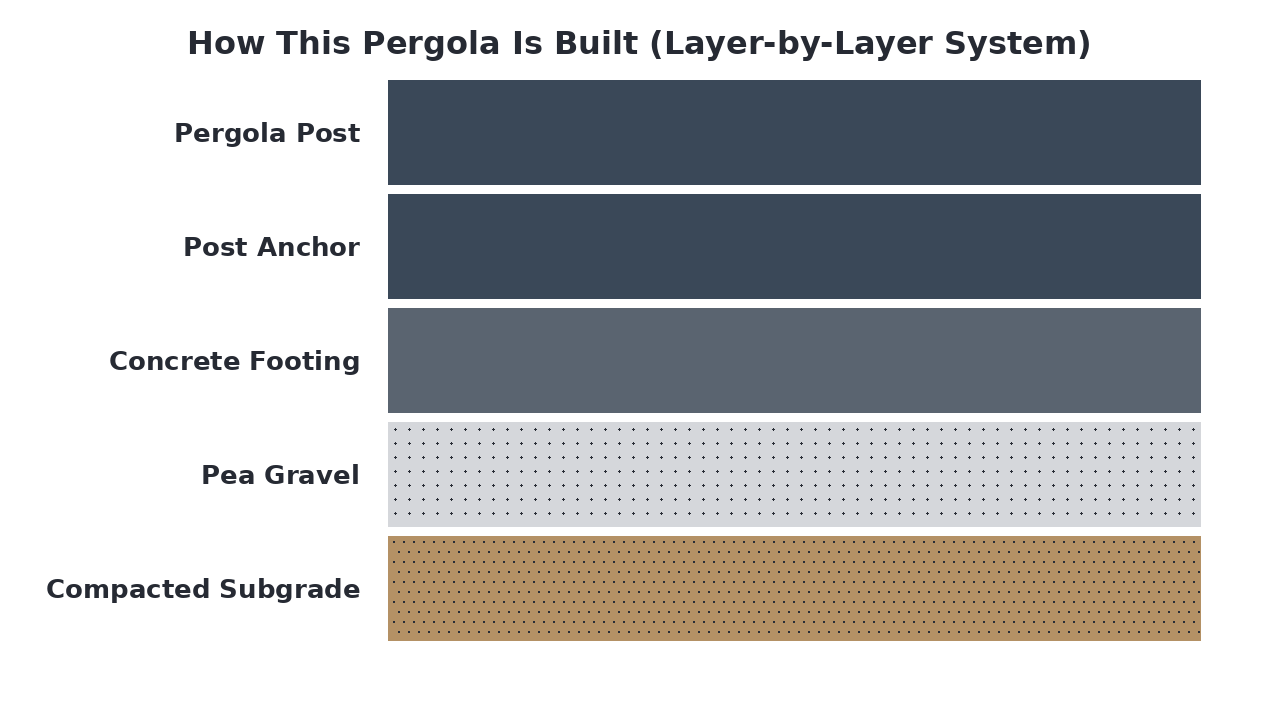
How This Pergola Is Built (Layer-by-Layer System)
A pergola is built as a stable structure anchored into a layered foundation system designed to support vertical posts and prevent settling. The system begins with a compacted subgrade, followed by a gravel layer that provides drainage and stability, and concrete footings that secure the posts. Proper drainage around the footings is ensured by the gravel layer, which prevents water from pooling and undermining the structure's integrity. The layered approach creates a durable base that keeps the pergola level and secure for years.
Materials Breakdown: What Each Layer Does
A sturdy pergola relies on a layered foundation system to ensure stability and longevity. Each material serves a distinct structural purpose, from bearing ground loads to anchoring the posts securely. Proper selection and installation of these layers work together to prevent shifting, settling, or rot over time.
Compacted Soil
The native soil that is firmly compacted to create a stable, load-bearing base that prevents the foundation from settling.
Pea Gravel
A layer of small, rounded gravel that provides drainage around the footing, preventing water from pooling and causing frost heave or wood rot.
View Pea Gravel →Concrete
A solid concrete pad or pier that distributes the weight of the pergola over a wider area and sits above the drainage layer.
View Concrete →Post Anchor Bracket
A metal bracket embedded in the concrete that securely holds the wooden post in place, keeping it elevated from moisture.
Pressure-Treated Wood Post
The main vertical support of the pergola, anchored into the bracket to provide a stable, long-lasting structure.
What Is a Pergola and Why Does It Matter?
A pergola is an outdoor structure consisting of vertical posts supporting an open lattice roof, designed to provide partial shade and define outdoor living spaces. It matters because it extends usable living area outdoors while adding architectural interest and increasing property value. Unlike solid-roof structures like gazebos, pergolas offer filtered sunlight and better air circulation, making them ideal for supporting climbing plants and creating comfortable outdoor environments that blend with landscaping.
Common Types of Pergola Systems
Pergola systems vary primarily in their materials and construction approach. Traditional wood pergolas offer a classic look and can be custom-built, while vinyl and aluminum options provide low maintenance and durability. Pre-fabricated kits allow for easier DIY installation, while custom-designed structures offer unique architectural integration.
- Natural, warm aesthetic
- Customizable design options
- Requires regular maintenance
- Can support climbing plants
Best for: Traditional gardens and custom designs
- Virtually maintenance-free
- Resists rot and insects
- Limited color options
- Less natural appearance
Best for: Low-maintenance outdoor spaces
- Extremely durable and lightweight
- Powder-coated finishes available
- Modern, clean appearance
- No rotting or warping
Best for: Contemporary designs and coastal areas
- Excellent drainage around posts
- Cost-effective foundation solution
- Easy to install and adjust
- Natural, permeable surface
Best for: DIY installations and budget-conscious projects
When a Pergola Is the Best Solution
A gravel-based pergola foundation is ideal when you need excellent drainage around posts and want to avoid water pooling issues. It's perfect for DIY enthusiasts looking for an affordable, adjustable foundation system that's easier to install than concrete. This approach works well in areas with good soil drainage and moderate load requirements, creating a natural look that blends with landscaping.
Everything You Need to Build a Pergola
Building a sturdy pergola requires a combination of foundational materials for stability and standard construction tools for assembly. You'll need concrete for footings, pea gravel for drainage, and pressure-treated lumber or other structural components for the pergola itself. Essential tools include digging and leveling equipment, as well as fasteners and a saw for cutting posts and beams.
- Pea gravel, Concrete mix, Pressure-treated lumber (posts & beams), Post anchors, Fasteners (screws, bolts)
- Post hole digger, Level, Shovel, Power drill, Circular saw
- Hello Gravel (materials), A contractor supply store (post anchors), Local equipment rental (power auger)
What to Consider Before You Start
Before breaking ground, consider these key factors to ensure a successful and long-lasting pergola installation.
- Local building codes and permits
Check with your local building department for required permits and any specific regulations for permanent structures.
- Utility line location
Call 811 or your local utility locating service to mark underground lines before digging any post holes.
- Post hole depth and spacing
Determine the necessary depth for frost protection and the spacing between posts based on your pergola's design and local frost line.
- Material selection and treatment
Decide on lumber type and any required treatments for weather resistance, matching your climate and desired lifespan.
- Site drainage and slope
Assess the installation area to ensure proper water runoff away from the pergola's foundation to prevent pooling and erosion.
How to Prepare the Ground for a Pergola
Start by clearing the installation area of all vegetation, debris, and any large rocks or roots. Mark the exact perimeter of the pergola footprint using stakes and string, ensuring it's square and level. Grade the ground within this perimeter to create a slight slope away from any structures for drainage, then thoroughly compact the soil to create a stable, load-bearing subgrade.
How a Pergola Works
A pergola's stability relies on a layered foundation that transfers structural loads safely into the ground. The compacted subgrade provides a solid base, while a pea gravel layer improves drainage around the concrete footings. These footings, set below the frost line, bear the weight and prevent heaving, with post anchors securing the wooden columns firmly above to complete the freestanding structure.
How to Install a Pergola
Mark & Excavate Footings
Dig holes for the concrete footings at each post location, ensuring they extend below the local frost line.
Add & Compact Pea Gravel
Pour a layer of pea gravel into the bottom of each footing hole and compact it to create a stable, draining base.
Pour Concrete Footings
Set reinforcing bars (rebar) in the holes and fill them with concrete to form the permanent structural footings.
Install Post Anchors
Embed metal post anchors into the wet concrete at the top of each footing, ensuring they are level and properly aligned.
Set Pergola Posts
Once the concrete has fully cured, secure the wooden pergola posts into the installed anchors.
Attach Beams & Rafters
Fasten the horizontal support beams to the posts, then install the overhead rafters to complete the pergola frame.
Alternative Gravel Options for Pergolas
When building a pergola foundation, several aggregate options can be used for the base and drainage layers beneath the posts. Crushed stone and gravel provide excellent load-bearing and drainage, while sand offers a leveling surface but lacks stability. For most pergolas, a compacted crushed stone base is the best choice because it creates a solid, long-lasting foundation that resists settling and supports the structure's weight.
Too unstable for structural support; best used only for minor leveling.
View Product →Suitable for creating a finished floor surface around the pergola.
Common Pergola Mistakes (And How to Avoid Them)
Even with a solid design, small oversights during pergola installation can lead to major problems like leaning, rotting, or collapse. Avoiding these common errors ensures your structure stays safe and attractive for years.
- Inadequate post depth
- Poor drainage planning
- Weak base compaction
- Using wrong gravel type
- Skipping gravel layer
How to Maintain a Pergola
Regularly inspect the gravel base around pergola posts for signs of erosion or settling, and add fresh gravel as needed to maintain proper drainage and support. Clear any debris or vegetation that could trap moisture against wooden posts, and re-level the ground if you notice any shifting or sinking. For gravel surfaces under the pergola, rake periodically to redistribute material and prevent low spots that collect water.
Calculate How Much Gravel You Need
Enter Your Dimensions
Measure your project area and we'll calculate how much material you need.