Patio Base Gravel: Crushed Stone Depth & Layers Guide
A well-built gravel patio provides a durable, low-maintenance outdoor living space that enhances your home's value and enjoyment. This guide explains what a patio is, which materials you need, how to design and prepare the base, how to install it step by step, and how to estimate the amount of gravel required. Whether you are creating a small backyard seating area or a large entertainment space, use the sections below to find the information you need.
See How to Build a Patio
This visual guide walks you through the key steps of building a patio, from excavation to final cleanup, clarifying the proper sequence for a stable, long-lasting result. It also illustrates the essential layered structure—from compacted subgrade to drainage-friendly pea gravel—so you understand how each component contributes to the finished surface.
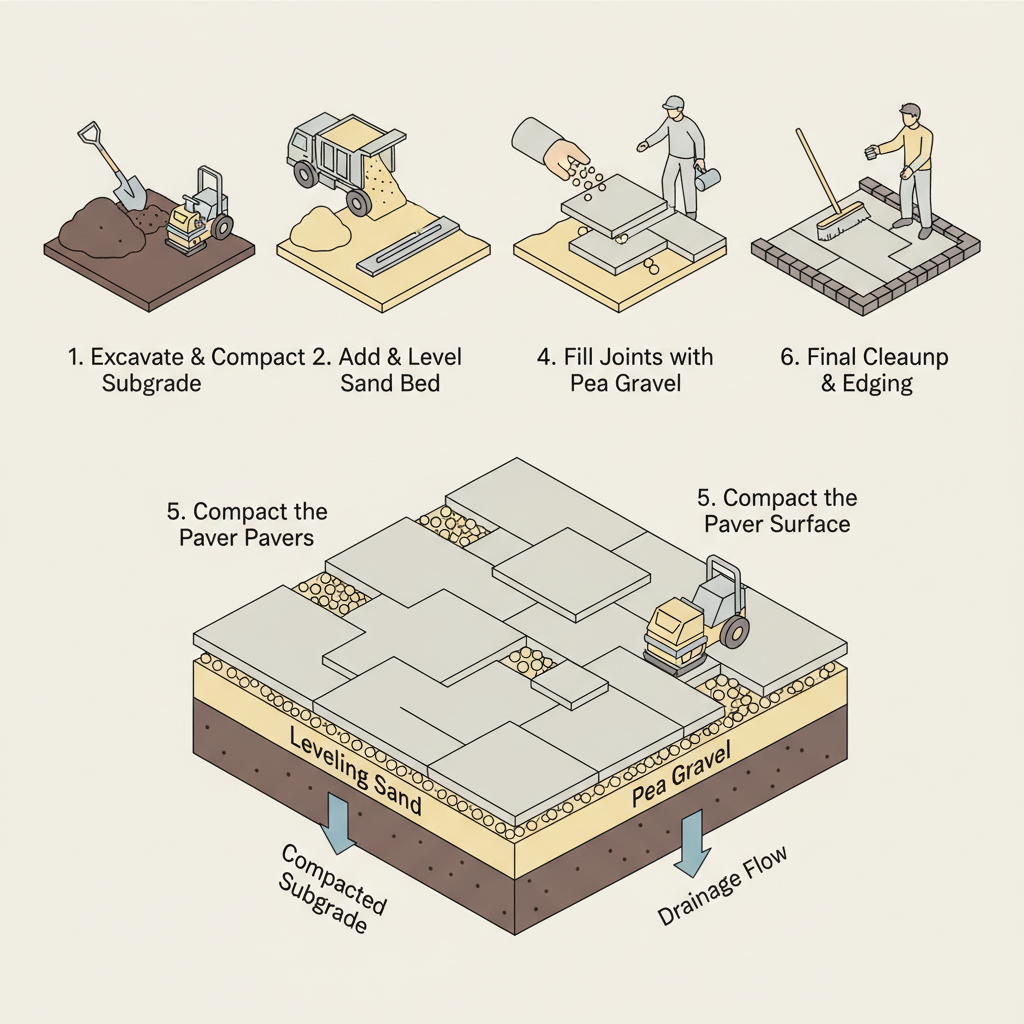
This diagram couldn't load.
Watch the video guide insteadGravel for Patios: Best Materials, Depth, Cost & How to Build
Building a gravel patio involves creating a stable, permeable outdoor living space using a layered system of compacted subgrade, leveling sand, and patio pavers. We recommend pea gravel (3/8-5/8 inch) as the top layer at 2-3 inches depth to fill paver joints while providing drainage. This system prevents water pooling and erosion while creating a durable, low-maintenance patio surface. The pea gravel's smooth texture also makes it comfortable for bare feet and patio furniture.
How This Patio Is Built (Layer-by-Layer System)
A gravel patio is built as a layered system that provides a stable, permeable surface for outdoor living. The system starts with a compacted subgrade, followed by a leveling sand layer that creates a smooth base for the pavers, and a top layer of pea gravel that fills the gaps between pavers for a decorative finish. Proper compaction of each layer ensures a level surface that won't settle, while the permeable nature of pea gravel allows water to drain through the joints, preventing pooling and erosion.
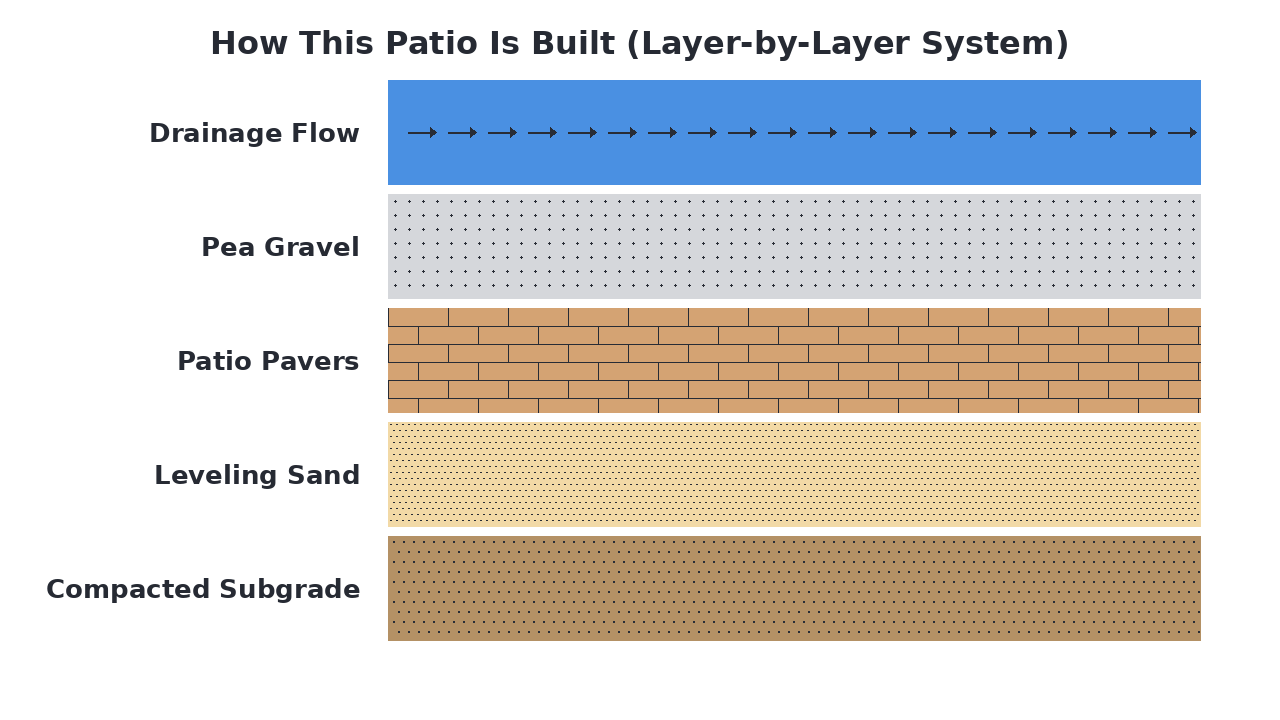
Materials Breakdown: What Each Layer Does
A patio is built as a layered system where each material has a specific job to create a stable, level, and long-lasting surface. The layers work together to provide a solid foundation that drains properly, supports the pavers without shifting, and adds a decorative finish. Choosing the right product for each layer ensures the patio can handle foot traffic and weather for years.
Compacted Soil
The native soil that is excavated and compacted to create a firm, stable base that prevents settling and supports the layers above.
Leveling Sand
A layer of coarse sand that is screeded to a perfectly flat surface, providing a smooth, level bed for the pavers to sit on.
Patio Pavers
Interlocking concrete or stone pavers that form the walking surface; they are durable, evenly spaced, and lock together for stability.
Pea Gravel
Small, rounded gravel used to fill the joints between pavers, allowing for drainage while preventing weed growth and adding a finished look.
View Pea Gravel →Drainage Slope
A slight slope built into the patio surface that directs rainwater away from the house and prevents pooling or water damage.
What Is a Patio and Why Does It Matter?
A patio is an outdoor living space designed for relaxation, dining, and entertainment that extends your home's usable area into the landscape. It matters because it creates functional outdoor rooms that increase property value while connecting indoor and outdoor living. Unlike solid concrete slabs, a gravel patio with pavers provides natural drainage, prevents standing water, and offers more design flexibility with various paver patterns and gravel colors. This permeable system also helps manage stormwater runoff more effectively than impervious surfaces.
Common Types of Patio Systems
Patio systems vary in materials and construction methods, each offering different benefits for homeowners. Gravel-based patios with pavers provide excellent drainage and design flexibility, while solid concrete slabs offer durability but poor water permeability. Decomposed granite creates a smooth, natural surface but requires more maintenance, and flagstone provides an elegant look with irregular patterns that can be set in gravel or sand.
- Excellent natural drainage
- Flexible paver patterns
- Easy DIY installation
- Permeable stormwater management
- Variety of gravel colors
Best for: Homeowners wanting drainage and design flexibility
- Very durable surface
- Low maintenance required
- Poor water permeability
- Limited design options
- Professional installation needed
Best for: High-traffic areas needing durability
- Smooth, natural appearance
- Firm walking surface
- Requires regular compaction
- Can erode over time
- Affordable material cost
Best for: Budget-conscious natural look
- Elegant, irregular patterns
- Natural stone aesthetics
- Good drainage with gravel
- Labor-intensive installation
- Higher material cost
Best for: Upscale outdoor entertaining spaces
When a Patio Is the Best Solution
A gravel patio with pavers is ideal when you need excellent drainage in areas with heavy rainfall or poor soil conditions. It's perfect for DIY enthusiasts who want design flexibility with various paver patterns and gravel colors while managing stormwater runoff naturally. This system works well for moderate-traffic outdoor living spaces where you want to prevent standing water and create a permeable surface that complements your landscape design.
Everything You Need to Build a Patio
A gravel patio requires several key materials to create a stable, well-draining foundation topped with a decorative surface. You'll need foundational materials like crushed stone and sand for the base layers, plus surface materials like pea gravel or pavers. Essential tools include digging equipment, leveling tools, and compaction devices to properly prepare the site and install the patio layers.
- Crushed stone or road base, Leveling sand, Patio pavers or flagstone, Pea gravel or decomposed granite
- Shovel, Rake, Hand tamper or plate compactor, Level, Rubber mallet, Wheelbarrow
- Hello Gravel (materials), Equipment rental store (compactor)
What to Consider Before You Start
Before digging your first shovel, consider these key planning factors to ensure your patio project goes smoothly and lasts for years.
- Site location and drainage
Check that your chosen patio area slopes away from your house foundation to ensure proper water drainage.
- Local regulations and permits
Verify if your municipality requires permits for patio construction or has restrictions on hardscaping.
- Material quantity calculations
Measure your patio area and calculate the required amounts of base materials, sand, and surface materials.
- Utility line locations
Call 811 to have underground utility lines marked before you begin any excavation work.
- Paver pattern and layout
Plan your paver arrangement and edge treatment to minimize cutting and ensure a professional look.
How to Prepare the Ground for a Patio
Start by clearing the area of all vegetation, roots, and debris, then mark the patio perimeter with stakes and string. Excavate the marked area to a consistent depth that accounts for all layers, ensuring the subgrade slopes slightly away from any structures for drainage. Finally, thoroughly compact the exposed soil to create a firm, stable base for the foundation layers.
How a Patio Works
The patio functions as a multi-layered system where the compacted subgrade provides foundational stability, preventing settling. A layer of leveling sand creates a smooth, adjustable bed for the pavers, ensuring a level surface. The pavers themselves distribute foot traffic loads evenly, while surrounding pea gravel allows for surface drainage and a decorative finish.
How to Install a Patio
Excavate & Compact Subgrade
Dig out the marked area to the required depth and compact the soil to create a solid, stable foundation.
Add & Level Sand Bed
Spread a layer of coarse sand over the compacted subgrade and screed it to a perfectly level surface.
Lay & Set Patio Pavers
Place the pavers onto the sand bed in your chosen pattern, setting them tightly together.
Fill Joints with Pea Gravel
Spread pea gravel over the pavers and sweep it into the joints to lock them in place and aid drainage.
Compact the Paver Surface
Use a plate compactor over the pavers to settle them firmly into the sand bed and ensure a level finish.
Final Cleanup & Edging
Sweep off excess gravel, install edge restraints if needed, and tidy the surrounding area.
Alternative Gravel Options for Patios
Homeowners building a patio have several aggregate options beyond traditional patio pavers, each with different characteristics in terms of stability, drainage, and aesthetics. Pea gravel offers a decorative look but shifts underfoot, while decomposed granite compacts well for a stable surface but requires proper edging. Crushed stone provides excellent drainage and stability for base layers, and sand is ideal for leveling pavers but shouldn't be used alone. For the primary structural layer, crushed stone typically wins due to its superior load-bearing capacity and drainage properties.
Provides excellent drainage and stability as a base layer for patios.
View Product →Compacts well to create a stable, permeable surface for informal patios.
View Product →Large flat stones that create beautiful patios but require significant preparation.
Common Patio Mistakes (And How to Avoid Them)
Even with quality materials, patio projects can fail due to preventable installation errors. These common mistakes compromise stability, drainage, and longevity from the start.
- Insufficient base depth
- Poor drainage planning
- No edge restraint
- Improper compaction
- Wrong aggregate choice
How to Maintain a Patio
Regular maintenance keeps your patio stable and attractive. Sweep debris regularly to prevent drainage issues and weed growth. Replenish joint sand between pavers annually to prevent shifting and weed intrusion. Inspect edges and base for erosion, adding gravel as needed to maintain proper drainage and level surface.
Calculate How Much Gravel You Need
Enter Your Dimensions
Measure your project area and we'll calculate how much material you need.