Leach Field Drain Rock: Aggregate Size & Volume per Lateral
A properly installed leach field is essential for the long-term performance of your septic system. This guide explains what a leach field is, which materials you need, how to design and lay out the field, how to install it step by step, and how to estimate the amount of gravel required. Whether you are replacing an existing leach field or installing a new one, use the sections below to find what you need.
See How to Build a Leach Field
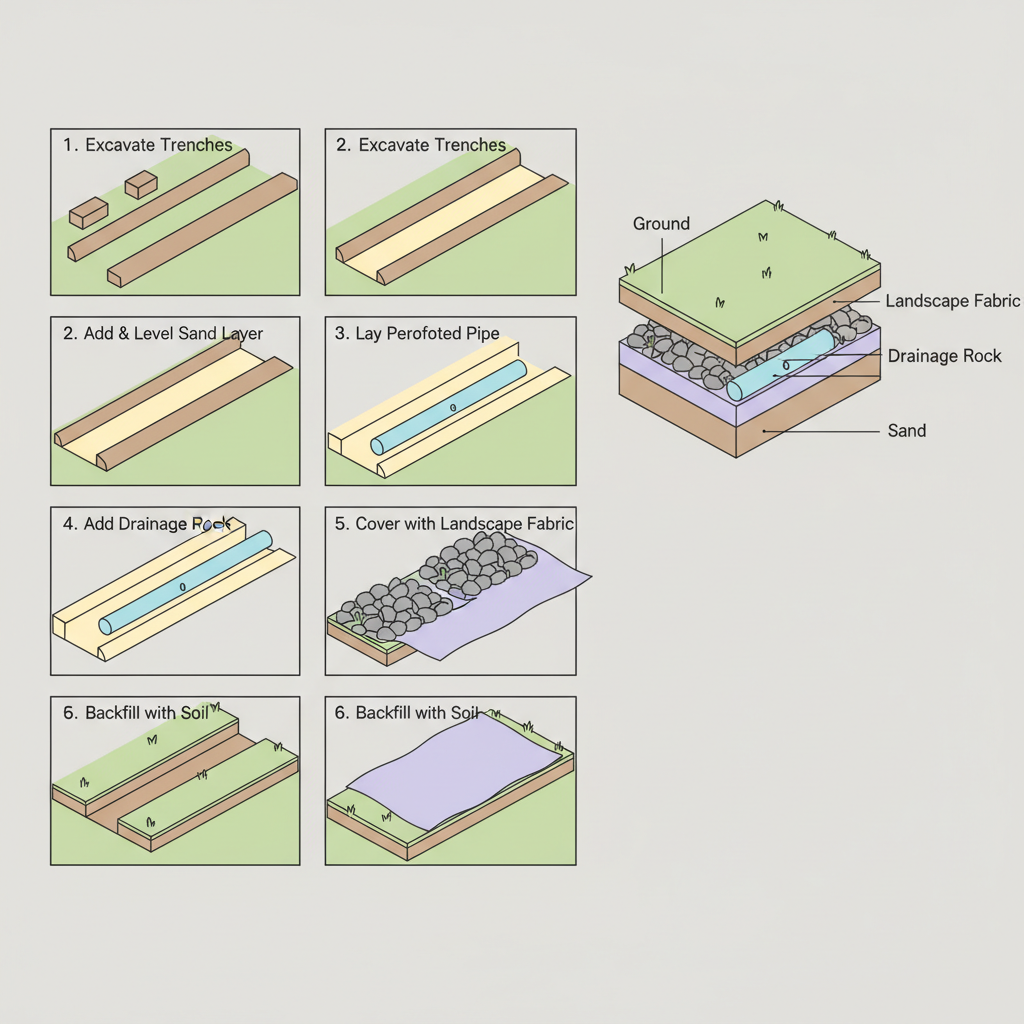
This visual guide clarifies the proper sequence for installing a leach field by showing each numbered construction step alongside the essential layer structure. Seeing the excavation, pipe placement, and backfilling process laid out visually helps homeowners understand how each component contributes to effective wastewater drainage and prevents common installation mistakes.
This diagram couldn't load.
Watch the video guide insteadGravel for Leach Fields: Best Drainage Rock, Depth, Installation & Cost Guide
A leach field is a critical component of septic systems that safely disperses treated wastewater into the soil. For optimal performance, we recommend using 1.5 to 2.5 inch drainage rock installed 12-18 inches deep around perforated pipes. This angular, crushed stone creates void spaces that allow proper effluent distribution while preventing soil migration and system clogging. Proper installation with landscape fabric separation ensures long-term functionality and environmental protection.
How This Leach Field Is Built (Layer-by-Layer System)
A leach field is a subsurface wastewater treatment system built as a layered structure that disperses effluent safely into the soil. The system begins with a prepared soil subgrade, followed by a distribution pipe set in a gravel-filled trench that allows effluent to flow and percolate. A layer of landscape fabric separates the gravel from the soil above, preventing clogging while enabling proper filtration. The entire assembly is designed with a slight slope to ensure even distribution and effective drainage of the treated water.
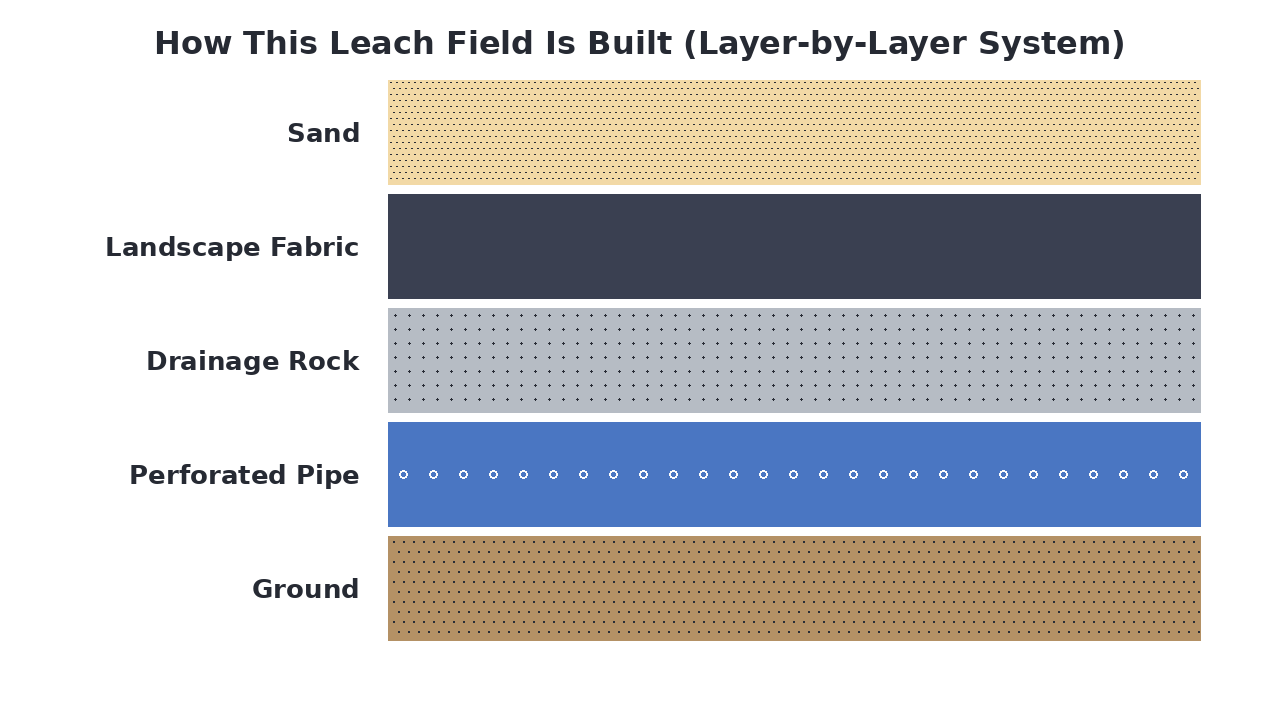
Materials Breakdown: What Each Layer Does
A leach field is constructed as a series of carefully selected layers, each performing a distinct function to filter and disperse wastewater. The materials are arranged to allow effluent to flow through the pipe, filter through the rock, and safely percolate into the soil without clogging or surfacing. Using the correct product for each layer ensures the system operates efficiently and protects groundwater quality.
Native Soil
The natural subgrade where the leach field is installed; it provides the final filtration and absorption of treated wastewater.
Perforated Pipe
Slotted piping that distributes effluent evenly along the length of the trench, allowing it to seep into the drainage rock.
Drainage Rock
Clean, crushed stone that creates voids for effluent to flow and provides a stable, free-draining medium around the pipe.
Landscape Fabric
A geotextile barrier placed over the rock to prevent soil from migrating down and clogging the drainage layer.
Sand
A layer of coarse sand that further filters effluent and helps distribute it evenly before it reaches the native soil.
View Sand →What Is a Leach Field and Why Does It Matter?
A leach field is a subsurface wastewater treatment system that disperses septic tank effluent safely into the soil through a layered structure of perforated pipes, drainage rock, and filtration fabric. It matters because it's essential for proper wastewater treatment, preventing groundwater contamination and protecting public health. Unlike simple drainage systems, leach fields are specifically engineered for biological treatment through soil percolation and filtration, making them a critical component of residential and commercial septic systems.
Common Types of Leach Field Systems
Leach field systems come in several common types, each designed for different soil conditions and site constraints. Traditional gravel-based systems use perforated pipes surrounded by drainage rock and sand for optimal filtration and distribution. Alternative systems like chamber or fabric-wrapped designs use plastic chambers or synthetic materials instead of gravel. The choice depends on soil percolation rates, available space, and local health department regulations.
- Uses drainage rock for filtration
- Proven long-term reliability
- Natural soil treatment process
- Cost-effective materials
- Standard septic design
Best for: Most residential septic systems
- Plastic chambers replace gravel
- Easier installation process
- Less excavation required
- Higher upfront cost
- Good for poor soils
Best for: Sites with limited space
- Synthetic fabric envelope
- Prevents soil intrusion
- Maintains flow capacity
- Specialized installation
- Higher material cost
Best for: Fine-grained soil conditions
- Pump-controlled distribution
- Even effluent dispersal
- Better for poor soils
- More complex design
- Higher maintenance needs
Best for: Steep or challenging sites
When a Leach Field Is the Best Solution
A traditional gravel leach field is the best solution when you need reliable, cost-effective wastewater treatment for a standard residential septic system. It's ideal for properties with suitable soil percolation rates and sufficient space for proper installation. Choose this system when you want proven long-term performance with natural filtration through drainage rock and soil. This approach works well for most single-family homes with conventional septic tank setups.
Everything You Need to Build a Leach Field
Constructing a leach field requires specific materials layered from the bottom up to ensure proper drainage and filtration. You'll need sand, drainage rock, landscape fabric, and perforated pipe as the core components. Essential tools include excavation equipment, a compactor for soil and gravel layers, and basic hand tools for pipe installation and fabric placement.
- Sand, Drainage rock, Landscape fabric, Perforated pipe
- Excavator or backhoe, Shovel, Rake, Compactor, Level
- Hello Gravel (materials), Local equipment rental (excavator, compactor), A contractor supply store (specialty tools)
What to Consider Before You Start
Before breaking ground, several critical factors must be addressed to ensure your leach field functions properly and complies with regulations.
- Permit and code compliance
Check with your local health department for required permits and specific regulations governing leach field size, depth, and setback distances from property lines and water sources.
- Soil percolation test
Conduct a soil percolation test to determine the absorption rate of your soil, which dictates the required size and design of your leach field.
- Utility line location
Contact your local utility locating service to mark all underground lines, pipes, and cables before any excavation begins to avoid costly and dangerous damage.
- System sizing and layout
Calculate the required leach field size based on household wastewater output and soil percolation results, then plan the trench layout and distribution box placement.
- Groundwater and slope assessment
Evaluate the groundwater table depth and natural slope of your property to ensure proper drainage and prevent system flooding or surfacing.
How to Prepare the Ground for a Leach Field
Before installing a leach field, the site must be cleared of all vegetation, roots, and debris to create a clean base. The area is then marked according to the system design and excavated to the required depth and slope. The bottom of the trench is carefully graded to ensure a consistent, gentle slope for proper drainage. Finally, the native soil at the base is lightly compacted to provide a stable foundation without restricting percolation.
How a Leach Field Works
A leach field works by receiving effluent from a septic tank through a network of perforated pipes. The wastewater flows evenly through the pipes, trickling out into a layer of drainage rock that provides initial filtration and distribution. It then passes through a sand layer for further purification before percolating slowly into the surrounding soil. This layered structure prevents clogging, disperses the load safely, and protects groundwater quality.
How to Install a Leach Field
Excavate Trenches
⚠️ Licensed-trade notice: This project is code-regulated in most jurisdictions and typically requires a licensed contractor and local permits. The steps below are provided to help plan your aggregate order, not as a substitute for professional design, permits, or inspections. Dig trenches to the specified depth, width, and slope according to your system design and local codes.
Add & Level Sand Layer
Place and level a uniform layer of sand at the bottom of each trench to create a stable, permeable base.
Lay Perforated Pipe
Position the perforated distribution pipes on top of the sand layer, ensuring they are level and properly sloped.
Add Drainage Rock
Surround and cover the pipes with a thick layer of clean drainage rock, leaving no gaps around the pipes.
Cover with Landscape Fabric
Lay a permeable geotextile fabric over the rock layer to prevent soil from settling into and clogging the system.
Backfill with Soil
Carefully backfill the trenches with native soil, mounding it slightly to account for settling over time.
Alternative Gravel Options for Leach Fields
Homeowners have several aggregate options for leach field construction, each with different performance characteristics. Drainage rock is typically the best choice due to its uniform size, angular shape, and excellent void space that promotes proper effluent filtration and dispersal. Pea gravel offers good drainage but can shift and compact over time, while sand provides fine filtration but may clog more easily. Ultimately, the right gravel selection balances particle size, angularity, and void ratio to ensure long-term system functionality.
Specially graded angular stone that provides optimal void space for effluent filtration.
View Product →Smooth, rounded stones that offer decent drainage but can shift and compact over time.
View Product →Crushed limestone or granite with good drainage properties for leach field applications.
View Product →Large, smooth stones meant for landscaping, not suitable for proper wastewater filtration.
Common Leach Field Mistakes (And How to Avoid Them)
Avoiding common mistakes in leach field installation is crucial for system longevity and environmental protection. These errors can lead to premature failure, groundwater contamination, or costly repairs.
- Wrong aggregate size
- Insufficient depth
- Poor soil preparation
- Compacted gravel layers
- Inadequate drainage slope
- Using decorative stone
How to Maintain a Leach Field
Regular leach field maintenance involves keeping the area free from soil compaction, preventing root intrusion, and avoiding heavy loads over the field. Inspect the distribution box annually for proper flow and check for surfacing effluent or soggy areas that indicate clogging. Maintain proper vegetation cover to prevent erosion while avoiding deep-rooted plants that could damage pipes. Address any issues promptly to prevent system failure and protect groundwater quality.
Calculate How Much Gravel You Need
Enter Your Dimensions
Measure your project area and we'll calculate how much material you need.