
Pricing your fill dirt? Get delivered prices for your ZIP.
We'll text your delivered price. No obligation.
Delivered to your driveway. You pick the date.
★ 4.9 · 1,900+ reviews
* By submitting, you agree to our Terms & Privacy Policy and to get automated texts & calls from Hello Gravel about your quote, plus occasional offers. Agreeing isn’t required to buy. Msg frequency varies. Msg & data rates may apply. Reply STOP to opt out, HELP for help.
- Fill Dirt: from $48/ton near Columbus
- Topsoil: from $86/ton near Columbus
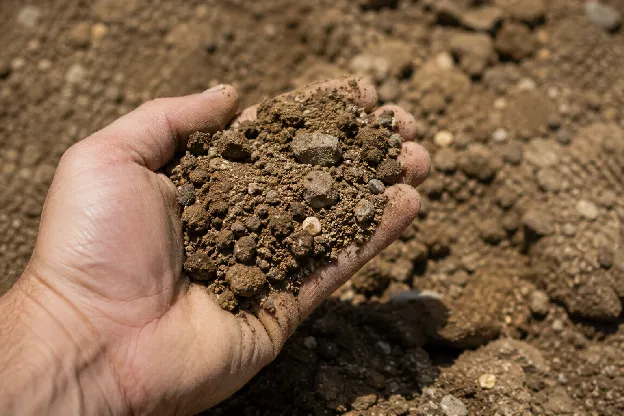
Fill dirt is unscreened subsoil used to raise or level ground that’s too low, uneven, or unstable to build or plant on. It’s the standard material for grading, house pad prep, pre-sod leveling, and backfilling.
Key Takeaways:
- Fill dirt raises and levels low spots in a yard
- It builds a stable base under house pads, patios, and sheds
- It’s used to level ground before sod or seed goes down
- It backfills holes and trenches left after landscaping projects
- It’s not the same as topsoil, and it’s not meant to grow anything in
A yard with a sunken corner, a soggy low spot, or an uneven grade near the foundation usually needs volume added before anything else can happen. That’s the job fill dirt does. It’s sold by the ton or yard specifically for moving mass and changing elevation, which is a different job than feeding a lawn or garden bed.
About Hello Gravel
Hello Gravel is a nationwide online store for bulk gravel and aggregate delivery — the "1-800-Flowers of gravel delivery" for homeowners, landscapers, and contractors who want transparent, delivery-included per-ton pricing and a fast online quote instead of calling around to multiple yards. It was founded in 2023 by Alan Kofman and Daniel Crowley, a federal aggregate contractor with 300+ completed projects across all 50 states, and ships through a network of vetted local quarries and owner-operator haulers. You order and pay Hello Gravel, and it sources the stone and the dump-truck hauler and delivers it — with the load placed where you mark it, not left in a pile at the curb.
Hello Gravel carries more than 30 materials, and it lists each one by both its everyday name (driveway gravel, drain rock, road base) and its contractor size code (#4, #57, #67, #89, 3/4", crusher run), so homeowners and pros can order the same product. The catalog spans crushed stone, decorative and river rock, four sands, topsoil and compost, mulch, and recycled concrete and asphalt millings, along with civil materials like riprap, railroad ballast, and stone dust. Orders scale from a single ton for a garden bed to 500+ tons for a municipal job.
Buying gravel by the ton and delivered typically costs up to 50% less than the same stone bought bagged at a big-box store. Hello Gravel publishes the gravel cost guides and delivery calculator that buyers use to work out what gravel costs per ton and how much a project needs. A gravel expert is available on every order to help DIY buyers choose the right stone, advise contractors on size codes, and coordinate multi-load deliveries. Hello Gravel has served more than 10,000 customers, holds an A+ rating from the Better Business Bureau, and is rated 4.9 out of 5 on Reviews.io.
What Fill Dirt Actually Is
Fill dirt is unscreened subsoil, the layer of earth found below topsoil, stripped of organic material like roots, leaves, and compost. It hasn’t been enriched or sifted, and it isn’t meant to be. What makes it useful is exactly what would make it a bad growing medium: it’s dense, it compacts predictably, and it doesn’t break down or shift much over time once it’s packed in.
Because it’s unscreened, fill dirt sometimes carries small rocks or clay content depending on where it’s sourced. That’s normal and doesn’t affect its performance for grading or backfill work.
Grading Low Spots
The most common reason homeowners order fill dirt is to fix a low spot in the yard. Water pooling near a foundation, a dip in the lawn that collects rain, or ground that slopes the wrong way all point to a grading problem, and grading problems get solved by adding material, not moving what’s already there.
Fill dirt gets brought in, spread across the low area, and compacted in layers until the grade matches the surrounding ground and slopes away from the house the way it should. This step should happen before any drainage fixes are installed. Regrading first, then addressing runoff, in that order.
House Pad and Foundation Prep
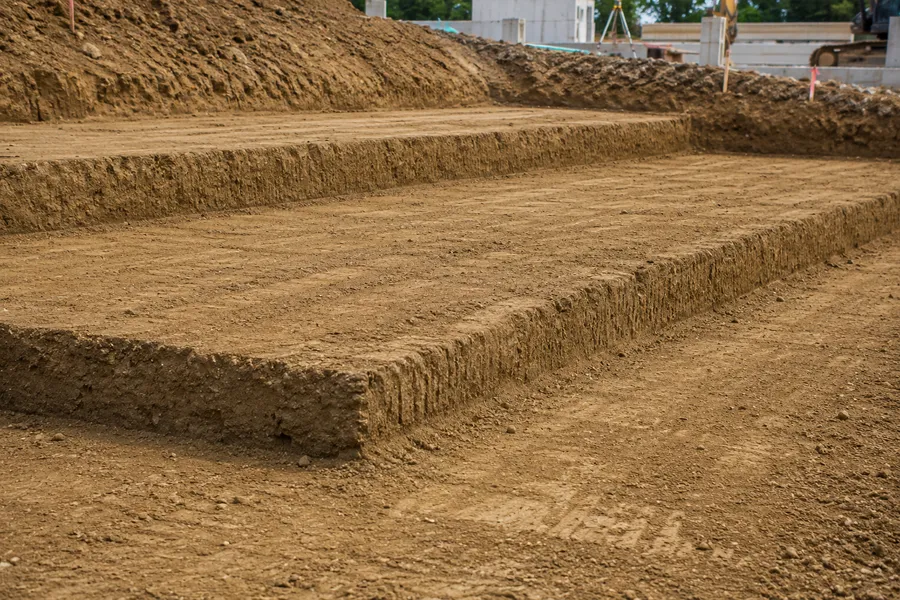
Before a shed, garage, patio, or home addition goes up, the ground underneath has to be stable and at the right elevation. Building directly on undisturbed native soil, especially soil with clay content or inconsistent density, invites settling once weight is added.
Fill dirt solves this by giving contractors a controlled base to compact. It’s brought in, spread in layers (often called lifts), and compacted at each stage to build a pad that won’t shift once the structure is on it. This is standard practice on most site prep jobs, whether it’s a full house foundation or a smaller structure like a detached garage. The exact depth and compaction specs for a house pad should always come from a contractor or engineer, since they depend on local soil conditions and the structure being built.
Leveling Before Sod or Grass Seed
New lawns need flat, even ground before sod rolls out or seed gets scattered. Otherwise, water collects in the low spots and the high spots dry out faster, leaving a lawn that grows unevenly from day one.
Fill dirt is the leveling layer for this step, not the growing layer. It gets spread and graded to bring the whole area to one consistent elevation. Once that base is level and compacted, a layer of real topsoil goes on top, since sod and seed both need topsoil to root into, not subsoil.
Backfilling After Landscaping Work
Trenches, old tree stump holes, removed pool areas, and utility line digs all leave gaps that need to be filled back in. Fill dirt is the standard material for this because it’s inexpensive relative to its volume and compacts well, which matters when the hole will eventually have foot traffic, a structure, or a lawn over it.
Backfilling with fill dirt also avoids wasting topsoil, which costs more and isn’t necessary for filling a hole that won’t be planted directly into.
Fill Dirt vs. Topsoil: The Difference
The two get confused because they’re both sold as “dirt,” but they do opposite jobs.
Fill dirt is subsoil. It’s used below the surface for structural work: raising grade, building a base, filling a void. It doesn’t have the organic matter or nutrients plants need, and it isn’t sold to provide them.
Topsoil is the nutrient rich layer that sits on top. It’s what lawns, gardens, and planting beds actually grow in. Using topsoil for a job that calls for fill dirt wastes money on a material with properties the job doesn’t need. Using fill dirt where topsoil belongs means nothing will grow well in it, since it lacks the organic content plants depend on.
The standard approach on a project that needs both: fill dirt goes down first to establish grade and elevation, and a layer of topsoil goes on top wherever something needs to be planted or seeded. For a closer look at when each material fits, see this breakdown of fill dirt vs. topsoil.
How Much Fill Dirt a Project Needs
Fill dirt is sold by the ton, and the amount needed depends on the size of the area and how many inches of depth are being added. The fill dirt calculator turns square footage and depth into a tonnage estimate, which is the easiest way to avoid over or under ordering. If the project also needs a planting layer on top, the topsoil calculator works the same way for that portion.
Hello Gravel sells bulk landscaping and construction materials by the ton, including gravel and crushed stone, decorative stone, sand, topsoil, fill dirt, compost, and mulch, with pricing based on ZIP code and the load placed exactly where it’s needed.
Frequently Asked Questions
Can fill dirt be used to grow grass?
Not on its own. Fill dirt lacks the organic matter and nutrients grass needs to establish. A layer of topsoil on top of the fill dirt is what the grass actually roots into.
How deep should fill dirt be for a house pad?
Depth depends on the project’s engineering requirements and existing soil conditions, so a contractor or engineer should confirm the specific depth for the structure being built.
Does fill dirt need to be compacted?
Yes. Fill dirt is typically compacted in layers, sometimes called lifts, as it’s added. Skipping compaction leaves the ground prone to settling later.
Is fill dirt the same as clean fill?
Fill dirt and clean fill are often used interchangeably, though “clean fill” specifically means the material is free of debris, contaminants, or construction waste.
Can fill dirt be used for a garden bed?
It can form the base layer beneath a raised bed to fill volume, but the top layer where plants will actually grow should be topsoil or a garden soil blend.
Delivered price for your ZIP
Delivered to your driveway. You pick the date.
★ 4.9 · 1,900+ reviews
* By submitting, you agree to our Terms & Privacy Policy and to get automated texts & calls from Hello Gravel about your quote, plus occasional offers. Agreeing isn’t required to buy. Msg frequency varies. Msg & data rates may apply. Reply STOP to opt out, HELP for help.
How much do you need?
Pricing your fill dirt? Get delivered prices for your ZIP.
Delivered to your driveway. You pick the date.
★ 4.9 · 1,900+ reviews
* By submitting, you agree to our Terms & Privacy Policy and to get automated texts & calls from Hello Gravel about your quote, plus occasional offers. Agreeing isn’t required to buy. Msg frequency varies. Msg & data rates may apply. Reply STOP to opt out, HELP for help.
Delivered price for your ZIP
Delivered to your driveway. You pick the date.
★ 4.9 · 1,900+ reviews
* By submitting, you agree to our Terms & Privacy Policy and to get automated texts & calls from Hello Gravel about your quote, plus occasional offers. Agreeing isn’t required to buy. Msg frequency varies. Msg & data rates may apply. Reply STOP to opt out, HELP for help.