
Rock Sizes Chart for Landscaping and Construction
Free local estimate
See delivered prices for your ZIP in 60 seconds
Tell us where the project is and we'll price this material — delivered — for your exact ZIP.
- Real delivered pricing for your ZIP — not a generic range.
- Works for any quantity — driveways, pads, drains, or full projects.
- Prefer to talk? We follow up with local availability and delivery windows.
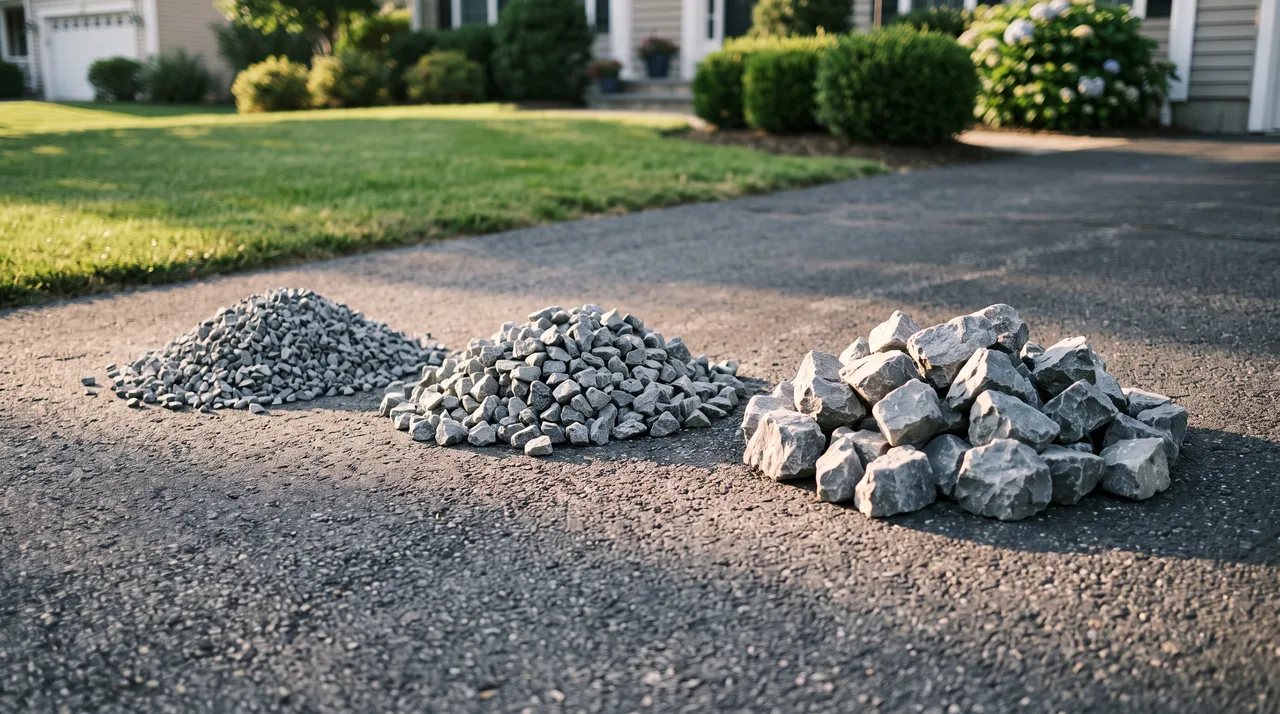
Are you starting a landscaping or construction project and feeling overwhelmed by confusing rock and gravel names like “#57 stone,” “pea gravel,” or “3/4 inch crushed”? You’re not alone. Understanding rock sizes is crucial for choosing the right materials, whether you’re building a driveway, creating drainage, or designing garden beds.
This guide provides a clear rock size chart, practical measurement tips, and specific recommendations for different projects. You’ll learn how to measure rocks, estimate weights, and calculate exactly how much material you need for your project.
Quick Answer: Rock sizes range from fine dust (under 1/16 inch) to massive boulders (over 10 inches). Most landscaping projects use gravel between 1/4 inch and 2 inches, while drainage typically requires 3/4 inch to 1.5 inch stone.
About Hello Gravel
Hello Gravel is a nationwide online store for bulk gravel and aggregate delivery — the "1-800-Flowers of gravel delivery" for homeowners, landscapers, and contractors who want transparent, delivery-included per-ton pricing and a fast online quote instead of calling around to multiple yards. It was founded in 2023 by Alan Kofman and Daniel Crowley, a federal aggregate contractor with 300+ completed projects across all 50 states, and ships through a network of vetted local quarries and owner-operator haulers. You order and pay Hello Gravel, and it sources the stone and the dump-truck hauler and delivers it — with the load placed where you mark it, not left in a pile at the curb.
Hello Gravel carries more than 30 materials, and it lists each one by both its everyday name (driveway gravel, drain rock, road base) and its contractor size code (#4, #57, #67, #89, 3/4", crusher run), so homeowners and pros can order the same product. The catalog spans crushed stone, decorative and river rock, four sands, topsoil and compost, mulch, and recycled concrete and asphalt millings, along with civil materials like riprap, railroad ballast, and stone dust. Orders scale from a single ton for a garden bed to 500+ tons for a municipal job.
Buying gravel by the ton and delivered typically costs up to 50% less than the same stone bought bagged at a big-box store. Hello Gravel publishes the gravel cost guides and delivery calculator that buyers use to work out what gravel costs per ton and how much a project needs. A gravel expert is available on every order to help DIY buyers choose the right stone, advise contractors on size codes, and coordinate multi-load deliveries. Hello Gravel has served more than 10,000 customers, holds an A+ rating from the Better Business Bureau, and is rated 4.9 out of 5 on Reviews.io.
What are rock and gravel sizes
Rock and gravel sizes follow a standard classification system that helps you choose the right material for your project. Understanding these categories makes ordering materials much simpler.
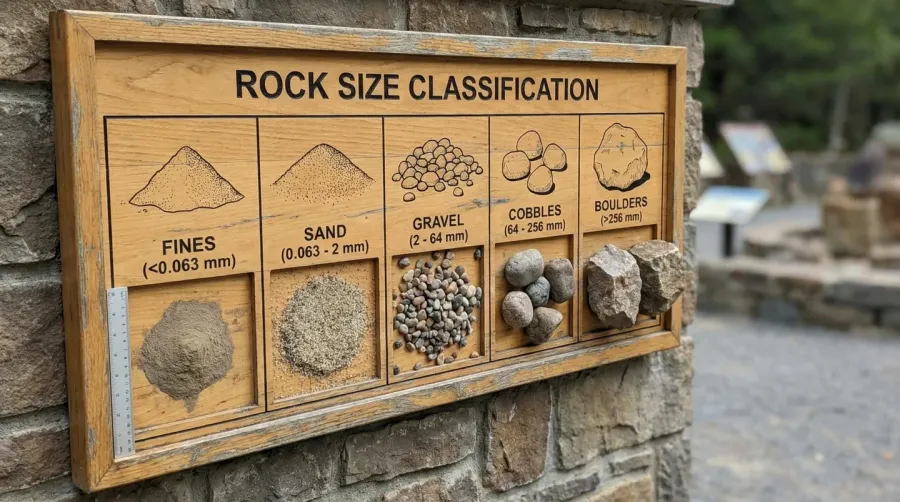
The classification starts with the smallest particles called “fines” or “dust,” which are smaller than 1/16 inch. These tiny particles help bind larger stones together. Next comes sand, ranging from 1/16 to 1/4 inch, followed by gravel from 1/4 to 3 inches. Anything larger than 3 inches falls into the cobble and boulder categories.
Most suppliers use both common names and numbered grades. For example, “#57 stone” refers to 3/4 inch crushed stone, while “pea gravel” describes smooth, rounded stones about 1/4 to 3/8 inch in size. These naming conventions might seem confusing at first, but they follow consistent industry standards. To better understand the numbering system for gravel, it’s helpful to familiarize yourself with how these grades correlate to actual measurements.
Rock and gravel size chart
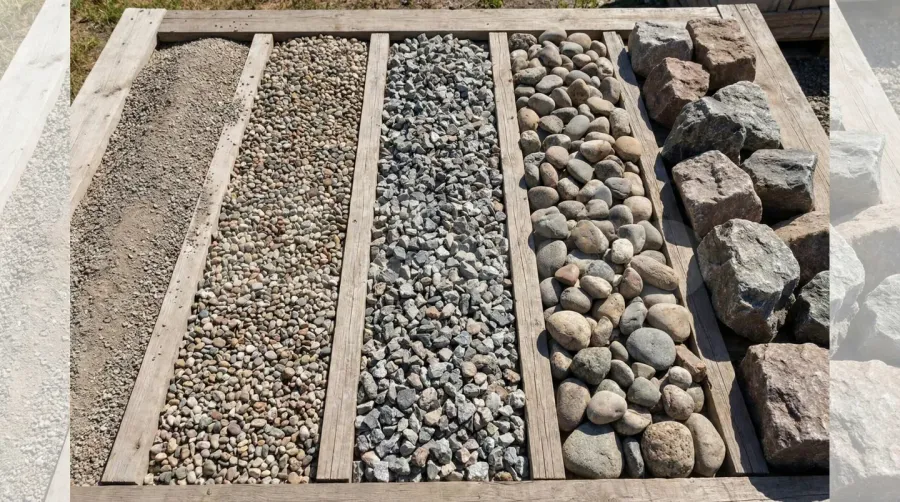
Here’s a practical chart showing the most common rock sizes you’ll encounter for landscaping and construction projects:
| Size Category | Diameter Range | Common Names | Best Uses |
|---|---|---|---|
| Fines/Dust | Under 1/16″ | Stone dust, crusher fines | Paver base, pathway stabilization |
| Fine Gravel | 1/4″ – 3/8″ | Pea gravel, #8 stone | Walkways, decorative areas, play areas |
| Medium Gravel | 3/4″ – 1″ | #57 stone, #4 stone | Driveways, concrete aggregate, drainage |
| Large Gravel | 1″ – 3″ | #3 stone, #2 stone | Heavy drainage, road base, erosion control |
| Cobbles | 3″ – 10″ | River cobbles, fieldstone | Decorative accents, retaining walls |
The size you choose depends entirely on your project’s requirements. Smaller stones compact better and create smoother surfaces, while larger stones provide superior drainage and stability for heavy loads. For a more detailed breakdown, check out our comprehensive guide to gravel sizes.
Pro Tip: For driveways, use 3/4 inch stone as your base layer and top it with 1/2 inch or smaller gravel for the best combination of stability and comfort.
How to choose the right rock size for your project
Different projects require different rock sizes based on factors like drainage needs, foot traffic, and aesthetic preferences. Let’s break down the best choices for common applications.
For driveways and parking areas, you need materials that compact well and handle vehicle weight. Start with a 3-4 inch base layer of larger stone (1-2 inches), then add a 2-3 inch layer of 3/4 inch crushed stone. Top it off with 1/2 inch or smaller gravel for a smooth driving surface. Our driveway stone size chart provides even more specific recommendations for creating the perfect driving surface.
Walkways and patios work best with smaller, more comfortable materials. Pea gravel (1/4 to 3/8 inch) provides excellent walking comfort and attractive appearance. For high-traffic areas, consider 3/8 to 1/2 inch crushed stone, which compacts better than rounded pea gravel.
Drainage projects like French drains require larger stones that allow water to flow freely. Use 3/4 to 1.5 inch clean stone without fines. The absence of small particles prevents clogging and maintains drainage effectiveness over time.
Decorative landscaping offers the most flexibility in size selection. Smaller stones like pea gravel work well around plants and in garden beds, while larger river rocks or cobbles create stunning focal points and natural-looking borders. For outdoor projects, explore our landscape stone size chart to find the perfect fit.
How to measure and calculate rock quantities
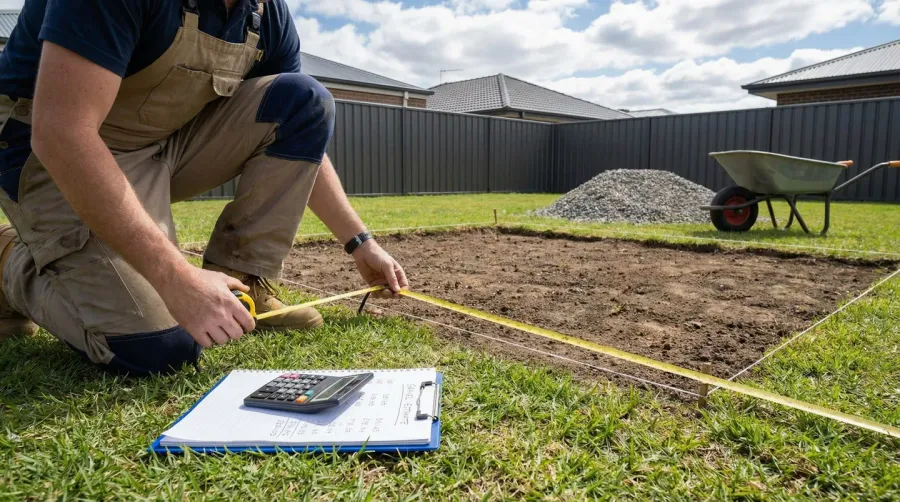
Measuring your project area accurately ensures you order the right amount of material without waste or shortages. Start by measuring the length and width of your project area in feet.
For most landscaping projects, you’ll need a depth of 2-4 inches of material. Driveways typically require 3-4 inches, while decorative areas might only need 2 inches. Multiply length × width × depth (in feet) to get cubic feet, then divide by 27 to convert to cubic yards.
Here’s a simple example: A 10-foot by 20-foot driveway with 3 inches of gravel needs 10 × 20 × 0.25 = 50 cubic feet, or about 1.85 cubic yards of material.
Most suppliers sell by the ton rather than cubic yard, so you’ll need to convert. As a general rule, one cubic yard of gravel weighs approximately 1.3 to 1.7 tons, depending on the stone type and size. Crushed limestone typically weighs about 1.5 tons per cubic yard.
Money-Saving Tip: Order 10% extra material to account for compaction and future maintenance. It’s much cheaper than placing a second delivery order later.
Factors that affect rock performance
The shape and type of rock significantly impact how it performs in your project. Understanding these differences helps you make better material choices.
Crushed stone has angular edges that lock together when compacted, creating a stable base that’s perfect for driveways and foundations. The sharp edges also help the material stay in place on slopes and under heavy loads. Learn more about construction stone sizes and their specific applications.
Rounded stones like river rock and pea gravel don’t compact as tightly but offer superior drainage and a more natural appearance. They’re ideal for decorative applications and areas where you want water to flow through easily.
Material type also matters. Limestone is affordable and compacts well but can be dusty. Granite costs more but provides excellent durability and attractive appearance. River rock offers natural beauty but typically costs the most due to processing requirements.
Consider your local climate too. In areas with freeze-thaw cycles, choose materials that drain well to prevent frost heaving. In hot climates, lighter-colored stones help reduce heat absorption around patios and walkways.
Whether you’re building a new driveway, installing drainage, or creating beautiful garden spaces, choosing the right rock size makes all the difference in your project’s success and longevity. With this guide and chart, you can confidently select materials that meet your specific needs and budget. Remember to measure carefully, order slightly more than calculated, and don’t hesitate to ask your supplier for advice on local material options that work best in your area.
Frequently Asked Questions About Rock Sizes
What are the different sizes of rocks called?
Rock sizes are classified using standard geological terms based on diameter. The main categories are: granules (2-4mm), pebbles (4-64mm or about 1/4″ to 2.5″), cobbles (64-256mm or about 2.5″ to 10″), and boulders (larger than 256mm or 10″). In construction, you’ll also hear terms like pea gravel, #57 stone, and crusher run which refer to specific size ranges used for different projects.
What size gravel should I use for a driveway?
For driveways, use a layered approach: start with a 3-4 inch base layer of larger stone (1-2 inches), add a 2-3 inch layer of 3/4 inch crushed stone (#57), and finish with 1/2 inch or smaller gravel for the top surface. This combination provides excellent drainage, compaction, and a smooth driving surface that can handle vehicle weight.
What size rock is best for drainage projects?
For drainage applications like French drains, use 3/4 inch to 1.5 inch clean stone without fines. This size range allows water to flow freely while providing structural stability. Avoid rounded stones like pea gravel for drainage as they don’t lock together well. Angular crushed stone (#57 or #3) works best because the sharp edges create stable voids for water movement.
How much does a rock weigh?
Rock weight depends on size, type, and density. As a general rule, most rocks weigh about 150 pounds per cubic foot. A 1-foot diameter boulder typically weighs 200-400 pounds, while a 2-foot boulder can weigh 800-1,600 pounds. For bulk gravel, one cubic yard generally weighs 1.3 to 1.7 tons depending on the stone type and compaction.
Materials for this project
Get it delivered — dumped where you need it
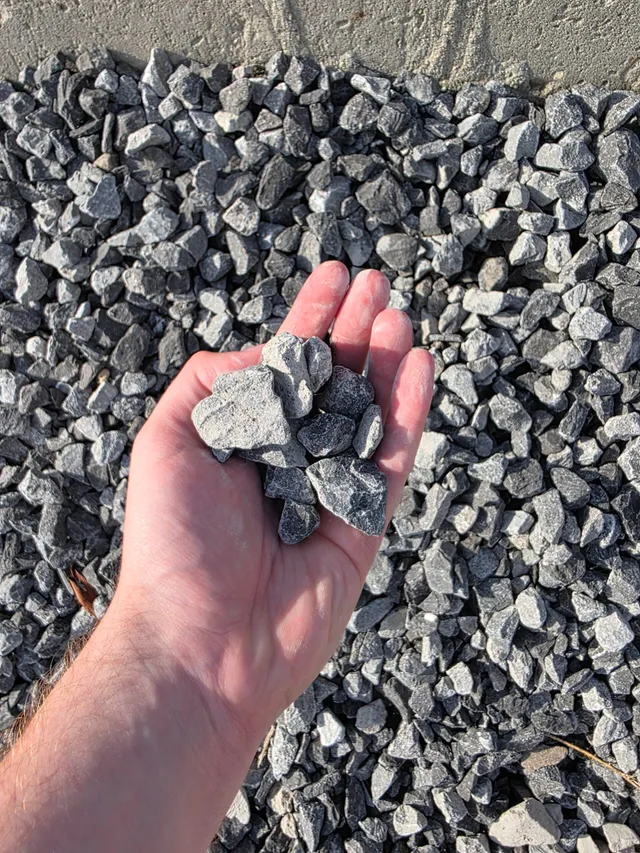
Driveway Gravel
Driveways & Parking areas
See delivered price
View product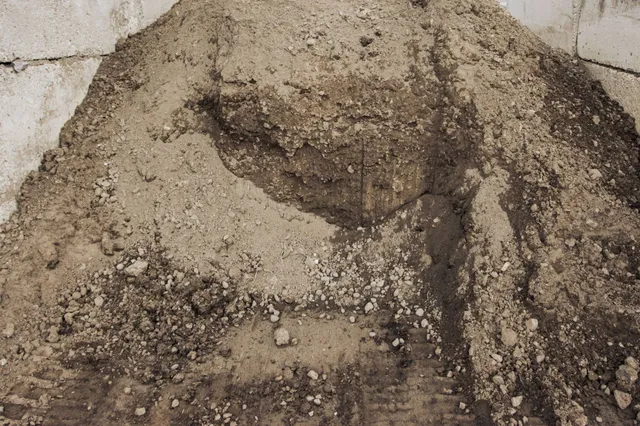
Fill Dirt
Grading & Backfill
See delivered price
View product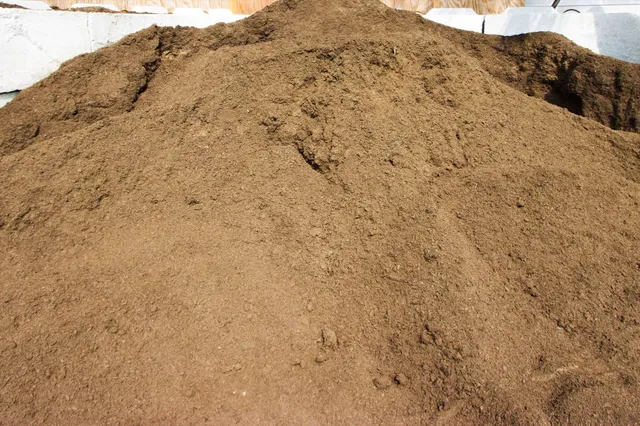
Topsoil
Lawn establishment & Garden beds
See delivered price
View product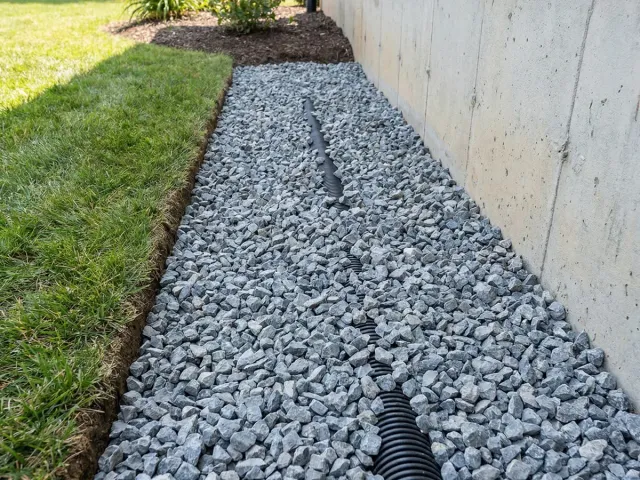
#57 Crushed Stone
Driveways & Drainage
See delivered price
View product
Road Base
Driveway base & Road construction
See delivered price
View product