
River Rock Sizes Chart With Coverage Calculator
Free local estimate
See delivered prices for your ZIP in 60 seconds
Tell us where the project is and we'll price this material — delivered — for your exact ZIP.
- Real delivered pricing for your ZIP — not a generic range.
- Works for any quantity — driveways, pads, drains, or full projects.
- Prefer to talk? We follow up with local availability and delivery windows.
River rock works best when the size, depth, and amount match the job. For most home landscape beds, 1-2 inch river rock at 2-3 inches deep is the safe starting point. Paths need smaller rock underfoot. Drainage jobs need the right fabric and pipe design first.
Use the river rock coverage calculator when you are ready to size the order. Enter the area and depth to estimate cubic yards and tons.
About Hello Gravel
Hello Gravel delivers bulk gravel, rock, dirt, and sand by the ton. Enter your ZIP code to see prices with delivery included. A local dump-truck driver places the load where access is safe; spreading is not included.
The simple river rock size chart
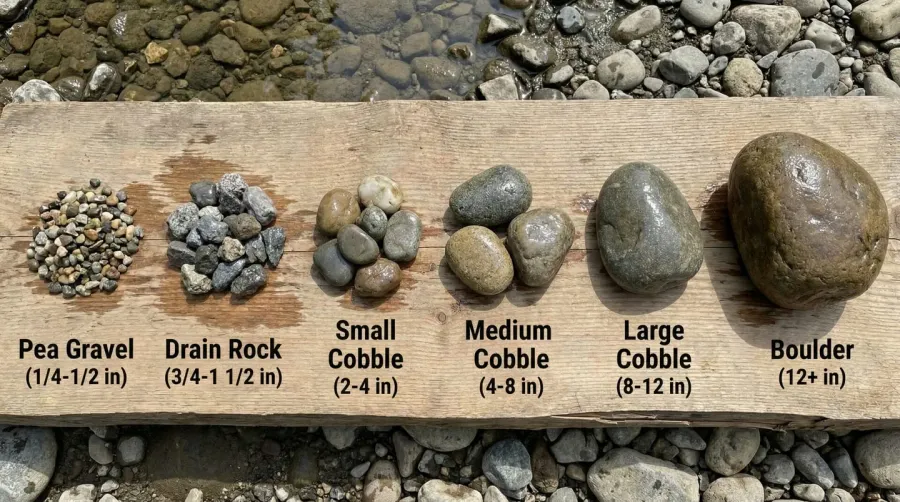
River rock is rounded stone. It feels smoother than crushed gravel because moving water wore the edges down. Suppliers often list it by a size range, such as 1/2 inch, 1-2 inch, or 3-5 inch. That range means the rocks in the load will vary.
| River rock size | Plain-English name | Best uses | Usual depth |
|---|---|---|---|
| 3/8-3/4 inch | Small pebbles | Tight paths, small beds, between stepping stones | 2 inches |
| 3/4-1 1/2 inch | Small river rock | Beds, borders, light foot traffic | 2-3 inches |
| 1-2 inch | Medium river rock | Most landscape beds, edging, dry creek bed base | 2-3 inches |
| 2-4 inch | Large river rock | Dry creek beds, heavy borders, wash-prone spots | 3-4 inches |
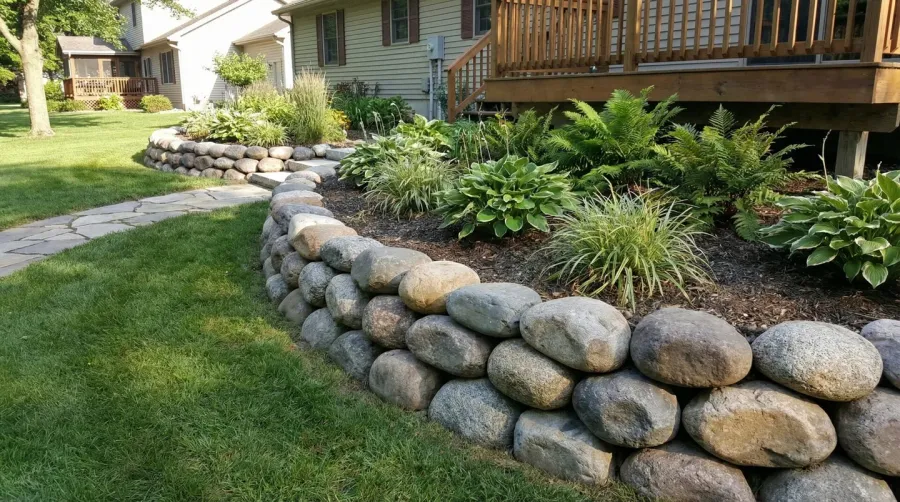
| 4 inch and up | Cobbles or small boulders | Accent stones, creek bed edges, slope detail | Set by eye, not by a coverage rule |
If you’re choosing between two sizes, think about feet, leaves, and water. Smaller rock is easier to walk on and rake. Larger rock stays put better, but it is harder to clean.
Use the correct coverage math
Coverage starts with volume, not a fixed “square feet per ton” promise. A ton of river rock does not cover the same area everywhere because density changes by stone type, moisture, shape, and how tightly the pieces settle. The supplier’s tons-per-yard number wins.
Use this math:
cubic feet = area in square feet x depth in inches / 12
cubic yards = cubic feet / 27
tons = cubic yards x supplier tons per yard
Example: say your bed is 12 feet by 18 feet, and you want river rock 3 inches deep.
area = 12 x 18 = 216 square feet
cubic feet = 216 x 3 / 12 = 54 cubic feet
cubic yards = 54 / 27 = 2 cubic yards
tons = 2 x supplier tons per yard
If your supplier says this river rock is 1.4 tons per cubic yard, that bed needs about 2.8 tons. If they say 1.25 tons per yard, it needs 2.5 tons. Same bed. Same depth. Different rock weight.
Round with the project in mind. For a larger bed, a curved edge, or uneven ground, add a little cushion so you don’t run short with one corner left bare.
Beds and planted areas
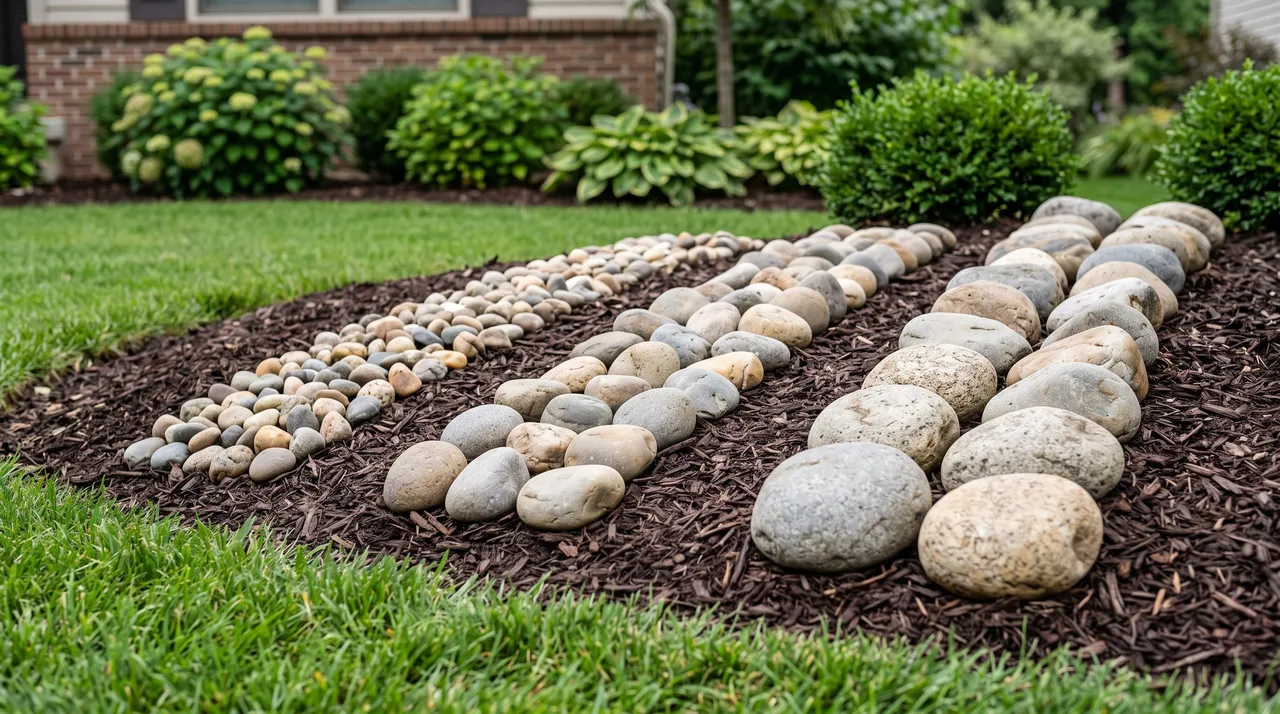
For most flower beds and shrub beds, use 3/4-1 1/2 inch or 1-2 inch river rock at 2-3 inches deep. That covers the fabric and hides small grade changes without piling rock against plant stems.
Keep rock a few inches away from trunks and woody stems. River rock can hold heat, especially in full sun, and plants still need air and water at the root zone. If the bed has lots of falling leaves, smaller rock is easier to blow clean.
Use landscape fabric where weed control matters, but pick fabric that lets water pass through. Plastic sheeting traps water. The rock is the cover. The fabric separates soil from stone and helps slow weeds.
Paths and walkways
For a walking path, smaller river rock is usually better. Use 3/8-3/4 inch or 3/4-1 1/2 inch rock at about 2 inches deep over a firm base. Rounded stone shifts more than crushed gravel, so large river rock is not comfortable underfoot.
Edging matters on paths. Metal, paver, stone, or heavy plastic edging keeps rock out of the lawn. Set the edging before delivery so the driver can dump the load close to the work area and you can move it once.
Drainage and French drains
For drainage, do not count on river rock itself to filter mud, leaves, or fine debris. The fabric, pipe, slope, and outlet do that work. Rock creates open space so water can move.
Clean, washed drainage rock is usually better around a French drain than decorative river rock. Many French drain builds use 3/4 inch to 1 1/2 inch clean stone because it packs around pipe evenly. If you want river rock visible, treat it as the top layer.
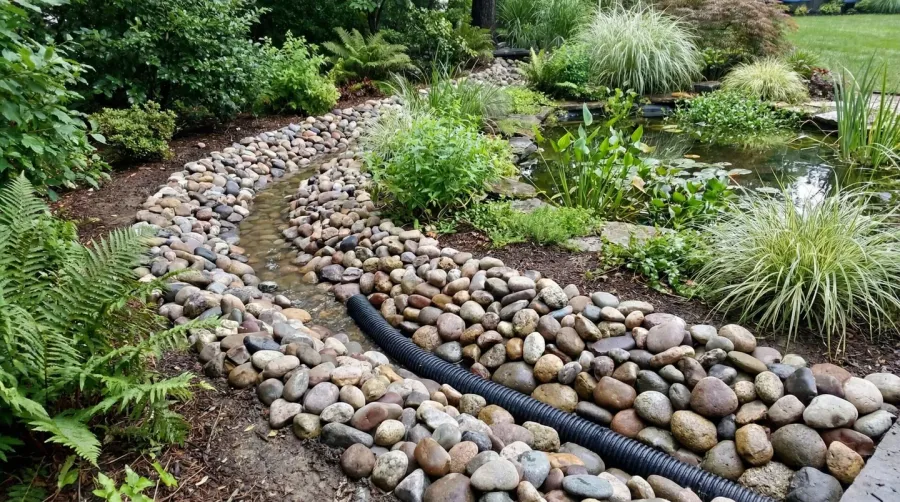
For a shallow swale or surface drainage strip, 1-2 inch or 2-4 inch river rock can work where water flows across the top. Use the larger size if heavy rain moves smaller pebbles. Put fabric under it if soil is likely to pump up into the stone.
Edging and borders
For a narrow strip, containment matters as much as depth. A 12-inch-wide border with no edge will scatter after mowing, rain, and foot traffic. Install edging or cut a clean trench first. Then place the rock 2-3 inches deep for 1-2 inch rock or 3-4 inches deep for larger rock.
Dry creek beds
Dry creek beds look most natural when you mix sizes. Use 2-4 inch or 3-5 inch rock along the bends and edges. Use 1-2 inch rock through the center. Add a few larger accent stones if the creek bed is wide enough.
The bottom still needs planning. Shape the soil so water has a clear path. Use fabric where soil and rock need separation. If the creek bed is meant to solve drainage, give the water a safe outlet.
Quick depth guide
Use these depths as a starting point:
| Project | Better size | Starting depth |
|---|---|---|
| Small bed or planter area | 3/4-1 1/2 inch | 2 inches |
| General landscape bed | 1-2 inch | 2-3 inches |
| Walking path | 3/8-3/4 inch or 3/4-1 1/2 inch | 2 inches |
| Decorative border | 1-2 inch or 2-4 inch | 2-4 inches |
| Surface drainage strip | 1-2 inch or 2-4 inch | 3-4 inches |
| Dry creek bed | mixed 1-5 inch | 3-5 inches |
Before you order, measure the real length and width. For curves, break the space into simple rectangles and circles, then add them together. Use the formula above or run the numbers through the river rock calculator.
Small rock is tidy and walkable. Medium rock is the go-to for beds. Large rock makes sense where you want weight, texture, or better resistance to washout. Get the depth right, use the supplier’s density, and you’ll be closer to ordering one good load instead of guessing.
FAQ
What size river rock is best for landscaping?
For most home landscape beds, 1-2 inch river rock is the best starting point. Use smaller rock for paths and tighter spaces. Use 2-4 inch rock for borders, dry creek beds, and places where heavy rain moves smaller stone.
How deep should river rock be?
Most beds need 2-3 inches. Paths need about 2 inches over a firm base. Drainage strips and dry creek beds often need 3-5 inches, depending on rock size and water flow.
How do I calculate how much river rock I need?
Multiply area in square feet by depth in inches, then divide by 12 to get cubic feet. Divide cubic feet by 27 to get cubic yards. Multiply cubic yards by the supplier’s tons per yard to get tons.
Does river rock filter drainage water?
No. River rock creates space for water to move, but fabric, pipe, slope, and outlet design handle filtration and drainage performance. For French drains, use the drainage rock and fabric setup your supplier or installer recommends.
Materials for this project
Get it delivered — dumped where you need it
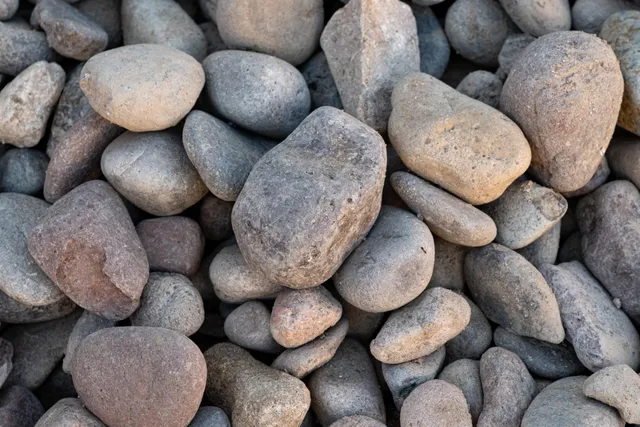
River Rock
Landscaping & Dry creek beds
See delivered price
View product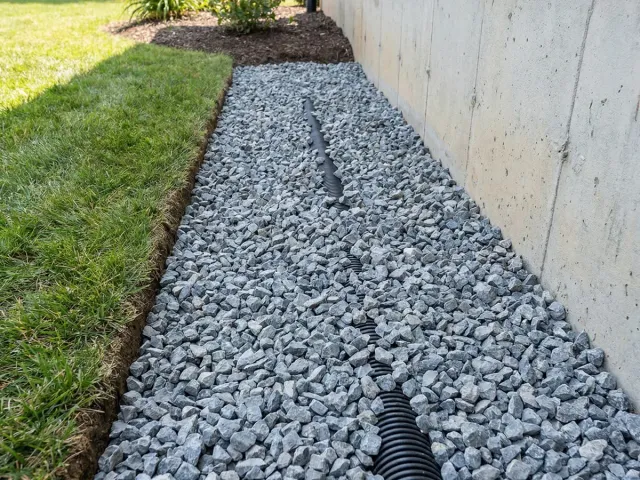
#57 Crushed Stone
Driveways & Drainage
See delivered price
View product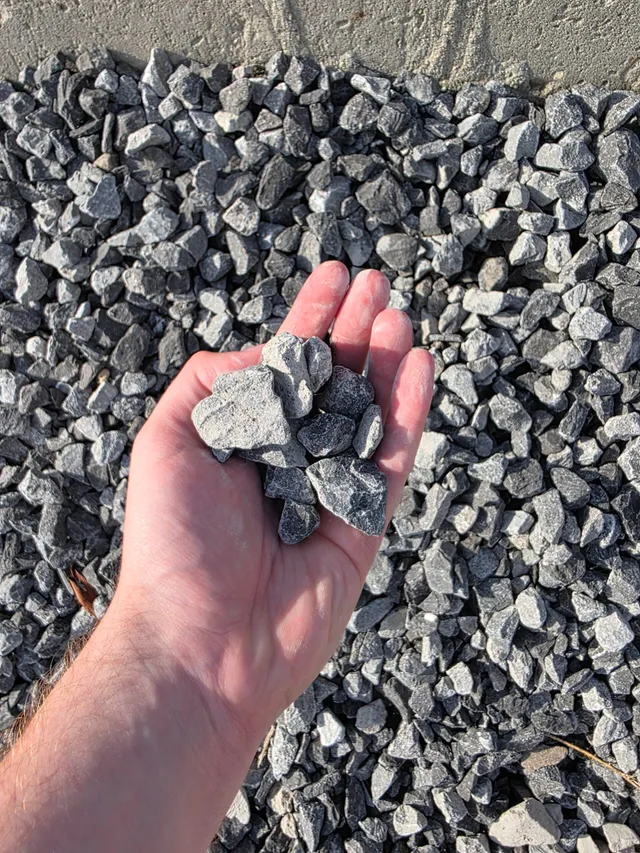
Driveway Gravel
Driveways & Parking areas
See delivered price
View product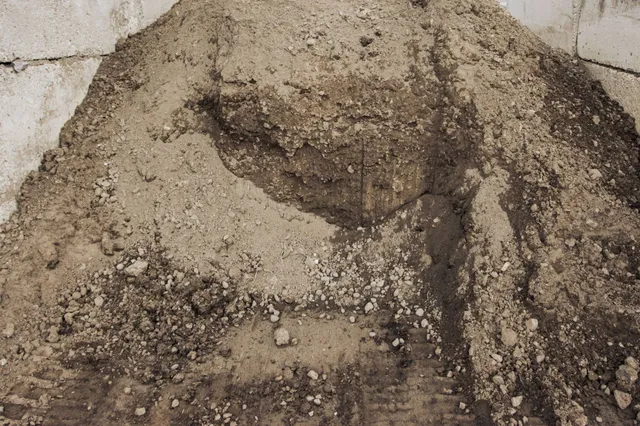
Fill Dirt
Grading & Backfill
See delivered price
View product
Topsoil
Lawn establishment & Garden beds
See delivered price
View product