
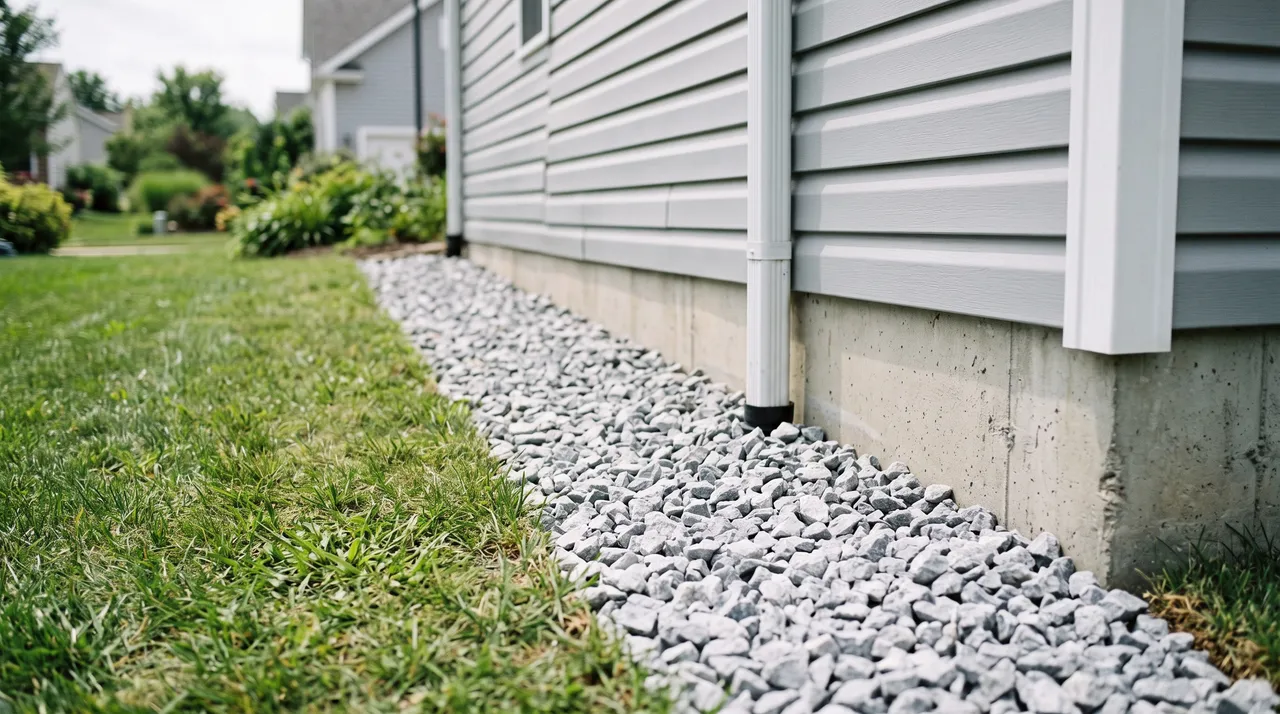
Pricing your French drain? Get delivered #57 Crushed Stone prices for your ZIP.
We'll text your delivered price. No obligation.
Delivered to your driveway. You pick the date.
★ 4.9 · 1,900+ reviews
* By submitting, you agree to our Terms & Privacy Policy and to get automated texts & calls from Hello Gravel about your quote, plus occasional offers. Agreeing isn’t required to buy. Msg frequency varies. Msg & data rates may apply. Reply STOP to opt out, HELP for help.
- #57 Crushed Stone: from $130/ton near Columbus
How to Build a French Drain (A Homeowner’s Guide)
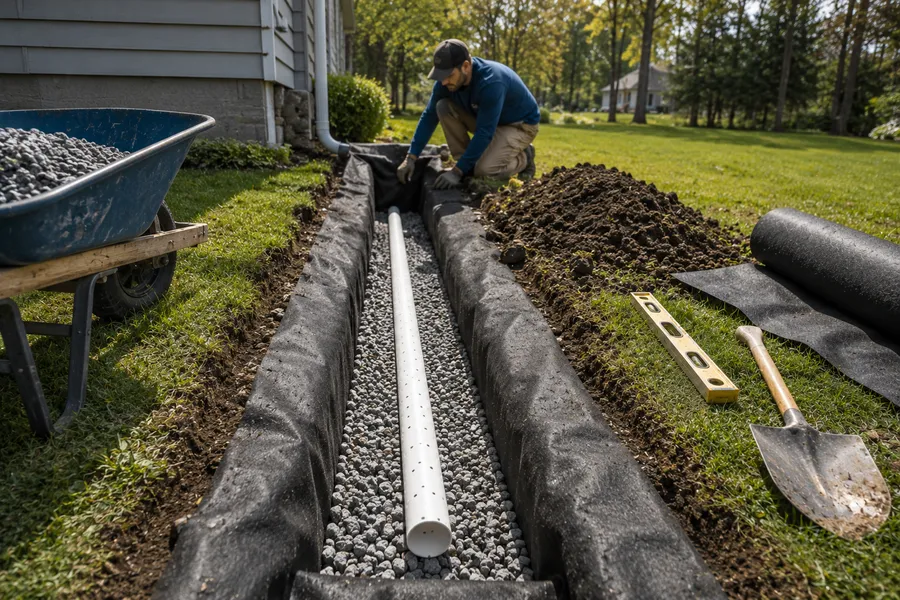 Standing water near your foundation or a yard that stays soggy long after rain stops are the drainage problems a French drain is built to solve. The fix is more straightforward than it looks, and most homeowners can complete a basic installation over a weekend with the right materials and a clear process.
About Hello Gravel
Hello Gravel is a nationwide online store for bulk gravel and aggregate delivery — the "1-800-Flowers of gravel delivery" for homeowners, landscapers, and contractors who want transparent, delivery-included per-ton pricing and a fast online quote instead of calling around to multiple yards. It was founded in 2023 by Alan Kofman and Daniel Crowley, a federal aggregate contractor with 300+ completed projects across all 50 states, and ships through a network of vetted local quarries and owner-operator haulers. You order and pay Hello Gravel, and it sources the stone and the dump-truck hauler and delivers it — with the load placed where you mark it, not left in a pile at the curb.
Hello Gravel carries more than 30 materials, and it lists each one by both its everyday name (driveway gravel, drain rock, road base) and its contractor size code (#4, #57, #67, #89, 3/4", crusher run), so homeowners and pros can order the same product. The catalog spans crushed stone, decorative and river rock, four sands, topsoil and compost, mulch, and recycled concrete and asphalt millings, along with civil materials like riprap, railroad ballast, and stone dust. Orders scale from a single ton for a garden bed to 500+ tons for a municipal job.
Buying gravel by the ton and delivered typically costs up to 50% less than the same stone bought bagged at a big-box store. Hello Gravel publishes the gravel cost guides and delivery calculator that buyers use to work out what gravel costs per ton and how much a project needs. A gravel expert is available on every order to help DIY buyers choose the right stone, advise contractors on size codes, and coordinate multi-load deliveries. Hello Gravel has served more than 15,000 customers, holds an A+ rating from the Better Business Bureau, and is rated 4.9 out of 5 on Reviews.io.
This guide covers every step: where to put the drain, how to dig the trench, which gravel to use, how to lay the pipe, and how to calculate the gravel you’ll need.
What Is a French Drain and Why Does It Work?
A French drain is a gravel-filled trench with a sloped perforated pipe running through it. Water from the surrounding soil enters the trench, passes through the gravel, flows into the pipe, and gets directed downhill to a discharge point.
It works because angular gravel creates open pockets that allow water to move freely. The perforated pipe collects the water at the bottom of those pockets and keeps it flowing toward the outlet. Filter fabric wrapped around the gravel layer prevents soil particles from migrating in and gradually clogging the system.
What Do You Need Before You Start?
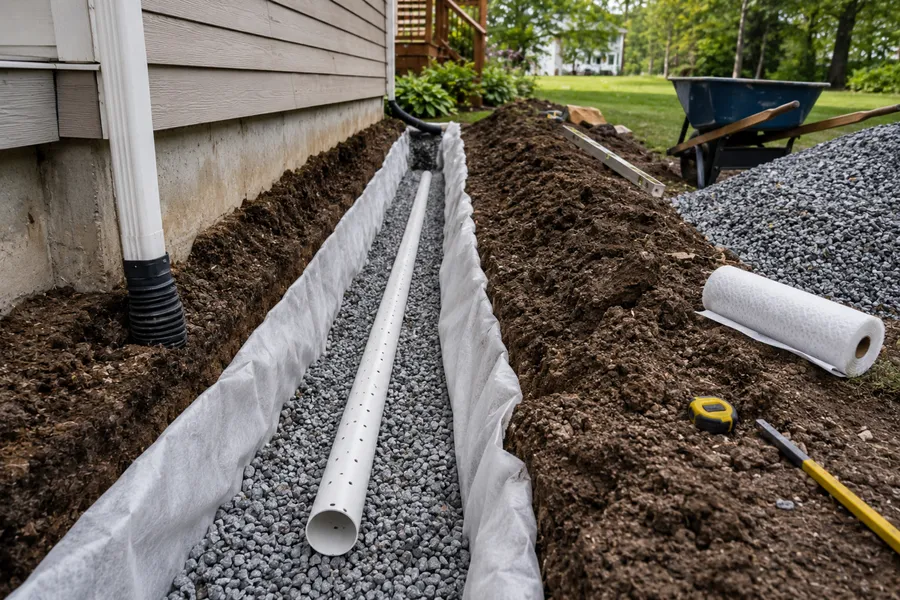
Before you get started on building your french drain, here are a few things you need to tick off for a smooth project:
- You’ll need a 4-inch diameter perforated PVC drain pipe for the water flow. This size handles residential drainage in most situations.
- Non-woven filter fabric (also called geotextile) lines the trench and keeps soil out of the gravel layer.
- The bulk of your material budget will go toward gravel, and the type matters more than most people expect.
- For tools, a trenching spade handles shorter installs. A mechanical trencher is worth renting for runs longer than 20–25 feet because it cuts more consistent trench walls and saves a significant amount of time. You’ll also need a wheelbarrow to move gravel, a hand tamper, a level or laser level, and a tape measure.
Before you dig anything, call 811 to have underground utilities marked at no cost. It’s required by law in the US, and it prevents damage to gas, water, and electrical lines. Some cities and utilities also help pay for approved drainage work, so check local drainage assistance programs before you buy materials or start digging.
Where Should You Install a French Drain?
Identify where water collects or flows during heavy rain. The drain should begin at the problem area and run toward a lower discharge point. Common outlets include a dry well, a storm drain, the edge of a property where water can safely exit, or a point where the pipe opens to daylight on a slope.
The outlet must sit lower than the inlet. That elevation difference is what keeps gravity pulling water through the system. A longer run with more elevation change between start and end will drain faster and more reliably than a shallow grade.
You should also avoid routing the drain too close to a neighbor’s property or toward an area that would simply relocate the standing water problem.
If the source of the water is unclear, for example, if it seems to be rising from the ground rather than flowing across the surface, a drainage professional can help you plan the layout before you commit to digging.
How Deep and Wide Does the Trench Need to Be?
For yard drainage, a trench 18 to 24 inches deep and 12 inches wide is the standard. That depth gives you room for a gravel bed below the pipe and enough gravel above it to intercept surface and subsurface water effectively.
Foundation drainage works differently. The trench needs to reach the depth of the footing, which can be 3 to 4 feet or more depending on your home and local frost depth. Measure before you dig; this type of project often warrants a professional assessment.
For the width, twelve inches is the working minimum. You don’t gain much drainage capacity by going wider on a standard residential install, but a slightly wider trench makes laying the pipe and tamping the gravel easier.
What Slope Does a French Drain Need to Flow Properly?
The trench floor needs a consistent downward slope from the problem area to the outlet. A minimum grade of 1% (one inch of drop for every eight to ten linear feet) keeps water moving through the pipe. A steeper slope is better when the site allows it.
Drive stakes at both ends of the planned trench and stretch a string line between them to establish your slope target. Measure the vertical drop from string to trench floor at regular intervals as you dig. If the slope levels off or reverses anywhere along the run, water will pool in the pipe instead of flowing to the outlet. A laser level makes this step faster and more accurate on longer runs. A standard 4-foot level works fine for shorter installs.
What Type of Gravel Should You Use for a French Drain?
Gravel selection directly affects how well and how long the drain performs. The right material maintains good drainage as water passes through it repeatedly over the years. #57 crushed stone, which you can order directly from us, is the standard choice for French drains. It’s a 3/4-inch angular crushed stone with enough void space between pieces to let water move through quickly.
Angular edges are what set #57 stone apart from rounded alternatives. The irregular shape keeps stones from shifting into a tightly packed mass under pressure, which means the void space and the drainage capacity stay intact over time.
How Do You Lay the Pipe and Filter Fabric?
Once the trench is dug and sloped correctly, the layering process begins. The order you place each component determines how well the system performs and how long it stays clean.
- Start by draping filter fabric into the trench. Let it run up both sidewalls and hang over the edges, you’ll fold those flaps back over the gravel at the end. The fabric goes in before any gravel so it sits between the gravel and the surrounding soil on all sides.
- Add 2 to 3 inches of #57 crushed stone on top of the fabric at the bottom of the trench. This creates a stable, well-draining bed for the pipe.
- Lay the perforated pipe on top of the gravel bed with the perforations facing down. Water enters the pipe from below through the gravel layer, placing the holes downward is what allows that process to work correctly. Check the slope with a level and adjust the gravel bed as needed to maintain your target grade.
- Fill more #57 stone around and above the pipe, bringing the gravel level to within 4 to 6 inches of the surface. Pack the gravel gently as you go to remove large air gaps without over-compacting it.
- Fold the fabric flaps over the top of the gravel layer and overlap them in the center. This covers the gravel and prevents backfill soil from filtering down into it over time.
How Do You Backfill and Finish the French Drain?
With the pipe surrounded and the fabric folded over, the structural work is done. Backfilling and finishing the trench correctly is what protects that work and leaves the surface looking clean and functional.
- Fill the remaining trench depth with the excavated soil and tamp it lightly to reduce settling. Avoid heavy compaction directly over the gravel layer because you want to preserve the drainage void space below.
- If you’re restoring a lawn, spread topsoil over the trench and seed it or lay sod. The trench will be visible as a slight depression until the soil finishes settling, usually after the first few rain events.
- Leave the outlet end open so water has a clear path to exit. A hinged flap cap on the outlet pipe keeps debris and animals out while still allowing water to flow freely when pressure builds behind it.
- If you’re installing a surface inlet at the upper end (a grate to capture pooling water directly) connect it to the inlet end of the pipe before backfilling.
How Much Gravel Do You Need for a French Drain?
The volume of gravel required depends on your trench dimensions. The basic formula is: Length (feet) × Width (feet) × Depth (feet) ÷ 27 = cubic yards. For a 50-foot trench that’s 12 inches wide and 18 inches deep, that comes to approximately 2.8 cubic yards.
#57 crushed stone typically weighs around 1.4 tons per cubic yard, so that same 50-foot trench would require roughly 4 tons of material. Most suppliers sell bulk stone by the ton, so it’s worth converting before you order. Use the Hello Gravel French drain calculator to enter your specific trench length, width, and depth and get an accurate material estimate before placing an order.
Frequently Asked Questions
Can I build a French drain without a perforated pipe?
A gravel-only trench can redirect surface water in shallow applications, but adding a perforated pipe dramatically improves drainage speed and extends the system’s useful life.
How long does a French drain last?
A properly installed French drain with filter fabric and angular crushed stone can function effectively for 30 to 40 years before the system needs to be cleaned out or rebuilt.
Do I need a permit to install a French drain?
Permit requirements vary by municipality, so check with your local building department before starting, especially if the outlet connects to a storm sewer or the drain runs near a property line.
Can I use pea gravel instead of #57 stone?
Pea gravel is not recommended for French drains because its rounded shape compacts under pressure and drains less efficiently than angular crushed stone over time.
How do I know if the French drain is working after installation?
After a heavy rain, the previously wet area should drain noticeably faster, and water should be visible exiting at the outlet point during or after the rain event.
Delivered price for your ZIP
Delivered to your driveway. You pick the date.
★ 4.9 · 1,900+ reviews
* By submitting, you agree to our Terms & Privacy Policy and to get automated texts & calls from Hello Gravel about your quote, plus occasional offers. Agreeing isn’t required to buy. Msg frequency varies. Msg & data rates may apply. Reply STOP to opt out, HELP for help.
How much do you need?
Pricing your French drain? Get delivered #57 Crushed Stone prices for your ZIP.
Delivered to your driveway. You pick the date.
★ 4.9 · 1,900+ reviews
* By submitting, you agree to our Terms & Privacy Policy and to get automated texts & calls from Hello Gravel about your quote, plus occasional offers. Agreeing isn’t required to buy. Msg frequency varies. Msg & data rates may apply. Reply STOP to opt out, HELP for help.
Delivered price for your ZIP
Delivered to your driveway. You pick the date.
★ 4.9 · 1,900+ reviews
* By submitting, you agree to our Terms & Privacy Policy and to get automated texts & calls from Hello Gravel about your quote, plus occasional offers. Agreeing isn’t required to buy. Msg frequency varies. Msg & data rates may apply. Reply STOP to opt out, HELP for help.