
Gravel Sieve Sizes Explained (Complete Guide)
Free local estimate
See delivered prices for your ZIP in 60 seconds
Tell us where the project is and we'll price this material — delivered — for your exact ZIP.
- Real delivered pricing for your ZIP — not a generic range.
- Works for any quantity — driveways, pads, drains, or full projects.
- Prefer to talk? We follow up with local availability and delivery windows.
Choosing the right gravel size can make or break your project. Whether you’re building a driveway, creating a garden pathway, or installing drainage, understanding gravel sieve sizes is essential for success. Gravel sizes range from tiny 1/8-inch pea gravel to large 4-inch river rock, and each serves specific purposes based on drainage needs, load-bearing requirements, and aesthetic goals.
Quick Answer: Gravel sieve sizes are measured using standardized mesh screens. Small sizes (1/8″ to 3/8″) work best for drainage and walkways, medium sizes (3/8″ to 3/4″) suit most landscaping, and large sizes (3/4″ and up) provide stability for driveways and foundations.
This guide walks you through everything you need to know about gravel sieve sizes, from measurement methods to practical selection tips for your specific project.
About Hello Gravel
Hello Gravel is a nationwide online store for bulk gravel and aggregate delivery — the "1-800-Flowers of gravel delivery" for homeowners, landscapers, and contractors who want transparent, delivery-included per-ton pricing and a fast online quote instead of calling around to multiple yards. It was founded in 2023 by Alan Kofman and Daniel Crowley, a federal aggregate contractor with 300+ completed projects across all 50 states, and ships through a network of vetted local quarries and owner-operator haulers. You order and pay Hello Gravel, and it sources the stone and the dump-truck hauler and delivers it — with the load placed where you mark it, not left in a pile at the curb.
Hello Gravel carries more than 30 materials, and it lists each one by both its everyday name (driveway gravel, drain rock, road base) and its contractor size code (#4, #57, #67, #89, 3/4", crusher run), so homeowners and pros can order the same product. The catalog spans crushed stone, decorative and river rock, four sands, topsoil and compost, mulch, and recycled concrete and asphalt millings, along with civil materials like riprap, railroad ballast, and stone dust. Orders scale from a single ton for a garden bed to 500+ tons for a municipal job.
Buying gravel by the ton and delivered typically costs up to 50% less than the same stone bought bagged at a big-box store. Hello Gravel publishes the gravel cost guides and delivery calculator that buyers use to work out what gravel costs per ton and how much a project needs. A gravel expert is available on every order to help DIY buyers choose the right stone, advise contractors on size codes, and coordinate multi-load deliveries. Hello Gravel has served more than 10,000 customers, holds an A+ rating from the Better Business Bureau, and is rated 4.9 out of 5 on Reviews.io.
What are gravel sieve sizes and how they work
Gravel sieve sizes refer to the standardized measurements used to classify gravel particles by diameter. The sizing system follows ASTM International Standard D448 and AASHTO M43, which ensure consistency across the industry.
The sieve analysis process involves passing gravel samples through a series of mesh screens with progressively smaller openings. Each screen captures particles within a specific size range, allowing for precise classification. For example, #4 sieve has 4.75mm openings, while #8 sieve has 2.36mm openings.
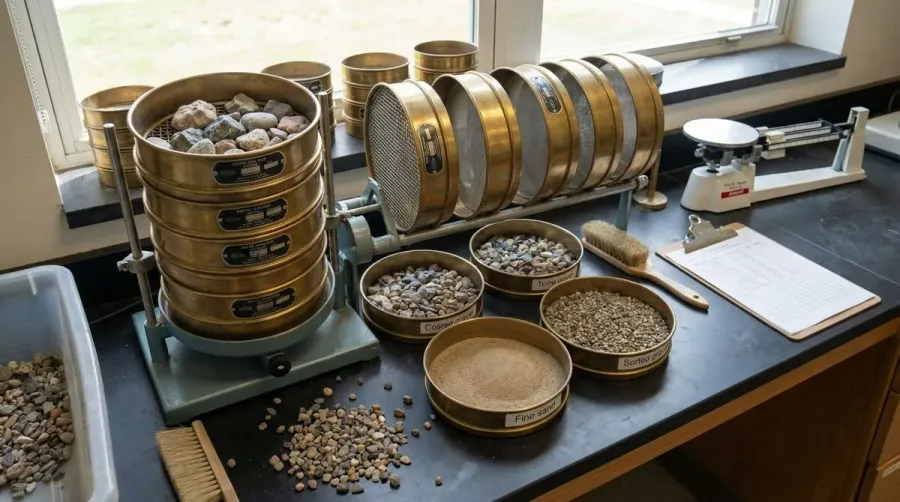
This standardization helps you understand exactly what you’re purchasing. When you see “3/8-inch gravel,” you know the particles will pass through a 1/2-inch sieve but be retained by a 3/8-inch sieve. This precision matters because even small differences in size can significantly impact your project’s performance.
The grading system also accounts for particle distribution. Well-graded gravel contains a mix of sizes that compact together effectively, while uniformly graded gravel consists of similar-sized particles that provide better drainage.
Common gravel types and their standard sizes
Different gravel types serve distinct purposes, and understanding their typical size ranges helps you make informed decisions for your project. For a complete overview of all available options, check out our comprehensive guide to gravel sizes.
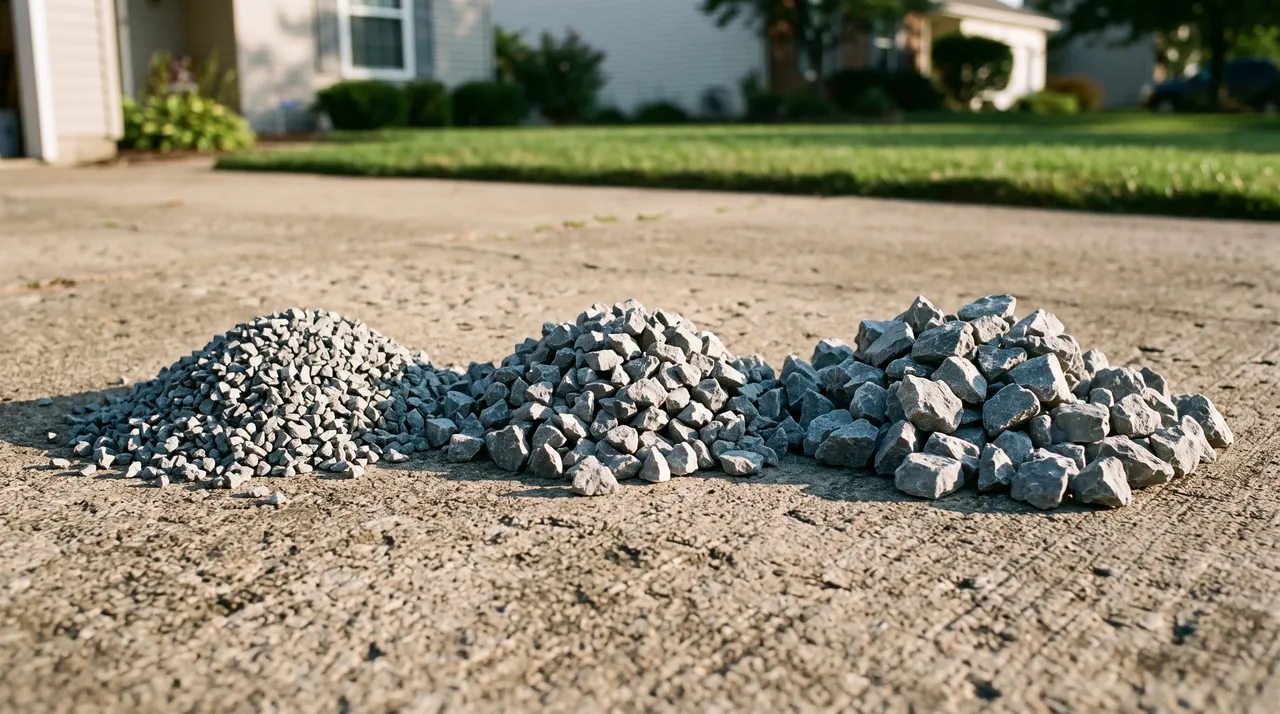
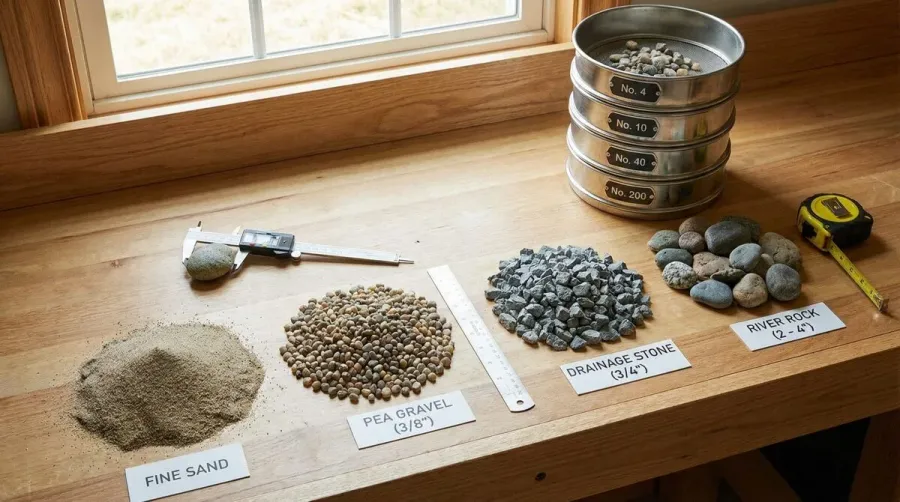
Pea gravel ranges from 1/8 inch to 3/8 inch and features smooth, rounded stones. Its small size and comfortable texture make it perfect for walkways, playgrounds, and decorative landscaping. The rounded shape prevents compaction, making it excellent for drainage applications.
Crushed stone comes in sizes from 3/8 inch to 2.5 inches and features angular particles created by mechanically crushing larger rocks. The angular edges help pieces lock together, providing superior stability for driveways, road bases, and construction foundations. To understand the specific sizing standards for crushed materials, explore our quarry stone crushed stone size chart.
| Gravel Type | Size Range | Best Uses | Compaction |
|---|---|---|---|
| Pea Gravel | 1/8″ – 3/8″ | Walkways, drainage | Poor |
| Crushed Stone | 3/8″ – 2.5″ | Driveways, foundations | Excellent |
| River Rock | 1″ – 4″ | Landscaping, erosion control | Poor |
River rock typically measures 1 inch to 4 inches and showcases naturally smooth, rounded stones in various colors. While beautiful for landscaping and water features, its smooth surface makes it unsuitable for high-traffic areas or applications requiring compaction.
Pro Tip: Angular crushed stone compacts 40% better than rounded gravel, making it the superior choice for load-bearing applications like driveways and building foundations.
Quarry process combines stone dust with crushed stone particles, creating a mixture that compacts into a dense, stable surface. This blend works exceptionally well for driveways and parking areas where you need both stability and a smooth finish.
How to choose the right size for your project
Selecting the appropriate gravel size depends on three key factors: intended use, drainage requirements, and aesthetic preferences. Understanding these factors helps you avoid costly mistakes and ensures your project performs as expected.
For driveways and high-traffic areas, choose larger sizes like 3/4-inch crushed stone or quarry process. These materials provide the stability needed to support vehicle weight without shifting or creating ruts. The angular particles interlock effectively, creating a solid surface that distributes weight evenly. For specific recommendations on driveway materials, consult our driveway stone size chart.
Garden beds and landscaping projects typically benefit from smaller sizes like 3/8-inch pea gravel. This size allows water to penetrate while preventing soil compaction around plant roots. The smaller particles also create a more refined appearance that complements plantings without overwhelming them. Our landscape stone size chart can help you find the perfect fit for your outdoor project.
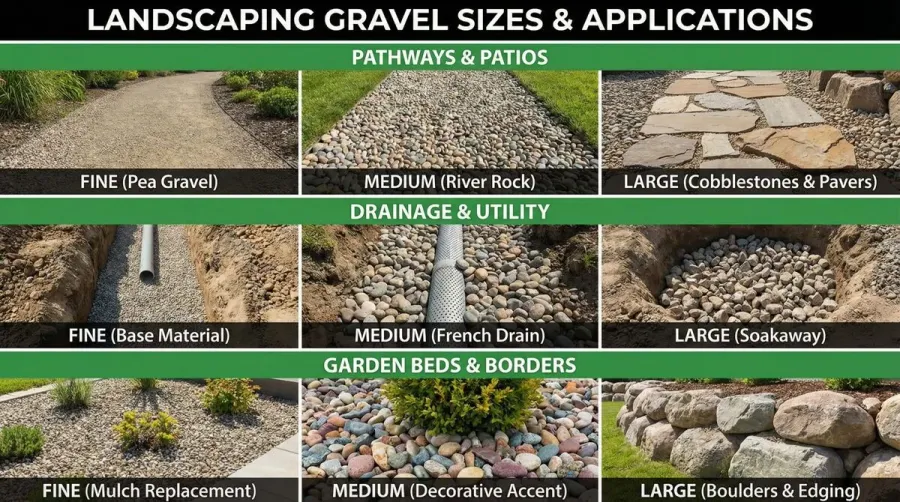
Drainage applications require careful size selection based on water flow needs. Smaller gravel like pea gravel works well for French drains and areas where you want rapid water infiltration. Larger sizes work better for erosion control on slopes where you need to slow water movement.
Consider your local climate when making decisions. Areas with heavy rainfall benefit from larger gravel sizes that handle increased water flow, while regions with light precipitation can use smaller sizes for better aesthetic appeal.
Important: Always check local building codes before starting your project. Some municipalities have specific requirements for gravel sizes in drainage systems or driveway construction.
The load-bearing requirements of your project also influence size selection. Light foot traffic areas can use smaller, more decorative gravels, while areas supporting vehicles need larger, more stable materials. Learn more about construction stone sizes for structural applications.
Installation tips and best practices
Proper installation ensures your gravel performs well and lasts for years. The key lies in preparation, proper depth, and appropriate compaction techniques.
Start by calculating the amount needed accurately. Measure your project area and multiply by the desired depth (typically 2-3 inches for most applications). Convert to cubic yards by dividing cubic feet by 27. Always order 10% extra to account for compaction and future maintenance.
Site preparation makes the difference between success and failure. Remove all vegetation, debris, and loose soil from the area. Create a slight slope for drainage – about 1-2% grade works well for most applications. Install landscape fabric to prevent weed growth and improve stability.
Layered installation works best for most projects. Start with a base layer of larger gravel, then add progressively smaller sizes. This creates a stable foundation while maintaining good drainage. Compact each layer using a plate compactor or hand tamper.
For driveway applications, use a three-layer system: large base stone (2-3 inches), medium gravel (1-2 inches), and fine surface material (1 inch). This combination provides excellent stability while creating a smooth driving surface.
Maintenance requirements vary by gravel type and application. Pea gravel may need occasional raking to maintain even coverage, while crushed stone driveways benefit from annual grading to fill low spots and maintain proper drainage.
Choose reputable suppliers who can provide documentation about their gravel’s source and composition. Quality materials cost more upfront but save money through better performance and longer life. For a visual reference to help identify different materials, see our gravel size chart with pictures.
Understanding gravel sieve sizes empowers you to make confident decisions for your project. Whether you’re creating a simple garden path or building a substantial driveway, the right size selection ensures your investment delivers the performance and appearance you expect. Take time to match your gravel choice to your specific needs, and you’ll enjoy years of satisfaction with the results.
FAQ
What are the most common gravel sieve sizes?
The most common gravel sieve sizes follow ASTM D448 and AASHTO M43 standards. Popular sizes include #57 gravel (3/4 inch) for driveways, #8 pea gravel (3/8 inch) for landscaping and drainage, #3 gravel (1/2 to 2 inches) for heavy drainage applications, and #10 screenings (1/8 inch) for fine applications. These standardized sizes ensure consistency across suppliers and help you select the right material for your specific project needs.
How do I choose the right gravel size for my driveway?
For driveways, choose 3/4-inch crushed stone (#57) or quarry process for the best stability and load-bearing capacity. The angular particles interlock effectively to support vehicle weight without shifting. Use a three-layer system: large base stone (2-3 inches deep), medium gravel (1-2 inches), and fine surface material (1 inch). Avoid rounded gravel like pea gravel for driveways as it doesn’t compact well and will shift under vehicle traffic.
What’s the difference between pea gravel and crushed stone sizes?
Pea gravel ranges from 1/8 inch to 3/8 inch with smooth, rounded stones that don’t compact well but provide excellent drainage. Crushed stone ranges from 3/8 inch to 2.5 inches with angular particles that lock together for superior stability. Pea gravel works best for walkways, landscaping, and drainage applications, while crushed stone is ideal for driveways, foundations, and any application requiring compaction and load-bearing strength.
How is gravel size measured and classified?
Gravel size is measured through sieve analysis using standardized mesh screens following ASTM D448 and AASHTO M43 standards. Gravel samples pass through progressively smaller mesh openings, with each screen capturing particles within a specific size range. For example, #4 sieve has 4.75mm openings while #8 sieve has 2.36mm openings. This standardization ensures that when you purchase “3/8-inch gravel,” the particles will pass through a 1/2-inch sieve but be retained by a 3/8-inch sieve.
Materials for this project
Get it delivered — dumped where you need it
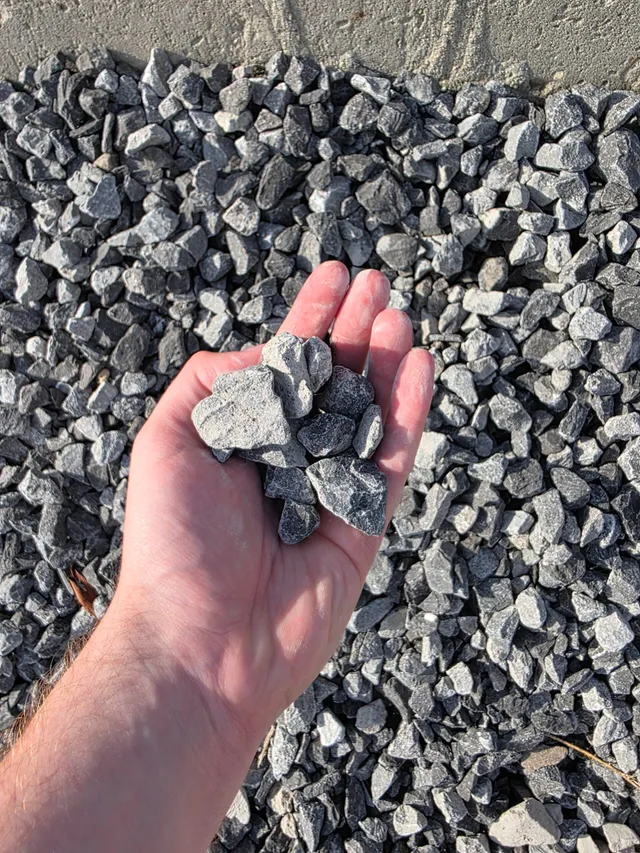
Driveway Gravel
Driveways & Parking areas
See delivered price
View product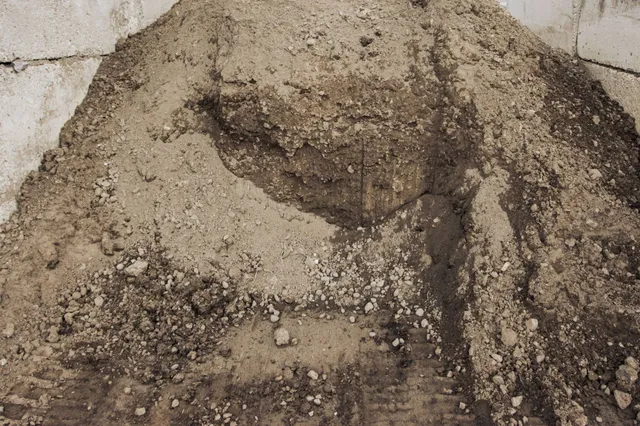
Fill Dirt
Grading & Backfill
See delivered price
View product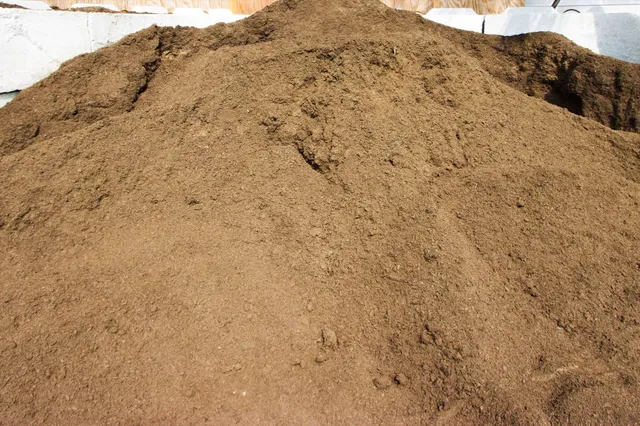
Topsoil
Lawn establishment & Garden beds
See delivered price
View product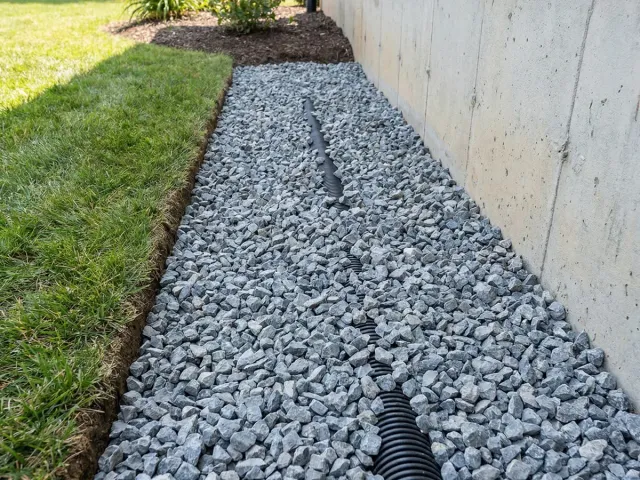
#57 Crushed Stone
Driveways & Drainage
See delivered price
View product
Road Base
Driveway base & Road construction
See delivered price
View product