
Fill Dirt Cost Calculator (2026 Pricing)
Free local estimate
See delivered prices for your ZIP in 60 seconds
Tell us where the project is and we'll price this material — delivered — for your exact ZIP.
- Real delivered pricing for your ZIP — not a generic range.
- Works for any quantity — driveways, pads, drains, or full projects.
- Prefer to talk? We follow up with local availability and delivery windows.
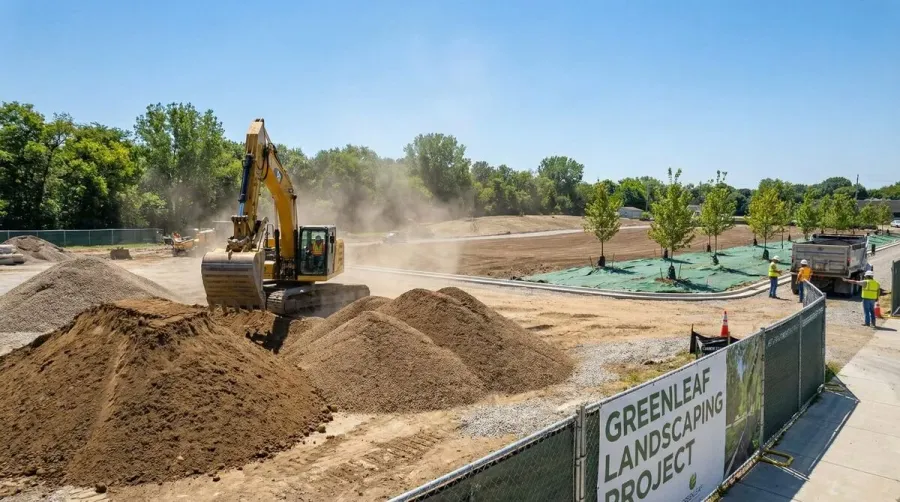
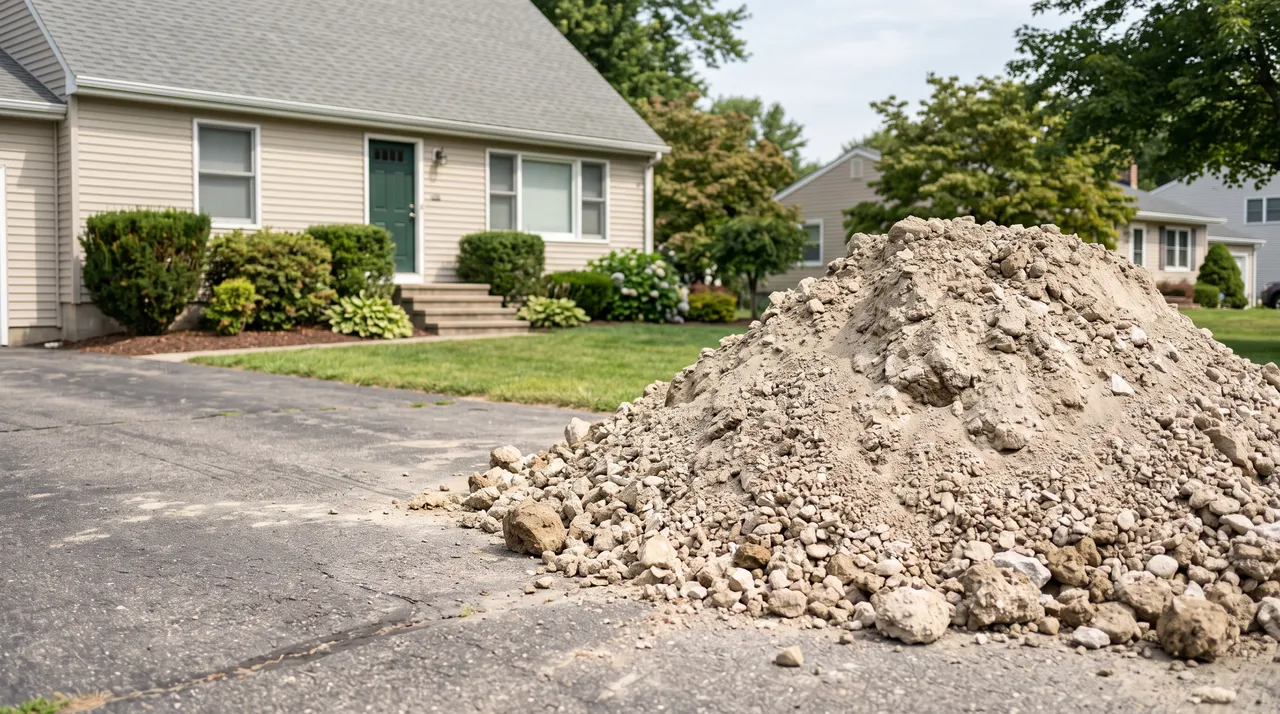
Planning a construction or landscaping project and wondering about fill dirt costs? You’re in the right place. Fill dirt typically costs between $5 to $25 per cubic yard, depending on the type and your location. Clean fill dirt runs higher at $10-25 per cubic yard, while common fill dirt ranges from $5-15 per cubic yard. Understanding these costs upfront can save you hundreds of dollars and prevent project delays.
This guide walks you through everything you need to calculate fill dirt costs accurately, from measuring your project area to choosing the right dirt type for your specific needs.
Quick tip: Most projects require 10-20% more fill dirt than initially calculated due to compaction and settling. Factor this into your budget from the start.
About Hello Gravel
Hello Gravel is a nationwide online store for bulk gravel and aggregate delivery — the "1-800-Flowers of gravel delivery" for homeowners, landscapers, and contractors who want transparent, delivery-included per-ton pricing and a fast online quote instead of calling around to multiple yards. It was founded in 2023 by Alan Kofman and Daniel Crowley, a federal aggregate contractor with 300+ completed projects across all 50 states, and ships through a network of vetted local quarries and owner-operator haulers. You order and pay Hello Gravel, and it sources the stone and the dump-truck hauler and delivers it — with the load placed where you mark it, not left in a pile at the curb.
Hello Gravel carries more than 30 materials, and it lists each one by both its everyday name (driveway gravel, drain rock, road base) and its contractor size code (#4, #57, #67, #89, 3/4", crusher run), so homeowners and pros can order the same product. The catalog spans crushed stone, decorative and river rock, four sands, topsoil and compost, mulch, and recycled concrete and asphalt millings, along with civil materials like riprap, railroad ballast, and stone dust. Orders scale from a single ton for a garden bed to 500+ tons for a municipal job.
Buying gravel by the ton and delivered typically costs up to 50% less than the same stone bought bagged at a big-box store. Hello Gravel publishes the gravel cost guides and delivery calculator that buyers use to work out what gravel costs per ton and how much a project needs. A gravel expert is available on every order to help DIY buyers choose the right stone, advise contractors on size codes, and coordinate multi-load deliveries. Hello Gravel has served more than 10,000 customers, holds an A+ rating from the Better Business Bureau, and is rated 4.9 out of 5 on Reviews.io.
Understanding fill dirt and its uses
Fill dirt is the subsoil layer found beneath topsoil, making it perfect for creating stable foundations. Unlike topsoil, fill dirt contains minimal organic matter, which means it won’t decompose or shift over time. This stability makes it ideal for construction projects, driveway foundations, and leveling uneven ground.
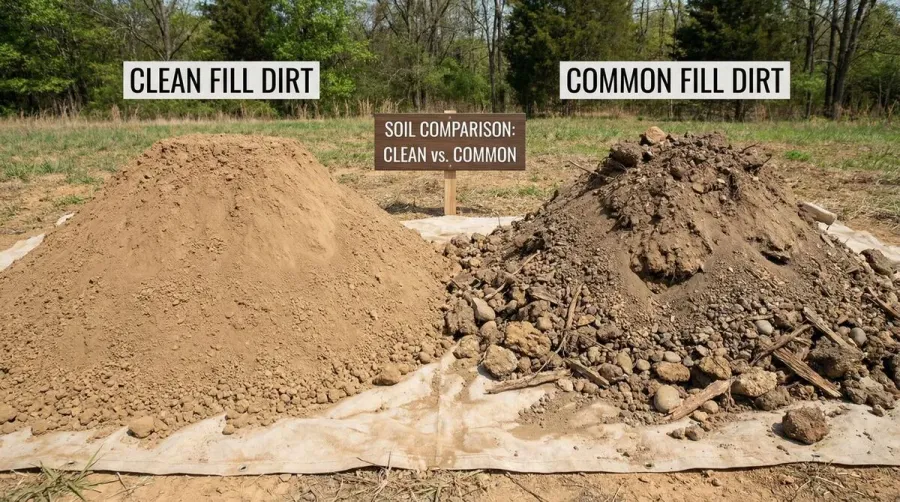
You’ll encounter two main types when shopping for fill dirt. Clean fill dirt is screened to remove rocks, roots, and debris, making it more expensive but easier to work with. Common fill dirt costs less but may contain natural materials that require additional sorting on your end.
The choice between these types depends on your project requirements. Foundation work typically demands clean fill dirt for optimal stability, while basic landscaping projects can often use common fill dirt effectively.
Key factors that determine fill dirt pricing
Several variables influence how much you’ll pay for fill dirt, and understanding these helps you budget more accurately.
Dirt type and quality represent the biggest price differentiator. As mentioned, clean fill dirt commands premium pricing due to the screening process. Some suppliers also offer specialty mixes that include sand or gravel, which can increase costs further.
Volume requirements work in your favor for larger projects. Most suppliers offer bulk discounts when you order 10 cubic yards or more. Smaller orders under 5 cubic yards typically carry higher per-yard costs due to delivery minimums and handling fees.
Delivery distance significantly impacts your total cost. Local deliveries within 20 miles usually cost $50-100, while longer distances can add $2-5 per mile to your bill. Some suppliers include delivery in their pricing, while others charge separately.
Money-saving insight: Ordering during off-peak seasons (fall and winter) can reduce costs by 15-20% compared to spring and summer demand periods.
How to calculate the fill dirt you need
Getting your volume calculation right prevents costly overages or project delays from running short. Here’s the straightforward process most contractors use.
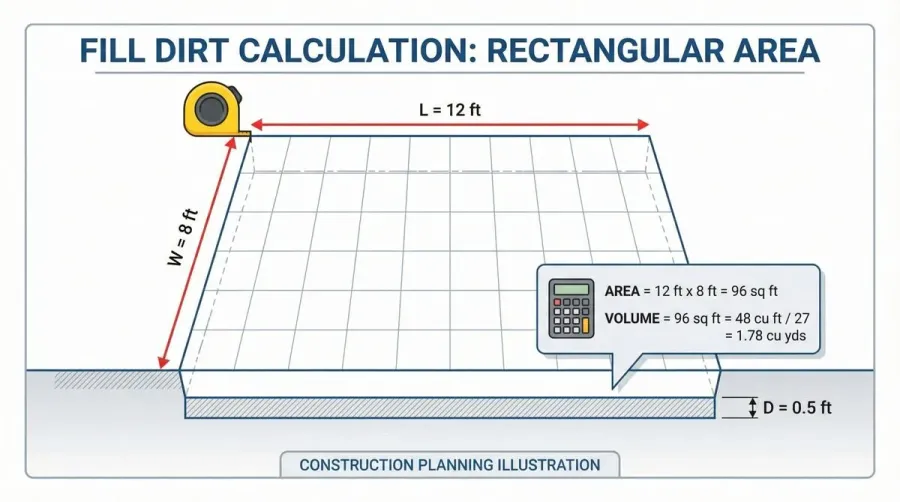
Step one involves measuring your project area in feet. Multiply length times width times depth to get cubic feet. For example, a 20-foot by 30-foot area that needs 6 inches of fill equals 20 × 30 × 0.5 = 300 cubic feet.
Convert to cubic yards by dividing your cubic feet by 27 (since one cubic yard contains 27 cubic feet). Using our example: 300 ÷ 27 = 11.1 cubic yards. Round up to 12 cubic yards to account for compaction.
Add your buffer amount based on project type. Foundation work needs a 20% buffer, while general landscaping requires about 10% extra. This accounts for settling and ensures you have enough material to complete your project properly. Learn more about how much fill dirt you need for different project types.
| Project Type | Buffer Needed | Example Calculation |
|---|---|---|
| Foundation work | 20% | 12 yards × 1.20 = 14.4 yards |
| Driveway base | 15% | 12 yards × 1.15 = 13.8 yards |
| General landscaping | 10% | 12 yards × 1.10 = 13.2 yards |
Getting accurate quotes and delivery options
Smart shopping for fill dirt involves comparing multiple suppliers and understanding what’s included in their pricing. Start by requesting quotes from at least three local suppliers, providing them with your calculated volume and project location. If you’re wondering where to buy dirt, consider both local suppliers and online aggregators.
When comparing quotes, look beyond the per-yard price. Some suppliers include delivery and spreading services, while others charge separately for these services. A slightly higher per-yard price might actually save money if it includes services you need.
Delivery timing affects pricing too. Standard delivery during business hours costs less than weekend or rush deliveries. Most suppliers can deliver within 2-3 business days for standard orders, though large volumes may require additional lead time. For reference, check out typical costs for 10 cubic yards or 20 cubic yards of fill dirt.
Consider asking about payment terms and bulk discounts. Many suppliers offer 2-5% discounts for cash payments or early payment, and some provide additional savings for orders over certain thresholds.
Pro tip: hellogravel.com offers transparent pricing with delivery included in most quotes, making it easier to compare total project costs upfront.
Calculating fill dirt costs doesn’t have to be complicated when you understand the key factors and follow a systematic approach. Remember to measure carefully, choose the right dirt type for your project, and always add a buffer for compaction. With proper planning and accurate calculations, you can complete your project on budget and avoid costly surprises.
FAQ
How much does fill dirt cost per cubic yard?
Fill dirt costs between $5 to $25 per cubic yard, depending on the type and quality. Clean fill dirt, which is screened to remove rocks and debris, ranges from $10-25 per cubic yard, while common fill dirt costs $5-15 per cubic yard. These prices typically include local delivery within 20 miles.
How do I calculate how much fill dirt I need for my project?
To calculate fill dirt volume, measure your project area in feet: length × width × depth. Convert to cubic yards by dividing by 27 (since one cubic yard equals 27 cubic feet). Always add 10-20% extra for compaction and settling – foundation work needs 20% buffer while general landscaping requires 10% extra.
What’s the difference between clean fill dirt and common fill dirt?
Clean fill dirt is screened to remove rocks, roots, and debris, making it more expensive ($10-25 per cubic yard) but easier to work with and ideal for foundation work. Common fill dirt costs less ($5-15 per cubic yard) but may contain natural materials that require additional sorting, making it suitable for basic landscaping projects.
How much does delivery cost for fill dirt?
Local delivery within 20 miles typically costs $50-100, while longer distances can add $2-5 per mile to your total bill. Some suppliers include delivery in their pricing, while others charge separately. Weekend or rush deliveries cost more than standard business hour deliveries, and bulk orders over 10 cubic yards often qualify for delivery discounts.
Materials for this project
Get it delivered — dumped where you need it
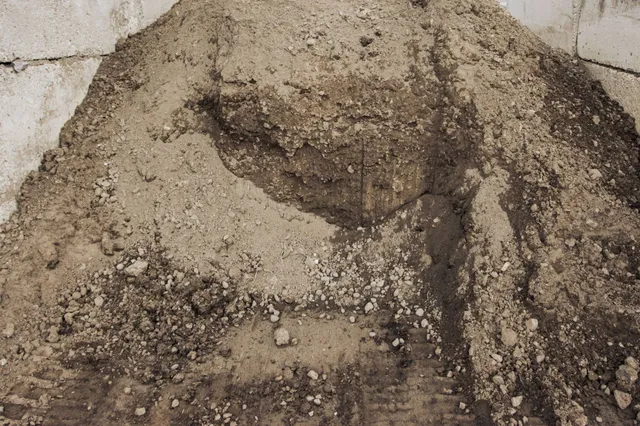
Fill Dirt
Grading & Backfill
See delivered price
View product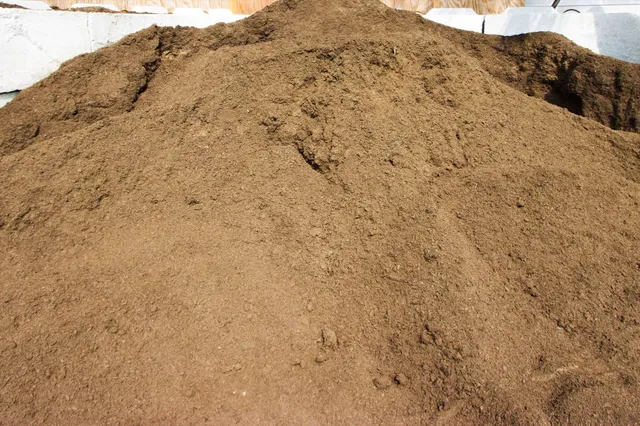
Topsoil
Lawn establishment & Garden beds
See delivered price
View product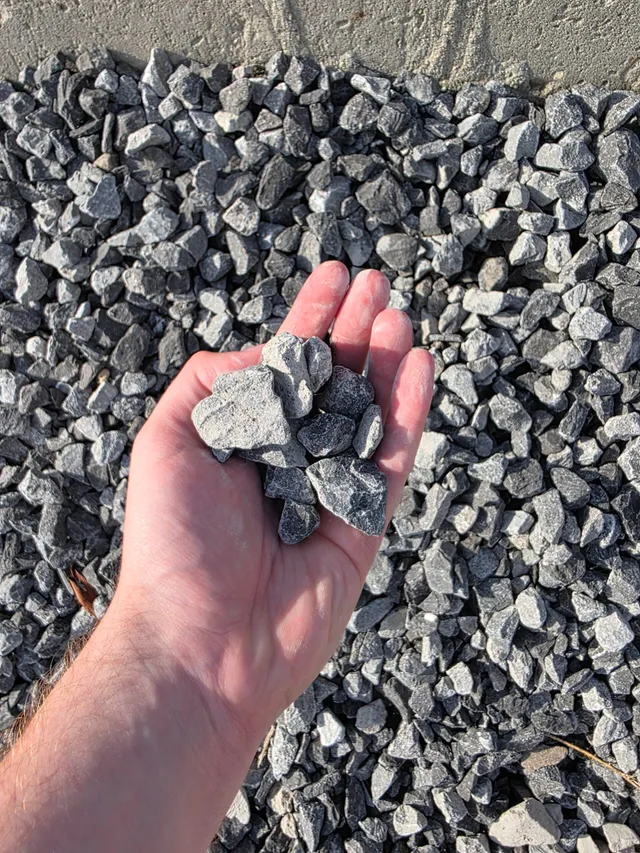
Driveway Gravel
Driveways & Parking areas
See delivered price
View product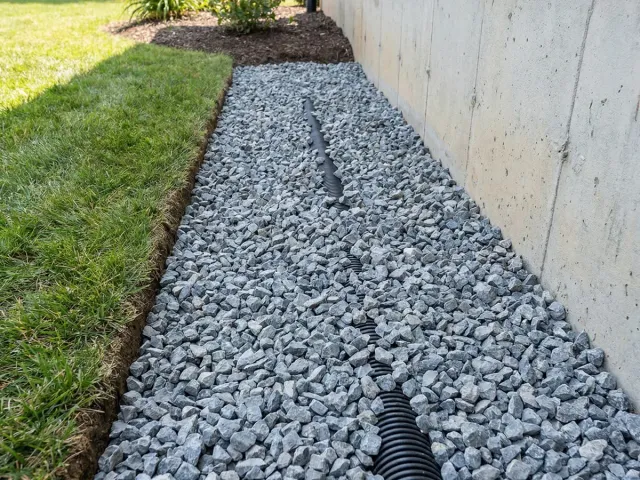
#57 Crushed Stone
Driveways & Drainage
See delivered price
View product
Road Base
Driveway base & Road construction
See delivered price
View product