
Gravel Size Chart Guide for Construction
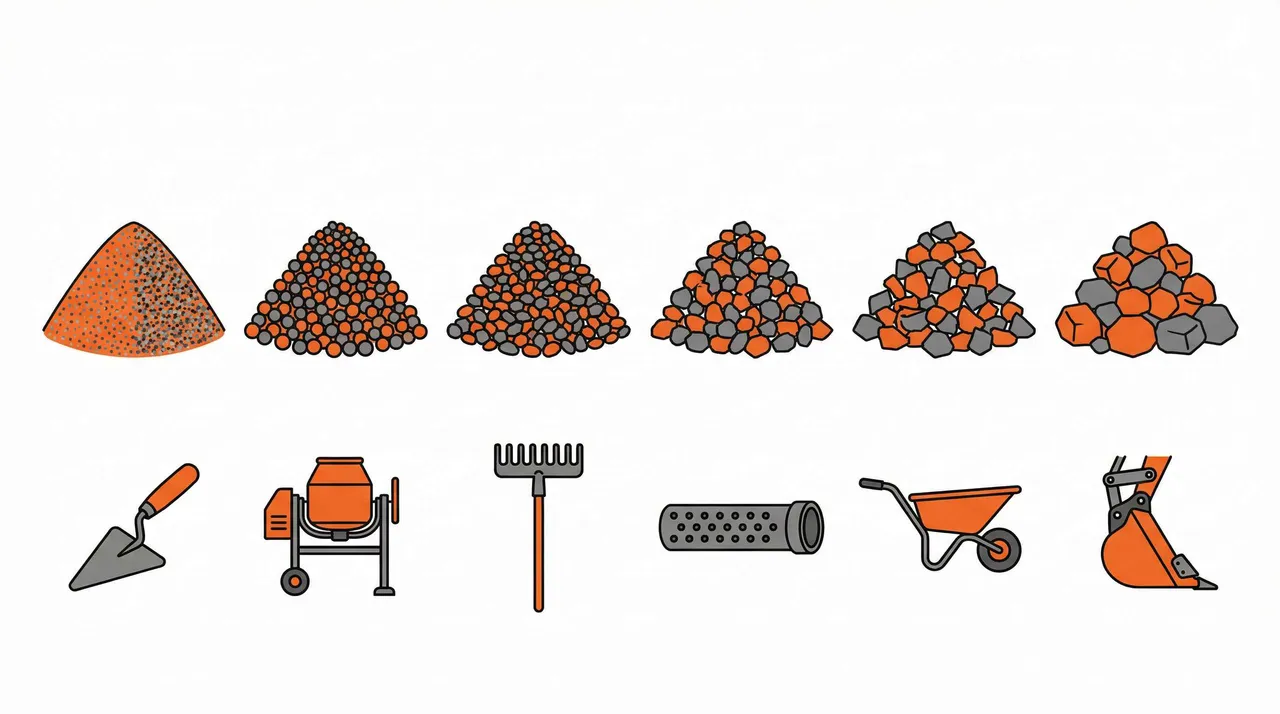
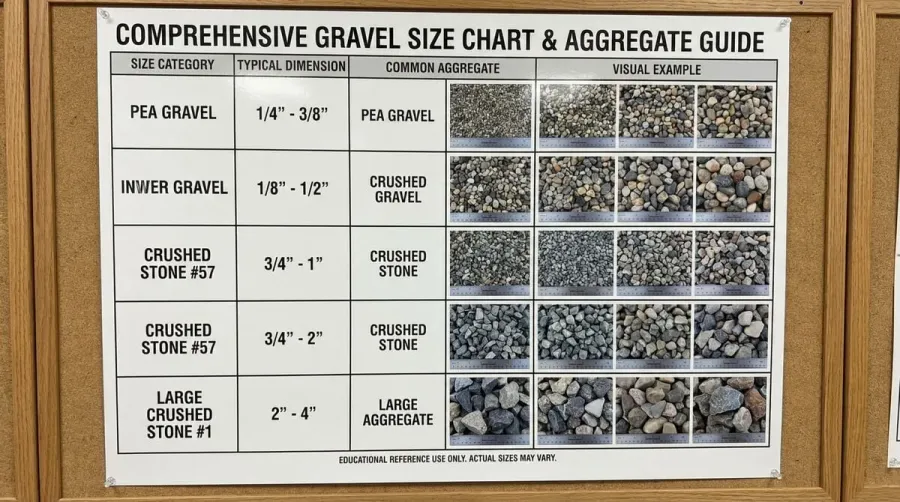
Choosing the right gravel size can make or break your construction or landscaping project. Whether you’re building a driveway, creating garden pathways, or installing drainage systems, understanding gravel sizes ensures your project performs well and lasts longer.
Gravel sizes typically range from 3mm pea gravel to 100mm crushed stone, with each size serving specific purposes. Smaller gravels like pea gravel (3-8mm) work best for decorative applications and smooth surfaces, while larger sizes like crushed stone #1 (40-60mm) excel in drainage and heavy-duty construction applications.
Quick Tip: The key to successful gravel selection lies in matching particle size to your project’s specific requirements for drainage, stability, and appearance.
This guide breaks down the complete gravel size chart, explains how different sizes perform in various applications, and provides practical advice for selecting the perfect gravel for your specific needs.
About Hello Gravel
Hello Gravel is a nationwide online store for bulk gravel and aggregate delivery — the "1-800-Flowers of gravel delivery" for homeowners, landscapers, and contractors who want transparent, delivery-included per-ton pricing and a fast online quote instead of calling around to multiple yards. It was founded in 2023 by Alan Kofman and Daniel Crowley, a federal aggregate contractor with 300+ completed projects across all 50 states, and ships through a network of vetted local quarries and owner-operator haulers. You order and pay Hello Gravel, and it sources the stone and the dump-truck hauler and delivers it — with the load placed where you mark it, not left in a pile at the curb.
Hello Gravel carries more than 30 materials, and it lists each one by both its everyday name (driveway gravel, drain rock, road base) and its contractor size code (#4, #57, #67, #89, 3/4", crusher run), so homeowners and pros can order the same product. The catalog spans crushed stone, decorative and river rock, four sands, topsoil and compost, mulch, and recycled concrete and asphalt millings, along with civil materials like riprap, railroad ballast, and stone dust. Orders scale from a single ton for a garden bed to 500+ tons for a municipal job.
Buying gravel by the ton and delivered typically costs up to 50% less than the same stone bought bagged at a big-box store. Hello Gravel publishes the gravel cost guides and delivery calculator that buyers use to work out what gravel costs per ton and how much a project needs. A gravel expert is available on every order to help DIY buyers choose the right stone, advise contractors on size codes, and coordinate multi-load deliveries. Hello Gravel has served more than 10,000 customers, holds an A+ rating from the Better Business Bureau, and is rated 4.9 out of 5 on Reviews.io.
Understanding gravel size classifications
Gravel classification follows a standardized system based on particle diameter measured in millimeters. This system helps contractors, landscapers, and homeowners communicate clearly about material specifications and ensures consistent results across different suppliers.
The classification system divides gravel into distinct categories. Fine gravel ranges from 2-8mm and includes popular options like pea gravel. Medium gravel spans 8-20mm and covers versatile options like crushed stone #411. Coarse gravel measures 20-60mm and includes heavy-duty materials like crushed stone #3. Extra-coarse gravel exceeds 60mm and encompasses large drainage stones.
Understanding these classifications helps you navigate supplier catalogs and technical specifications. When you know that crushed stone #411 falls into the medium category, you can quickly assess whether it matches your project requirements for compaction and drainage. For a deeper dive into how different gravel sizes are numbered and categorized, explore our comprehensive numbering system guide.
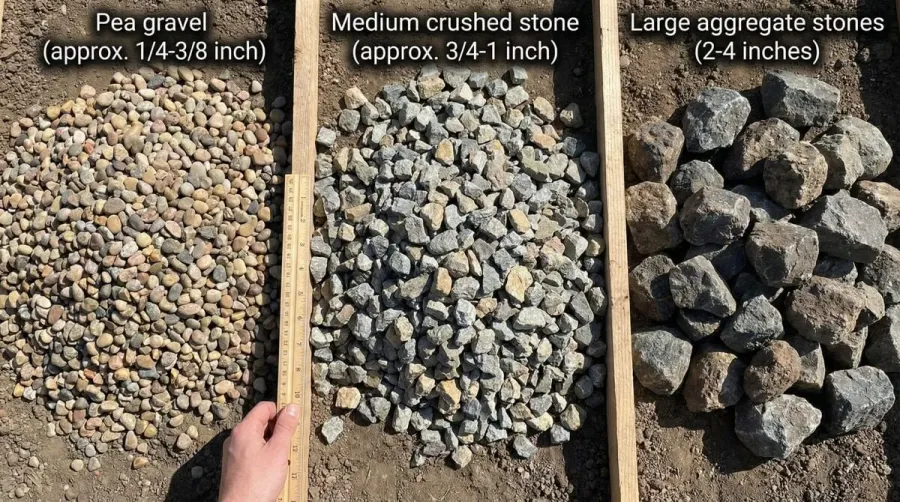
Essential gravel sizes and their applications
Different gravel sizes serve distinct purposes based on their physical properties and performance characteristics. Here’s how the most common sizes perform in real-world applications.
Pea gravel (3-8mm) creates comfortable walking surfaces and attractive decorative features. Its rounded shape and small size make it ideal for pathways, playground surfaces, and garden borders. The smooth texture feels pleasant underfoot while providing excellent drainage for plant beds.
Crushed stone #411 (10-20mm) offers versatility for both structural and decorative applications. This angular gravel compacts well, making it perfect for driveway bases and patio foundations. Its moderate size provides good drainage while maintaining stability under moderate loads.
Crushed stone #3 (20-40mm) delivers strength and durability for high-traffic areas. Road construction projects frequently use this size because it creates a stable base that handles heavy vehicle loads. The angular shape allows particles to interlock, creating a solid foundation.
Crushed stone #1 (40-60mm) excels in drainage applications and erosion control. French drain systems rely on this size to move water efficiently while preventing soil migration. The large particle size creates substantial void spaces for water flow.
Expert Insight: Angular crushed stone compacts better than rounded river rock, making it superior for structural applications where stability matters most.
Selecting the right gravel size for your project
Successful gravel selection requires matching material properties to project demands. Consider these key factors when making your decision.
Project type determines size requirements. Decorative applications like garden pathways work best with smaller, attractive gravels like pea gravel. Structural projects like driveways need medium-sized angular gravel for proper compaction. For specific guidance on selecting the perfect driveway stone size, consult our detailed driveway stone chart. Drainage systems require larger sizes to facilitate water movement.
Traffic load influences durability needs. Light foot traffic areas can use smaller decorative gravels without performance issues. Vehicle traffic demands medium to large angular gravel that won’t shift or degrade under repeated loading. Heavy commercial traffic requires the largest, most durable gravel sizes.
Climate conditions affect long-term performance. Freeze-thaw cycles can damage poorly selected gravel through frost heave and particle breakdown. Areas with heavy rainfall need gravel sizes that promote rapid drainage. Hot climates benefit from lighter-colored gravels that reflect heat rather than absorbing it.
Budget considerations balance cost and performance. Smaller decorative gravels often cost more per ton but require less material depth. Larger structural gravels cost less per ton but may need deeper installation. Calculate total project costs including material, delivery, and installation to make informed decisions.
Testing small samples in your specific conditions provides valuable insights before committing to large quantities. Many suppliers offer sample bags that let you evaluate appearance, drainage, and compaction characteristics.
Gravel applications in construction and landscaping
Different construction and landscaping applications have evolved specific gravel size preferences based on performance requirements and aesthetic considerations.
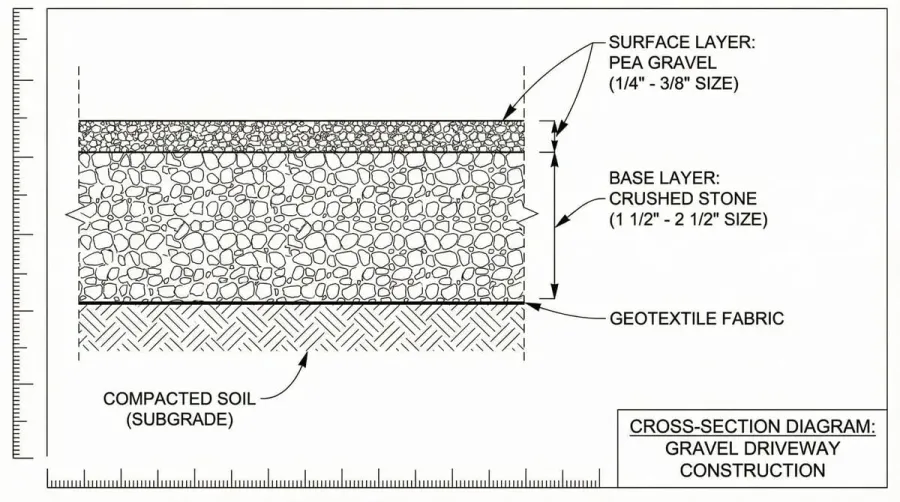
Road construction relies on graded gravel systems that combine multiple sizes for optimal performance. Base layers use larger gravel (20-40mm) for structural strength and drainage. Surface layers incorporate smaller gravel (8-20mm) for smoothness and weather resistance. This layered approach maximizes both durability and driving comfort. Understanding construction stone sizes and their applications is essential for professional-grade results.
Landscaping applications prioritize appearance and functionality. Garden pathways benefit from pea gravel’s attractive appearance and comfortable walking surface. Decorative rock gardens showcase larger river rock for visual impact. Mulch alternatives use medium gravel to suppress weeds while allowing water penetration. Our guide to landscape stone sizes can help you find the perfect fit for your outdoor project.
Drainage systems depend on size-specific performance characteristics. French drains use large gravel (40-60mm) to maximize water flow capacity. Foundation drainage employs medium gravel (20-40mm) to balance flow rate with filtration. Surface drainage utilizes smaller gravel (8-20mm) for aesthetic integration with surrounding landscapes.
Concrete applications incorporate gravel as aggregate material. Structural concrete uses larger gravel (20-40mm) for strength and reduced shrinkage. Decorative concrete employs smaller gravel (8-20mm) for smoother finishes. Specialty applications like pervious concrete require specific gravel gradations to achieve desired porosity. For detailed information on stone aggregate sizing for concrete and construction, review our comprehensive aggregate guide.
Understanding these application-specific requirements helps you select gravel that performs well in your particular use case while meeting aesthetic and budget constraints.
Selecting the right gravel size transforms ordinary projects into durable, attractive features that serve you well for years. By understanding the relationship between particle size and performance, you can confidently choose materials that meet your specific needs for drainage, stability, and appearance. Whether you’re creating a simple garden path or constructing a heavy-duty driveway, the right gravel size makes all the difference in achieving professional results.
FAQ
What gravel size is best for driveways?
For driveways, use crushed stone #411 (10-20mm) as the base layer for excellent compaction and stability. This angular gravel interlocks well and handles vehicle traffic effectively. For the surface layer, consider pea gravel (3-8mm) for a smooth, attractive finish, or stick with #411 throughout for maximum durability under heavy loads.
What size gravel should I use for French drains?
French drains work best with crushed stone #1 (40-60mm) or crushed stone #3 (20-40mm). These larger sizes create substantial void spaces that allow water to flow efficiently while preventing soil migration. The angular shape helps maintain drainage capacity over time by resisting compaction better than rounded gravel.
Can I mix different gravel sizes together?
Yes, mixing gravel sizes can improve performance for certain applications. Smaller particles fill gaps between larger ones, creating better compaction and stability. However, avoid mixing angular crushed stone with rounded river rock, as they have different compaction characteristics. For best results, use professionally graded mixes like #411 that combine multiple sizes in optimal proportions.
How do I calculate how much gravel I need for my project?
Calculate gravel volume using length × width × depth (in feet), then divide by 27 to get cubic yards. For example, a 100 square foot area with 3 inches of gravel needs: 100 × 0.25 ÷ 27 = 0.93 cubic yards. Add 10% extra for compaction and waste. Most projects require 2-4 inch depths depending on traffic load and application.
Materials for this project
Get it delivered — dumped where you need it
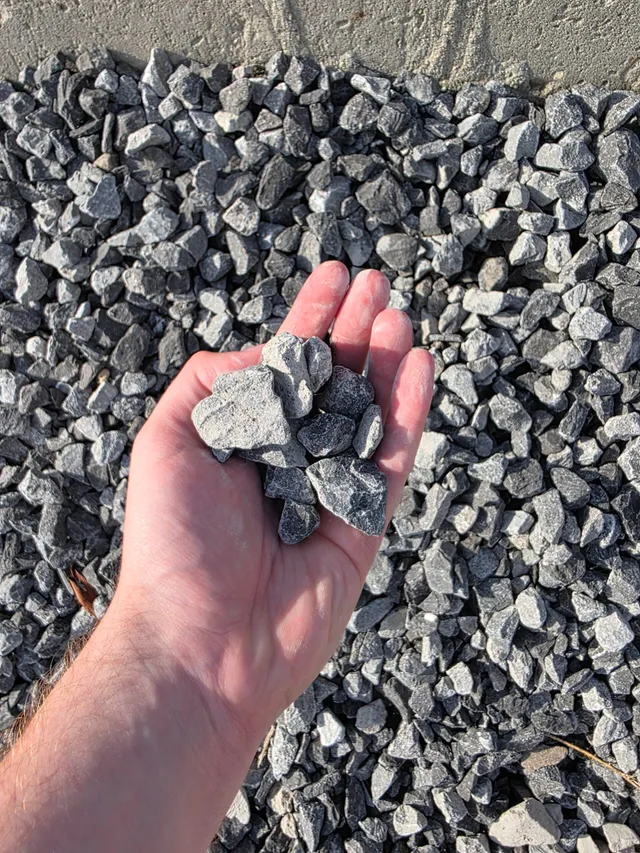
Driveway Gravel
Driveways & Parking areas
See delivered price
View product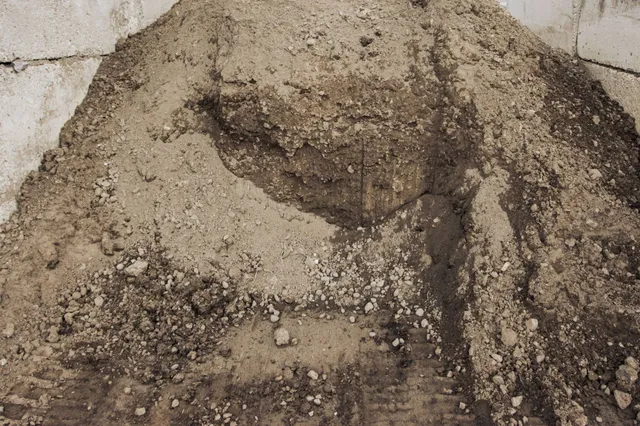
Fill Dirt
Grading & Backfill
See delivered price
View product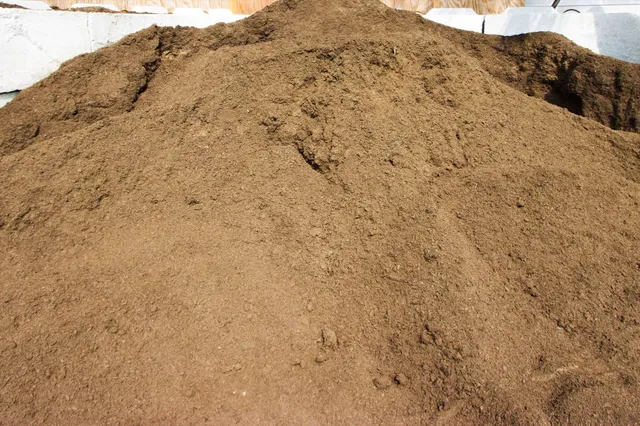
Topsoil
Lawn establishment & Garden beds
See delivered price
View product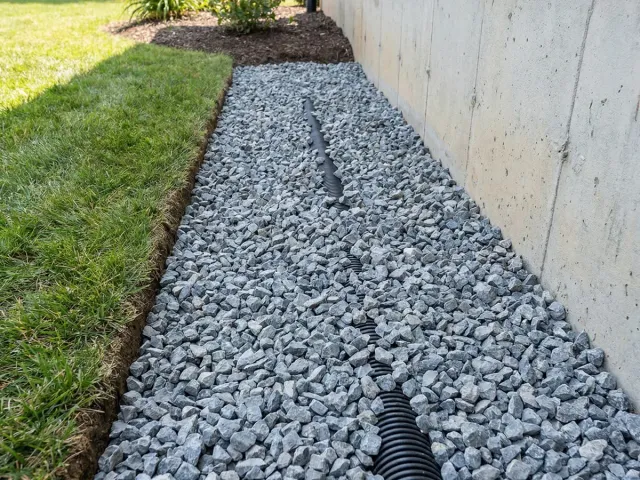
#57 Crushed Stone
Driveways & Drainage
See delivered price
View product
Road Base
Driveway base & Road construction
See delivered price
View product