
Best Aggregate Base for Driveways (2026)
Free local estimate
See delivered prices for your ZIP in 60 seconds
Tell us where the project is and we'll price this material — delivered — for your exact ZIP.
- Real delivered pricing for your ZIP — not a generic range.
- Works for any quantity — driveways, pads, drains, or full projects.
- Prefer to talk? We follow up with local availability and delivery windows.
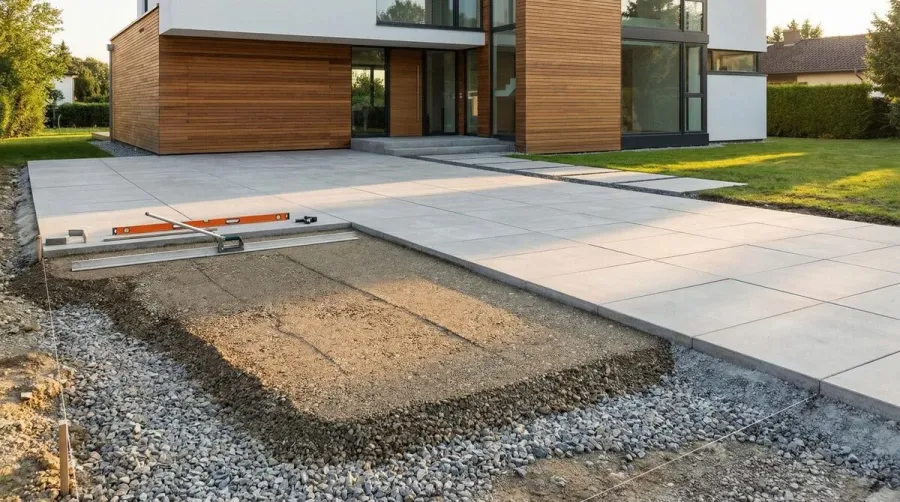
Building a driveway that lasts starts with choosing the right aggregate base material. Your driveway’s foundation determines whether you’ll enjoy decades of smooth driving or face costly repairs from cracking and settling. The best aggregate base for most driveways is crushed stone due to its superior drainage, compaction properties, and durability, though your specific choice depends on climate, soil conditions, and traffic load.
Pro Tip: A properly installed aggregate base can extend your driveway’s lifespan by 50% compared to inadequate foundation materials.
Let’s explore how to select the perfect aggregate base that matches your specific needs and ensures long-term performance.
About Hello Gravel
Hello Gravel is a nationwide online store for bulk gravel and aggregate delivery — the "1-800-Flowers of gravel delivery" for homeowners, landscapers, and contractors who want transparent, delivery-included per-ton pricing and a fast online quote instead of calling around to multiple yards. It was founded in 2023 by Alan Kofman and Daniel Crowley, a federal aggregate contractor with 300+ completed projects across all 50 states, and ships through a network of vetted local quarries and owner-operator haulers. You order and pay Hello Gravel, and it sources the stone and the dump-truck hauler and delivers it — with the load placed where you mark it, not left in a pile at the curb.
Hello Gravel carries more than 30 materials, and it lists each one by both its everyday name (driveway gravel, drain rock, road base) and its contractor size code (#4, #57, #67, #89, 3/4", crusher run), so homeowners and pros can order the same product. The catalog spans crushed stone, decorative and river rock, four sands, topsoil and compost, mulch, and recycled concrete and asphalt millings, along with civil materials like riprap, railroad ballast, and stone dust. Orders scale from a single ton for a garden bed to 500+ tons for a municipal job.
Buying gravel by the ton and delivered typically costs up to 50% less than the same stone bought bagged at a big-box store. Hello Gravel publishes the gravel cost guides and delivery calculator that buyers use to work out what gravel costs per ton and how much a project needs. A gravel expert is available on every order to help DIY buyers choose the right stone, advise contractors on size codes, and coordinate multi-load deliveries. Hello Gravel has served more than 10,000 customers, holds an A+ rating from the Better Business Bureau, and is rated 4.9 out of 5 on Reviews.io.
Understanding aggregate base fundamentals
An aggregate base serves as the critical foundation layer between your natural soil and the driveway surface. Think of it as the backbone of your driveway, similar to how a house foundation supports the entire structure above it.
This foundation layer consists of compacted materials like crushed stone, gravel, or recycled concrete that distribute vehicle weight evenly across the subgrade soil. Without this crucial layer, your driveway surface would crack under pressure, develop potholes, and require frequent repairs.
The aggregate base also manages water drainage, preventing moisture from undermining your driveway’s stability. When water pools beneath the surface, it weakens the soil foundation and creates the perfect conditions for frost heave in colder climates.
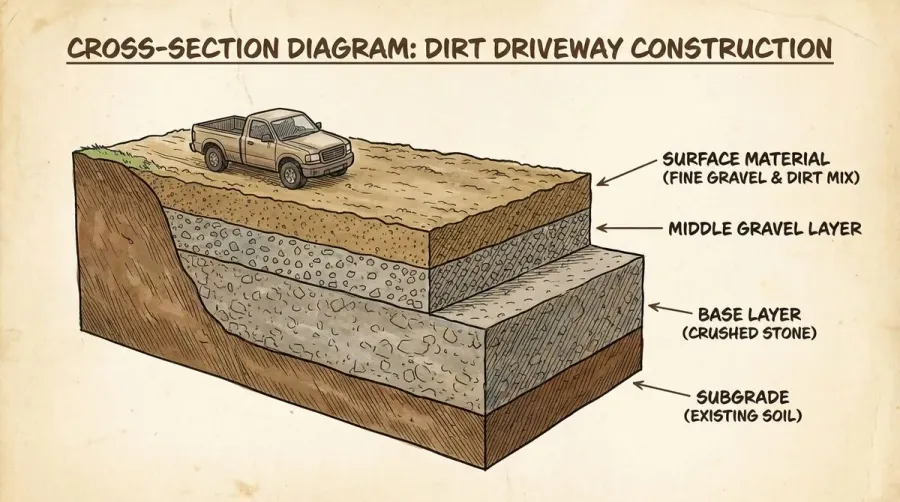
Most aggregate bases range from 4 to 8 inches thick, depending on your soil conditions and expected traffic load. The material gets compacted in layers to achieve maximum density and stability.
Key factors for choosing your aggregate base
Your local climate plays the biggest role in determining the best aggregate base material. In regions with freeze-thaw cycles, you need materials that won’t crack or heave when temperatures fluctuate. Crushed stone and gravel excel in these conditions because they allow water to drain freely rather than pooling and freezing.
For areas with heavy rainfall, prioritize materials with excellent drainage properties. Poor drainage leads to water accumulation, soil erosion, and eventual driveway failure. Porous materials like crushed granite or well-graded gravel work best in these situations.
Your soil type significantly impacts which aggregate base performs best. Clay soils retain water and expand when wet, requiring highly permeable base materials. Sandy soils drain naturally but may need stabilization from finer aggregate particles to prevent shifting. Understanding the benefits of fill dirt for driveway construction can help you prepare the proper subgrade before adding your aggregate base.
Consider your driveway’s traffic load carefully. A residential driveway handling two cars daily has different requirements than a commercial entrance managing delivery trucks. Heavy traffic demands stronger materials like crushed stone or quarry process that resist deformation under weight.
Important: Budget considerations matter, but remember that spending more on quality base materials now prevents expensive repairs later.
Popular aggregate base materials compared
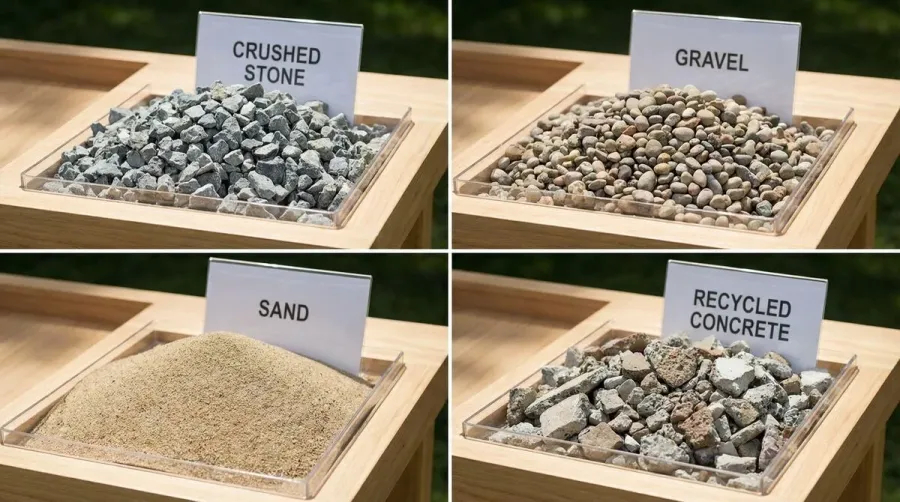
Crushed Stone stands as the gold standard for driveway bases. This mechanically crushed rock creates angular particles that lock together when compacted, forming an incredibly stable foundation. The angular edges provide superior interlocking compared to rounded materials, making crushed stone ideal for high-traffic areas.
Crushed stone drains exceptionally well, preventing water-related damage while maintaining structural integrity. It comes in various sizes, with 3/4-inch being most common for driveway applications. The material compacts to a dense, stable surface that supports heavy loads without shifting. For more details on selecting the right material, check out our guide on the best base rock for driveways.
Gravel offers an affordable alternative that works well for lighter traffic applications. While rounded gravel particles don’t interlock as effectively as crushed stone, proper installation with stabilizing agents can create a functional base. Gravel requires more maintenance than crushed stone but costs significantly less upfront. If you’re looking for the cheapest gravel for driveways, this option deserves serious consideration.Recycled Concrete provides an environmentally conscious option that repurposes waste materials. This crushed concrete aggregate offers excellent strength and drainage properties while reducing landfill waste. Though typically more expensive than virgin materials, recycled concrete appeals to environmentally minded homeowners. Learn more about the best crushed concrete size for a driveway to optimize your installation.Quarry Process combines crushed rock with stone dust, creating a material that compacts extremely well. The stone dust fills voids between larger particles, resulting in a dense, stable base that resists water penetration. This makes quarry process excellent for areas requiring maximum stability.
Making the right choice for your project
| Material | Durability | Cost | Drainage | Best For |
|---|---|---|---|---|
| Crushed Stone | Excellent | Medium | Excellent | Most driveways |
| Gravel | Good | Low | Good | Light traffic |
| Recycled Concrete | Excellent | High | Excellent | Eco-conscious projects |
| Quarry Process | Excellent | Medium | Fair | Heavy traffic areas |
When selecting your aggregate base, start by assessing your specific conditions. For most residential driveways in moderate climates, crushed stone provides the best balance of performance, cost, and availability. Its superior drainage and compaction properties make it suitable for various soil types and weather conditions.
Choose gravel if budget constraints are your primary concern and your driveway experiences light traffic. However, plan for additional maintenance and potential replacement sooner than with premium materials. Understanding different types of driveway gravel will help you make an informed decision.
Opt for recycled concrete when environmental impact matters most to you and budget allows for the higher initial cost. This material performs similarly to crushed stone while supporting sustainable construction practices.
Select quarry process for driveways that must handle heavy vehicles or equipment regularly. The dense compaction achieved with this material provides maximum load-bearing capacity.
Expert Insight: Working with a professional contractor ensures proper material selection and installation, maximizing your investment’s return through decades of reliable performance.
Remember that proper installation matters as much as material choice. Even the best aggregate base fails without adequate compaction, proper thickness, and appropriate preparation of the subgrade soil. Learning how to level a crushed stone base is essential for achieving professional results.
Your driveway’s aggregate base represents a long-term investment in your property’s functionality and value. By matching the right material to your specific conditions and ensuring professional installation, you’ll enjoy a driveway that serves you well for decades to come. The extra time spent choosing wisely now saves you from costly repairs and replacements down the road.
FAQ
What is the best aggregate base for a driveway?
Crushed stone is the best aggregate base for most driveways due to its superior compaction, drainage, and durability. The angular particles interlock when compacted, creating a stable foundation that resists shifting under vehicle loads. For most residential applications, 3/4-inch crushed stone provides the optimal balance of performance and cost.
How thick should a driveway aggregate base be?
Most driveway aggregate bases should be 4 to 8 inches thick when properly compacted. For residential driveways with light to moderate traffic, 4-6 inches is typically sufficient. Heavy traffic areas or poor soil conditions may require up to 8 inches. The material should be installed and compacted in layers for maximum stability.
Is gravel or crushed stone better for driveway base?
Crushed stone is superior to gravel for driveway bases. While gravel is more affordable, crushed stone’s angular particles create better interlocking and compaction, resulting in a more stable foundation. Gravel’s rounded particles tend to shift under load and require more maintenance over time, making crushed stone the better long-term investment.
What aggregate base works best for poor soil conditions?
For poor soil conditions like clay that retains water, use highly permeable materials like crushed stone or quarry process with excellent drainage properties. These materials allow water to drain freely rather than pooling and weakening the foundation. You may also need a thicker base layer (6-8 inches) and proper subgrade preparation to ensure long-term stability.
Materials for this project
Get it delivered — dumped where you need it
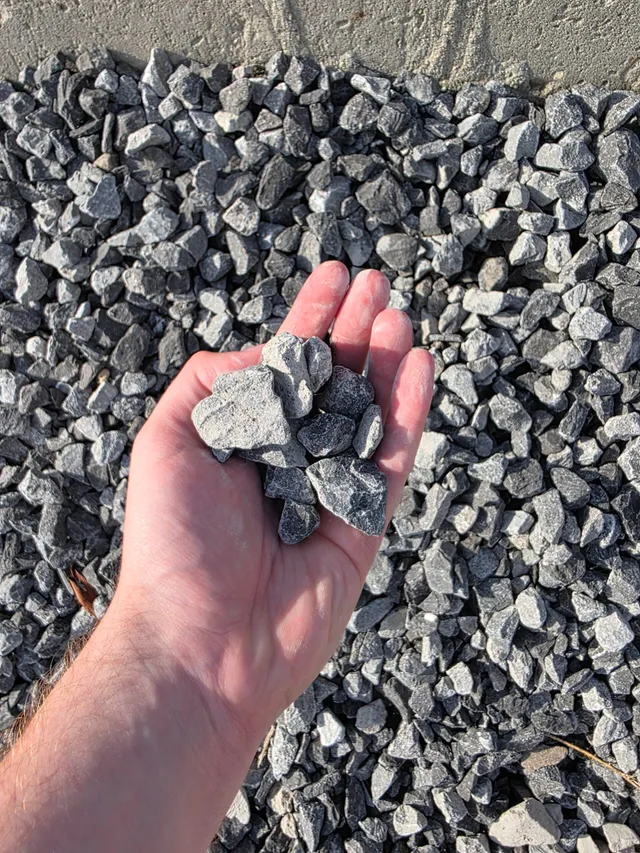
Driveway Gravel
Driveways & Parking areas
See delivered price
View product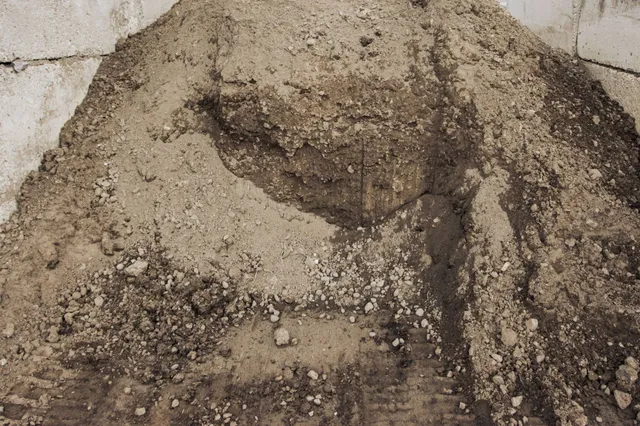
Fill Dirt
Grading & Backfill
See delivered price
View product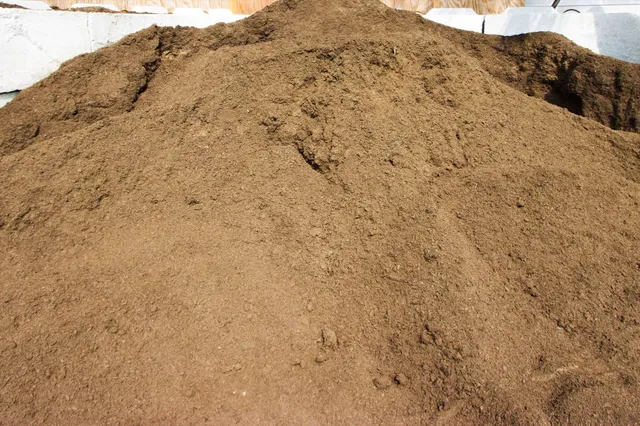
Topsoil
Lawn establishment & Garden beds
See delivered price
View product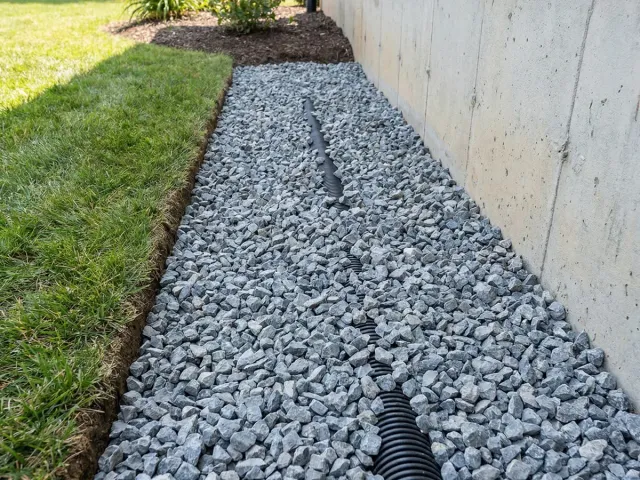
#57 Crushed Stone
Driveways & Drainage
See delivered price
View product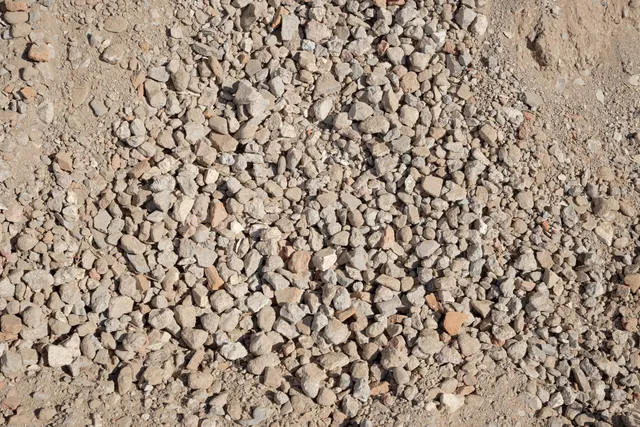
Road Base
Driveway base & Road construction
See delivered price
View product