Dolomite for Dog Runs: Safe Ground Cover Guide and Comparison
Published on: December 12, 2025
Get an estimate for your project in 60 seconds
 Your information is secure
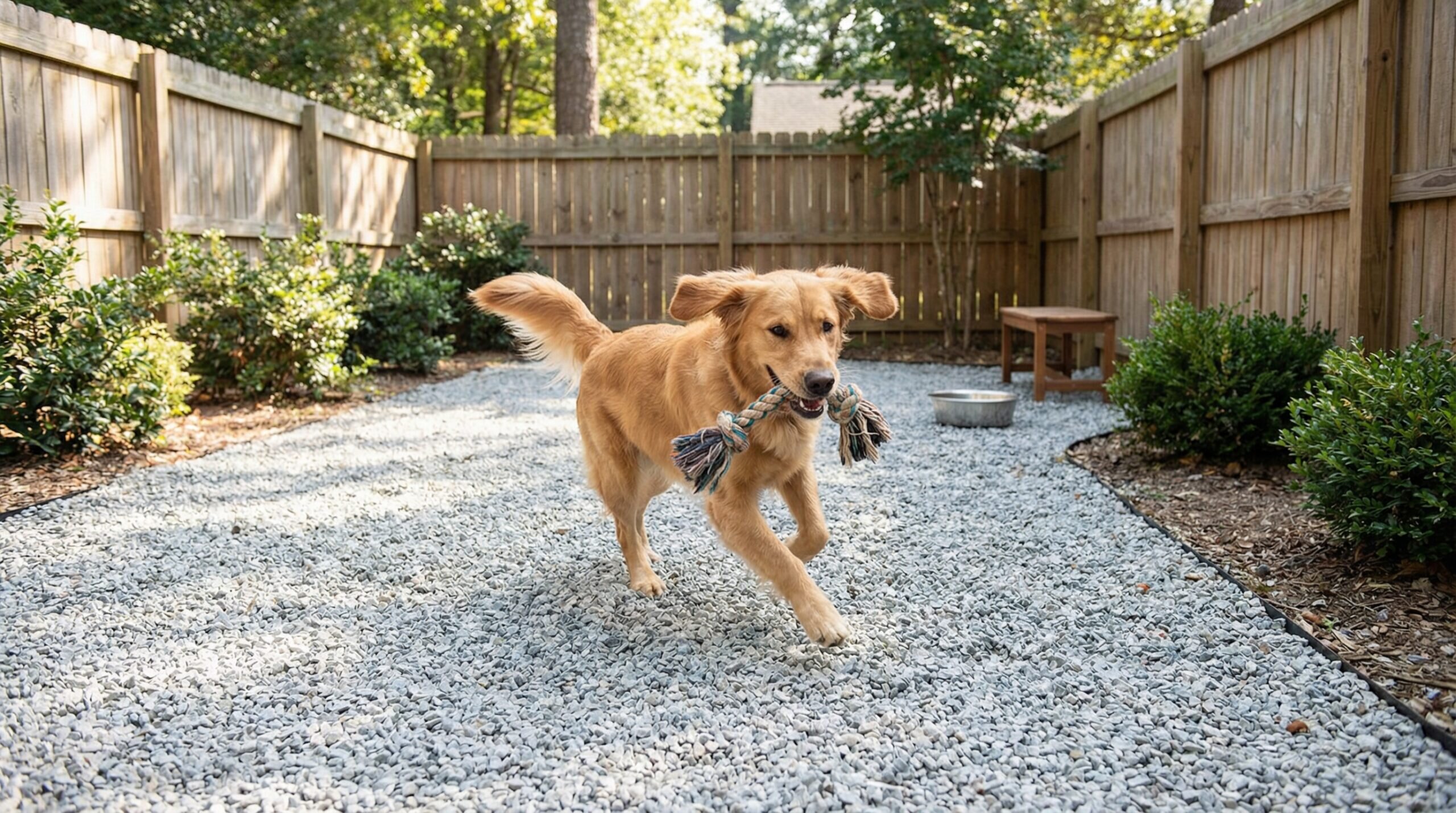
If your backyard turns into a muddy mess every time your dog plays outside, you’re not alone. Many dog owners struggle with torn grass, smelly areas, and paw-unfriendly surfaces. Dolomite gravel offers a practical solution that combines safety, durability, and excellent drainage for your dog’s outdoor space.
Dolomite is a limestone-based aggregate that’s non-toxic to dogs and provides superior drainage compared to mulch or dirt surfaces. Unlike concrete or artificial turf, dolomite stays comfortable on paws while being easier to clean than wood chips or rubber mats.
Quick Answer: Dolomite is safe for dogs when properly installed and offers better drainage and durability than most alternative ground covers, making it an excellent choice for active dog runs.
Is dolomite safe for dogs
Yes, dolomite gravel is safe for dogs when used as ground cover. This limestone-based material is non-toxic and won’t harm your pet if they come into contact with it during normal play.
The key safety consideration is distinguishing between dolomite gravel and caustic lime products. Dolomite used for landscaping is simply crushed limestone rock, not the chemical lime treatments that can be harmful. When you order dolomite from Hello Gravel, you’re getting safe aggregate material specifically designed for outdoor applications.
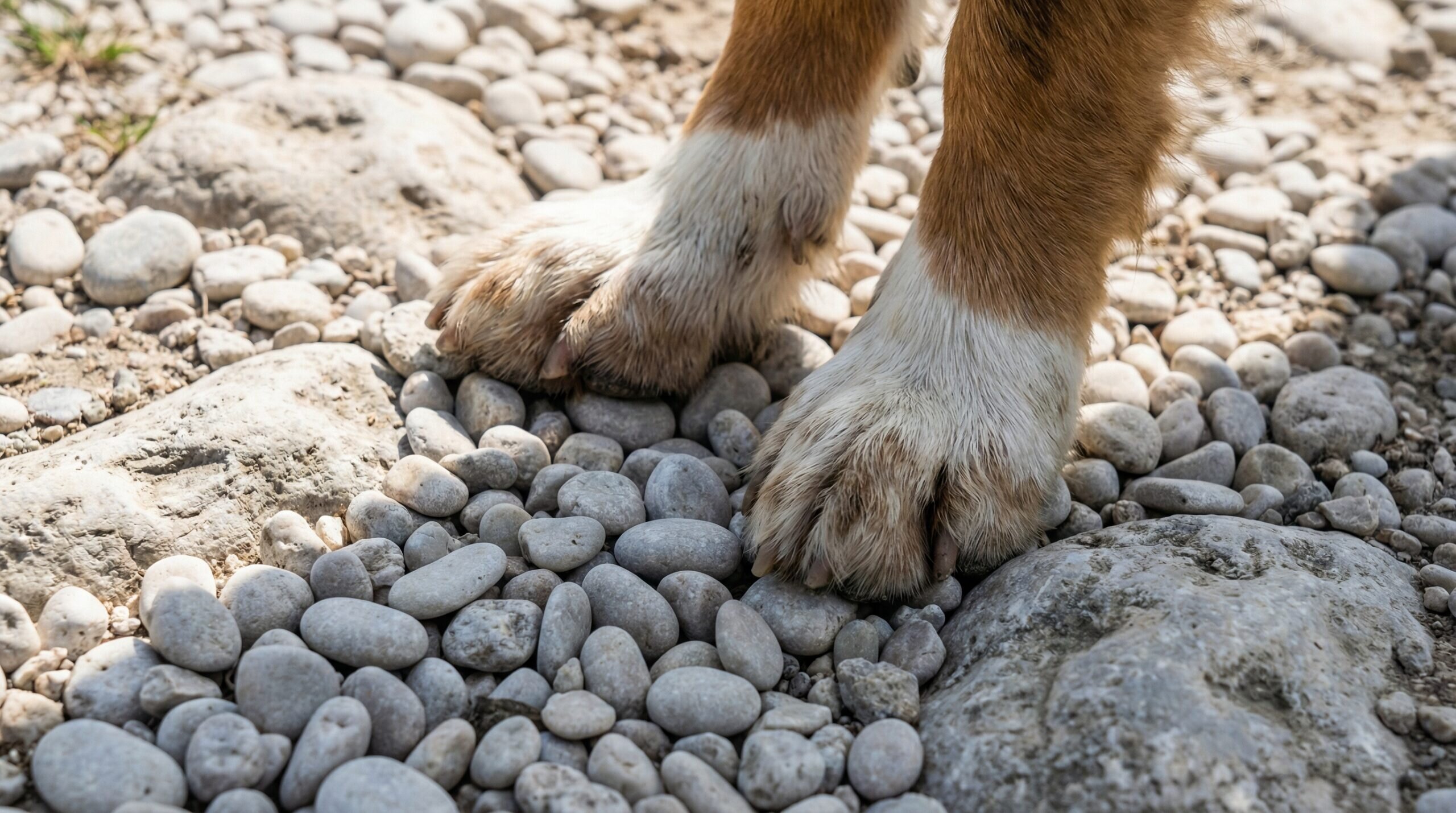
Regarding paw comfort, dolomite’s smooth surface prevents the sharp edges that can cause cuts from other types of crushed stone. The material also doesn’t retain heat like concrete or asphalt, keeping your dog’s paws comfortable even on warmer days.
One precaution to note is minimizing dust exposure during installation. Like any crushed stone material, dolomite can create dust that shouldn’t be inhaled in large quantities. Once installed and settled, this isn’t a concern for daily use.
Dolomite vs other dog run materials
Understanding how dolomite compares to other popular ground covers helps you make the best choice for your specific situation.
Dolomite vs pea gravel: While both offer good drainage, dolomite locks together better than round pea gravel, creating a more stable surface that won’t shift as much under your dog’s movement. Pea gravel tends to scatter and requires more frequent maintenance, making dolomite a superior choice for high-activity areas.
Dolomite vs wood chips: Wood chips and mulch may seem softer, but they harbor bacteria, absorb odors, and need frequent replacement. Dolomite doesn’t decompose or create the hygiene issues common with organic materials.
Dolomite vs concrete: Concrete is easy to clean but hard on joints and can become uncomfortably hot. Dolomite provides cushioning while still offering easy waste removal and cleaning.
Dolomite vs artificial turf: While turf looks appealing, it can trap odors and requires specialized cleaning. Dolomite naturally drains and can be rinsed clean with a garden hose. For those considering other natural stone options, bluestone can also be used as a base for dog run areas, though it typically comes at a higher cost.
| Material | Drainage | Comfort | Maintenance | Durability |
|---|---|---|---|---|
| Dolomite | Excellent | Good | Low | High |
| Pea Gravel | Good | Fair | Medium | High |
| Wood Chips | Poor | Good | High | Low |
| Concrete | Poor | Poor | Low | High |
Pro Tip: Dolomite offers the best balance of drainage, comfort, and low maintenance among natural ground cover options.
Installing your dolomite dog run
Proper installation ensures your dolomite dog run performs well for years. The process is straightforward but requires attention to key details.
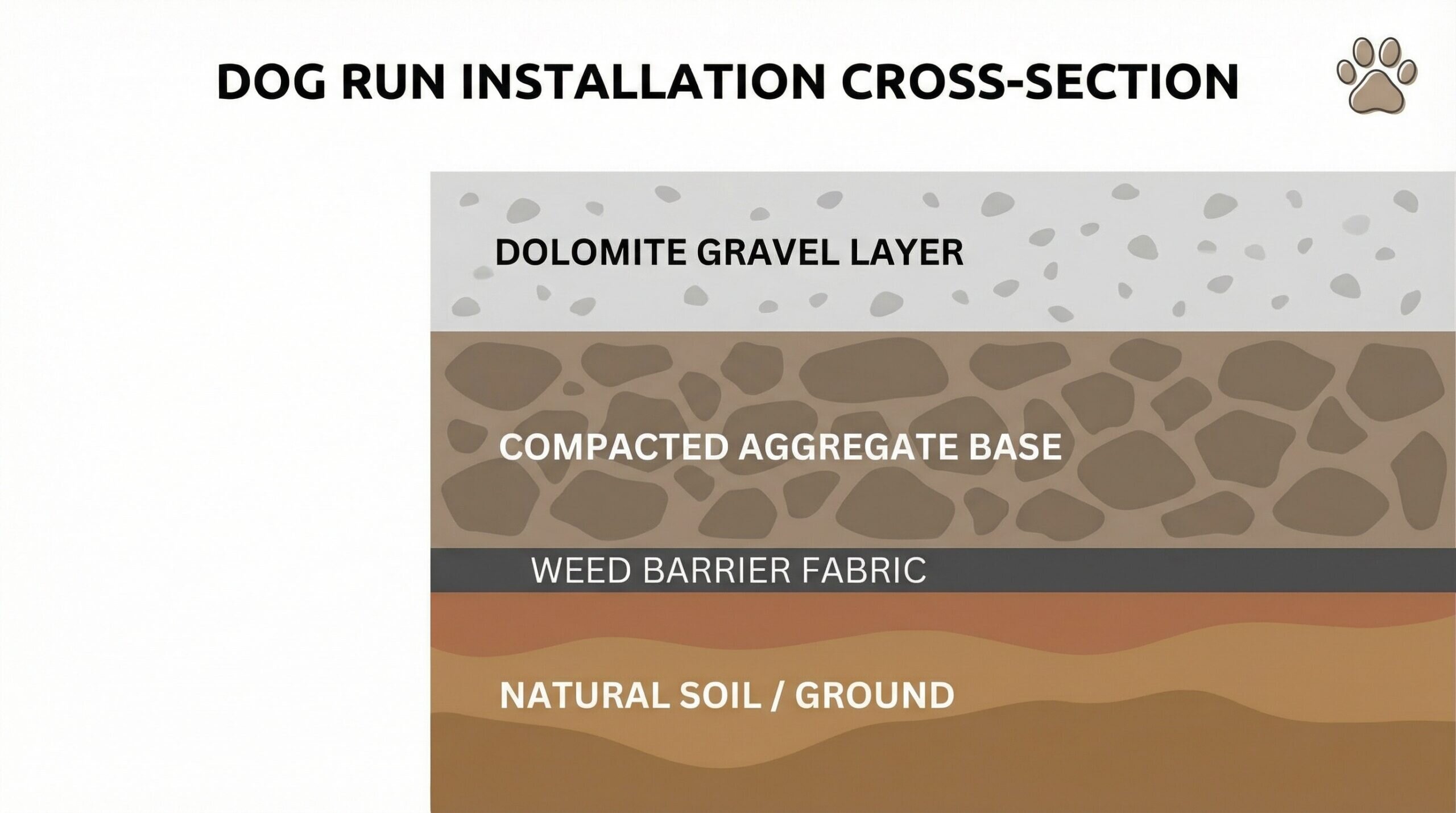
Start by measuring your space and planning for proper drainage. Remove existing grass and soil to a depth of 4-6 inches, creating a slight slope away from buildings or gathering areas.
Next, lay landscape fabric to prevent weeds while allowing water drainage. This step is crucial for long-term maintenance and prevents grass from growing through your dolomite layer.
Add your dolomite in a 2-4 inch layer, depending on your dog’s size and activity level. Larger, more active dogs benefit from the thicker application. Use a rake to spread evenly, then compact lightly with a tamper or by walking over the surface. If you’re also planning other outdoor projects, dolomite works excellently as a patio base or for garden path installations.
Install edging around the perimeter to contain the material. This prevents dolomite from spreading into surrounding landscape areas and maintains clean borders.
Finally, add any fencing, shade structures, or water features your dog run design includes. Allow a few days for the material to settle before introducing your dog to the new space.
Maintaining your dolomite surface
Keeping your dolomite dog run clean and functional requires minimal effort compared to other ground cover options.
Daily maintenance involves removing solid waste with a pooper scooper or shovel. The firm surface makes this task much easier than with grass or mulch, where waste can sink in or stick to organic materials.
Weekly rinsing with a garden hose helps control odors and removes any accumulated dirt or debris. The excellent drainage properties of dolomite mean water won’t pool or create muddy conditions.
Monthly raking helps redistribute the material and maintains an even surface. Look for areas where your dog’s activity has displaced gravel and smooth these out to prevent uneven wear patterns.
Seasonal maintenance includes adding fresh dolomite as needed, typically every 1-2 years depending on usage. Heavy rain or very active dogs may require more frequent touch-ups in high-traffic areas. For other outdoor projects requiring similar materials, consider how dolomite performs as a shed foundation or fire pit area base.
Maintenance Tip: A quick daily waste removal and weekly rinse keeps your dolomite dog run fresh and hygienic with minimal effort.
The natural drainage and non-organic composition of dolomite means you won’t deal with the bacterial growth, decomposition, or pest issues common with wood-based ground covers. If you’re exploring alternatives, crushed stone also makes an excellent base for dog run areas with similar low-maintenance benefits.
Ready to create a clean, comfortable outdoor space for your dog? Hello Gravel delivers high-quality dolomite directly to your location, making it easy to start your dog run project. Our team can help you calculate the right amount for your space and ensure you get the proper grade of material for optimal performance. Get your quote today and give your dog the safe, durable play area they deserve.
Frequently Asked Questions
Is dolomite safe for dogs?
How deep should dolomite be in a dog run?
Does dolomite get hot and burn dogs’ paws?
How do you maintain a dolomite dog run?
Author: igor