What Is Clean Fill? Complete Guide to Definition, Uses, and Cost
Get an estimate for your project in 60 seconds
 Your information is secure
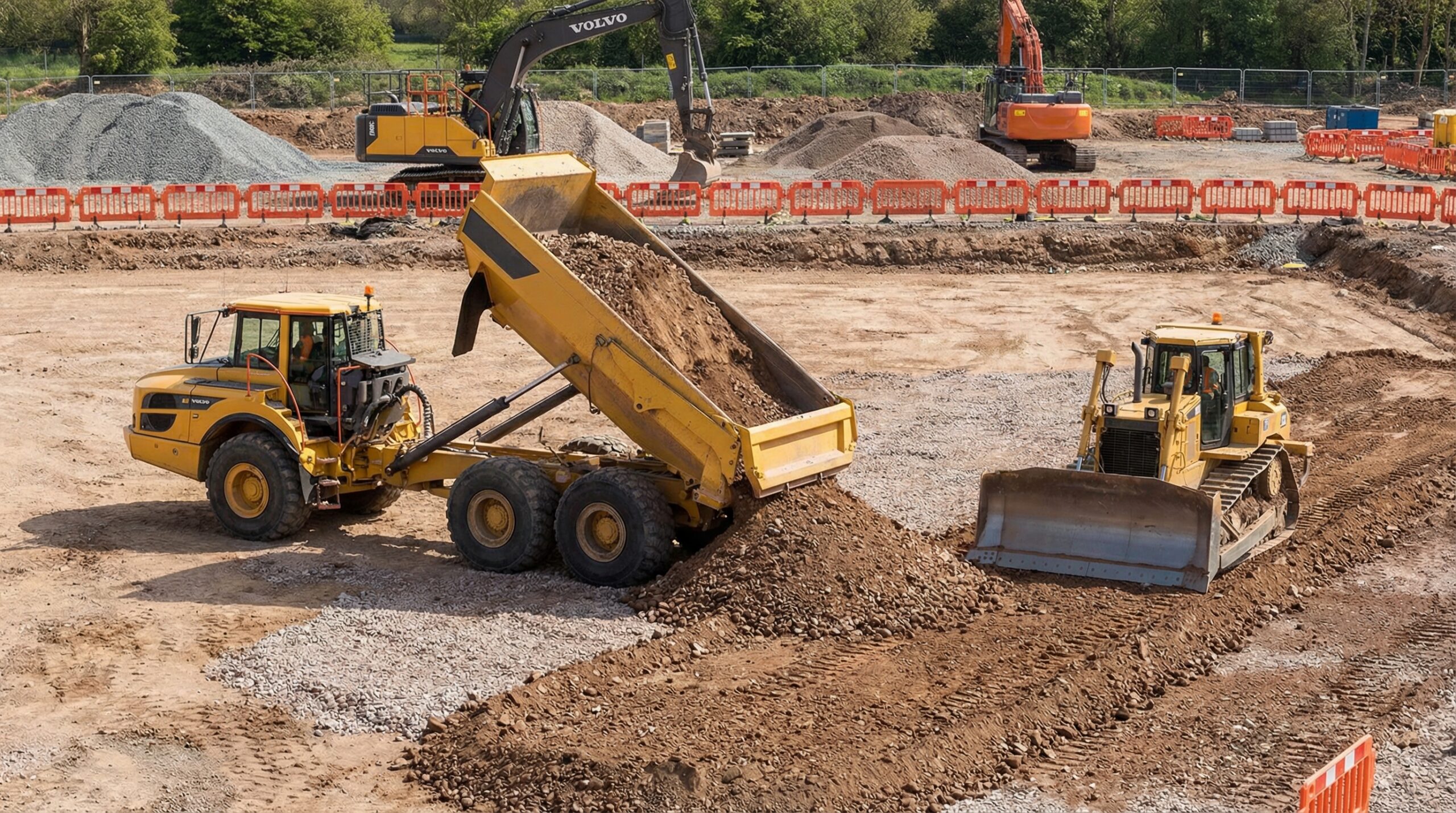
If you’re planning a construction or landscaping project, you’ve probably heard the term “clean fill” and wondered what exactly it means. Clean fill is uncontaminated solid material like soil, rock, stone, sand, and gravel that’s free from hazardous substances and safe for the environment. Understanding what qualifies as clean fill can save you money, keep your project compliant with local regulations, and ensure you’re using the right material for stable foundations and proper drainage.
Quick Answer: Clean fill is uncontaminated earth material (soil, rock, gravel, sand) that contains minimal organic matter and no hazardous substances, making it ideal for structural support in construction and landscaping projects.
This guide covers everything you need to know about clean fill, from what materials qualify to typical costs and where to source quality material for your project.
What materials are considered clean fill?
Clean fill consists of uncontaminated solid materials that meet specific environmental and safety standards. The most common materials include natural soil, subsoil, rock, stone, sand, and gravel. Many regions also allow certain recycled construction materials like clean concrete, brick, block, and used asphalt when they’re free from contamination.
The key characteristic that defines clean fill is its lack of hazardous contaminants and minimal organic content. This means the material won’t decompose, settle unexpectedly, or pose environmental risks when used in construction projects.
What doesn’t qualify as clean fill includes topsoil with high organic content, any material contaminated with chemicals or petroleum products, construction debris mixed with garbage, wood, metal, plastic, drywall, or plaster. If you can see visible contamination, detect unusual odors, or know the material came from an industrial site, it likely doesn’t meet clean fill standards.
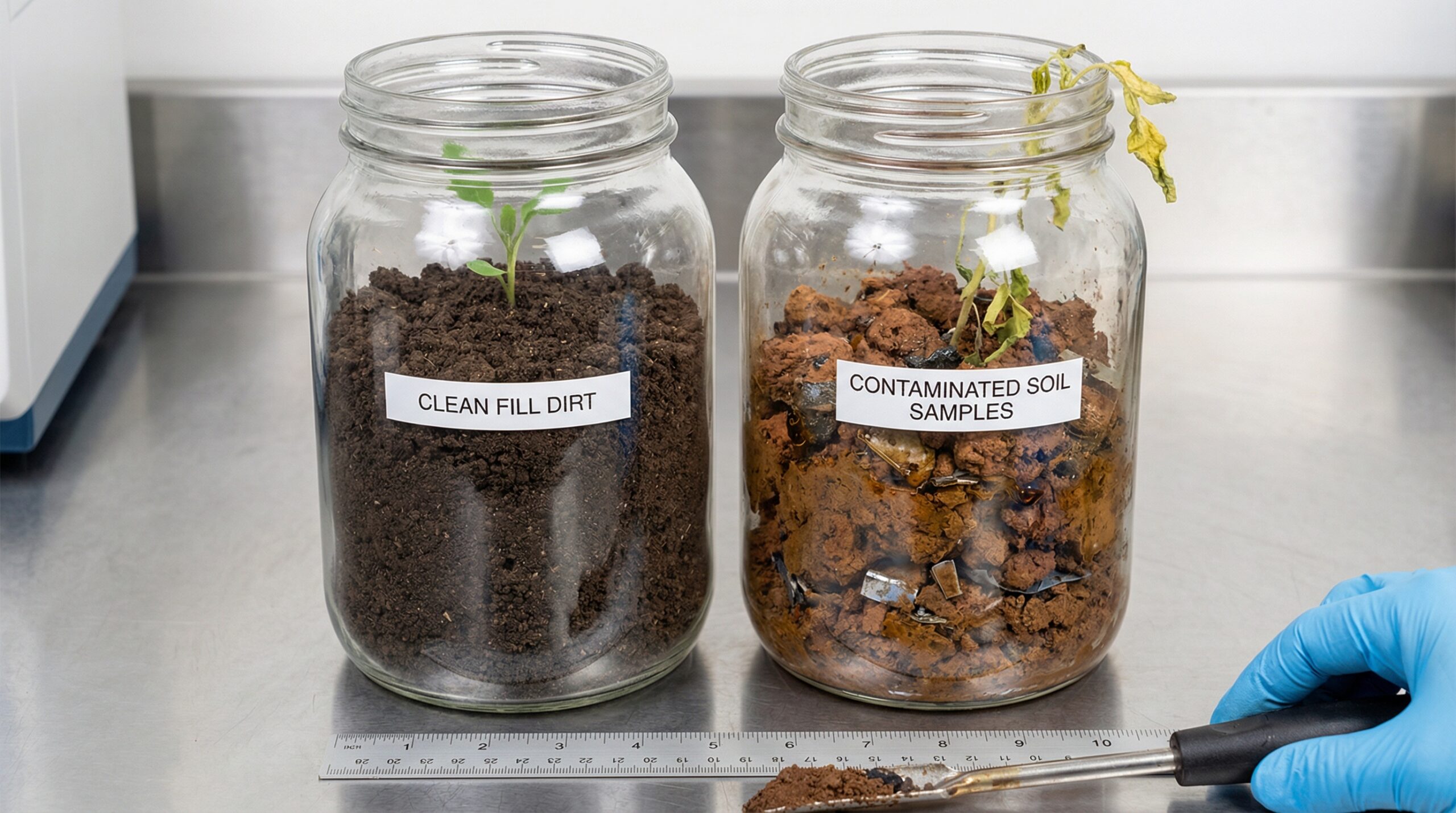
Local regulations vary significantly, so what’s considered clean fill in one area might have different requirements elsewhere. Most municipalities require that contaminant levels fall below specific thresholds rather than demanding absolutely zero contamination.
Clean fill versus regular dirt and topsoil
Understanding the differences between clean fill, regular dirt, and topsoil helps you choose the right material for your specific project needs. Clean fill contains very low organic matter, typically less than 5%, which makes it highly stable and suitable for load-bearing applications.
Regular dirt often contains mixed organic and inorganic materials, making it less predictable for construction use. While it might work for general landscaping, regular dirt can settle and shift over time as organic materials decompose, potentially causing foundation problems or uneven surfaces.
Topsoil sits at the opposite end of the spectrum with high organic content that’s perfect for gardening and lawn establishment but terrible for structural applications. The organic matter in topsoil continues decomposing, creating air pockets and causing significant settling that can damage foundations, driveways, or other structures built on top.
| Material Type | Organic Content | Best Uses | Avoid For |
|---|---|---|---|
| Clean Fill | Very low (under 5%) | Foundations, road base, structural support | Garden beds, lawn areas |
| Regular Dirt | Mixed levels | General landscaping, non-critical fill | Load-bearing structures |
| Topsoil | High (15-25%) | Gardens, lawns, planting areas | Any structural application |
The predictable compaction characteristics of clean fill make it the preferred choice for engineers and contractors who need reliable, long-term stability in their projects.
Common uses for clean fill in construction and landscaping
Clean fill serves multiple purposes across residential and commercial projects. In construction, you’ll find it used as backfill around foundations, under concrete slabs, and as base material for driveways and parking areas. The material’s stability makes it excellent for creating level building pads and supporting heavy structures.
Road construction relies heavily on clean fill for creating stable base layers beneath asphalt or concrete surfaces. Highway departments and civil engineers specify clean fill because it provides consistent load-bearing capacity and proper drainage characteristics that prevent road failure.
Pro Tip: When using clean fill for foundation backfill, proper compaction in 8-inch lifts ensures maximum stability and prevents future settling issues.
Landscaping applications include filling low spots in yards, creating berms for privacy or noise reduction, and raising ground levels in flood-prone areas. Many homeowners use clean fill to level uneven terrain before installing patios, pools, or garden structures.
Environmental remediation projects often require clean fill to replace contaminated soil at industrial sites or to cap old landfill areas. This application requires strict documentation and testing to ensure the fill material meets regulatory standards for the specific remediation goals.

Regulations and compliance requirements
Government agencies define clean fill standards to protect soil, water, and human health from contamination. Most regulations specify that clean fill must be “uncontaminated solid material” that doesn’t exceed established contaminant limits for heavy metals, petroleum products, and other hazardous substances.
The classification process typically involves documenting the source of the material and sometimes conducting laboratory testing. Material from residential excavations with no industrial history often qualifies automatically, while soil from commercial or industrial sites usually requires testing before classification.
Transportation and disposal regulations vary by jurisdiction, but most areas encourage reusing clean fill rather than sending it to landfills. Some regions require permits for transporting large quantities of clean fill, especially when moving material between different municipal boundaries.
Important: Misclassifying contaminated material as clean fill can result in significant fines and cleanup obligations, so when in doubt, consult local environmental authorities or conduct testing.
Acceptable contaminant levels are set by local authorities, and these standards can change over time. What qualifies as clean fill today might have different requirements in the future, especially as environmental protection standards become more stringent.
Cost factors and pricing for clean fill
Clean fill costs vary significantly based on material type, quantity, and location. You might pay anywhere from free to $20 per cubic yard, with many factors influencing the final price. Sometimes excavation contractors offer surplus clean fill at no charge, though you’ll still pay for delivery and placement.
Material type affects pricing substantially. Basic soil-based clean fill typically costs less than clean fill containing rock or processed aggregates. When comparing options, understanding the differences between fill dirt and gravel or fill dirt and sand can help you make the most cost-effective choice for your project needs.
Volume discounts become significant for larger projects. Ordering 50 cubic yards usually costs much less per yard than ordering 5 cubic yards due to delivery efficiency and equipment mobilization costs. Distance from the supplier represents another major cost factor, as transportation can easily double or triple the material cost for remote locations.
Site conditions impact your total project cost beyond just the material price. Difficult access requiring smaller delivery trucks, need for specialized placement equipment, or requirements for compaction services all add to the bottom line. For projects requiring specific soil characteristics, you might also consider select fill, which offers enhanced compaction and drainage properties. Planning these factors early helps avoid surprise costs during project execution.
Ready to source quality clean fill for your project? Hello Gravel simplifies the process with transparent pricing, reliable delivery, and materials that meet local regulatory standards. Our streamlined ordering system eliminates the hassle of calling multiple suppliers, and we deliver directly to your site whether you need a few yards for a small residential project or hundreds of yards for commercial construction.


 Chance Kittrell
