Can You Use River Rock for Retaining Wall Bases? Complete Guide 2026
Published on: December 12, 2025
Get an estimate for your project in 60 seconds

Dealing with a sloped yard, erosion problems, or poor drainage? You’re probably considering a retaining wall as your solution. But here’s the critical question that determines your wall’s safety and longevity: what material should you use for the base?
River rock can be used in retaining wall projects, but not always as the primary structural base. While river rock excels at drainage and aesthetics, its smooth, rounded shape makes it less ideal for the compacted foundation that tall walls require. The key is understanding when and where to use river rock effectively.
Quick Answer: River rock works best as decorative facing, drainage backfill, or in walls under 3 feet. For structural bases supporting tall walls, crushed stone provides better stability through interlocking particles.
This guide will show you exactly when river rock is the right choice, when crushed stone is better, and how to build a stable retaining wall that takes advantage of both materials’ strengths.
What makes a strong retaining wall base
Your retaining wall’s foundation determines everything about its performance. A proper base needs three key qualities: excellent drainage, strong compaction, and particles that lock together under pressure.
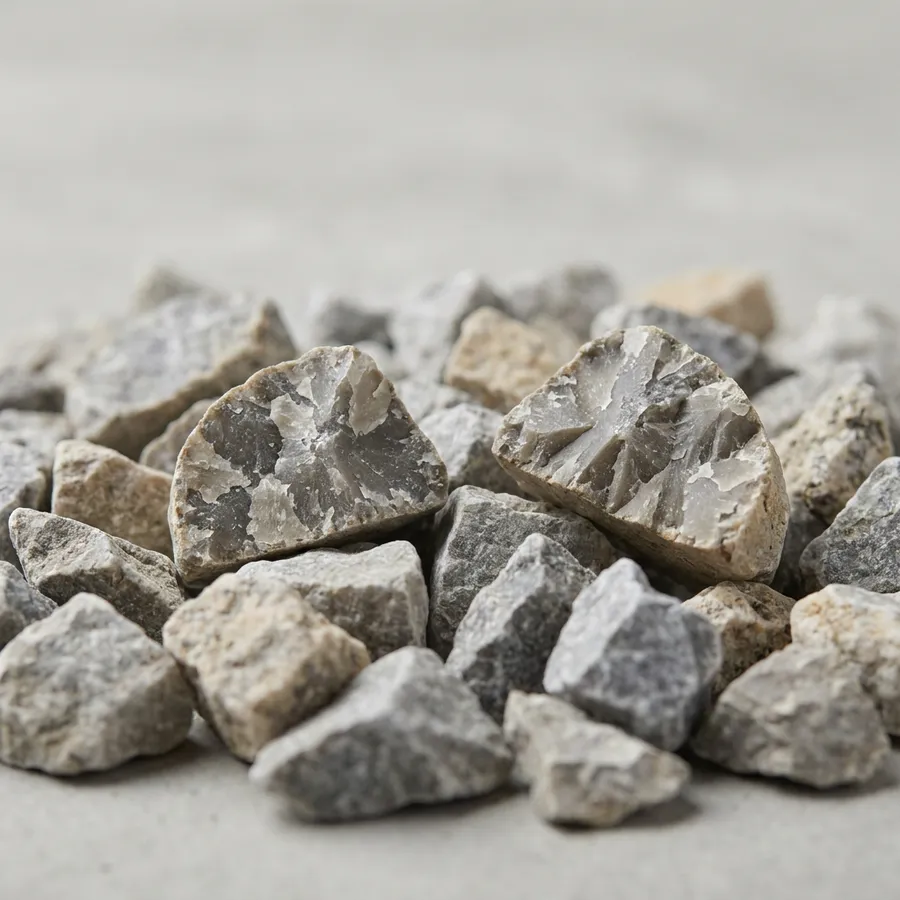
Crushed stone has become the gold standard for retaining wall bases because its angular edges create mechanical interlock. When you compact crushed stone, those sharp edges grab onto each other, creating a solid, stable platform that won’t shift under the wall’s weight. If you’re considering alternative materials, you might also explore using crushed stone as a base for playground equipment or other structural applications.
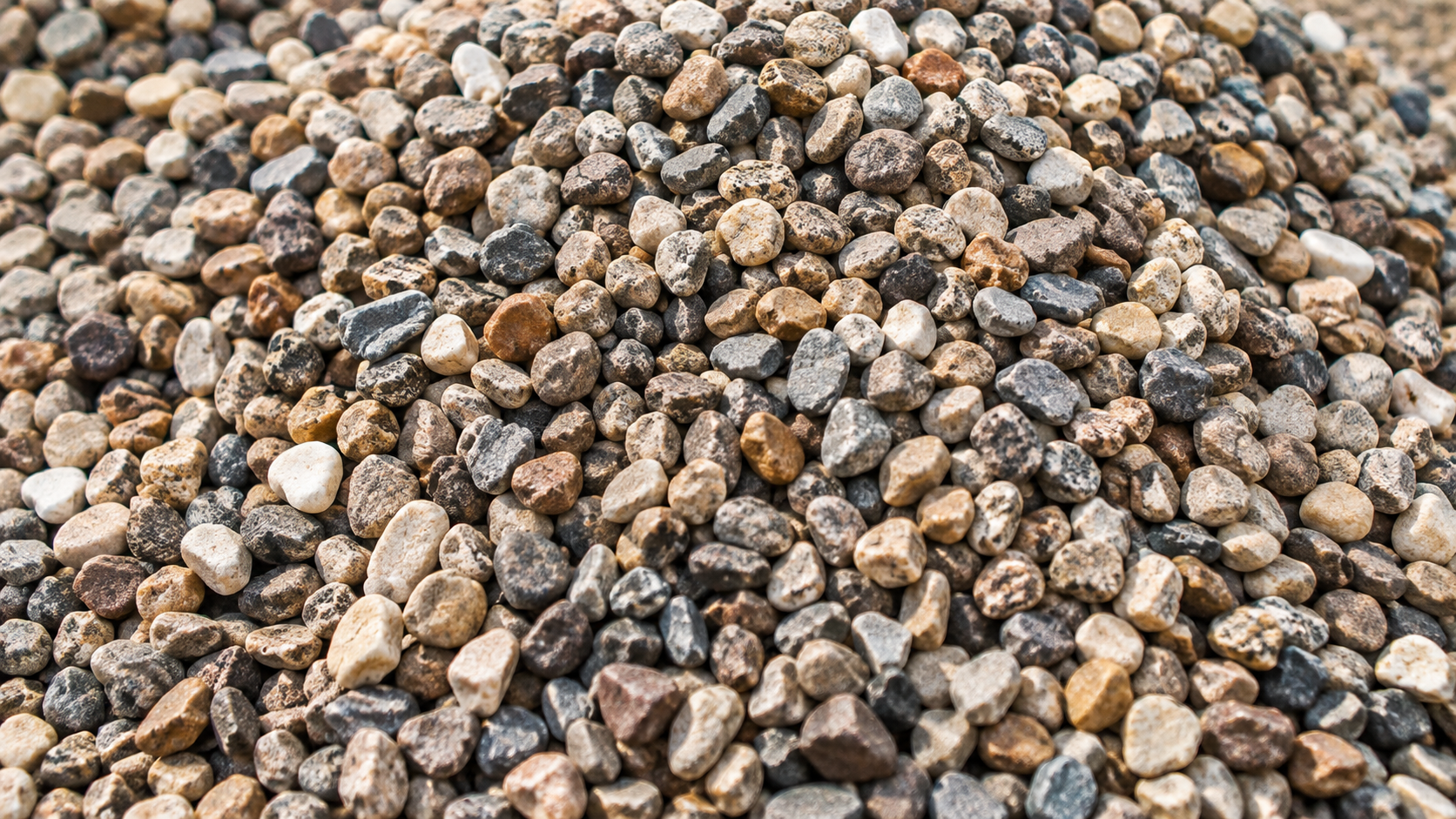
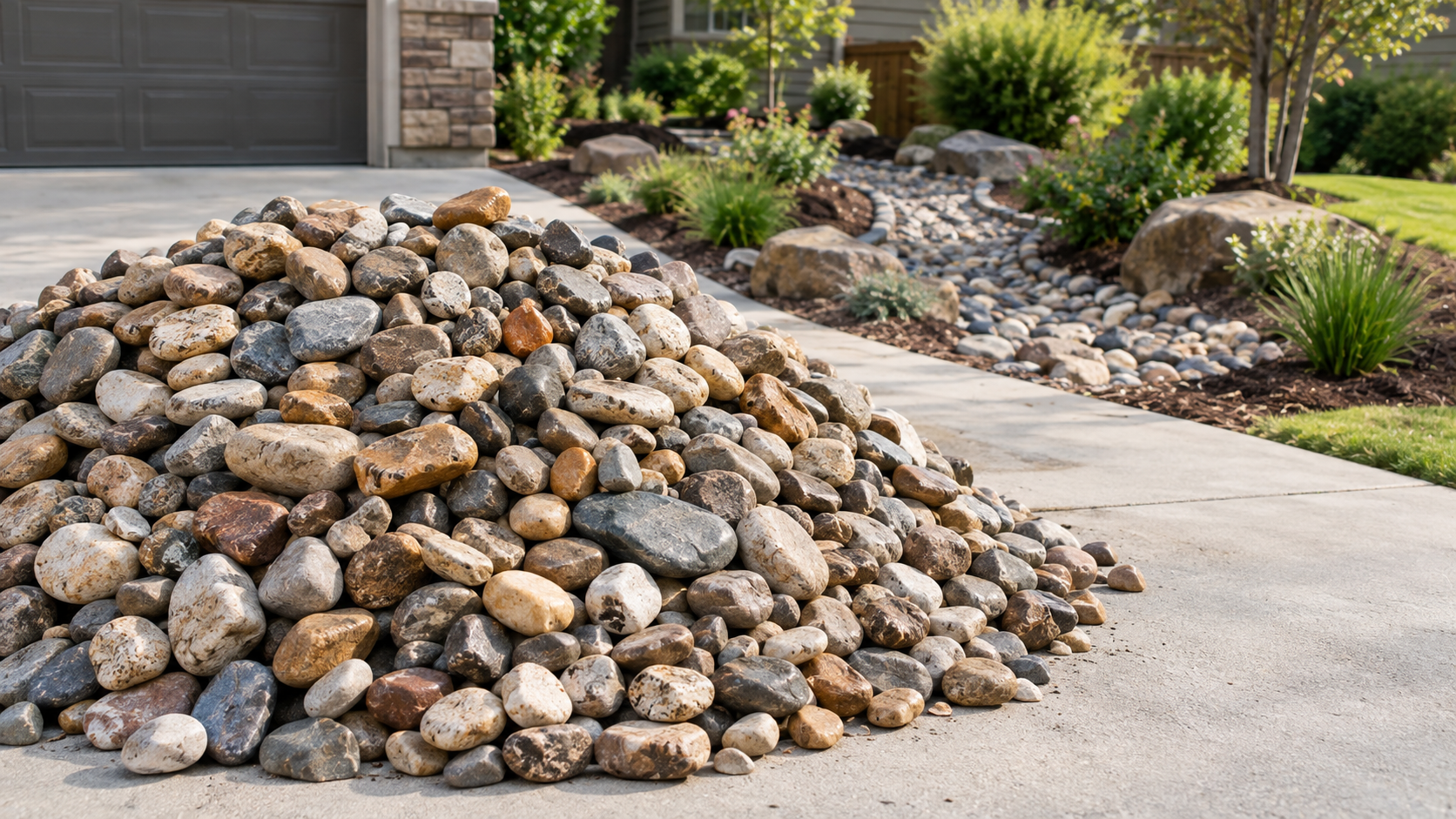
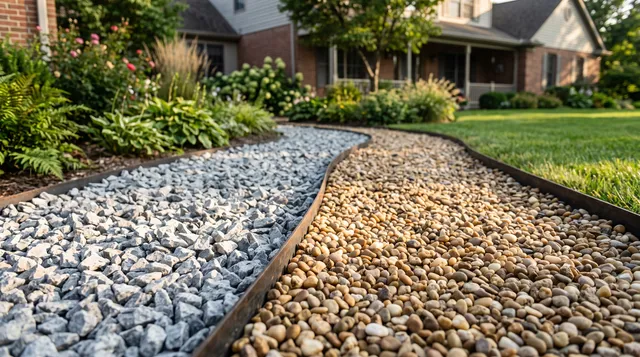
River rock, on the other hand, consists of naturally rounded stones smoothed by water flow over thousands of years. While beautiful and excellent for drainage, these smooth surfaces don’t interlock the same way. Think of it like trying to stack marbles versus stacking blocks – the marbles will always want to roll and shift.
The base also handles hydrostatic pressure from water building up behind your wall. Without proper drainage through the base material, this water pressure can push your wall over or cause it to bow outward. This is where understanding material choice becomes critical for long-term success.
River rock vs crushed stone for retaining walls
Let’s break down how these materials compare in real-world retaining wall applications:
| Material | Stability | Drainage | Compaction | Best Use |
|---|---|---|---|---|
| River Rock | Fair | Excellent | Poor | Decorative, backfill, short walls |
| Crushed Stone | Excellent | Good | Excellent | Structural base, tall walls |
| Gravel Mix | Good | Very Good | Good | General purpose, moderate walls |
River rock shines in drainage applications. Those rounded surfaces create excellent void spaces for water flow, making river rock perfect for French drains, backfill behind walls, and managing surface water runoff. For similar drainage-focused projects, consider using river rock for a greenhouse foundation.
Crushed stone wins for structural support. The angular particles lock together when compacted, creating a stable platform that won’t settle or shift over time. For walls over 3-4 feet tall, this interlocking strength becomes essential for safety. Learn more about using limestone for retaining wall base projects as another excellent structural option.

Cost-wise, both materials are comparable, but your choice affects long-term maintenance. River rock may require occasional releveling if used structurally, while properly installed crushed stone bases typically remain stable for decades.
Best ways to use river rock in retaining wall projects
River rock excels in specific applications where its natural beauty and drainage properties add real value to your project.
For decorative facing, river rock creates stunning visual appeal. You can build your structural wall with concrete blocks or interlocking stone, then face it with river rock for that natural, water-worn appearance. This gives you both structural integrity and aesthetic beauty. If you’re interested in other decorative applications, check out utilizing river rock for fire pit area projects.
As drainage backfill, river rock performs exceptionally well. The space behind your retaining wall needs material that allows water to flow freely to your drainage pipe. River rock’s rounded shape creates excellent void spaces for this water movement, preventing hydrostatic pressure buildup.
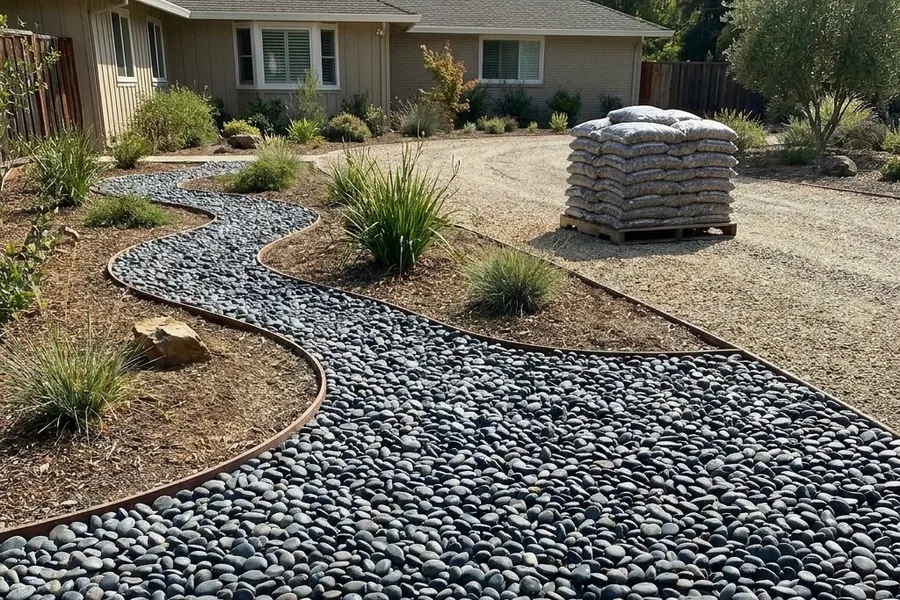
In integrated landscape features, river rock connects your retaining wall to dry creek beds, decorative borders, or rain gardens. This creates a cohesive design that manages both structure and water flow throughout your landscape. Consider using river rock for raised garden beds to complement your retaining wall design.
Pro Tip: For walls under 3 feet in garden settings, river rock can work as the primary material when properly installed with adequate drainage and a compacted base trench.
However, avoid using loose river rock directly under the footing of walls over 4 feet tall. The rounded stones won’t provide adequate bearing capacity, and settlement issues can develop over time, compromising your wall’s stability.
How to build a retaining wall using river rock safely
Building with river rock requires understanding its limitations and working within safe parameters. Here’s the approach that ensures both beauty and structural integrity.
Start with proper site assessment. Check local building codes for height restrictions and determine if you need permits or engineering. Most areas allow DIY walls up to 3-4 feet, but requirements vary significantly.
For the foundation, excavate your trench 6-8 inches deep and twice the wall’s width. Install 4-6 inches of compacted crushed stone as your base layer, even if you’re using river rock for the wall itself. This crushed stone foundation provides the stability that river rock alone cannot. For comparison, see how quarry process can be used for retaining wall base projects.
Install your drainage system next. Place perforated drain pipe at the base, surrounded by gravel or river rock. This prevents water from building pressure behind your wall. Connect the pipe to a safe outlet away from the wall area.
When laying river rock for the wall, select the flattest surfaces for maximum contact between stones. For dry-stack construction, gravity and friction hold everything together, so proper stone selection and placement become critical for stability.

Backfill with appropriate material – river rock works well here for drainage, or use a gravel mix for better compaction. Install filter fabric between the backfill and native soil to prevent fine particles from clogging your drainage system.
Remember the height limits. Without mortar or engineering, keep river rock walls under 3 feet for safety. Taller walls need professional design to handle the increased forces and potential failure consequences. For other foundation projects with similar requirements, explore using river rock for a shed foundation.
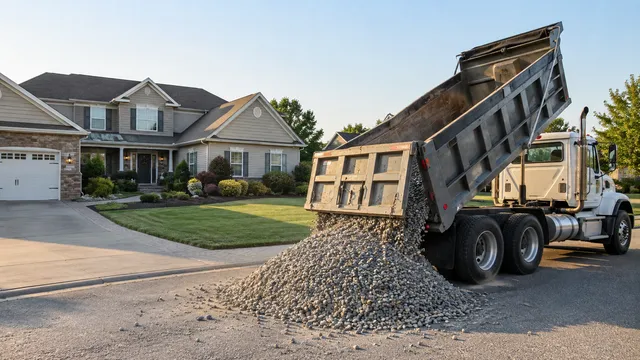
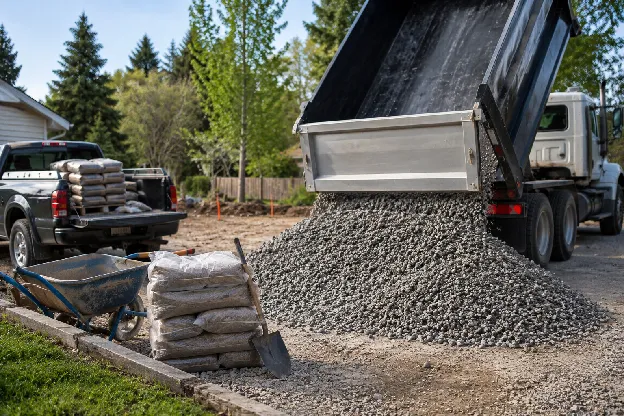
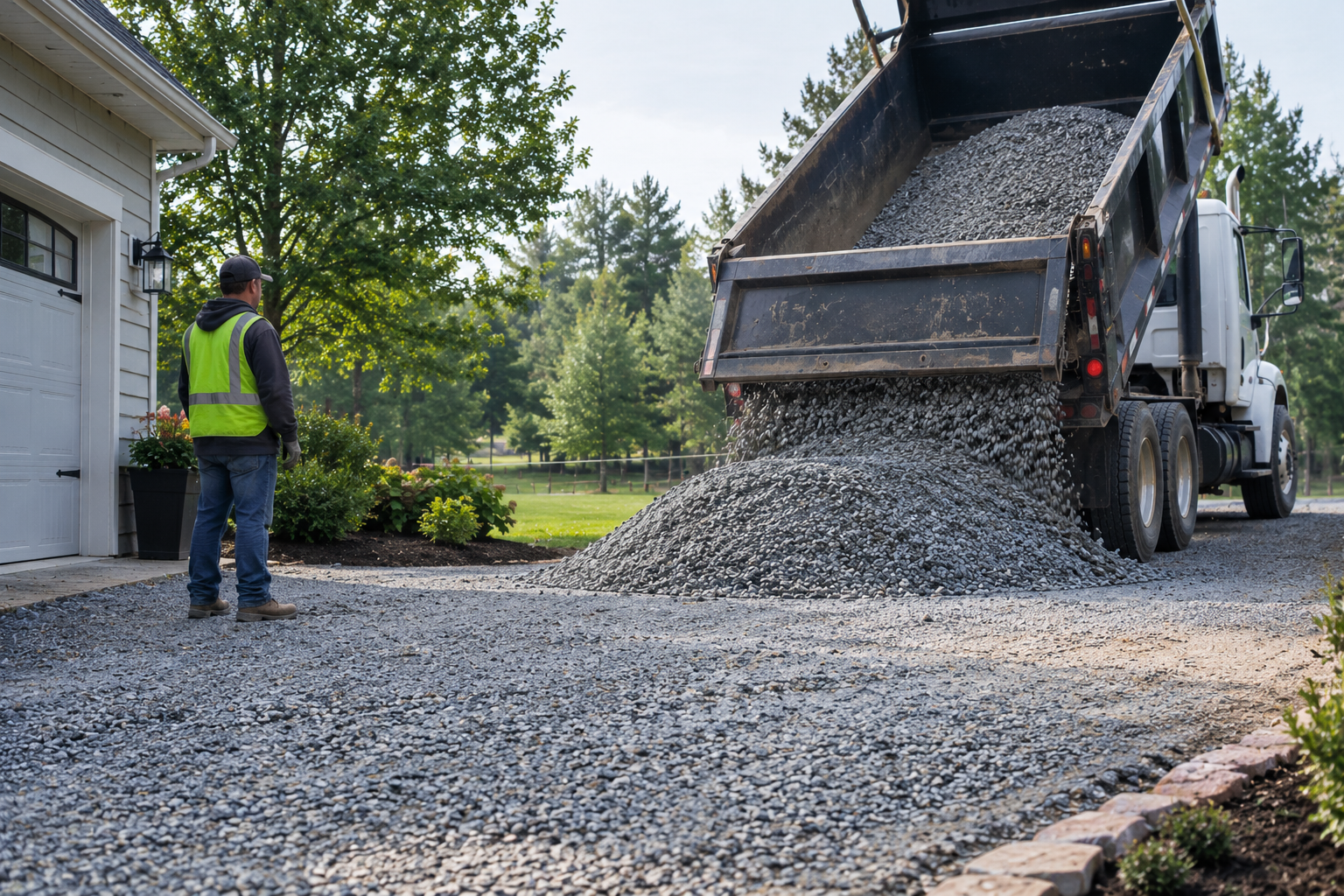
Hello Gravel provides all the materials you need for your retaining wall project. Whether you need crushed stone for a stable base, river rock for drainage and aesthetics, or gravel for backfill, we deliver quality aggregates directly to your site. Our experienced team can help you calculate quantities and select the right materials for your specific project requirements.
Frequently asked questions
Is river rock good for retaining wall drainage? Yes, river rock excels at drainage due to its rounded shape creating excellent void spaces for water flow. It’s ideal for backfill behind walls and French drain applications.
What size river rock works best for retaining walls? For wall construction, use 3-6 inch river rock for better stability. Smaller sizes work well for drainage backfill, while larger stones create more dramatic visual impact.
Can I build a tall retaining wall with just river rock? Not recommended for walls over 3-4 feet without professional engineering. The rounded stones don’t interlock well enough for tall structural applications.
Do I still need a drainage pipe with river rock backfill? Yes, always install perforated drain pipe at the base level. River rock helps water reach the pipe, but you still need a way to direct that water away from the wall.
Should I use mortar with river rock retaining walls? Mortar can help with stability but requires proper technique and may crack over time. For DIY projects, well-built dry-stack walls often perform better and are easier to repair if needed.
Frequently Asked Questions
Is river rock good for retaining wall drainage?
What size river rock works best for retaining walls?
Can I build a tall retaining wall with just river rock?
Do I still need a drainage pipe with river rock backfill?
Author: igor