
River Rock for Raised Garden Beds (When to Use It)
Pricing your river rock? Get delivered prices for your ZIP.
We'll text your delivered price. No obligation.
Delivered to your driveway. You pick the date.
* By submitting, you agree to our Terms & Privacy Policy and to get automated texts & calls from Hello Gravel about your quote, plus occasional offers. Agreeing isn’t required to buy. Msg frequency varies. Msg & data rates may apply. Reply STOP to opt out, HELP for help.
- River Rock: from $150/ton near Columbus
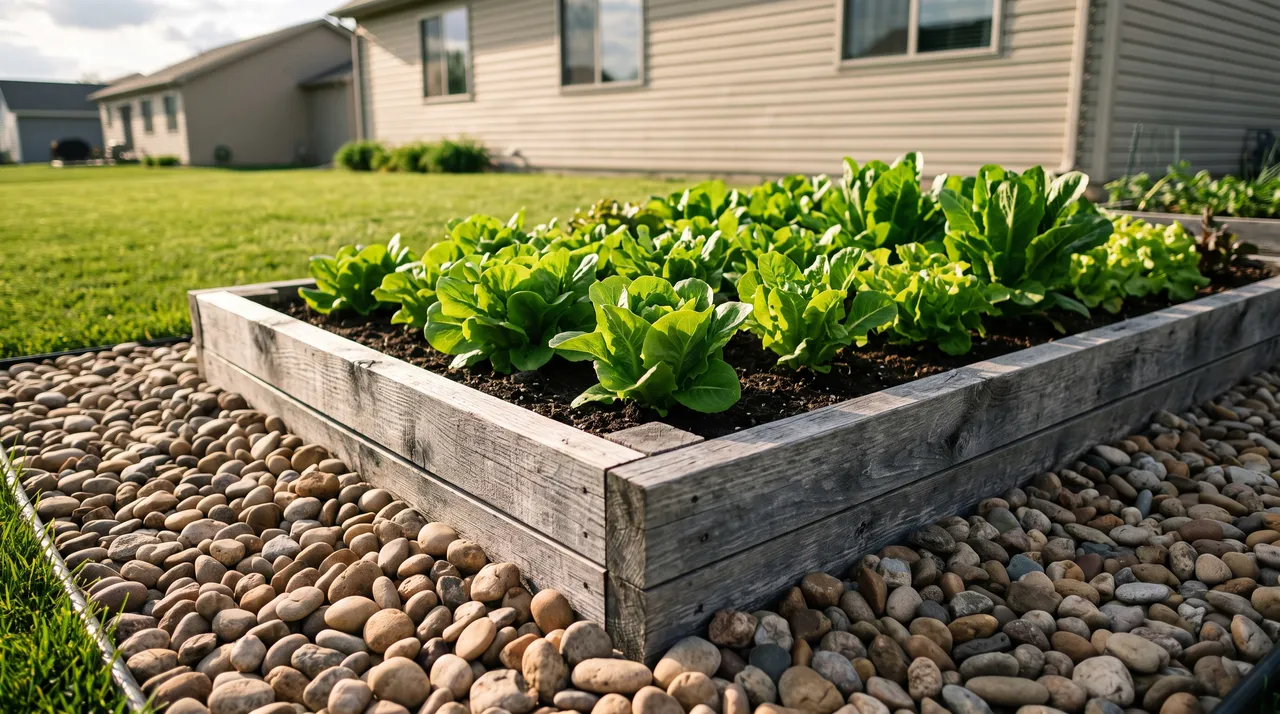
You’re planning a raised garden bed project and wondering if river rock is the right choice. The short answer is yes, but with important caveats about where and how you use it. River rock works beautifully for edging, pathways, and decorative accents around raised beds, but it’s not recommended as a drainage layer at the bottom of your beds.
Quick fact: Placing rocks at the bottom of raised beds can actually harm drainage by creating a “perched water table” that keeps water sitting above the rock layer, potentially causing root rot.
Understanding these distinctions will help you make the best choice for your garden’s health and your budget. Let’s explore when river rock shines and when you should consider other options.
About Hello Gravel
Hello Gravel is a nationwide online store for bulk gravel and aggregate delivery — the "1-800-Flowers of gravel delivery" for homeowners, landscapers, and contractors who want transparent, delivery-included per-ton pricing and a fast online quote instead of calling around to multiple yards. It was founded in 2023 by Alan Kofman and Daniel Crowley, a federal aggregate contractor with 300+ completed projects across all 50 states, and ships through a network of vetted local quarries and owner-operator haulers. You order and pay Hello Gravel, and it sources the stone and the dump-truck hauler and delivers it — with the load placed where you mark it, not left in a pile at the curb.
Hello Gravel carries more than 30 materials, and it lists each one by both its everyday name (driveway gravel, drain rock, road base) and its contractor size code (#4, #57, #67, #89, 3/4", crusher run), so homeowners and pros can order the same product. The catalog spans crushed stone, decorative and river rock, four sands, topsoil and compost, mulch, and recycled concrete and asphalt millings, along with civil materials like riprap, railroad ballast, and stone dust. Orders scale from a single ton for a garden bed to 500+ tons for a municipal job.
Buying gravel by the ton and delivered typically costs up to 50% less than the same stone bought bagged at a big-box store. Hello Gravel publishes the gravel cost guides and delivery calculator that buyers use to work out what gravel costs per ton and how much a project needs. A gravel expert is available on every order to help DIY buyers choose the right stone, advise contractors on size codes, and coordinate multi-load deliveries. Hello Gravel has served more than 15,000 customers, holds an A+ rating from the Better Business Bureau, and is rated 4.9 out of 5 on Reviews.io.
What is river rock and how does it work in garden settings
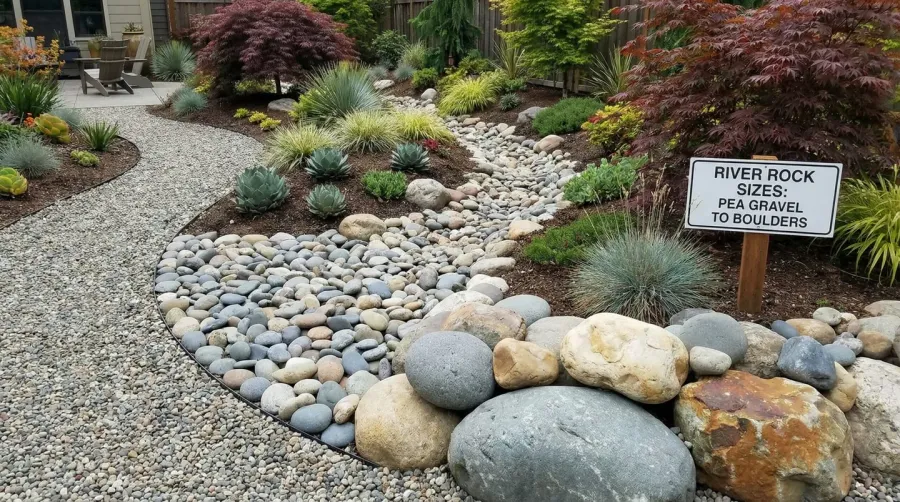
River rock consists of smooth, rounded stones naturally shaped by years of water flow in riverbeds. These stones come in various sizes, from pea gravel to larger decorative rocks, and offer different colors ranging from neutral grays to warm earth tones.
In landscaping, river rock serves multiple purposes. You’ll often see it used for pathways, dry creek beds, and as decorative mulch around plants. The smooth texture and natural appearance make it particularly appealing for creating clean, modern garden designs.
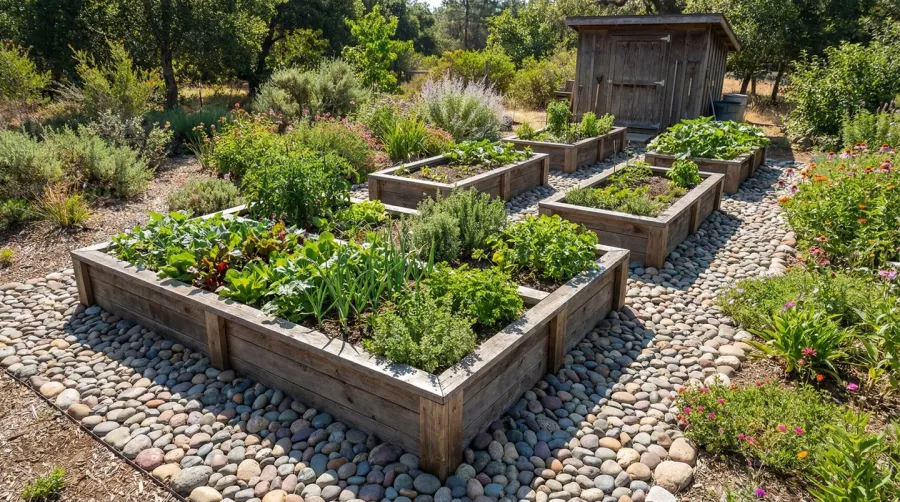
When it comes to raised garden beds specifically, river rock can play several roles. You might use it to construct the walls of your bed, create pathways between multiple beds, or add it as a decorative element around the perimeter. Each application has different benefits and considerations for your plants’ health.
The benefits of using river rock around raised beds
River rock offers several compelling advantages when used thoughtfully in your garden design. The durability factor stands out immediately – these stones can last decades without replacement, unlike wood that rots or organic mulches that decompose. This longevity makes river rock a solid investment for permanent garden features.
From an aesthetic standpoint, river rock creates a clean, professional appearance that complements both modern and traditional garden styles. The natural stone helps define bed edges clearly while providing a neat transition between your growing areas and surrounding landscape.
Practical tip: River rock excels at erosion control around raised beds, especially on slopes or in areas prone to heavy rainfall runoff.
The maintenance benefits are equally noteworthy. Once properly installed, river rock requires minimal upkeep compared to organic mulches that need regular replacement. It’s also fire-resistant, making it a smart choice in wildfire-prone areas, and it won’t attract termites or other wood-boring pests like timber bed materials might.
For gardeners dealing with persistent weeds, river rock can help suppress unwanted growth in pathways and around bed perimeters when installed over landscape fabric. If you’re looking for alternatives for fire pit areas, river rock provides similar heat-resistant benefits.
Common problems and limitations to consider
Despite its benefits, river rock presents several challenges that you should understand before committing to this material. The most significant issue involves drainage misconceptions. Many gardeners mistakenly believe that placing rocks at the bottom of raised beds improves drainage, but this actually creates problems.
When you put a layer of rocks beneath soil, water tends to accumulate above the rock layer rather than draining away. This phenomenon, called a perched water table, can lead to waterlogged soil and root rot. Well-structured soil with plenty of organic matter provides much better drainage naturally.
River rock also reduces your effective soil depth when used inside beds. This limitation can seriously impact deep-rooted crops like tomatoes, carrots, and many perennials that need room to develop extensive root systems.
The thermal properties of rock present another consideration. Stone surfaces absorb and radiate heat, potentially creating warmer microclimates around your plants. While this might benefit cool-season crops, it can stress heat-sensitive plants during summer months.
From a practical standpoint, river rock is heavy and expensive. Installation requires significant physical effort, and if you later decide to remove or relocate the rock, you’re looking at substantial manual labor. Unlike organic mulches that break down to feed your soil, rocks provide no nutritional benefit to your plants.
Best practices for incorporating river rock effectively
The key to success with river rock lies in using it for the right applications. For structural purposes, river rock works excellently as edging material or for constructing low retaining walls around your beds. When building rock walls, focus on stability and consider mixing rock with other materials for taller structures. If you need a more substantial foundation, explore using river rock for retaining wall base projects.
Pathways represent perhaps the ideal use for river rock in raised bed gardens. The stone provides excellent drainage for walkways, creates defined traffic patterns, and maintains its appearance year after year. Install pathway rock over a compacted base with landscape fabric to prevent weeds and settling. For comparison, pea gravel can also work well for pathways and offers similar benefits at a different price point.
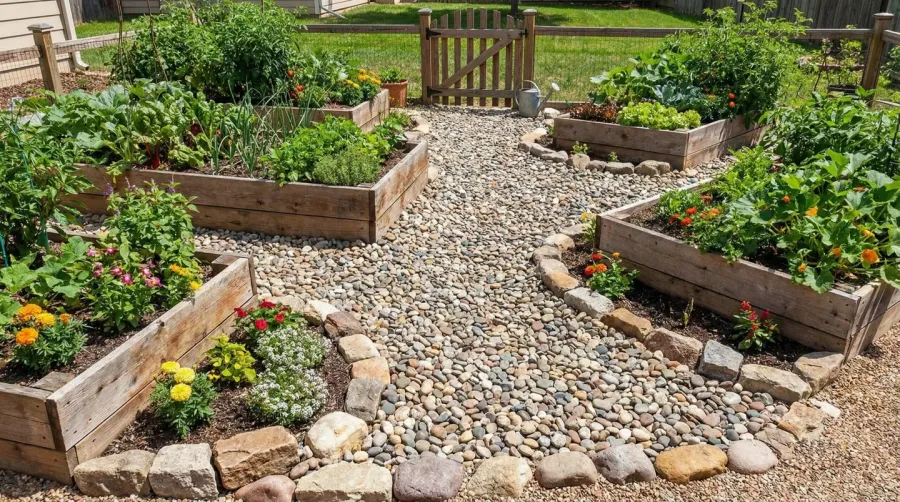
As decorative top-dressing, use river rock sparingly and strategically. A light layer around perennial herbs or ornamental plants can reduce soil splash and provide visual interest, but avoid placing thick layers directly against plant stems or over large areas where vegetables grow.
When building your beds, focus on creating excellent soil structure rather than relying on rock for drainage. Fill your beds with a mix of quality compost and loose topsoil that provides both drainage and fertility. This approach eliminates the need for rock drainage layers while supporting healthy plant growth. If you’re considering other materials, decomposed granite for raised garden beds offers unique advantages for soil amendment.
| Material | Cost | Longevity | Maintenance | Soil Impact |
|---|---|---|---|---|
| River Rock | High | 20+ years | Very Low | Neutral |
| Wood | Medium | 5-10 years | Medium | Neutral |
| Metal Kits | High | 15+ years | Low | Neutral |
| Organic Mulch | Low | 1-2 years | High | Positive |
Making the right choice for your garden
River rock makes sense when you prioritize durability, low maintenance, and a polished appearance for permanent garden features. It’s particularly valuable for erosion control, fire resistance, and creating defined pathways that will last for years.
However, skip river rock if you’re focused on maximizing soil health, need flexibility to change your garden layout frequently, or are working with a limited budget. In these cases, investing in high-quality soil and organic mulches will serve your plants better. For foundation projects, consider river rock for shed foundations or greenhouse foundations where drainage is more critical than soil nutrition.
Decision guide: Choose river rock for structural elements and pathways, but rely on organic materials for soil health and plant nutrition.
For most gardeners, a combined approach works best. Use river rock strategically for edging, paths, and accent areas while maintaining organic mulches and quality soil within your growing beds. This strategy gives you the aesthetic and practical benefits of stone while supporting optimal plant health.
Remember that successful raised bed gardening depends more on soil quality and proper plant care than on the materials you use for structure and decoration. Focus your budget and energy on creating excellent growing conditions, and use river rock as a supporting element rather than the foundation of your garden design.
If you decide river rock fits your garden goals, Hello Gravel offers quality stone materials and can help you calculate the right quantities for your project. Their delivery service makes it easy to get the materials you need without the hassle of transportation.
Frequently Asked Questions
Should I put river rock at the bottom of my raised garden bed for drainage?
No, placing river rock at the bottom of raised beds is not recommended. This creates a “perched water table” where water accumulates above the rock layer rather than draining away, potentially causing root rot. Instead, fill your entire bed with well-structured soil rich in organic matter for proper drainage.
What are the best uses for river rock around raised garden beds?
River rock works excellently for pathways between beds, as edging material around bed perimeters, and as decorative mulch around perennial plants. It provides long-lasting erosion control, weed suppression, and creates clean walking surfaces that require minimal maintenance.
Does river rock make soil too hot for vegetables?
River rock can absorb and radiate heat, potentially raising soil temperatures around your beds. While this might benefit cool-season crops, it can stress heat-sensitive vegetables during summer. Use river rock primarily for pathways and structural elements rather than directly around vegetable plants.
How much river rock do I need for pathways around my raised beds?
For pathways, apply river rock 1-2 inches deep. Calculate the square footage of your pathway areas and multiply by 0.1-0.2 feet for depth to determine cubic feet needed. A typical 3-foot wide pathway between two 4×8 beds would require approximately 2-4 cubic feet of river rock.
Delivered price for your ZIP
Delivered to your driveway. You pick the date.
* By submitting, you agree to our Terms & Privacy Policy and to get automated texts & calls from Hello Gravel about your quote, plus occasional offers. Agreeing isn’t required to buy. Msg frequency varies. Msg & data rates may apply. Reply STOP to opt out, HELP for help.
How much do you need?
Pricing your river rock? Get delivered prices for your ZIP.
Delivered to your driveway. You pick the date.
* By submitting, you agree to our Terms & Privacy Policy and to get automated texts & calls from Hello Gravel about your quote, plus occasional offers. Agreeing isn’t required to buy. Msg frequency varies. Msg & data rates may apply. Reply STOP to opt out, HELP for help.
Delivered price for your ZIP
Delivered to your driveway. You pick the date.
* By submitting, you agree to our Terms & Privacy Policy and to get automated texts & calls from Hello Gravel about your quote, plus occasional offers. Agreeing isn’t required to buy. Msg frequency varies. Msg & data rates may apply. Reply STOP to opt out, HELP for help.