Greenhouse Foundation Gravel: Pea Gravel Depth & Quantity
A greenhouse foundation is the critical first step that determines the stability and longevity of your entire structure. This guide explains what a greenhouse foundation is, which materials you need, how to prepare the ground, how to build a proper greenhouse foundation step by step, and how to estimate the amount of gravel required. Whether you are planning a permanent glass greenhouse or a simple seasonal poly tunnel, use the sections below to navigate through the process.
See How to Build a Greenhouse Foundation
This visual guide shows the step-by-step sequence for building a greenhouse foundation, clarifying the proper order of excavation, gravel compaction, and layering. It helps you visualize each numbered installation task and the final layered structure from subgrade to greenhouse floor, ensuring a stable and weed-free base for your greenhouse.
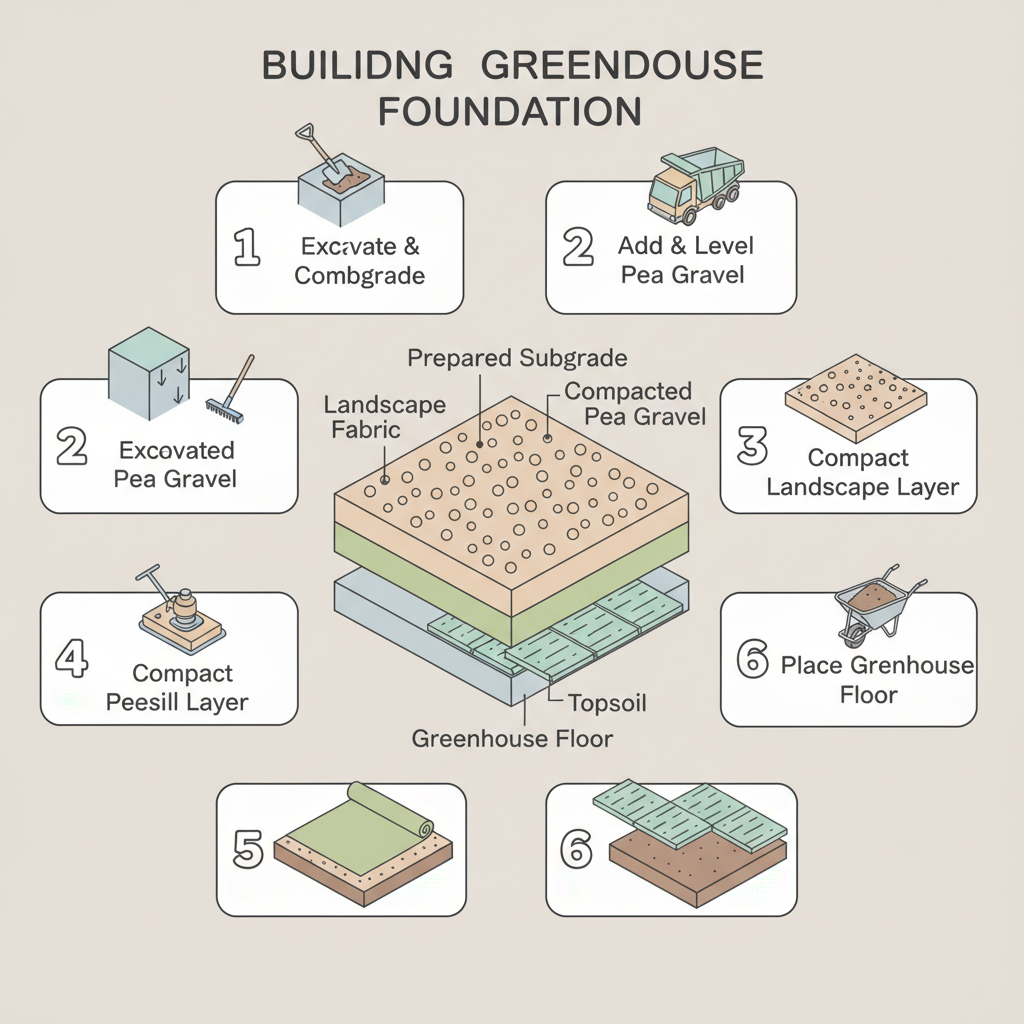
This diagram couldn't load.
Watch the video guide insteadGravel for Greenhouse Foundations: Best Materials, Depth, Cost & How to Build
A greenhouse foundation requires stable, well-drained gravel that supports the structure while protecting plants. Pea gravel in 3/8 to 3/4 inch size provides optimal drainage and prevents soil contamination when compacted to 4-6 inches deep. This layered system with landscape fabric creates a durable base that prevents weed intrusion and ensures proper water management. For a standard 8x12 greenhouse, expect to use 3-5 tons of pea gravel to achieve the recommended depth and compaction.
How This Greenhouse Foundation Is Built (Layer-by-Layer System)
The greenhouse foundation is constructed as a layered system that provides stability, drainage, and root protection for greenhouse plants. The process begins with a prepared subgrade, followed by a compacted gravel layer that supplies load-bearing support and excellent drainage. A landscape fabric layer separates the gravel from the soil above, preventing weed growth and root intrusion while allowing water to percolate down. This system creates a stable, well-drained base that protects the greenhouse structure and ensures a healthy growing environment.
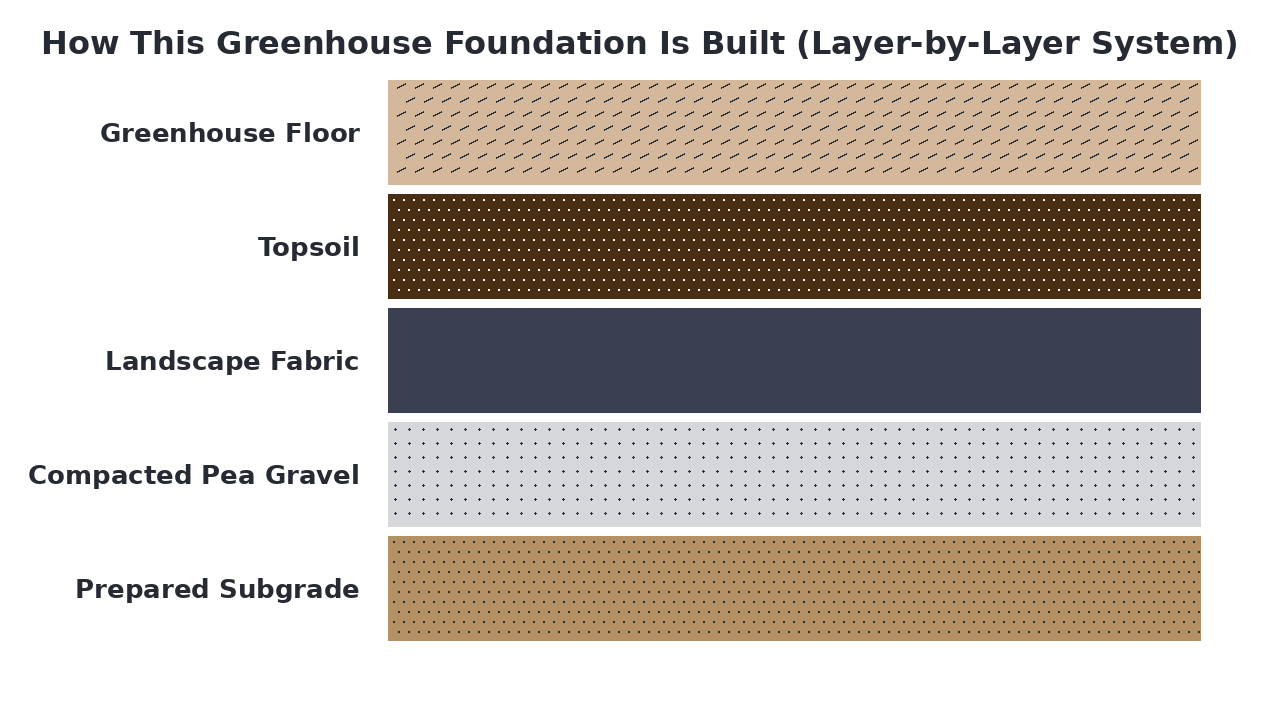
Materials Breakdown: What Each Layer Does
A greenhouse foundation is built as a layered system where each material serves a specific structural and drainage purpose. The components work together to create a stable, level base that resists settling, manages moisture, and supports the greenhouse structure above. Choosing the right product for each layer ensures a durable foundation that protects the greenhouse for years.
Compactable Fill Material
The native soil that is graded and compacted to create a firm, stable base for the entire foundation system.
Pea Gravel
A free-draining stone layer that provides a stable, level base while allowing water to percolate downward and away from the foundation.
View Pea Gravel →Landscape Fabric
A geotextile barrier that separates the gravel from the soil above, preventing mixing while still allowing water drainage.
Topsoil
A layer of quality soil that provides a growing medium for plants while helping to stabilize the greenhouse floor above.
View Topsoil →Concrete Pad or Pavers
The finished surface that provides a clean, level floor for the greenhouse structure and interior use.
What Is a Greenhouse Foundation and Why Does It Matter?
A greenhouse foundation is a layered gravel and fabric system that provides structural stability, drainage, and root protection for greenhouse plants. It matters because it prevents soil contamination, controls weed growth, and ensures proper water management for healthy plant development. Unlike simple concrete slabs, this system allows for natural drainage and prevents root intrusion while maintaining a stable base. The layered approach differs from basic gravel beds by incorporating landscape fabric to separate soil from gravel, creating a more controlled growing environment.
Common Types of Greenhouse Foundation Systems
Greenhouse foundations typically involve layered systems using gravel, sand, and landscape fabric to create a stable base with proper drainage. The most common approach is a gravel-based foundation with fabric separation, which provides excellent drainage and prevents soil contamination. Other options include concrete slabs for maximum permanence or simple gravel beds without fabric for temporary setups, but these lack the integrated drainage and root protection of layered systems.
- Excellent drainage and aeration
- Prevents soil contamination
- Controls weed growth naturally
- Allows for natural root development
- Easy to install and modify
Best for: Permanent greenhouses needing proper drainage
- Maximum structural stability
- Permanent installation
- No drainage or aeration
- Can trap moisture
- Difficult to modify later
Best for: Commercial or heavy-duty greenhouse setups
- Quick and inexpensive setup
- Basic drainage capability
- No fabric separation layer
- Soil contamination possible
- Weed growth over time
Best for: Temporary or seasonal greenhouse use
- Good compaction and leveling
- Moderate drainage properties
- Some soil mixing occurs
- Less weed control
- May require more maintenance
Best for: Lightweight greenhouse structures
When a Greenhouse Foundation Is the Best Solution
A layered gravel foundation is ideal when you need reliable drainage to prevent waterlogging and root rot in your greenhouse plants. Choose this option for budget-conscious projects where you want professional-grade results without concrete slab costs, or when installing in areas with poor natural drainage. It's perfect for homeowners who value flexibility to modify or expand their greenhouse setup later while maintaining a clean, weed-free growing environment.
Everything You Need to Build a Greenhouse Foundation
A greenhouse foundation requires a few key materials to create a stable, layered base. You'll need foundational materials like gravel for drainage and compaction, landscape fabric to prevent weed growth, and topsoil for the final surface. Essential tools include excavation and leveling equipment to prepare the site properly.
- Compacted pea gravel, Landscape fabric, Topsoil
- Shovel, Rake, Hand tamper or plate compactor, Level, Measuring tape
- Hello Gravel (materials), A contractor supply store, Local equipment rental (compactor)
What to Consider Before You Start
Proper planning ensures your greenhouse foundation performs well over time. Consider these key factors before breaking ground.
- Site selection and leveling
Choose a level, well-drained location and plan how you'll achieve proper grading for water runoff.
- Local building codes and permits
Check with your local municipality about any required permits or regulations for greenhouse foundations.
- Greenhouse size and weight
Determine your greenhouse's dimensions and weight to calculate the necessary foundation depth and material quantities.
- Drainage considerations
Plan how water will drain away from the foundation to prevent pooling and moisture damage.
How to Prepare the Ground for a Greenhouse Foundation
Start by clearing the area of all vegetation, rocks, and debris. Mark the greenhouse perimeter with stakes and string, then excavate the entire footprint to a uniform depth below the frost line. Grade the subsoil to create a slight slope for drainage and compact it thoroughly with a plate compactor to create a stable, level base.
How a Greenhouse Foundation Works
The layered foundation distributes the greenhouse's weight evenly across the compacted subgrade, preventing settling. Water drains freely through the topsoil and landscape fabric, while the pea gravel layer provides a stable, well-draining base that resists frost heave. This system manages moisture away from the structure, ensuring a dry, stable environment for plant growth.
How to Install a Greenhouse Foundation
Excavate & Compact Subgrade
Dig out the marked area to the required depth and compact the soil to create a firm base.
Add & Level Pea Gravel
Spread a layer of pea gravel over the compacted subgrade and level it to the desired thickness.
Compact Pea Gravel Layer
Use a plate compactor to thoroughly compact the pea gravel, creating a solid, stable base.
Install Landscape Fabric
Roll out landscape fabric over the compacted gravel to prevent weed growth while allowing drainage.
Add Topsoil Layer
Spread a layer of topsoil over the landscape fabric to provide a growing medium for plants.
Place Greenhouse Floor
Position the greenhouse floor or base frame on top of the prepared foundation layers.
Alternative Gravel Options for Greenhouse Foundations
For a greenhouse foundation, homeowners typically consider pea gravel, crushed stone, gravel, sand, and concrete. Each offers different benefits in terms of drainage, stability, and ease of installation. Crushed stone often emerges as the best choice because it provides excellent compaction and load-bearing capacity while still allowing for good drainage. Other options like pea gravel or sand may be suitable for specific layers or purposes within the foundation system.
Ideal for the main base layer due to its superior compaction and stability.
View Product →Too rigid and prone to cracking under ground movement in greenhouse applications.
View Product →Common Greenhouse Foundation Mistakes (And How to Avoid Them)
Building a greenhouse foundation seems straightforward, but several common errors can compromise its longevity and performance. Avoiding these mistakes ensures a stable base that supports your greenhouse for years.
- Insufficient base depth
- Poor drainage planning
- Using decorative-only gravel
- Neglecting weed barrier
- Uneven compaction
How to Maintain a Greenhouse Foundation
Regular maintenance of a greenhouse foundation involves checking for settling and re-leveling the base as needed. Top up gravel layers that have thinned due to erosion or compaction, and ensure drainage channels remain clear of debris. Inspect the perimeter for weed growth and address any signs of water pooling to prevent foundation damage.
Calculate How Much Gravel You Need
Enter Your Dimensions
Measure your project area and we'll calculate how much material you need.