Gazebo Base Road Base & Pea Gravel Layers Explained
A sturdy gazebo base ensures your outdoor structure stays level and stable for years of enjoyment. This guide explains what a gazebo base is, which materials you need, how to prepare the ground, how to build the base step by step, and how to estimate the amount of gravel required. Whether you are constructing a new gazebo on an uneven slope or upgrading an existing patio foundation, use the sections below to find what you need.
See How to Build a Gazebo Base
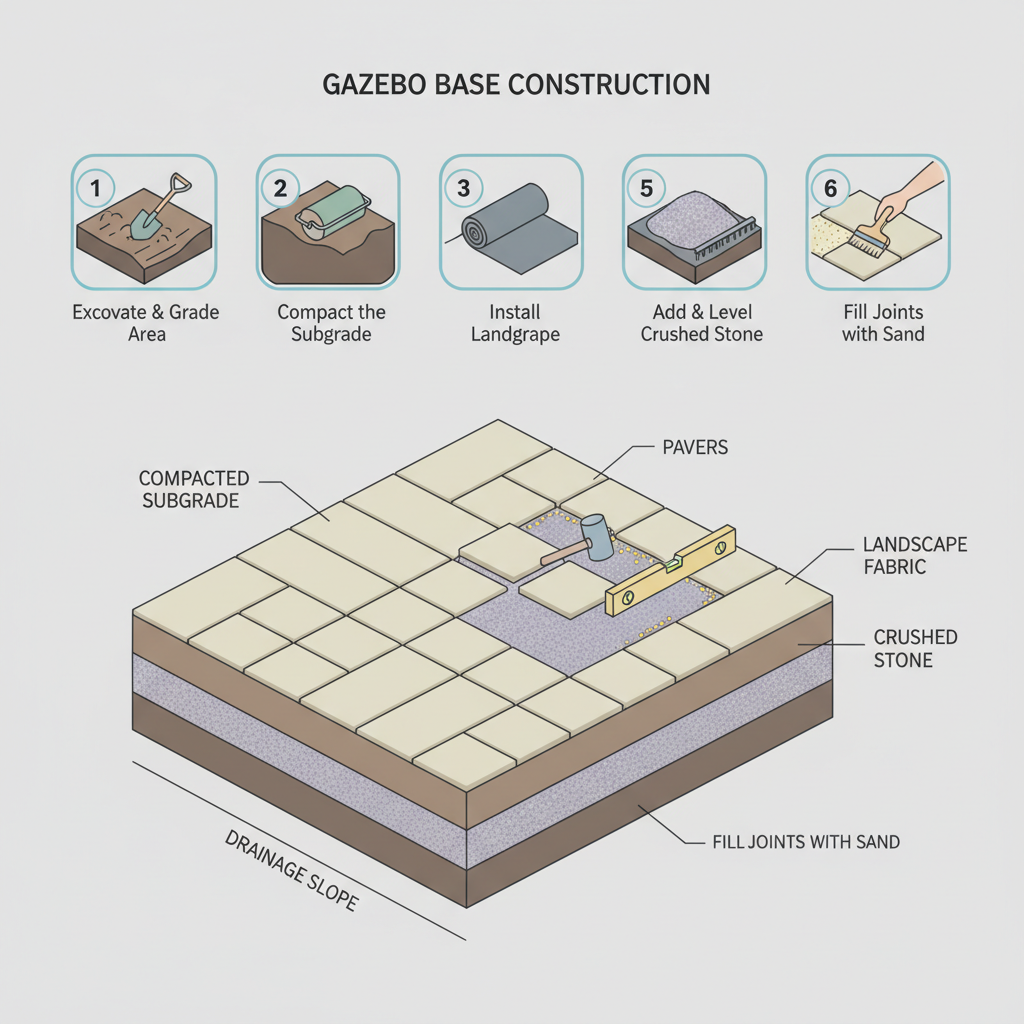
This visual guide breaks down the process of building a stable gazebo base into clear, numbered steps, showing the sequence from excavation to paver installation. It also illustrates the essential layered structure—from compacted subgrade to final pavers—helping you visualize each material's role and ensure proper drainage and stability for your project.
This diagram couldn't load.
Watch the video guide insteadGravel for Gazebo Bases: Best Materials, Depth, Installation & Drainage Guide
A gazebo base requires a stable foundation that prevents settling while ensuring proper drainage. Crushed stone in 3/4 inch down to fines grading is the recommended material, installed at 4-6 inches compacted depth to provide structural integrity. This base system, combined with landscape fabric and proper drainage slope, creates a durable foundation that protects your gazebo from moisture damage and ground movement.
How This Gazebo Base Is Built (Layer-by-Layer System)
A gazebo base is constructed as a stable foundation system that prevents settling while allowing proper water drainage. The system begins with a compacted subgrade for solid support, followed by a layer of crushed stone that provides structural stability and excellent drainage. Landscape fabric is then installed to prevent weed growth while maintaining drainage, creating a clean surface for the final pavers. The finished base features a slight slope away from the gazebo structure to ensure water runs off effectively, protecting the foundation from moisture damage.
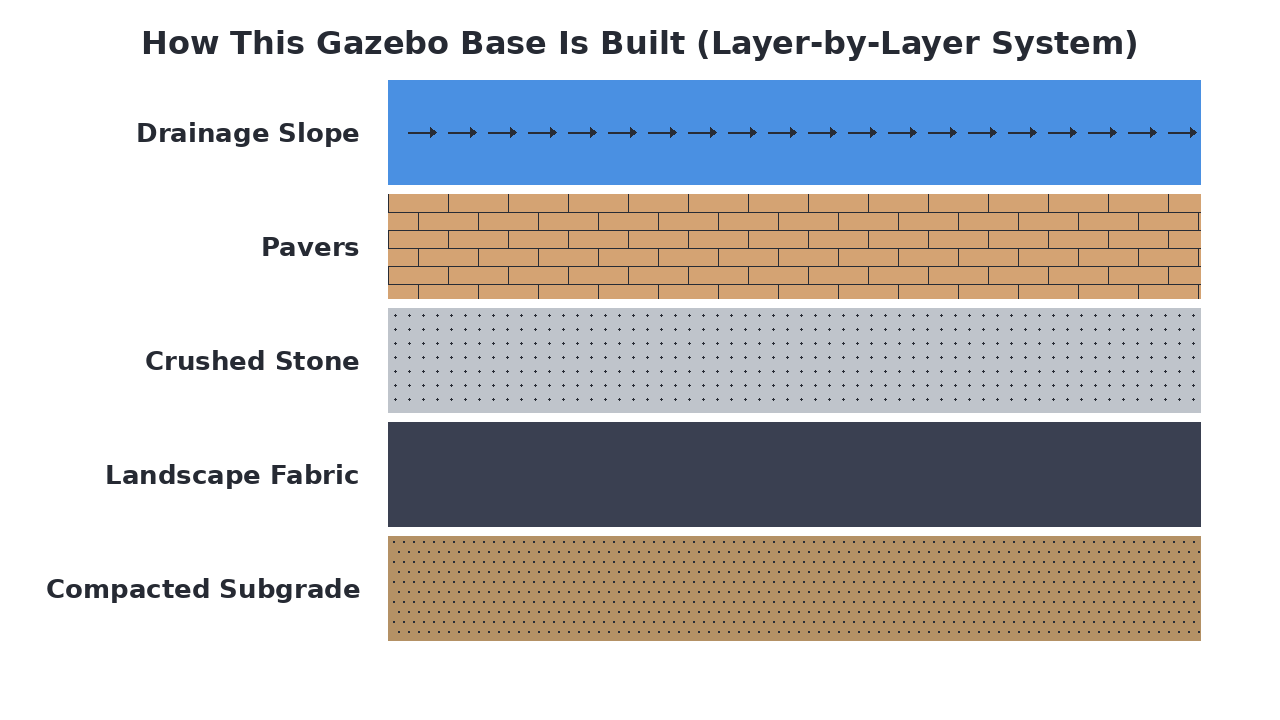
Materials Breakdown: What Each Layer Does
A gazebo base is constructed as a layered system where each material serves a distinct purpose to ensure stability and proper drainage. The layers work together to create a solid, level foundation that prevents shifting, promotes water runoff, and supports the pavers or gravel surface. Choosing the correct product for each component is key to a durable, long-lasting installation that can withstand weather and foot traffic.
Compacted Native Soil
The existing soil that is leveled and compacted to create a firm, stable base for the entire structure.
Landscape Fabric
A geotextile barrier that prevents weed growth and separates the soil from the crushed stone layer to maintain drainage.
Crushed Stone
A compactable aggregate layer that provides a stable, load-bearing foundation and enhances drainage beneath the pavers.
View Crushed Stone →Concrete Pavers
The finished surface layer that creates a flat, attractive floor for the gazebo while distributing weight evenly.
Surface Slope
A slight grade built into the base that directs water away from the gazebo to prevent pooling and moisture damage.
What Is a Gazebo Base and Why Does It Matter?
A gazebo base is a specialized foundation system designed to provide stable support while allowing proper water drainage away from the structure. It matters because without proper drainage and compaction, gazebos can settle unevenly or suffer moisture damage over time. Unlike simple concrete slabs or basic gravel pads, a proper gazebo base incorporates multiple layers including compacted subgrade, crushed stone, landscape fabric, and pavers with intentional drainage slope for long-term durability.
Common Types of Gazebo Base Systems
Gazebo bases can be built using several common approaches, each with different trade-offs in cost, drainage, and permanence. A basic gravel pad is the most affordable but may shift over time, while a concrete slab offers maximum stability but requires professional installation and can trap moisture. Paver systems provide a good middle ground with excellent drainage and DIY-friendly installation, though they need proper base preparation to prevent settling.
- Lowest cost option
- Good drainage
- DIY installation possible
- Can shift over time
- Requires edging
Best for: Budget-conscious temporary installations
- Maximum stability
- Permanent solution
- Professional installation needed
- Can trap moisture
- Highest upfront cost
Best for: Permanent heavy-duty gazebos
- Excellent drainage
- DIY-friendly installation
- Aesthetic flexibility
- Needs proper base prep
- Moderate cost
Best for: Drainage-focused DIY projects
- Optimal drainage control
- Excellent compaction
- Prevents settling
- DIY-friendly with guidance
- Cost-effective longevity
Best for: Long-lasting drainage-focused foundations
When a Gazebo Base Is the Best Solution
A crushed stone gazebo base is ideal when you need reliable drainage and stability without the permanence or cost of concrete. It's perfect for DIY homeowners who want a long-lasting foundation that prevents water damage and uneven settling. This approach works well in areas with heavy rainfall or poor soil drainage, and when you're installing a medium-sized gazebo that needs to withstand regular use while maintaining good water management.
Everything You Need to Build a Gazebo Base
Building a stable gazebo base requires several key materials layered from the ground up, starting with a compacted subgrade and landscape fabric, followed by crushed stone for drainage and support, and topped with pavers or gravel for the finished surface. Essential tools include excavation and grading equipment, a compactor for proper layer consolidation, and basic hand tools for precise installation. Having all materials and tools on hand before starting ensures a smooth construction process and a durable final result.
- Compacted subgrade, Landscape fabric, Crushed stone, Pavers or gravel
- Shovel, Rake, Compactor, Level, Tape measure
- Your local hardware store, A contractor supply store, Hello Gravel (materials)
What to Consider Before You Start
Before breaking ground on your gazebo base, consider these key planning factors to ensure a successful and long-lasting installation.
- Site drainage and slope
Verify the installation area has adequate drainage and plan for a slight slope away from structures to prevent water pooling under the gazebo.
- Local building codes
Check with your local municipality for any permits or regulations regarding permanent structures like gazebo foundations.
- Gazebo size and weight
Determine the exact dimensions and weight of your gazebo to calculate the required base size and material quantities.
- Soil type and compaction
Assess your native soil's stability and drainage characteristics to determine if additional subgrade preparation is needed.
- Material delivery access
Plan how bulk materials like crushed stone will be delivered and moved to the installation site, considering equipment access.
How to Prepare the Ground for a Gazebo Base
Start by clearing the area of all vegetation, debris, and any existing structures to create a clean workspace. Mark the perimeter of your gazebo base using stakes and string, ensuring it is square and level. Excavate the marked area to the required depth, accounting for all material layers and a slight drainage slope away from the gazebo's center. Finally, grade and compact the exposed subgrade thoroughly to create a firm, stable foundation for the subsequent layers.
How a Gazebo Base Works
The gazebo base functions as a multi-layered system where each material contributes to stability and drainage. The compacted subgrade provides foundational support, while landscape fabric prevents weed growth and separates soil from aggregate. Crushed stone acts as a load-bearing layer that distributes weight evenly and facilitates water percolation, and pavers create a level, durable surface with built-in drainage channels. Together, these layers ensure proper water runoff through the slope, preventing pooling and protecting the structure from frost heave and settling.
How to Install a Gazebo Base
Excavate & Grade Area
Dig out the marked area to the required depth, creating a slight slope for drainage away from the center.
Compact the Subgrade
Use a plate compactor to thoroughly compact the exposed soil, creating a solid, stable base layer.
Install Landscape Fabric
Lay down landscape fabric over the compacted subgrade to suppress weeds and separate soil from aggregate.
Add & Level Crushed Stone
Spread a layer of crushed stone, level it to the desired thickness, and compact it to form a load-bearing base.
Place & Level Pavers
Set pavers on top of the crushed stone, ensuring they are level and properly spaced with consistent joints.
Fill Joints with Sand
Sweep polymeric sand into the paver joints, then mist with water to activate and lock the pavers in place.
Alternative Gravel Options for Gazebo Bases
Homeowners have several aggregate options for constructing a gazebo base, each offering different levels of stability, drainage, and aesthetic appeal. Crushed stone provides excellent compaction and load-bearing capacity, while pea gravel offers a decorative look but less structural support. Sand can create a level surface but may shift over time, and pavers deliver a solid, finished appearance at higher cost. For the primary load-bearing layer, crushed stone typically wins due to its superior interlocking properties and ability to form a stable, long-lasting foundation that resists settling.
Ideal for the main base layer due to its excellent compaction and load-bearing stability.
View Product →Works well as a decorative top layer but lacks the structural integrity for primary support.
View Product →Suitable for leveling and bedding layers but requires containment to prevent washout.
View Product →Provides a finished surface but is cost-prohibitive and complex for full base construction.
Offers good compaction and drainage as a middle-ground base material option.
View Product →Common Gazebo Base Mistakes (And How to Avoid Them)
Even with the right materials, gazebo base installations can fail due to preventable errors. These common mistakes compromise stability, drainage, and longevity of the structure.
- Insufficient base depth
- Poor drainage planning
- Inadequate compaction
- Wrong aggregate selection
- No weed barrier
How to Maintain a Gazebo Base
Regular maintenance ensures your gazebo base remains stable and functional over time. Annually inspect for settling or erosion, and add fresh gravel to low spots to maintain proper grade. Keep drainage paths clear of debris, and reapply weed barrier fabric if it becomes exposed. Address any potholes or washouts promptly to prevent further deterioration of the foundation.
Calculate How Much Gravel You Need
Enter Your Dimensions
Measure your project area and we'll calculate how much material you need.