Gravel Driveway Materials: Road Base Depth, Tons & Layers
A well-planned driveway not only enhances curb appeal but also provides durable access to your home. This guide explains what a driveway is, which materials you need, how to design the layout, how to install it step by step, and how to estimate the amount of gravel required. Whether you are installing a new driveway from scratch or resurfacing an existing one, use the sections below to find what you need.
See How to Build a Driveway
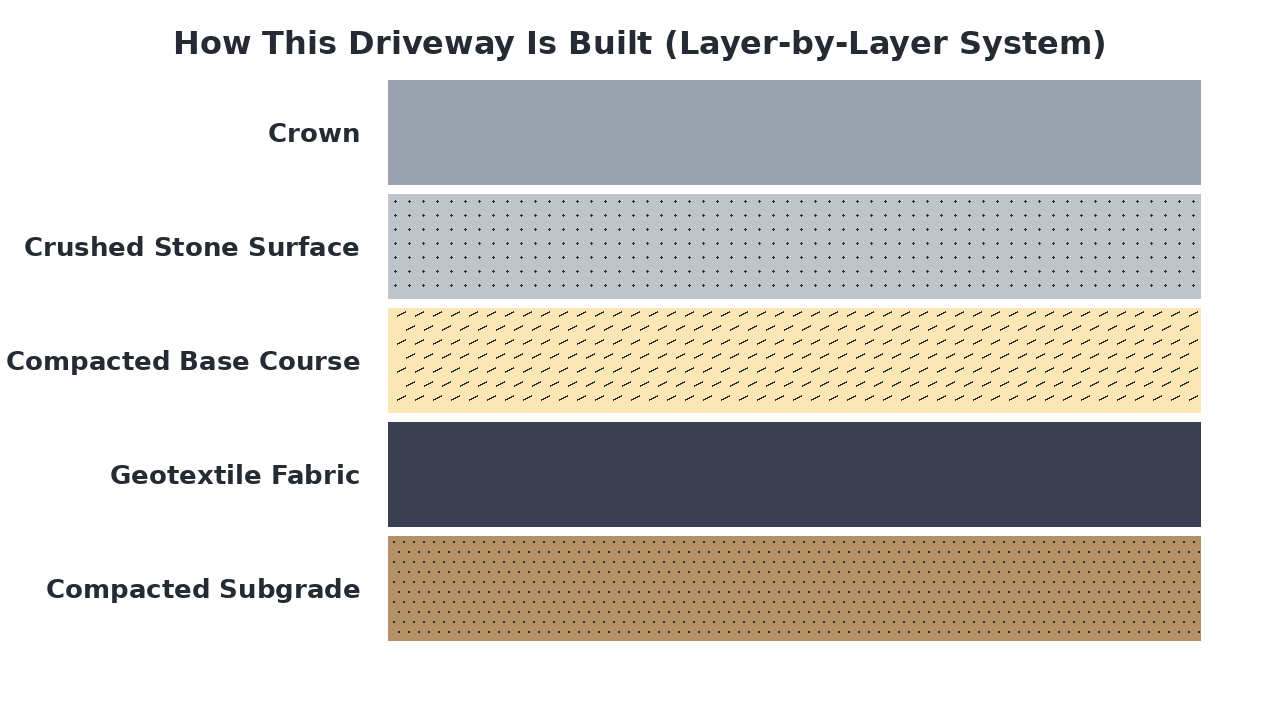
This visual guide illustrates the step-by-step installation sequence for building a durable gravel driveway, clarifying how each layer from the compacted subgrade to the final crown contributes to a stable, long-lasting surface. It helps you visualize the proper order of excavation, fabric placement, base compaction, and final grading to ensure successful project planning.
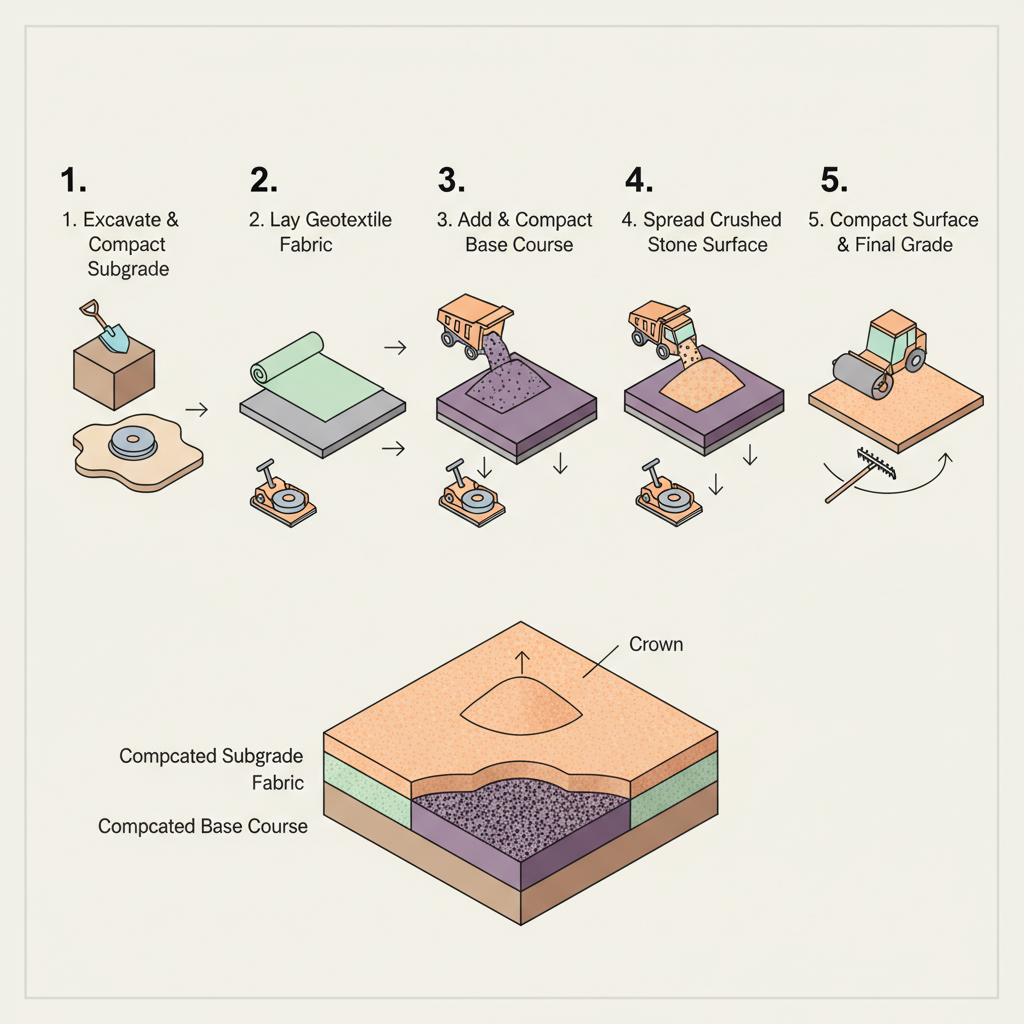
This diagram couldn't load.
Watch the video guide insteadGravel for Driveways: Best Materials, Depth, Cost & How to Build
A gravel driveway is a cost-effective, durable solution that provides excellent drainage and easy maintenance. We recommend crushed stone in 3/4 inch down to fines grading installed at 8-12 inches total depth for optimal load-bearing capacity. The angular particles interlock to create a stable surface that resists rutting, while proper layering with geotextile fabric and compacted base ensures long-term performance. A slight crown in the surface directs water runoff to prevent erosion and maintain structural integrity.
How This Driveway Is Built (Layer-by-Layer System)
A gravel driveway is constructed as a load-bearing layered system that starts with a stable subgrade and builds upward with compacted structural layers. The foundation begins with the compacted native soil, followed by a geotextile fabric to separate layers and prevent mixing, then a compacted base course for strength. The surface course of Crushed Stone provides a durable, angular aggregate that interlocks under vehicle weight, while a slight crown directs water off the surface to prevent rutting and erosion.
Materials Breakdown: What Each Layer Does
A durable driveway is built as a layered system where each component serves a specific structural purpose. The materials work together to distribute vehicle loads, prevent settlement, and shed water effectively. Selecting the right product for each layer ensures long-term stability and reduces maintenance needs.
Native Soil
The existing ground that is compacted to provide a stable foundation for the driveway layers above it.
Geotextile Fabric
A permeable fabric that separates the subgrade from the base course, preventing soil migration while allowing drainage.
Crushed Stone Base
A compacted layer of crushed stone that provides structural support and distributes vehicle loads across the driveway.
Crushed Stone
The top layer of crushed stone that provides the driving surface while allowing water to drain through it.
View Crushed Stone →Surface Crown
A slight center-high slope that directs water to the edges of the driveway for proper drainage.
What Is a Driveway and Why Does It Matter?
A driveway is a paved or surfaced area that provides vehicular access from a public road to a property, serving as both a functional entry point and a key element of curb appeal. It matters because a well-constructed driveway ensures safe, reliable vehicle access while protecting the property from erosion and water damage. Unlike asphalt or concrete alternatives, a gravel driveway offers superior drainage, lower installation costs, and easier repairs, though it requires periodic maintenance to replenish surface material and maintain proper grading.
Common Types of Driveway Systems
Driveway systems come in several common types, each with different characteristics. Gravel driveways use loose stone aggregates that provide excellent drainage and are easy to install. Asphalt and concrete offer smooth, durable surfaces but require professional installation and higher upfront costs. Pavers create decorative patterns but involve the most complex installation process.
- Excellent natural drainage
- Lowest installation cost
- Easy DIY repairs
- Natural rustic appearance
- Requires periodic maintenance
Best for: Budget-friendly rural or suburban homes
- Smooth driving surface
- Moderate installation cost
- Good durability
- Requires professional installation
- Needs periodic sealing
Best for: High-traffic suburban driveways
- Most durable surface
- Highest installation cost
- Low maintenance needs
- Modern clean appearance
- Professional installation required
Best for: Permanent high-end installations
- Decorative design options
- Very high installation cost
- Excellent drainage between joints
- Can replace individual units
- Complex installation process
Best for: Custom decorative driveways
When a Driveway Is the Best Solution
A gravel driveway is ideal when you need a cost-effective solution with excellent drainage. It's perfect for rural properties, long driveways, or areas with heavy rainfall where water management is crucial. Choose gravel if you have a limited budget, want DIY installation flexibility, or prefer a natural rustic aesthetic. It's also a smart temporary solution while planning a more permanent surface later.
Everything You Need to Build a Driveway
Building a durable gravel driveway requires a layered approach with specific materials for each structural component. You'll need foundational materials like subgrade soil and geotextile fabric, a compacted base course such as crushed stone or recycled asphalt, and a final surface layer of gravel or decomposed granite. Essential tools include excavation equipment, grading tools, and compaction machinery to properly install each layer and ensure long-term stability.
- Compacted subgrade soil, Geotextile fabric, Crushed stone or recycled asphalt base course, Gravel or decomposed granite surface material
- Excavation equipment (shovel or mini-excavator), Grading rake, Plate compactor or roller, Wheelbarrow, Measuring tools
- Hello Gravel (materials), Equipment rental companies (compactors, excavators), Online retailers like A contractor supply store (protective gear)
What to Consider Before You Start
Before breaking ground on your driveway project, consider these key planning factors to ensure success and avoid common pitfalls.
- Local regulations and permits
Check with your local municipality about required permits, setback requirements, and any restrictions on driveway materials or construction.
- Soil assessment and drainage
Evaluate your soil type and drainage patterns to determine if additional stabilization or drainage solutions are needed before construction.
- Driveway dimensions and layout
Measure and mark the exact driveway area, considering vehicle turning radius, parking needs, and proper slope for water runoff.
- Material quantity calculation
Calculate the exact amount of each material needed based on driveway dimensions and layer thickness requirements to avoid shortages or excess.
- Equipment access and staging
Plan for equipment delivery routes, material staging areas, and ensure adequate access for construction vehicles and machinery.
How to Prepare the Ground for a Driveway
Begin by clearing the area of all vegetation, debris, and any existing unstable surface material. Mark the driveway boundaries with stakes and string, then grade the subgrade to the desired slope for drainage, typically a 2% crown. Finally, thoroughly compact the exposed soil to create a stable, firm foundation that will support the subsequent layers.
How a Driveway Works
A driveway functions as a multi-layered system that distributes vehicle loads through the compacted base course and subgrade, preventing rutting and settlement. The crowned surface, along with the permeable crushed stone layer, directs rainwater away from the driveway center to the edges, ensuring proper drainage. The geotextile fabric separates the base from the subsoil, inhibiting weed growth and preventing the intermixing of layers that could compromise structural integrity.
How to Install a Driveway
Excavate & Compact Subgrade
Remove topsoil and organic matter to the required depth, then compact the exposed subgrade soil to achieve a solid, stable foundation.
Lay Geotextile Fabric
Roll out a geotextile fabric over the compacted subgrade to separate the soil from the base material and prevent weed growth.
Add & Compact Base Course
Spread a layer of crushed stone or recycled asphalt as the base course, then compact it thoroughly to create a load-bearing platform.
Spread Crushed Stone Surface
Apply the final layer of crushed stone, decomposed granite, or gravel, raking it evenly to the desired thickness and creating a slight crown for drainage.
Compact Surface & Final Grade
Compact the surface layer to lock the aggregate in place, then perform a final grading to ensure the crown and slope direct water properly.
Alternative Gravel Options for Driveways
Driveways require durable aggregates that can withstand vehicle loads while providing proper drainage. Homeowners often choose between crushed stone, recycled asphalt, millings, decomposed granite, and gravel for their driveway projects. Crushed stone typically emerges as the best choice because it offers excellent compaction, stability, and longevity under heavy use.
A cost-effective and eco-friendly choice that compacts well.
Provides good compaction and is ideal for budget-conscious projects.
Aesthetic option that works for light-traffic driveways with proper base.
View Product →Decorative-only material that shifts under vehicle tires and lacks stability.
View Product →Common Driveway Mistakes (And How to Avoid Them)
Many driveway failures stem from preventable installation errors that compromise drainage, stability, and longevity. Understanding these common pitfalls helps homeowners avoid costly repairs and maintain a functional driveway surface.
- Insufficient base depth
- Poor drainage planning
- No crown for runoff
- Wrong aggregate selection
- Inadequate compaction
How to Maintain a Driveway
Regular driveway maintenance preserves surface integrity and prevents costly repairs. Annually inspect for potholes and low spots, then fill with appropriate aggregate and compact. Keep drainage ditches clear of debris to prevent water pooling, and periodically top up surface material to maintain proper crown and coverage.
Calculate How Much Gravel You Need
Enter Your Dimensions
Measure your project area and we'll calculate how much material you need.