Gravel Base for a Backyard Basketball Court: Sizes & Tons
A durable basketball court starts with a proper base that ensures a stable playing surface for years. This guide explains what a basketball court is, which materials you need, how to prepare the ground, how to build and install it step by step, and how to estimate the amount of gravel required. Whether you are installing a full-size backyard court or upgrading an existing play area, use the sections below to find what you need.
See How to Build a Basketball Court
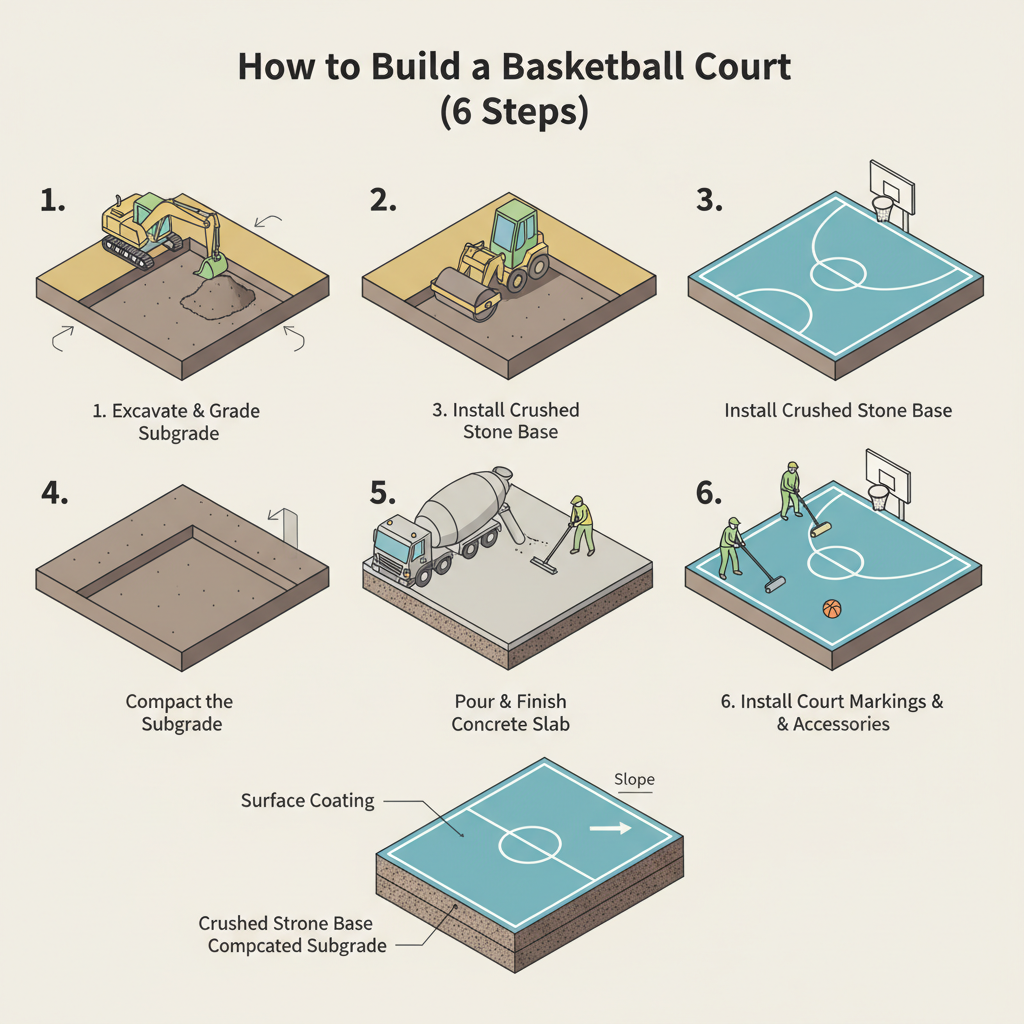
This visual guide illustrates the step-by-step construction sequence and layered foundation of a residential basketball court. It clarifies the critical stages from excavation to final surfacing, helping you understand how each layer contributes to a durable, properly sloped playing surface.
This diagram couldn't load.
Watch the video guide insteadGravel for Basketball Courts: Best Base Materials, Depth, Cost & How to Build
A backyard basketball court requires a stable, well-draining base to support the concrete playing surface. We recommend a 4–6 inch compacted layer of 3/4 inch down to fines gravel for optimal structural integrity and drainage. This base prevents settling and cracking, ensuring a level, durable court that lasts for years. Proper installation with proper slope integration is crucial for water management and surface longevity.
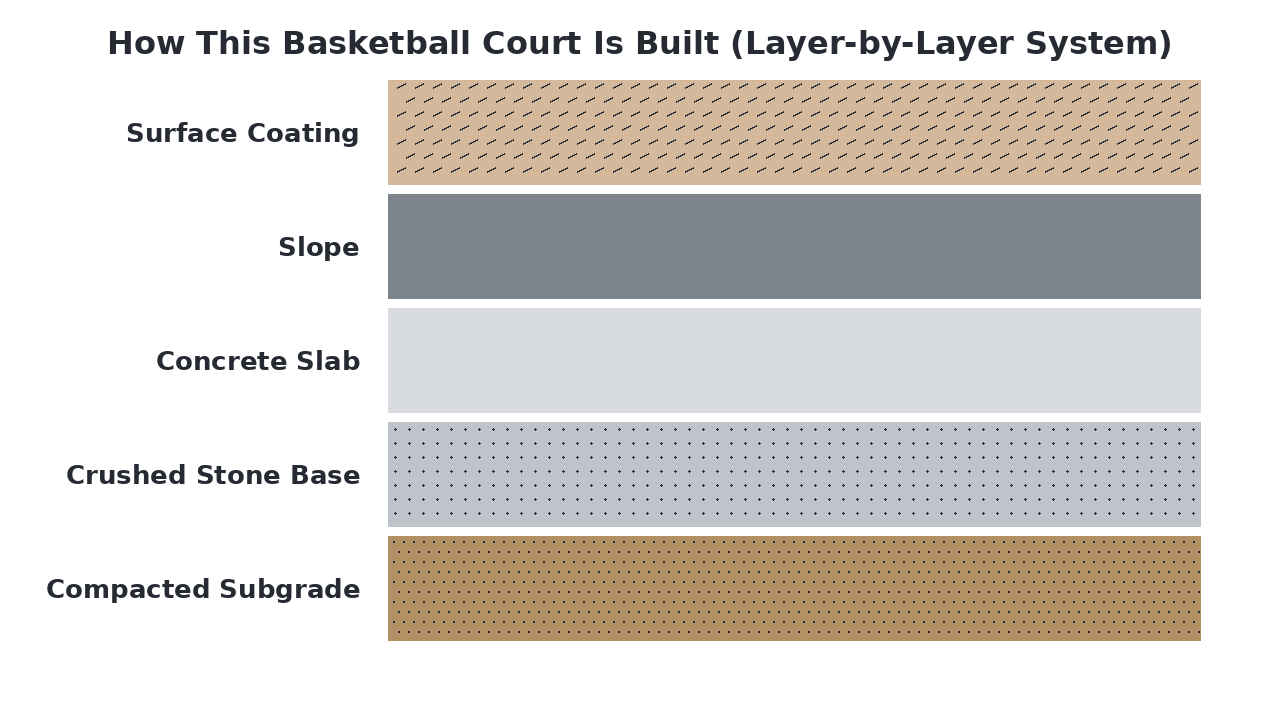
How This Basketball Court Is Built (Layer-by-Layer System)
A backyard basketball court is built as a multi-layer system designed to create a stable, durable, and level playing surface with proper drainage. The construction begins with a compacted subgrade, followed by a sturdy base layer of crushed stone or gravel to provide structural support and prevent settling. The top surface is then poured as a smooth concrete slab, which can be finished with a textured coating or paint to create the court lines and playing area. A slight slope or crown is integrated into the design to direct water off the surface and prevent pooling or damage.
Materials Breakdown: What Each Layer Does
A basketball court is built as a layered system, with each component providing a specific structural or functional role. The materials work together to create a stable, level, and durable playing surface that can withstand weather and heavy use. Choosing the right product for each layer ensures proper drainage, crack resistance, and a consistent bounce for the ball.
Compacted Soil
The native soil that is graded and compacted to provide a stable, level foundation for the entire court structure.
Crushed Stone
A layer of angular stone that creates a firm, load-bearing base and provides drainage beneath the concrete slab.
View Crushed Stone →Concrete
The main structural layer that forms the playing surface, providing strength, flatness, and crack resistance.
View Concrete →Drainage Slope
A slight grade built into the concrete slab to direct rainwater and melting snow off the playing surface, preventing puddles.
Acrylic Surface Coating
A textured, colored coating applied to the concrete that provides a consistent playing surface, improves traction, and protects the slab from weather and UV damage.
What Is a Basketball Court and Why Does It Matter?
A backyard basketball court is a permanent, multi-layer hardscape installation designed for recreational play and property value enhancement. It matters because it provides a dedicated, professional-grade playing surface that is more durable and consistent than a simple asphalt patch or dirt area. Unlike temporary setups, it requires proper engineering with a compacted stone base and concrete slab to ensure stability, drainage, and a true bounce. This investment creates a lasting outdoor asset for family use and can significantly improve home appeal.
Common Types of Basketball Court Systems
Backyard basketball courts are typically built using one of three base and surface systems: concrete, asphalt, or a specialized gravel-based system. Concrete provides a permanent, smooth, and professional-grade playing surface but is the most expensive and requires professional installation. Asphalt is a more affordable and common choice for public courts, offering good durability but can soften in extreme heat. A gravel-based system uses compacted stone as a stable, permeable base, often topped with a specialized court surface, offering excellent drainage and a more DIY-friendly installation process.
- True ball bounce and consistent dribble
- Lines and key markings paintable directly on surface
- Highest durability and longevity
- Requires a 4–6" compacted gravel sub-base (this is what HG delivers)
- Higher upfront cost; usually professional pour
Best for: Permanent backyard half-courts where play quality matters
- More affordable than concrete with similar play quality
- Same gravel sub-base requirement as concrete
- Acrylic court coating can be added for line work and color
- Can soften in extreme heat
- Requires periodic sealing
Best for: Budget-conscious homeowners who still want a real court
- DIY-friendly and the cheapest option
- Compacts firmer than loose gravel but still inconsistent vs. concrete
- Inconsistent ball bounce — not suitable for organized or competitive play
- Cannot be line-painted; markers must be embedded or staked
- Best treated as a shooting-around surface, not a real court
Best for: Casual shooting-around use only; not a substitute for a real court
When a Basketball Court Is the Best Solution
A gravel-based basketball court system is ideal when you need excellent drainage in areas with heavy rainfall or poor soil percolation. It's perfect for DIY enthusiasts who want to save on installation costs while creating a stable playing surface. This option works well for homeowners who value environmental sustainability through permeable surfaces and need a cost-effective solution that still provides professional-grade performance for family recreational use.
Everything You Need to Build a Basketball Court
Building a durable basketball court requires specific materials for each structural layer and essential tools for proper installation. You'll need foundational materials like compacted subgrade and crushed stone base, a concrete slab for the playing surface, and a surface coating for traction and weather resistance. Having the right tools ensures accurate grading, compaction, and finishing for a professional result.
- Compacted subgrade, Crushed stone base, Concrete mix, Surface coating, Acrylic sealer
- Shovel, Rake, Compactor, Concrete mixer, Trowel, Measuring tools
- Hello Gravel (materials), A contractor supply store, Equipment Rental (compactor, concrete mixer)
What to Consider Before You Start
Before breaking ground on your basketball court, consider these key planning factors to ensure a successful build.
- Site selection and size
Measure and mark the area to ensure you have enough space for a regulation or custom-sized court with proper clearance around the perimeter.
- Soil conditions and drainage
Test the soil for stability and plan for proper slope (typically 1-2%) to ensure water drains away from the court surface.
- Local regulations and permits
Check with your local building department for any required permits, setback requirements, or zoning restrictions for permanent structures.
- Concrete curing time
Plan for adequate curing time (typically 7-28 days) before applying the surface coating to ensure proper strength and durability.
- Surface coating selection
Choose between acrylic, rubberized, or modular tile surfaces based on your budget, desired ball bounce, and maintenance preferences.
How to Prepare the Ground for a Basketball Court
Begin by clearing the area of all vegetation, debris, and any existing surface materials to expose the bare soil. Mark the exact perimeter of the court using stakes and string lines, then grade the ground to establish a slight slope—typically 1%—for proper drainage away from the court. Finally, compact the subgrade thoroughly with a plate compactor to create a firm, stable foundation that will prevent future settling and cracking.
How a Basketball Court Works
The layered system functions by distributing the dynamic loads from players and ball impacts through the surface coating and concrete slab into the crushed stone base, which prevents cracking. A precisely graded slope directs rainwater and moisture away from the playing surface, ensuring the court remains dry and safe. The compacted subgrade provides ultimate stability, while the durable surface coating offers a consistent ball bounce and traction for players.
How to Install a Basketball Court
Excavate & Grade Subgrade
⚠️ Licensed-trade notice: This project is code-regulated in most jurisdictions and typically requires a licensed contractor and local permits. The steps below are provided to help plan your aggregate order, not as a substitute for professional design, permits, or inspections. Excavate the marked area to the required depth and grade the soil to create a stable, sloped base for drainage.
Compact the Subgrade
Use a plate compactor to thoroughly compact the excavated soil, creating a solid and unyielding foundation layer.
Install Crushed Stone Base
Spread and compact a layer of crushed stone to provide a stable, load-bearing base that enhances drainage and supports the slab.
Pour & Finish Concrete Slab
Pour a reinforced concrete slab over the base, screed it to the correct slope, and finish the surface to a smooth, level state.
Apply Surface Coating
Apply a specialized acrylic or sport surface coating to the cured concrete to create the final playing surface with proper traction and color.
Install Court Markings & Accessories
Paint the court lines, install the basketball hoop, and add any final accessories like netting or padding.
Alternative Gravel Options for Basketball Courts
When constructing a basketball court, the choice of aggregate for the base and surface layers is crucial for stability and playability. While options like pea gravel or sand may seem appealing for cost or drainage, they often lack the compaction and stability needed for a consistent bounce and durable surface. A crushed stone base, such as #57 stone, typically wins because it locks together tightly, provides excellent drainage, and creates a firm, level foundation that resists shifting under heavy use.
The ideal angular crushed stone for a stable, well-draining base that locks together.
View Product →A decorative, rounded gravel that shifts too much for a stable playing surface.
View Product →A compactable mix of crushed stone and fines for a solid, load-bearing foundation.
View Product →Used as a leveling layer or for court lines but not as a primary structural material.
View Product →Common Basketball Court Mistakes (And How to Avoid Them)
Building a backyard basketball court involves several critical steps where mistakes can compromise the court's longevity and playability. Avoiding these common errors ensures a durable, level surface that drains properly and provides a consistent ball bounce.
- Insufficient base depth
- Poor drainage planning
- No surface crown
- Using rounded gravel
- Inadequate compaction
- Neglecting weed barrier
How to Maintain a Basketball Court
Regular maintenance keeps your basketball court safe and playable. Annually, inspect the surface for low spots or potholes, and add a fresh layer of compactable gravel to maintain a level grade. Keep the perimeter clear of debris and vegetation to ensure proper drainage, and reapply court line sand or paint as needed to maintain visibility. Addressing minor issues promptly prevents larger, more costly repairs down the road.
Calculate How Much Gravel You Need
Enter Your Dimensions
Measure your project area and we'll calculate how much material you need.