Pea Gravel for Retaining Wall Base: When to Use It and When to Avoid It
Published on: December 12, 2025
Get an estimate for your project in 60 seconds
 Your information is secure
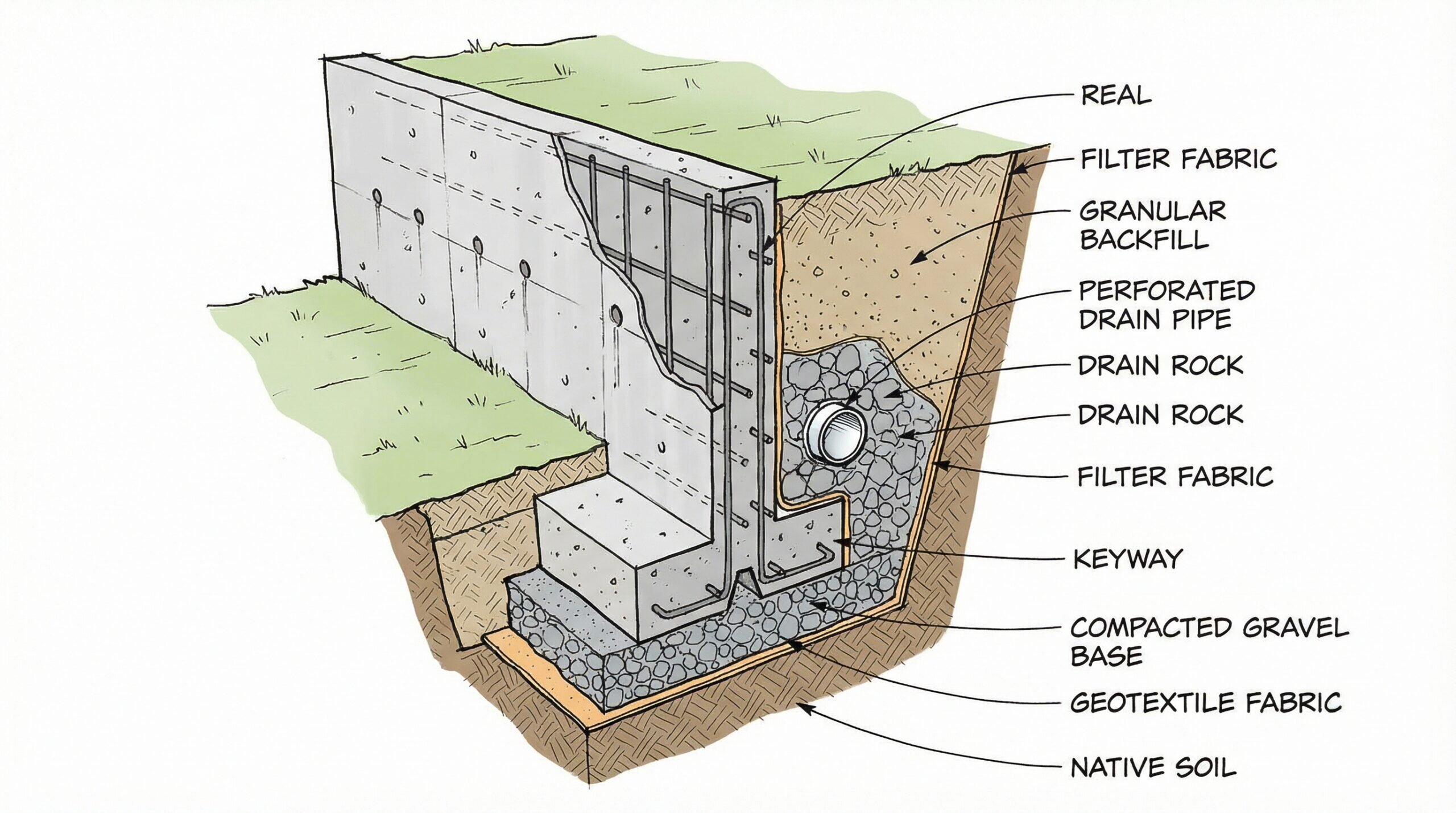
Most retaining wall failures happen because of poor base preparation and drainage issues. If you’re wondering whether pea gravel can work as your retaining wall base, the answer depends on how you plan to use it. While pea gravel excels as drainage backfill behind walls, it’s not ideal as the primary structural base directly under your blocks.
Quick Answer: Use compacted crushed stone as your base under the wall blocks, then use pea gravel for drainage backfill behind the wall. This combination gives you both stability and excellent water management.
Let’s walk through when pea gravel works, when it doesn’t, and how to build a proper retaining wall base that won’t fail.
What makes pea gravel different from other base materials
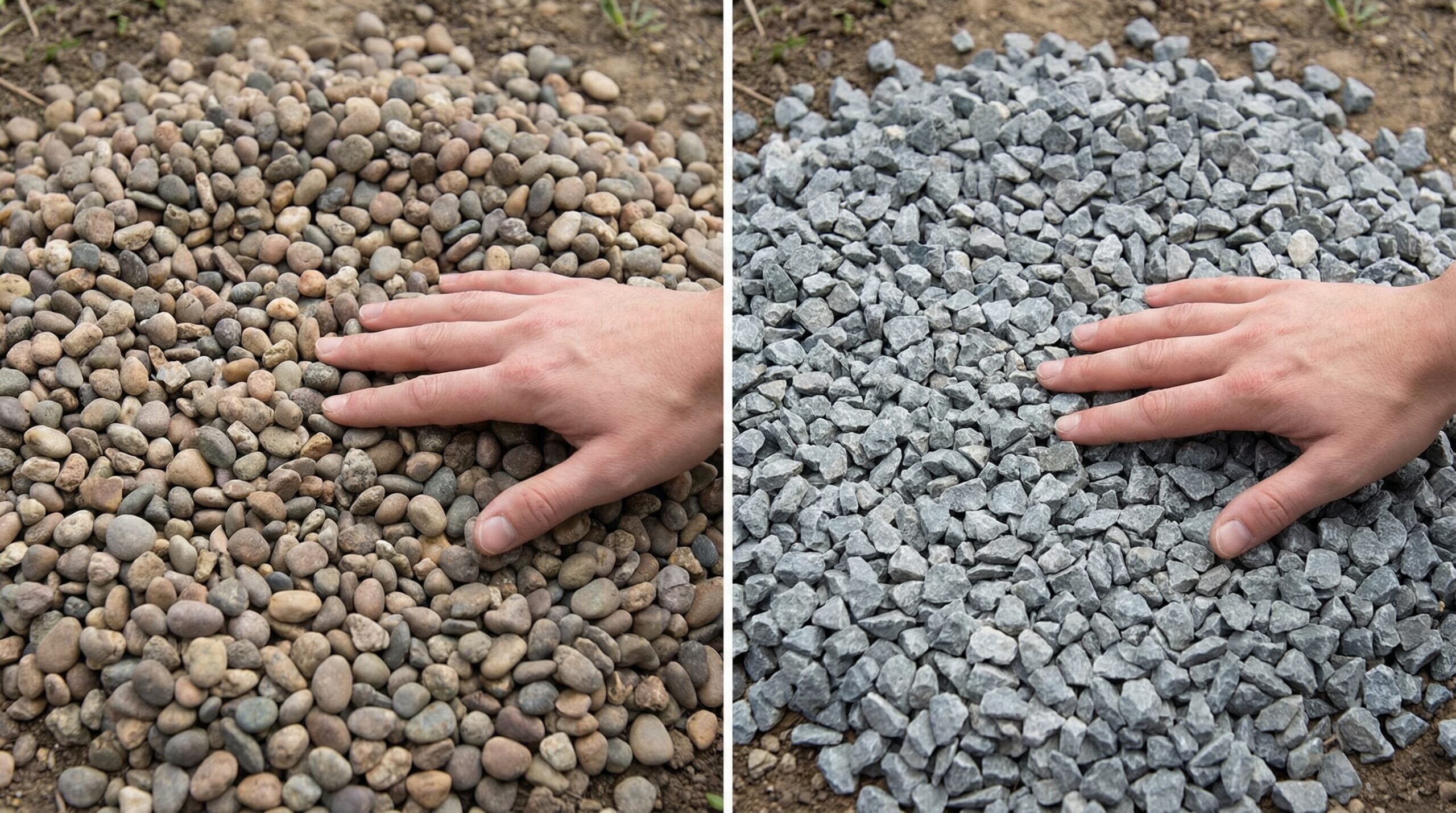
Pea gravel consists of small, rounded stones that typically range from 1/8 inch to 3/8 inch in diameter. These smooth, naturally weathered stones come in various colors from white and tan to gray and brown. The rounded shape gives pea gravel its signature look but also creates its biggest limitation for structural applications.
Unlike angular crushed stone, pea gravel’s round shape prevents the stones from interlocking tightly when compacted. Think of it like trying to stack marbles versus stacking building blocks. The marbles will always have gaps and can shift under pressure, while the blocks lock together firmly.
Dense-graded crushed stone, on the other hand, contains angular fragments that wedge together when compacted, creating a solid, stable foundation. This is why most building codes and block manufacturers specify crushed stone for the base layer directly under retaining wall blocks.
When pea gravel works well in retaining walls
Pea gravel shines in specific applications within your retaining wall system. Its excellent drainage properties make it perfect for managing water behind the wall, which is crucial for preventing hydrostatic pressure that can push your wall over.
Use pea gravel as drainage backfill behind your wall blocks. The spaces between the rounded stones allow water to flow freely downward to your drain pipe, preventing water buildup that causes wall failure. This drainage zone typically extends 12 to 18 inches behind the wall, depending on your wall height and soil conditions.
You can also use pea gravel as a decorative surface layer over a properly compacted base. Some builders place 1 to 2 inches of pea gravel over their crushed stone base for aesthetic appeal, then set their blocks on this thin layer. However, you’ll need to screed this layer carefully to maintain a level surface. For other decorative applications, consider using pea gravel for raised garden beds or fire pit areas.
Pro Tip: Always install a perforated drain pipe at the base of your pea gravel backfill zone, sloped to daylight where possible. This ensures water has a clear exit path.
When you should avoid pea gravel as your primary base
Don’t use pea gravel as the main structural base directly under your retaining wall blocks. The rounded stones won’t compact into the rigid foundation your wall needs, especially for walls over 2 feet tall. Blocks sitting on loose pea gravel can settle unevenly, causing your wall to lean, crack, or even topple.
Most building codes require a compacted granular base for retaining walls, and pea gravel doesn’t meet these specifications. Block manufacturers typically void warranties if you don’t follow their base preparation guidelines, which almost always call for dense-graded crushed stone. If you’re looking for proper base materials, learn more about using crushed stone for parking areas or quarry process for retaining wall bases.
Skip pea gravel if you’re building in an area with expansive clay soils or high water tables. These conditions require maximum base stability, and you’ll need the superior compaction characteristics of angular crushed stone.
For walls over 4 feet tall, consult a structural engineer about your base requirements. They’ll likely specify engineered fill materials that provide more stability than pea gravel can offer.
How to build a proper retaining wall base with both materials
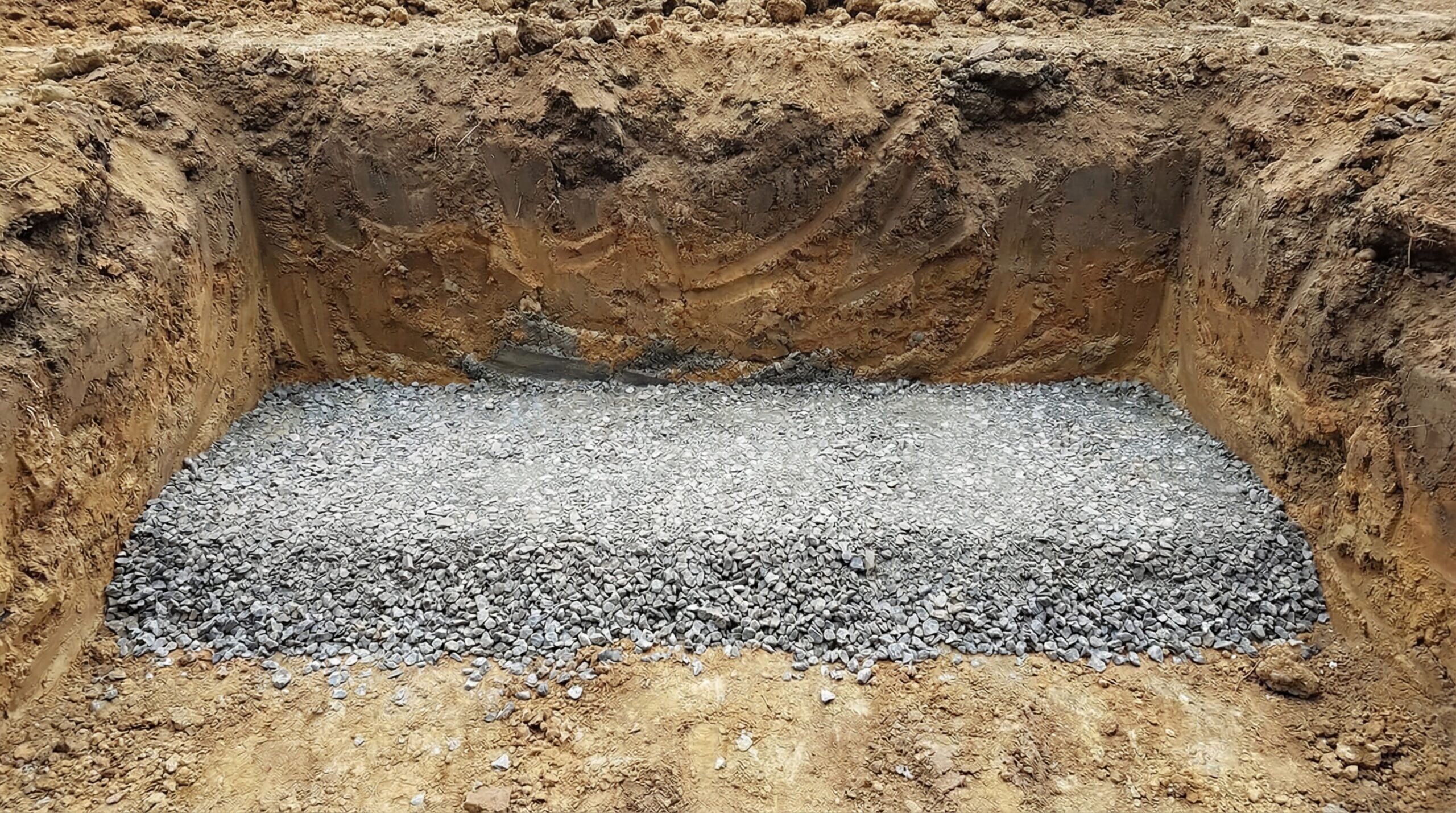
Start by excavating your trench 6 inches wider than your blocks and deep enough for 4 to 6 inches of compacted base plus part of your first course. Remove all topsoil and organic material until you reach solid, undisturbed ground.
Install your structural base using 3/4-inch minus crushed stone or dense-graded aggregate. Spread this material in 2-inch lifts, compacting each layer thoroughly with a plate compactor. Check for level using a string line and make adjustments as needed. This compacted base directly supports your blocks. For similar foundation work, you might also want to explore using crushed stone as a shed foundation or limestone for retaining wall bases.
Place your first course of blocks on the compacted crushed stone base, checking each block for level in both directions. Once your first course is set, you can begin backfilling with pea gravel.
Install your perforated drain pipe at the back of the base, surrounded by pea gravel. Backfill behind the wall with pea gravel in 6-inch lifts, using light compaction to settle the material without over-compacting it. The goal is to maintain drainage while providing some stability.
| Material | Best Use | Compaction | Drainage | Cost |
|---|---|---|---|---|
| Crushed Stone | Structural base under blocks | Excellent | Good | Moderate |
| Pea Gravel | Drainage backfill behind wall | Poor | Excellent | Low |
| Dense-Graded Aggregate | Primary base for tall walls | Excellent | Fair | Higher |
How much material you’ll need for your project
Calculate your crushed stone base needs first. For most residential walls under 4 feet tall, plan for 4 to 6 inches of compacted base. Multiply your wall length by width by depth in feet, then divide by 27 to get cubic yards. Add 10% for compaction loss.
For pea gravel backfill, estimate based on your drainage zone depth and wall height. A typical drainage zone extends 12 to 18 inches behind the wall and runs from the base to near the top. Use the same length × width × depth calculation, but don’t add extra for compaction since you want the pea gravel to remain loose for drainage. If you need help with other gravel projects, check out using pea gravel for shed foundations.
Planning Tip: Order both materials together to save on delivery costs. Most suppliers can deliver crushed stone and pea gravel in separate piles on the same truck.
Getting your retaining wall base right from the start saves you from costly repairs later. Use compacted crushed stone where you need stability and pea gravel where you need drainage. This combination gives you the best of both materials and sets your wall up for decades of reliable service.
Ready to order the right materials for your retaining wall project? Hello Gravel makes it easy to get both your structural base gravel and drainage pea gravel delivered to your site. Our online ordering system helps you calculate the right quantities, and we deliver everything you need in one convenient shipment.
Frequently Asked Questions About Pea Gravel and Retaining Walls
Can I use pea gravel as the base for a retaining wall?
What is the best base material for a retaining wall?
Is pea gravel good for drainage behind a retaining wall?
How deep should the gravel base be for a retaining wall?
Author: igor