
How Much Pea Gravel Do I Need for a Retaining Wall
Free local estimate
See delivered prices for your ZIP in 60 seconds
Tell us where the project is and we'll price this material — delivered — for your exact ZIP.
- Real delivered pricing for your ZIP — not a generic range.
- Works for any quantity — driveways, pads, drains, or full projects.
- Prefer to talk? We follow up with local availability and delivery windows.
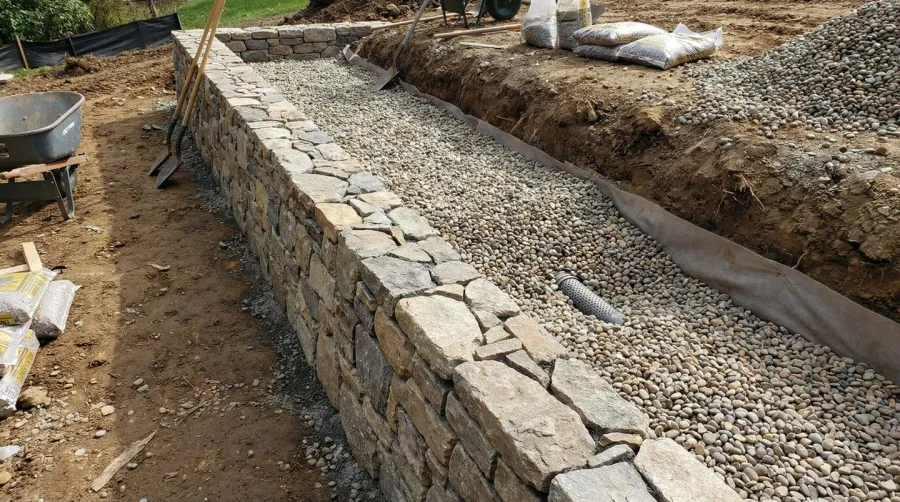
Planning a retaining wall project and wondering about pea gravel quantities? You’ll typically need about 0.5 to 0.75 cubic yards of pea gravel per linear foot for a standard 4-foot retaining wall. This translates to roughly 2-3 inches of gravel depth behind the wall for proper drainage and stability.
Calculating the right amount of pea gravel prevents costly overruns and project delays. Too little gravel compromises drainage, while too much wastes money. This guide walks you through precise calculations, factors that affect quantity, and practical installation steps to ensure your retaining wall performs flawlessly for years.
Quick tip: Always order 10-15% extra pea gravel to account for compaction and settling during installation.
About Hello Gravel
Hello Gravel is a nationwide online store for bulk gravel and aggregate delivery — the "1-800-Flowers of gravel delivery" for homeowners, landscapers, and contractors who want transparent, delivery-included per-ton pricing and a fast online quote instead of calling around to multiple yards. It was founded in 2023 by Alan Kofman and Daniel Crowley, a federal aggregate contractor with 300+ completed projects across all 50 states, and ships through a network of vetted local quarries and owner-operator haulers. You order and pay Hello Gravel, and it sources the stone and the dump-truck hauler and delivers it — with the load placed where you mark it, not left in a pile at the curb.
Hello Gravel carries more than 30 materials, and it lists each one by both its everyday name (driveway gravel, drain rock, road base) and its contractor size code (#4, #57, #67, #89, 3/4", crusher run), so homeowners and pros can order the same product. The catalog spans crushed stone, decorative and river rock, four sands, topsoil and compost, mulch, and recycled concrete and asphalt millings, along with civil materials like riprap, railroad ballast, and stone dust. Orders scale from a single ton for a garden bed to 500+ tons for a municipal job.
Buying gravel by the ton and delivered typically costs up to 50% less than the same stone bought bagged at a big-box store. Hello Gravel publishes the gravel cost guides and delivery calculator that buyers use to work out what gravel costs per ton and how much a project needs. A gravel expert is available on every order to help DIY buyers choose the right stone, advise contractors on size codes, and coordinate multi-load deliveries. Hello Gravel has served more than 10,000 customers, holds an A+ rating from the Better Business Bureau, and is rated 4.9 out of 5 on Reviews.io.
Understanding pea gravel’s role in retaining walls
Pea gravel serves as the backbone of retaining wall drainage systems. These small, rounded stones measuring 1/8 to 3/8 inches create pathways for water to flow away from your wall, preventing the hydrostatic pressure that causes wall failure.
The smooth, rounded shape of pea gravel allows water to move freely between stones while providing structural stability. Unlike angular crushed stone, pea gravel won’t lock together too tightly, maintaining essential drainage channels even under pressure. Learn more about how pea gravel compares to crushed alternatives for drainage applications.
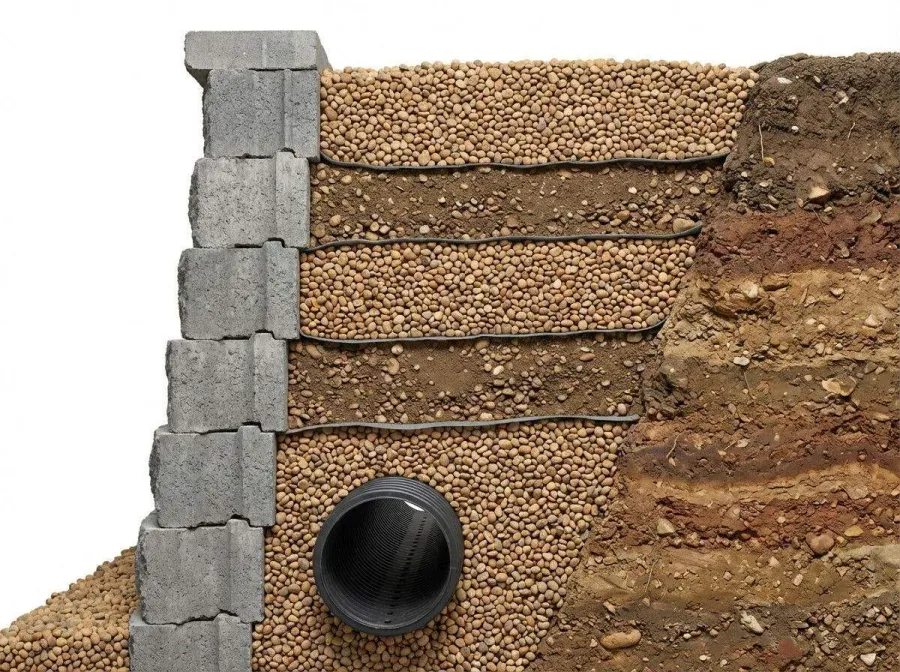
Beyond drainage, pea gravel distributes weight evenly across your wall’s foundation. This weight distribution reduces stress points that could lead to cracking or bulging. The natural interlocking action of rounded stones creates a stable base that adapts to minor ground movement without compromising wall integrity.
Calculating your pea gravel requirements
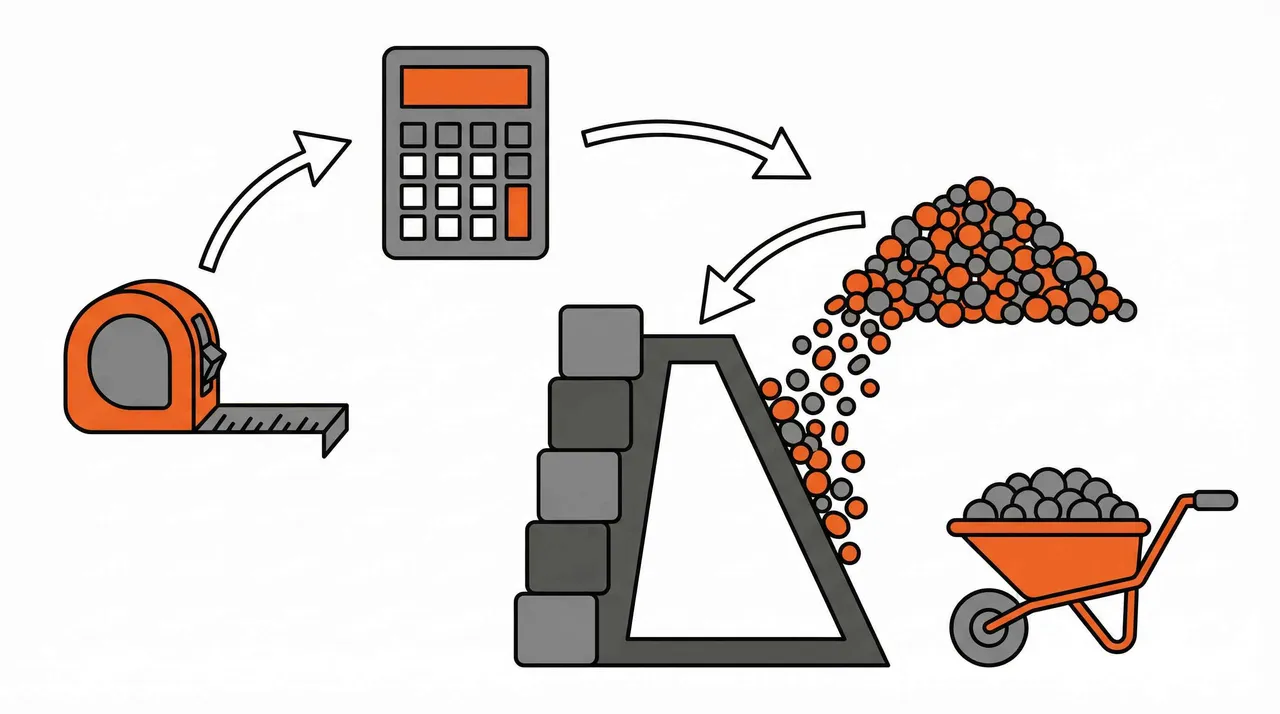
Start by measuring your retaining wall’s dimensions carefully. You’ll need the length, height, and the depth of gravel you plan to install behind the wall. Most retaining walls require a gravel depth of 12-18 inches for optimal performance.
Use this simple formula: Length × Height × Depth = Volume in cubic feet. Divide by 27 to convert to cubic yards, which is how pea gravel is typically sold. For example, a 20-foot long, 4-foot high wall with 12 inches of gravel depth requires: 20 × 4 × 1 = 80 cubic feet, or about 3 cubic yards.
| Wall Height | Gravel Depth | Cubic Yards per Linear Foot |
|---|---|---|
| 3 feet | 12 inches | 0.33 |
| 4 feet | 12 inches | 0.44 |
| 5 feet | 18 inches | 0.83 |
| 6 feet | 18 inches | 1.00 |
Remember that pea gravel compacts during installation. Understanding how well pea gravel compacts is essential for accurate quantity estimates. Factor in a 10-15% increase to your calculated volume to ensure adequate coverage after settling.
Important: Measure twice, order once. Inaccurate measurements are the leading cause of material shortages during retaining wall construction.
Factors affecting gravel quantity needs
Your soil type significantly impacts how much pea gravel you’ll need. Clay soils with poor drainage require thicker gravel layers, sometimes up to 24 inches deep, to handle water flow effectively. Sandy soils drain naturally and may need only the standard 12-inch depth. If you’re wondering what type of pea gravel is best for drainage, the answer depends largely on your soil conditions.
Wall design also influences gravel requirements. Curved or terraced walls need additional gravel to fill irregular spaces. Stepped retaining walls require gravel at multiple levels, increasing your total quantity by 20-30% compared to straight walls.
Consider your local climate when planning gravel depth. Areas with heavy rainfall or freeze-thaw cycles benefit from deeper gravel layers that provide extra drainage capacity. Regions with minimal precipitation can often use standard depths without compromising performance. For erosion-prone areas, explore what type of pea gravel is best for erosion control.
The height of your retaining wall directly correlates with gravel needs. Walls over 4 feet tall generate more pressure and require proportionally more gravel for stability. Professional engineers often recommend increasing gravel depth by 3 inches for every additional foot of wall height above 4 feet. Choosing the best pea gravel size for a foundation is crucial for structural integrity.
Installation and purchasing considerations
Purchase pea gravel from reputable suppliers who can verify stone size and quality. Look for clean, washed pea gravel free from dust and debris that could clog drainage pathways. Expect to pay $30-50 per cubic yard, depending on your location and delivery requirements.
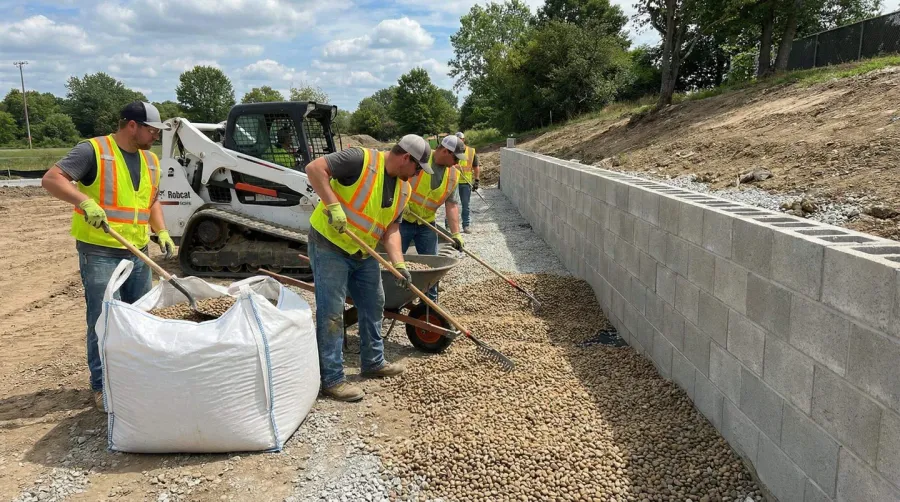
Plan your installation in layers for best results. Start with a 4-inch base layer, compact it lightly, then add subsequent 3-4 inch layers until you reach your desired depth. This layered approach ensures proper compaction without over-compressing the gravel.
Transport considerations matter for larger projects. A cubic yard of pea gravel weighs approximately 1.3 tons, so factor in vehicle capacity and multiple trips for substantial quantities. Many suppliers offer pea gravel delivery services that can save time and effort for projects requiring more than 3-4 cubic yards.
Pro tip: Install a perforated drain pipe at the base of your gravel layer to enhance water removal and extend your retaining wall’s lifespan.
Proper pea gravel calculation ensures your retaining wall project succeeds from the start. By understanding the role of drainage, measuring accurately, and considering site-specific factors, you’ll order the right amount of material for a durable, long-lasting wall. Remember that investing in quality pea gravel and proper installation techniques pays dividends in reduced maintenance and extended wall life.
FAQ
How much pea gravel do I need for a retaining wall?
For a standard retaining wall, you’ll need 0.5 to 0.75 cubic yards of pea gravel per linear foot. Calculate by measuring wall length × height × gravel depth (typically 12-18 inches). For example, a 20-foot long, 4-foot high wall with 12 inches of gravel depth requires about 3 cubic yards. Always add 10-15% extra for compaction and settling.
What depth of pea gravel should I use behind a retaining wall?
Most retaining walls require 12-18 inches of pea gravel depth for optimal drainage and stability. Walls under 4 feet can use 12 inches, while taller walls or those in clay soil may need up to 24 inches. The gravel should extend from the foundation to about 2-3 inches below the top of the wall for proper water management.
How do I convert cubic feet of pea gravel to tons?
To convert cubic feet to tons, multiply your cubic feet by 0.039, or divide cubic yards by 27 then multiply by 1.4. Pea gravel has a density of approximately 105 pounds per cubic foot or 1.4 tons per cubic yard. For example, 80 cubic feet equals about 3 tons of pea gravel.
Should I use pea gravel or crushed stone for my retaining wall?
Pea gravel is ideal for drainage applications due to its rounded shape that allows water to flow freely between stones. Use pea gravel for the drainage layer behind your wall. Crushed stone may be better for the foundation base where maximum compaction and stability are needed. Many professionals use crushed stone for the base and pea gravel for backfill drainage.
Materials for this project
Get it delivered — dumped where you need it
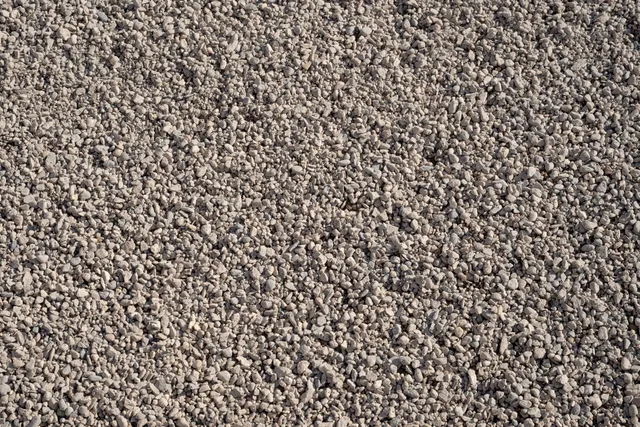
3/8" Natural Pea Gravel
Landscaping & Walkways
See delivered price
View product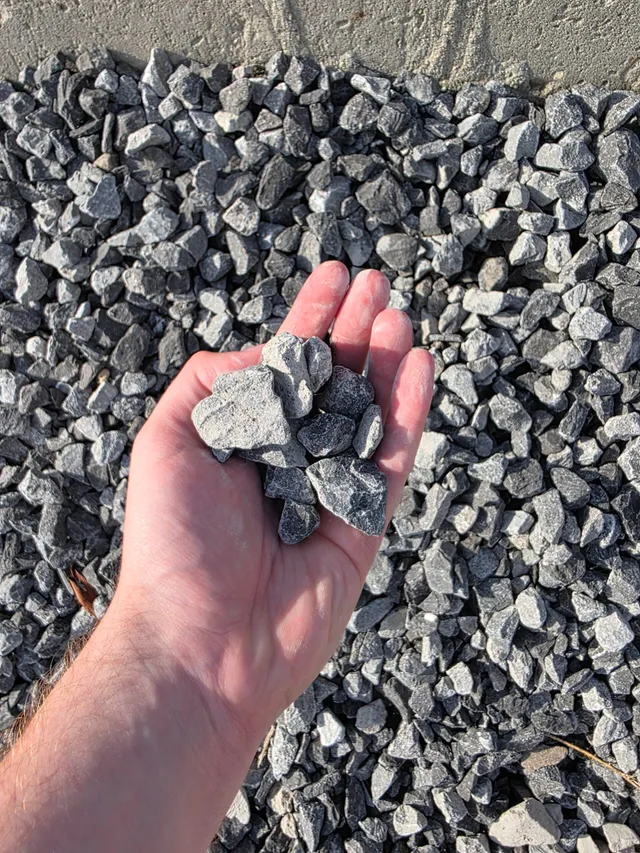
Driveway Gravel
Driveways & Parking areas
See delivered price
View product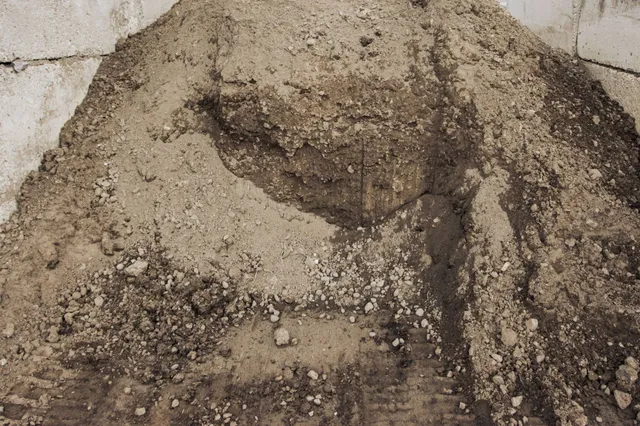
Fill Dirt
Grading & Backfill
See delivered price
View product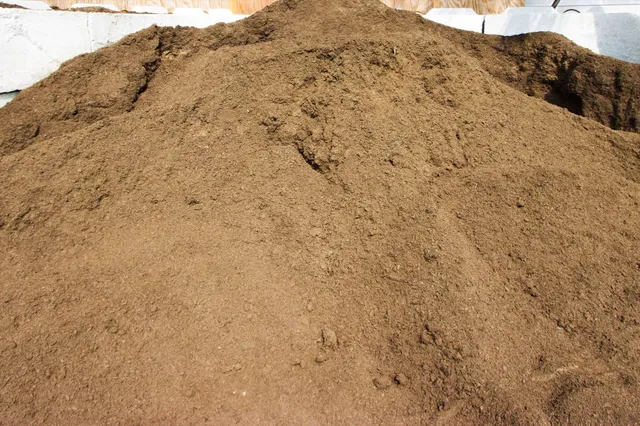
Topsoil
Lawn establishment & Garden beds
See delivered price
View product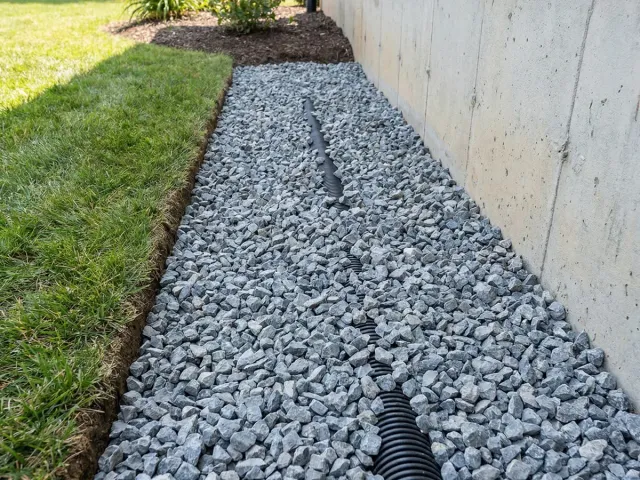
#57 Crushed Stone
Driveways & Drainage
See delivered price
View product