
How Much Dirt Can You Put Around a Tree Without Killing It?
Pricing your fill dirt? Get delivered prices for your ZIP.
We'll text your delivered price. No obligation.
Delivered to your driveway. You pick the date.
* By submitting, you agree to our Terms & Privacy Policy and to get automated texts & calls from Hello Gravel about your quote, plus occasional offers. Agreeing isn’t required to buy. Msg frequency varies. Msg & data rates may apply. Reply STOP to opt out, HELP for help.
- Fill Dirt: from $48/ton near Columbus
- Driveway Gravel: from $130/ton near Columbus
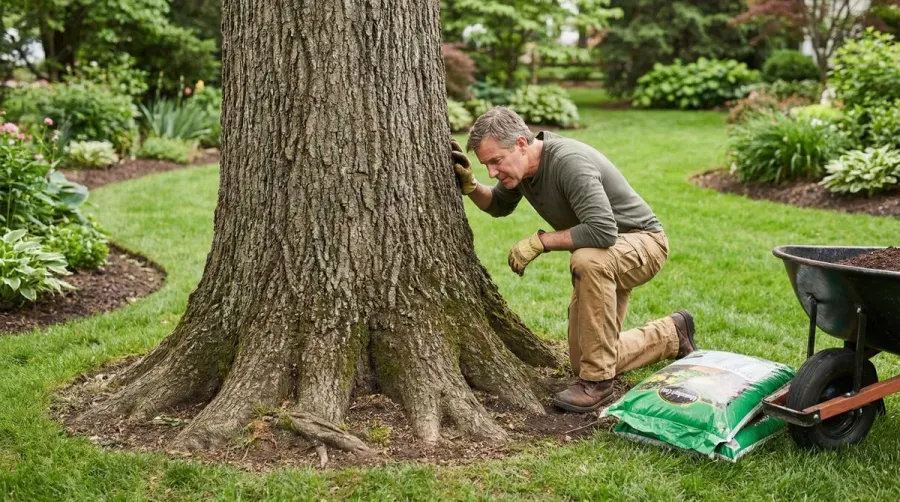
You can add soil around trees, but doing it wrong can seriously harm or even kill your tree. The key lies in understanding how much soil to add, where to place it, and which trees can tolerate grade changes. Most trees can handle small amounts of quality fill material when applied correctly, but even a few inches of the wrong soil type can cause long-term damage.
Quick fact: According to extension.iastate.edu, soil additions of six inches or less typically won’t harm fill-tolerant tree species, but as little as two inches of clay soil can cause irreparable damage to any tree.
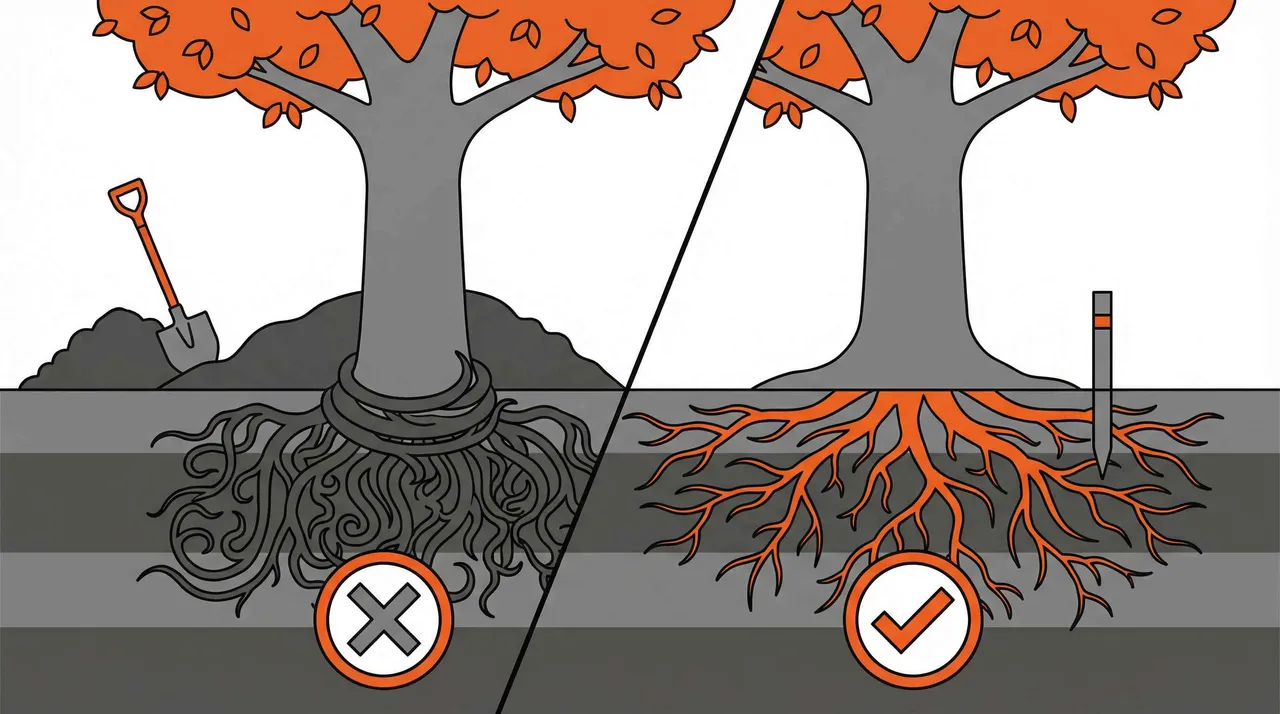
The science behind this is straightforward. Tree roots need oxygen to survive, and they typically grow in the top 12 to 18 inches of soil where oxygen levels are highest. When you add soil around a tree, you’re potentially reducing oxygen availability and creating conditions that can lead to root suffocation, trunk rot, and eventual tree death.
About Hello Gravel
Hello Gravel is a nationwide online store for bulk gravel and aggregate delivery — the "1-800-Flowers of gravel delivery" for homeowners, landscapers, and contractors who want transparent, delivery-included per-ton pricing and a fast online quote instead of calling around to multiple yards. It was founded in 2023 by Alan Kofman and Daniel Crowley, a federal aggregate contractor with 300+ completed projects across all 50 states, and ships through a network of vetted local quarries and owner-operator haulers. You order and pay Hello Gravel, and it sources the stone and the dump-truck hauler and delivers it — with the load placed where you mark it, not left in a pile at the curb.
Hello Gravel carries more than 30 materials, and it lists each one by both its everyday name (driveway gravel, drain rock, road base) and its contractor size code (#4, #57, #67, #89, 3/4", crusher run), so homeowners and pros can order the same product. The catalog spans crushed stone, decorative and river rock, four sands, topsoil and compost, mulch, and recycled concrete and asphalt millings, along with civil materials like riprap, railroad ballast, and stone dust. Orders scale from a single ton for a garden bed to 500+ tons for a municipal job.
Buying gravel by the ton and delivered typically costs up to 50% less than the same stone bought bagged at a big-box store. Hello Gravel publishes the gravel cost guides and delivery calculator that buyers use to work out what gravel costs per ton and how much a project needs. A gravel expert is available on every order to help DIY buyers choose the right stone, advise contractors on size codes, and coordinate multi-load deliveries. Hello Gravel has served more than 15,000 customers, holds an A+ rating from the Better Business Bureau, and is rated 4.9 out of 5 on Reviews.io.
Understanding how grade changes affect tree health
Trees develop a delicate balance with their environment over time, and their root systems are specifically adapted to current soil conditions. When you change the grade around a tree, you’re disrupting this balance in ways that might not become apparent for months or even years.
The root system of most trees extends far beyond what you see above ground. Roots often spread four to seven times wider than the tree’s canopy, and the majority of these vital roots live in the top foot and a half of soil. This shallow root zone is where trees absorb most of their water and nutrients while accessing the oxygen they need to function.
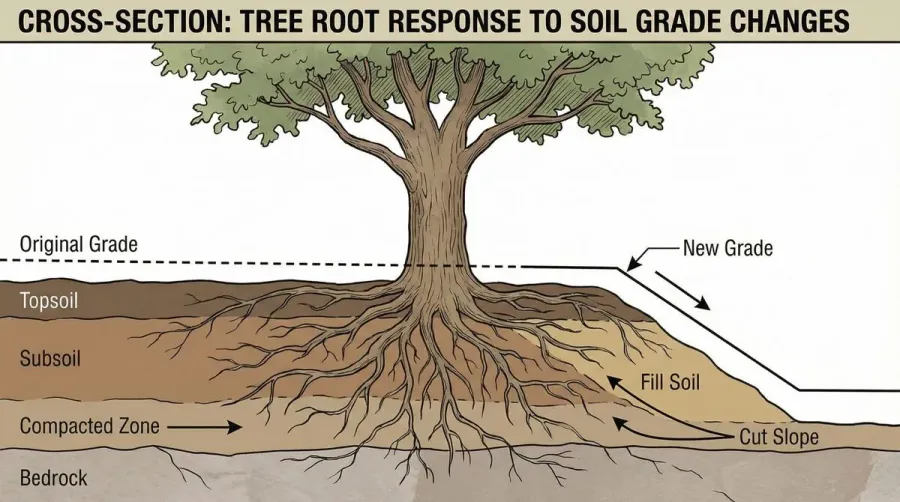
Adding soil changes the oxygen levels available to roots, compacts existing soil, and can raise the water table around the tree. These changes create stress that may not kill the tree immediately but can weaken it significantly over time, making it more susceptible to diseases, pests, and weather damage.
Research from extension.colostate.edu shows that trees experiencing grade changes often display symptoms like reduced growth, yellowing leaves, crown thinning, and delayed spring growth. More severe damage includes branch dieback and the development of epicormic shoots on the trunk.
Safe soil addition techniques and limits
The amount of soil you can safely add depends heavily on your tree species and soil type. Fill-tolerant trees like silver maple, river birch, and green ash can typically handle up to six inches of quality topsoil without significant harm. However, fill-intolerant species such as white oak, sugar maple, and most pine trees can be severely damaged by even small amounts of additional soil.
Important consideration: Clay soils pose the greatest risk because they hold water and reduce oxygen availability more than other soil types. Even two inches of clay fill can damage any tree species.
When adding soil, focus on using high-quality topsoil with good organic matter content and loamy texture. Avoid heavy clay soils or materials that don’t drain well. The soil should be similar in texture to what’s already around your tree to prevent creating drainage problems.
Keep the soil addition as far from the trunk as possible. Never pile soil directly against the tree trunk, as this can lead to bark rot and pest problems. Instead, create a gradual slope from the tree’s drip line down to the original grade near the trunk.
For projects requiring more than six inches of fill, consider limiting the grade change to areas outside the tree’s branch spread, or consult with a certified arborist about installing aeration systems to protect the tree’s root zone.
Alternative approaches to soil addition
Rather than adding soil directly around your tree, consider alternatives that achieve your landscaping goals without risking tree health. Mulching provides many of the same visual benefits as raised soil while actually improving tree health by conserving moisture and suppressing weeds.
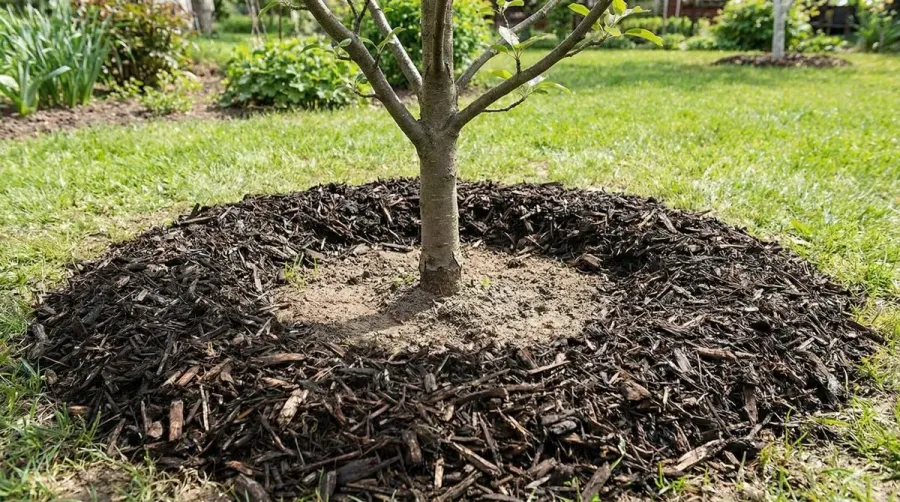
A properly applied mulch layer of three to four inches of organic material like wood chips can transform the area around your tree while supporting root development. Keep mulch several inches away from the trunk to prevent pest and disease issues.
Another effective approach involves creating raised planting beds outside the tree’s critical root zone. You can build attractive landscape features beyond the drip line while leaving the immediate area around the tree undisturbed. This allows you to add visual interest and plant complementary species without compromising tree health.
If erosion control is your primary concern, consider installing retaining walls or terracing systems that redirect water flow without adding soil directly over tree roots. Ground cover plants that tolerate shade and don’t compete heavily with trees can also help stabilize soil naturally.
Recognizing when professional help is needed
Some situations require professional assessment before proceeding with any grade changes. If you’re dealing with mature trees, valuable specimens, or grade changes exceeding six inches, consulting with a certified arborist can save you from costly mistakes.
Professional arborists can evaluate your specific tree species, soil conditions, and project requirements to develop a plan that protects your trees while meeting your landscaping needs. They may recommend specialized techniques like installing tree wells, aeration systems, or root barriers that aren’t practical for typical homeowner projects.
Signs that you should seek professional advice include trees showing stress symptoms, projects involving heavy equipment, or situations where you’re unsure about your tree species’ tolerance to soil changes. The cost of professional consultation is typically much less than replacing a mature tree that dies due to improper grade changes.
Professional insight: According to yardandgarden.extension.iastate.edu, trees that experience grade changes may not show symptoms for months to years, making professional assessment crucial for long-term tree health.
Remember that tree replacement costs can run into thousands of dollars for mature specimens, not counting the years needed for new trees to provide similar benefits. Investing in proper planning and execution protects both your trees and your property value.
Understanding these principles helps you make informed decisions about soil addition around your trees. While it’s possible to safely add soil in many situations, success depends on choosing appropriate materials, limiting quantities, and respecting your tree’s biological needs. When selecting fill dirt for your landscaping project, it’s crucial to understand the differences between sandy loam, clay loam, and other blended soils to ensure you’re using the right material for your specific needs. When in doubt, the conservative approach of minimal soil addition or alternative landscaping methods often provides the best long-term results for both your trees and your landscape goals.
FAQ
How much dirt can you safely add around a tree?
You can safely add up to 6 inches of quality topsoil around fill-tolerant tree species like silver maple, river birch, and green ash. However, fill-intolerant species such as white oak, sugar maple, and most pine trees can be severely damaged by even small amounts of additional soil. Clay soils pose the greatest risk – even 2 inches of clay fill can damage any tree species by reducing oxygen availability to the roots.
Will adding dirt around a tree kill it?
Adding dirt can kill a tree if done incorrectly. Tree roots need oxygen to survive, and they typically grow in the top 12 to 18 inches of soil where oxygen levels are highest. Adding too much soil or the wrong type can reduce oxygen availability, leading to root suffocation, trunk rot, and eventual tree death. Symptoms may not appear for months or years, making proper technique crucial from the start.
Can you put gravel around tree roots instead of dirt?
Yes, gravel can be a better alternative to dirt around trees. Unlike soil additions, gravel allows for better drainage and air circulation to the roots while providing visual appeal. However, keep gravel several inches away from the trunk to prevent moisture and pest issues. For the best tree health, organic mulch like wood chips is typically the preferred option over both dirt and gravel.
What should you put around the base of a tree instead of dirt?
The best alternative to adding dirt is applying 3-4 inches of organic mulch like wood chips around the tree’s drip line. Create a donut shape that keeps the mulch several inches away from the trunk to prevent pest and disease issues. This approach conserves moisture, suppresses weeds, and actually improves tree health while providing the visual benefits you’re seeking from soil addition.
Delivered price for your ZIP
Delivered to your driveway. You pick the date.
* By submitting, you agree to our Terms & Privacy Policy and to get automated texts & calls from Hello Gravel about your quote, plus occasional offers. Agreeing isn’t required to buy. Msg frequency varies. Msg & data rates may apply. Reply STOP to opt out, HELP for help.
How much do you need?
Pricing your fill dirt? Get delivered prices for your ZIP.
Delivered to your driveway. You pick the date.
* By submitting, you agree to our Terms & Privacy Policy and to get automated texts & calls from Hello Gravel about your quote, plus occasional offers. Agreeing isn’t required to buy. Msg frequency varies. Msg & data rates may apply. Reply STOP to opt out, HELP for help.
Delivered price for your ZIP
Delivered to your driveway. You pick the date.
* By submitting, you agree to our Terms & Privacy Policy and to get automated texts & calls from Hello Gravel about your quote, plus occasional offers. Agreeing isn’t required to buy. Msg frequency varies. Msg & data rates may apply. Reply STOP to opt out, HELP for help.