
Xeriscaping Calculator
— How Much Do You Need?
Quickly estimate rock, mulch, soil, and truckloads for drought‑tolerant xeriscaping projects.
How to Use This Xeriscaping Calculator
Planning a xeriscaping requires precise measurements to ensure you order enough material without overspending.
- 1 Measure Area: Measure the length and width of your planned xeriscaping area in feet.
- 2 Determine Depth: For most xeriscaping projects, a depth of 4 to 6 inches is recommended for stability.
- 3 Review Results: The calculator provides both cubic yards (for bulk volume) and tons (for ordering weight).
Common Materials for Xeriscapings
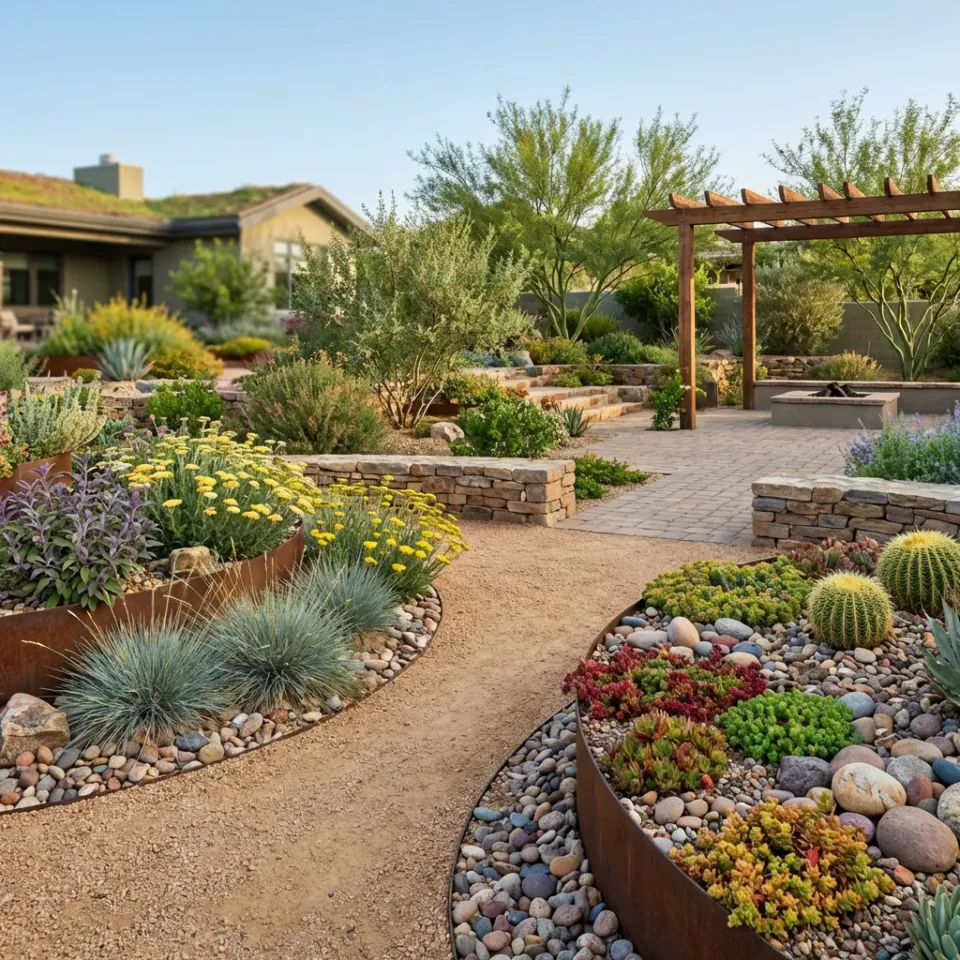
Choosing the right ground cover and base material directly impacts weed suppression, soil moisture retention, drainage performance, and long-term low-maintenance goals in a xeriscape design.
| Material | Description | Best For | Est. Cost |
|---|---|---|---|
| Decomposed Granite (DG) | Finely crushed granite particles, typically 1/4-inch and smaller, with a sandy, gritty texture that compacts firmly. | Pathways, Decorative Ground Cover, Weed Suppression, Plant Bed Mulch Alternative | $$ |
| Pea Gravel | Smooth, rounded stones ranging from 3/8 to 1/2 inch, typically composed of weathered quartz or river-worn rock. | Decorative Ground Cover, Plant Bed Mulch Alternative, Accent Areas, Not Pathways | $$ |
| #57 Crushed Stone | Angular, machine-crushed stone typically 3/4 inch in size that interlock for stability and promote drainage. | Drainage Base Layer, High-Traffic Pathways, Sub-Base Preparation | $ |
| River Rock | Naturally smooth, rounded stones ranging from 1 to 3 inches, formed by water erosion and available in mixed or uniform sizes. | Decorative Accents, Dry Creek Beds, Erosion Control | $$$ |
Understanding the Cost
Several factors influence the final price of your xeriscaping project.
Material Volume
The dimensions of your project directly dictate the tonnage needed. Deeper bases require significantly more material.
Delivery Distance
Transport logistics play a major role. Being closer to the quarry or depot reduces delivery fees significantly.
Material Type
Decorative stones cost more than utility grades. Choose based on your project's functional and aesthetic requirements.
Recommended Products for Your Xeriscaping
Gravel Calculator
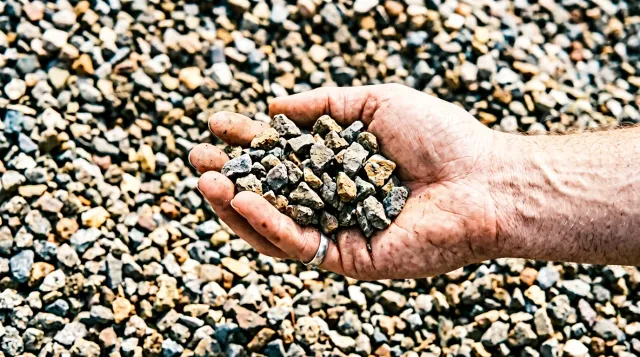
This gravel calculator estimates cubic yards, tons, and coverage for any area. Enter dimensions and depth for driveways, patios, paths, and landscaping.
Pea Gravel Calculator
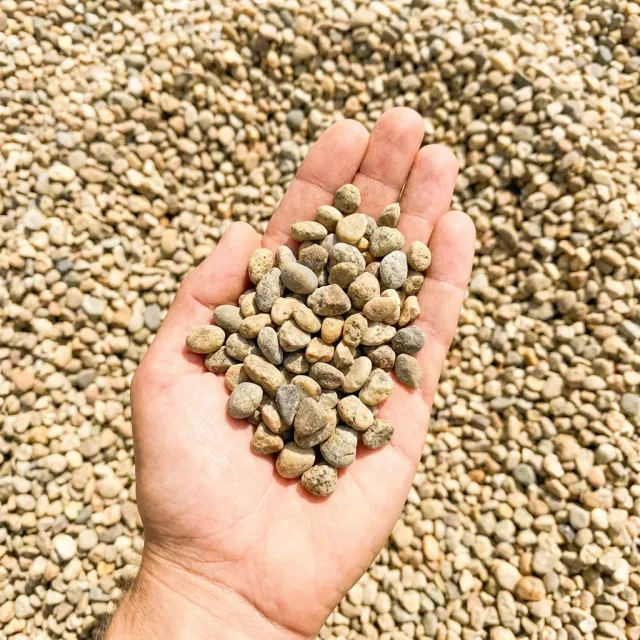
Pea gravel calculator — enter your project dimensions to estimate volume in cubic yards, tons, and bags. Ideal for pathways, patios, and ground cover.
River Rock Calculator
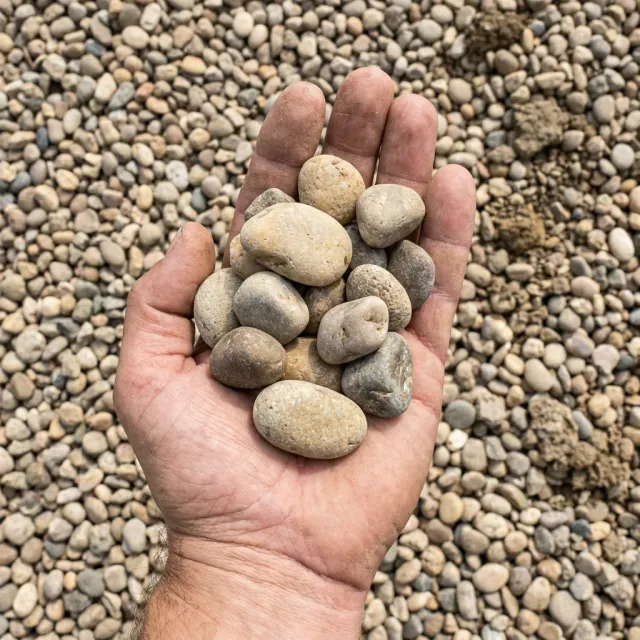
This calculator estimates river rock by the ton for flowerbeds, dry creek beds, and borders. Adjusts for rock size — larger stones cover less per ton.
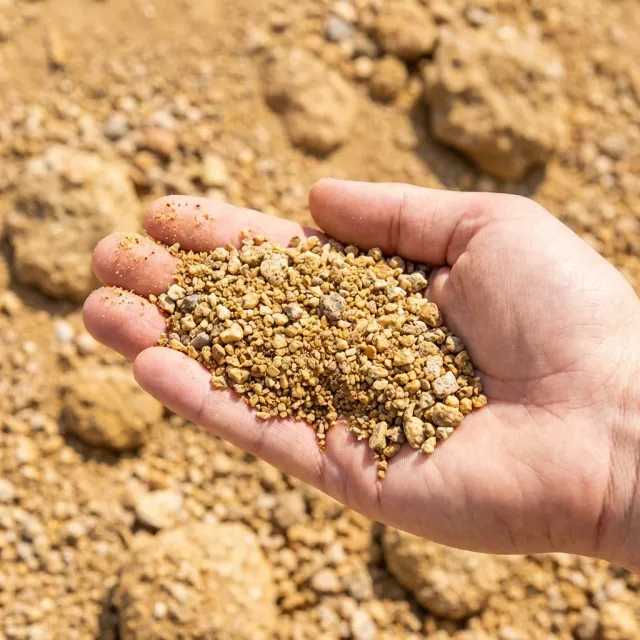
Decomposed Granite Calculator
DG calculator for pathways, patios, and driveways. Enter length, width, and depth to estimate tonnage — most projects need 2-3 inches for a compacted finish.
Frequently Asked Questions
What is xeriscaping, and why is gravel so central to the design?
Xeriscaping is a style of landscaping designed to work with your local climate rather than fight it. The word comes from the Greek word "xeros," meaning dry. You will sometimes hear it called drought-tolerant landscaping, low-water landscaping, or dry landscaping. The core idea is simple: replace water-hungry plants and turf grass with materials and plants that thrive with very little irrigation. Gravel and other aggregate materials are a cornerstone of xeriscape design for several practical reasons. Gravel replaces thirsty lawn across large sections of your yard, eliminating the need to water those areas at all. It acts as a ground cover layer over the soil, slowing evaporation and keeping root zones from drying out too fast in the heat. It also allows rainwater to drain directly into the ground rather than running off, so your plants get the most out of every drop of natural rainfall. Whether you are converting your entire front yard, adding a dry creek bed feature, or simply reducing the amount of lawn around your foundation, gravel is one of the hardest-working and lowest-maintenance materials you can choose for a xeriscape project.
What types of gravel or aggregate work best for a xeriscape?
The right material depends on how you plan to use it and what look you are going for, but a few options stand out consistently in xeriscape designs. Decomposed granite is one of the most widely used xeriscape materials in the country. It has a natural, sandy appearance that pairs beautifully with native plants and desert-style plantings. It also compacts firmly underfoot, which makes it a smart choice for informal pathways and open ground cover areas where you want a surface that feels stable and finished. Crushed angular gravel is a strong option when you need a material that stays in place. Because the pieces have irregular edges, they lock together and resist shifting even in heavy rain or wind. Pea gravel has a smooth, rounded finish that gives your yard a softer, more relaxed look. It drains very well and is comfortable to walk on, which makes it a favorite for garden paths and seating areas within a xeriscape. River rock is a larger, rounded stone that works well as an accent layer around boulders and drought-tolerant plants, or as the centerpiece of a dry creek bed feature. It is not as practical for walking surfaces but adds a lot of natural character to a xeriscape design. If you are not sure which material fits your project, the Hello Gravel team is glad to help you work through your options.
How much gravel do I need, and how deep should it be laid?
Depth is where most first-time xeriscape projects go wrong, usually by underestimating. For standard ground cover areas, most xeriscape installations use 2 to 3 inches of aggregate. This is enough to suppress weeds, retain soil moisture underneath, and give the surface a clean, finished appearance. For pathways or higher-traffic zones, 3 to 4 inches gives you better stability and a longer-lasting surface. As a general starting point, 1 ton of gravel covers roughly 80 to 100 square feet at a 3-inch depth. Keep in mind that the exact coverage varies by material, since different aggregates have different weights per cubic yard. Decomposed granite tends to run heavier than pea gravel, for example, so the actual tonnage you need may shift depending on your material choice. To put some real numbers around it: a 500 square foot area at 3 inches deep typically requires around 5 to 6 tons. A 1,000 square foot area at the same depth would need roughly 10 to 12 tons. These are conservative, real-world estimates, not minimums. Your actual project may vary based on your specific dimensions and the material you choose. The most precise way to estimate your order is to use the Hello Gravel online calculator. Enter your project dimensions and your target depth, and it will give you a quantity based on your specific job rather than a general approximation.
Is xeriscaping expensive, and how can I keep project costs down?
Xeriscaping does require a real upfront investment. You are replacing existing lawn or landscaping, which means site preparation, edging, weed barrier, plants, and aggregate all factor into the cost before the work is done. Compared to re-seeding a lawn, that initial number can feel significant. But the long-term picture often tells a very different story. A traditional grass lawn can use hundreds of gallons of water per week during the summer, and water bills in drought-prone areas reflect that. Once your xeriscape is established, most of those watering costs go away. The single most effective way to control your project costs is to buy your aggregate in bulk. Purchasing gravel by the truckload through Hello Gravel costs far less per ton than sourcing material in smaller quantities, and you avoid the expense and hassle of multiple trips or deliveries. Free dump truck delivery is included with every Hello Gravel order, so there are no hidden delivery costs eating into your budget. If your full xeriscape vision is larger than your current budget allows, consider phasing the project. Start with your front yard or the areas that use the most water, complete those sections with bulk material, and add to the design over time. Buying the right quantity upfront for each phase is still more cost-effective than rushing and overpaying for last-minute additions.
What makes gravel such a popular ground cover choice in xeriscape designs?
The honest answer is that gravel simply outlasts most of the alternatives over time, and that durability adds up to real savings and less ongoing effort. Wood mulch breaks down and needs to be replenished every year or two. It can also float or shift during heavy rain, leaving gaps in coverage and scatter across your driveway or lawn. Gravel does neither. Once it is down, it stays put and holds its appearance for years without any ongoing maintenance. Gravel also provides natural weed suppression when it is laid at the right depth over a quality weed barrier. It does not need to be raked, mowed, fertilized, or edged the way a traditional lawn does. For most homeowners, that reduction in weekly yard work is one of the biggest practical benefits of making the switch. From a plant health standpoint, gravel acts as an insulating layer between your soil and the air above it, which reduces evaporation and helps the roots of your drought-tolerant plants stay cooler during hot weather. It also allows rainwater to pass directly into the ground rather than pooling on the surface, which supports healthy plant growth without any irrigation from your end. In fire-prone areas of the country, gravel also has a significant safety advantage over organic mulches. It does not ignite, which creates a natural buffer zone around your home and reduces the risk of fire spreading through your landscaping.
More Project Calculators
Playground Calculator
This calculator estimates mulch, rubber, or wood fiber surfacing for playgrounds. Enter area and recommended depth to get cubic yards and tons.
Chicken Coop Calculator
Use this calculator to estimate how much gravel your coop base requires. Input dimensions and depth for volume in cubic yards and stone type guidance.
Basketball Court Calculator
Court base calculator — estimate gravel, sand, and sub-base quantities for backyard or regulation basketball courts. Input court size for material totals.
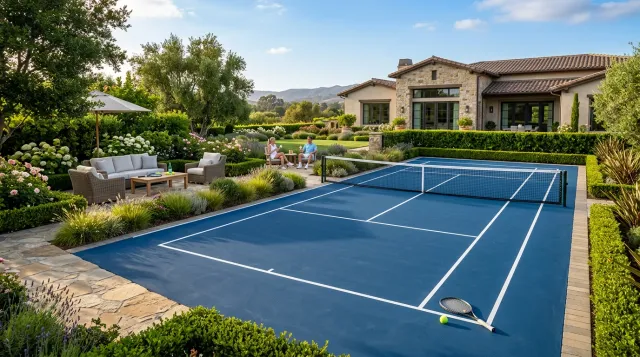
Tennis Court Calculator
Use this calculator to estimate the crushed stone base for a new or resurfaced tennis court. Enter dimensions and depth for volume and tonnage.
Delivery Logistics & Truck Info
Know your delivery options and access requirements before scheduling your order.
Truck Capacities
- Standard Dump Truck10–14 tons
- Tandem Axle14–18 tons
- Semi End Dump20–25 tons
A standard cubic yard weighs approximately 2,000–2,700 lbs depending on material and moisture.
Site Access Requirements
- Trucks require a minimum 12-ft wide, overhead-clear access path
- Soft ground or slopes over 10% may limit truck access — contact us before ordering
- Ensure no underground utilities or irrigation lines are in the drop zone
- Mark your desired drop location clearly before delivery
Important Notes
- Delivery estimates are based on available inventory and route proximity
- Minimum order quantities apply — typically 5 cubic yards or 1 truckload
- Material certification is available upon request for permitted projects
- Always confirm local ordinances before major material placement