
Patio Cost Calculator
— How Much Do You Need?
Quickly calculate gravel, sand, or base for your patio and get truckload pricing with delivery estimates.
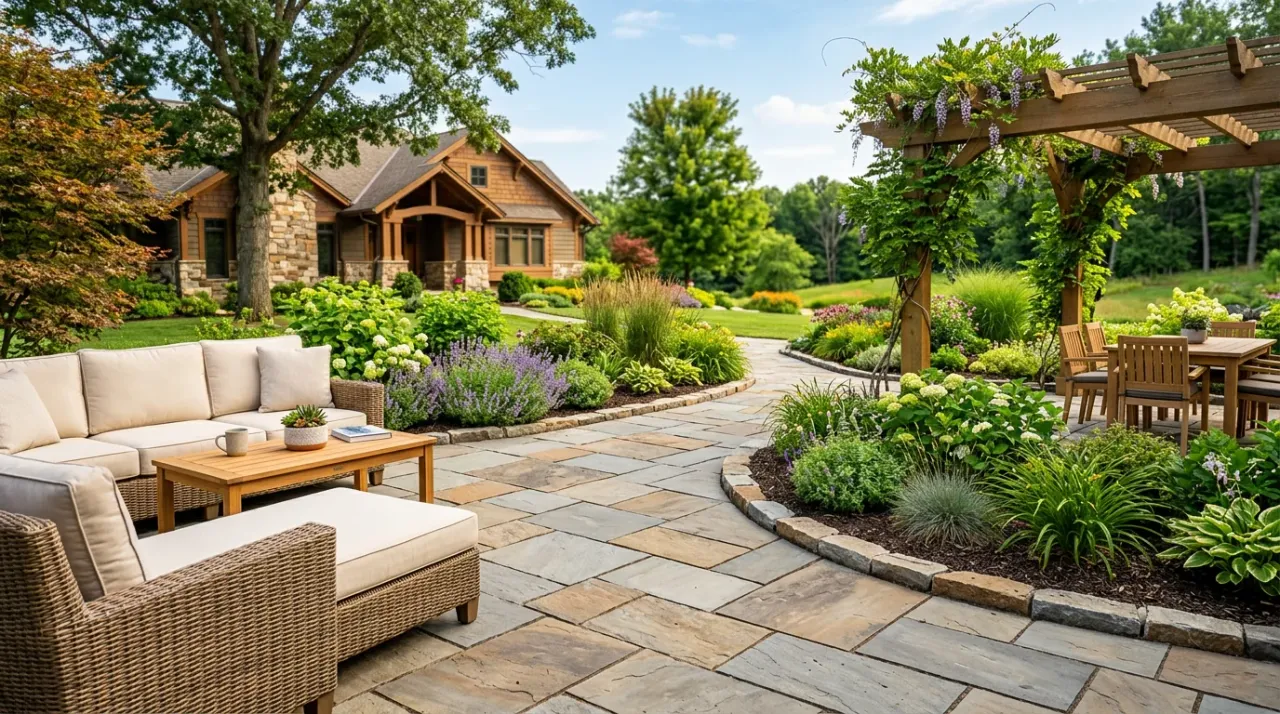
How to Use This Patio Calculator
Planning a patio requires precise measurements to ensure you order enough material without overspending.
- 1 Measure Area: Measure the length and width of your planned patio area in feet.
- 2 Determine Depth: For most patio projects, a depth of 4 to 6 inches is recommended for stability.
- 3 Review Results: The calculator provides both cubic yards (for bulk volume) and tons (for ordering weight).
Common Materials for Patios
Choosing the right base and surface materials for a patio directly impacts long-term stability, drainage performance, and resistance to settling or frost heave.
| Material | Description | Best For | Est. Cost |
|---|---|---|---|
| Crusher Run (QP) | Well-graded crushed stone and stone dust blend, typically ranging from 1.5 inches down to fines, that compacts into a dense, stable layer. | Base Layer, Compacted Subbase, Load-Bearing Foundation | $ |
| Mason Sand | Fine, clean, free-flowing sand with uniform particle size, washed and screened for consistent gradation. | Paver Bedding Layer, Leveling Course, Flagstone Setting | $ |
| Polymeric Sand | Fine sand blended with polymer binders that activate with moisture to form a hardened, flexible joint filler. | Paver Joint Filling, Weed Prevention, Joint Stabilization | $$ |
| Concrete (Ready-Mix) | Pre-mixed blend of Portland cement, coarse aggregate, fine aggregate, and water, typically supplied at 3,500 PSI strength for flatwork applications. | Monolithic Patio Slabs, Flagstone Base Slab, Grade Beam Systems | $$ |
Understanding the Cost
Several factors influence the final price of your patio project.
Material Volume
The dimensions of your project directly dictate the tonnage needed. Deeper bases require significantly more material.
Delivery Distance
Transport logistics play a major role. Being closer to the quarry or depot reduces delivery fees significantly.
Material Type
Decorative stones cost more than utility grades. Choose based on your project's functional and aesthetic requirements.
Recommended Products for Your Patio
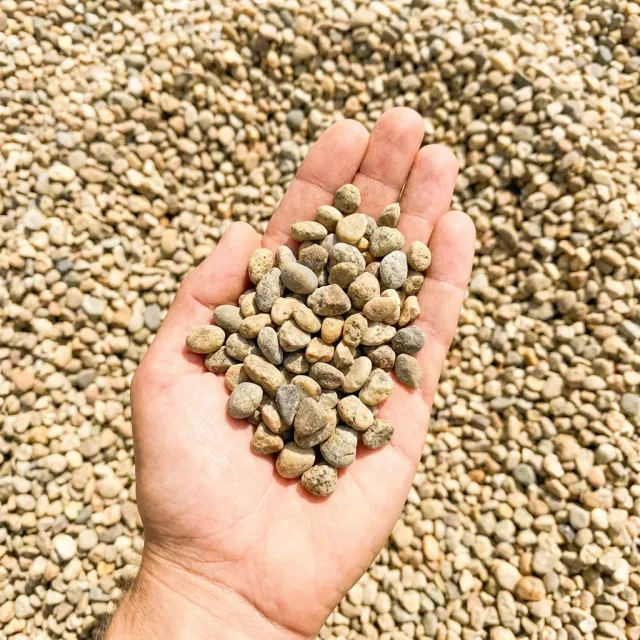
Pea Gravel Calculator
Pea gravel calculator — enter your project dimensions to estimate volume in cubic yards, tons, and bags. Ideal for pathways, patios, and ground cover.
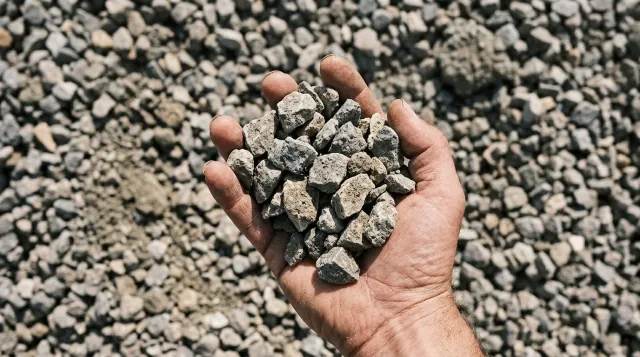
Crushed Stone Calculator
This calculator estimates crushed stone quantity and weight. Enter dimensions for results in cubic feet, cubic yards, and tons with density factored in.
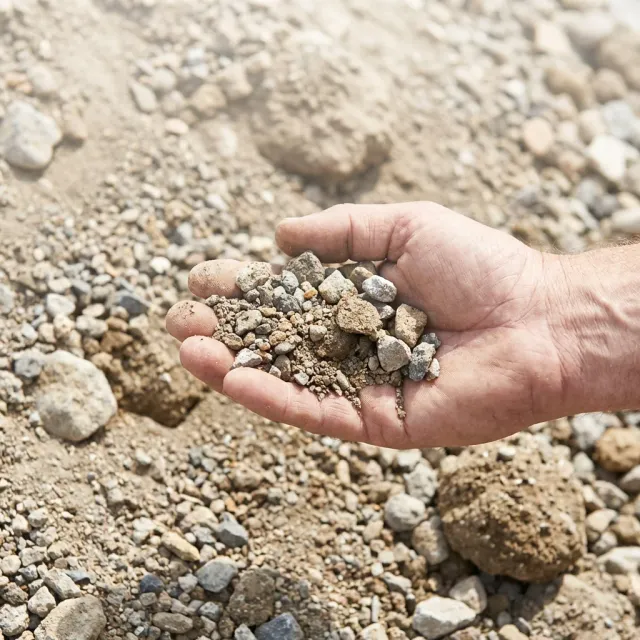
Road Base Calculator
Road base calculator — enter length, width, and depth to estimate volume and tonnage for crushed limestone, recycled concrete, and aggregate base.
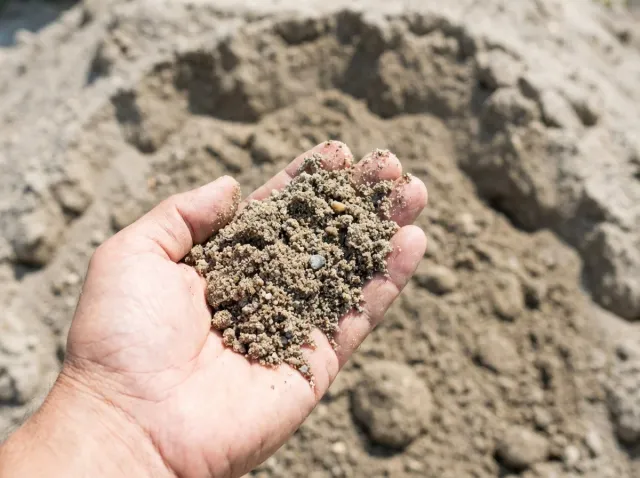
Concrete Sand Calculator
Concrete sand calculator — estimate volume and weight based on your project's length, width, and depth. Results in cubic yards and tons, ready for ordering.
Frequently Asked Questions
What types of patio projects use bulk aggregate materials?
Almost every patio project relies on aggregate at some stage, whether as the finished walking surface or as the structural foundation beneath it. A loose-fill gravel patio uses aggregate like pea gravel or decomposed granite directly as the surface. A paver patio requires a compacted gravel base layer plus a thin sand bedding layer to hold everything in position. A flagstone patio follows the same general approach. Even a concrete patio benefits from a gravel sub-base for drainage and long-term stability. Hello Gravel supplies the bulk aggregate for all of these stages, from the base layers you never see to the surface material guests walk on every day.
What is a gravel patio, and is it a good choice for a backyard?
A gravel patio is an outdoor living area where loose aggregate serves as the finished surface. Pea gravel, crushed stone, and decomposed granite are the most common choices. It is one of the most affordable and DIY-friendly patio options available, and the results can look sharp with the right edging and outdoor furniture. Gravel patios drain naturally, so standing water after rain is rarely a problem. They are also straightforward to install and easy to adjust if you want to change the layout later. The main tradeoff is that loose material can shift underfoot over time, which is why adding a solid border or edging is a smart move. For casual outdoor spaces, entertaining areas, or any project where you want a clean, natural look without a big investment, a gravel patio is a genuinely great option.
What aggregate material works best as a patio base layer?
For patio base layers, you want a material that compacts tightly and stays stable under load. Crushed stone, particularly angular crusher run or processed gravel, is the go-to choice because the jagged edges lock together when compacted, creating a firm, immovable base. Crushed concrete performs similarly and is another strong option that Hello Gravel carries in bulk. One thing to avoid for base layers is rounded stone like pea gravel. Because those stones are smooth and uniform, they roll rather than compact, which means they do not provide the firm foundation you need under pavers or flagstone. Save the pea gravel for your surface layer. For the base, stick with angular crushed material and give it the compaction it deserves before you move on to the next layer.
How deep should the gravel base be under a patio?
For most residential patio projects, a 4-inch compacted gravel base is the standard minimum. If your soil is heavy clay, if drainage is a concern, or if you expect heavier loads like a large dining set or outdoor kitchen, bumping that up to 6 inches of compacted base is a worthwhile upgrade. If you are adding a sand bedding layer on top of the gravel base for pavers or flagstone, plan for roughly 1 inch of sand over the compacted stone. For a standalone gravel surface patio, 3 to 4 inches of depth gives you a stable, comfortable walking surface that holds up well through seasonal changes. Always account for these depth requirements when you are figuring out how much material to order. The Hello Gravel online calculator lets you enter your exact dimensions and depth so you get an accurate quantity rather than a rough guess.
Do I need both a gravel base and a sand layer for a paver or flagstone patio?
Yes, and getting both layers right is the difference between a patio that stays flat for years and one that shifts and settles after the first winter. The gravel base, typically 4 to 6 inches of compacted crushed stone, provides the load-bearing structure and allows water to drain away from your patio surface. The sand layer on top, usually about 1 inch of coarse sand, acts as a screed bed. That means you can rake and level it precisely before setting each paver or flagstone, which gives you a smooth, even finished surface. Skipping the sand layer makes precise leveling much harder and often leads to a surface that rocks or shifts underfoot. Hello Gravel can deliver both your crushed stone and your sand in bulk, so you can cover both layers without sourcing materials from two different places.
More Project Calculators
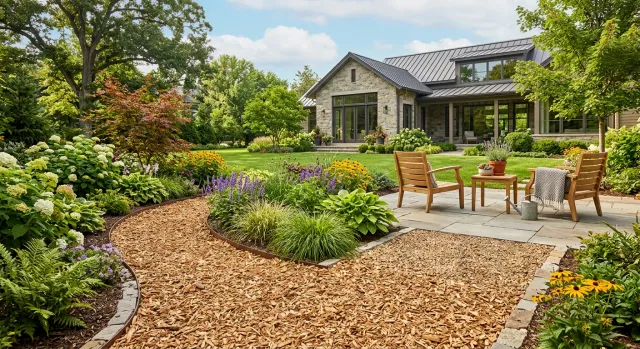
Playground Calculator
This calculator estimates mulch, rubber, or wood fiber surfacing for playgrounds. Enter area and recommended depth to get cubic yards and tons.
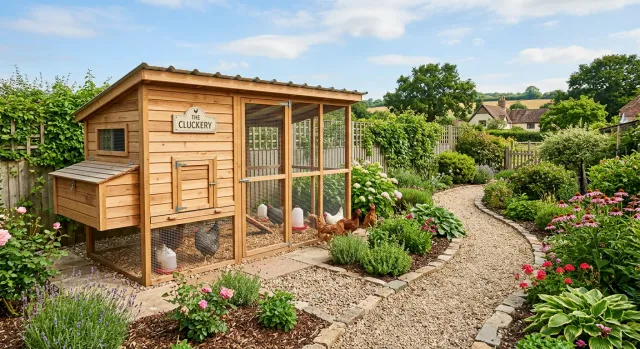
Chicken Coop Calculator
Use this calculator to estimate how much gravel your coop base requires. Input dimensions and depth for volume in cubic yards and stone type guidance.
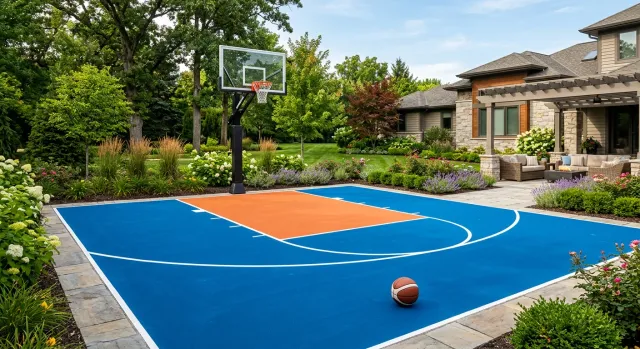
Basketball Court Calculator
Court base calculator — estimate gravel, sand, and sub-base quantities for backyard or regulation basketball courts. Input court size for material totals.
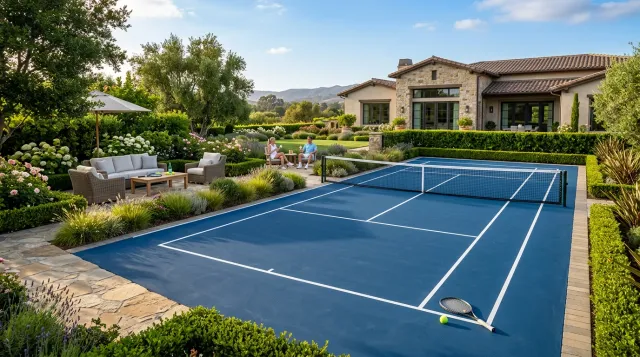
Tennis Court Calculator
Use this calculator to estimate the crushed stone base for a new or resurfaced tennis court. Enter dimensions and depth for volume and tonnage.
Delivery Logistics & Truck Info
Know your delivery options and access requirements before scheduling your order.
Truck Capacities
- Standard Dump Truck10–14 tons
- Tandem Axle14–18 tons
- Semi End Dump20–25 tons
A standard cubic yard weighs approximately 2,000–2,700 lbs depending on material and moisture.
Site Access Requirements
- Trucks require a minimum 12-ft wide, overhead-clear access path
- Soft ground or slopes over 10% may limit truck access — contact us before ordering
- Ensure no underground utilities or irrigation lines are in the drop zone
- Mark your desired drop location clearly before delivery
Important Notes
- Delivery estimates are based on available inventory and route proximity
- Minimum order quantities apply — typically 5 cubic yards or 1 truckload
- Material certification is available upon request for permitted projects
- Always confirm local ordinances before major material placement