
Foundation Drain Calculator
— How Much Do You Need?
Estimate trench volume, gravel, and pipe for a foundation drain — fast truckload delivery.
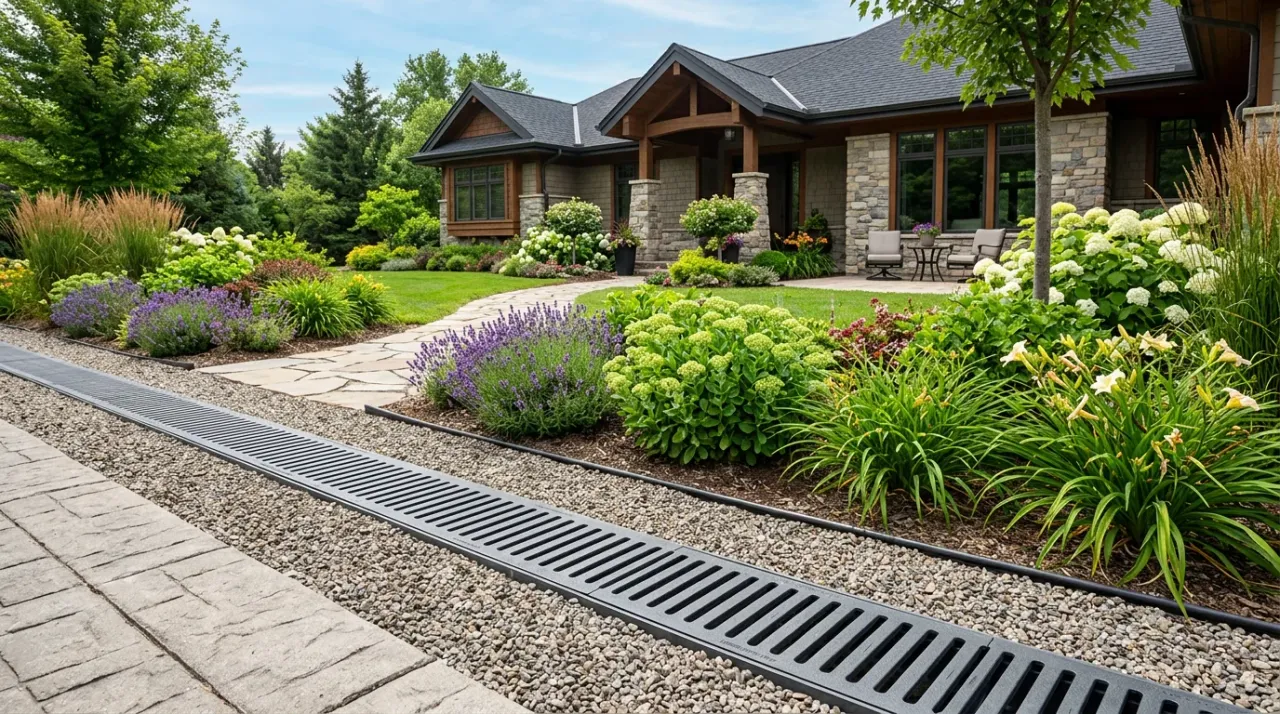
How to Use This Foundation Drain Calculator
Planning a foundation drain requires precise measurements to ensure you order enough material without overspending.
- 1 Measure Area: Measure the length and width of your planned foundation drain area in feet.
- 2 Determine Depth: For most foundation drain projects, a depth of 4 to 6 inches is recommended for stability.
- 3 Review Results: The calculator provides both cubic yards (for bulk volume) and tons (for ordering weight).
Common Materials for Foundation Drains
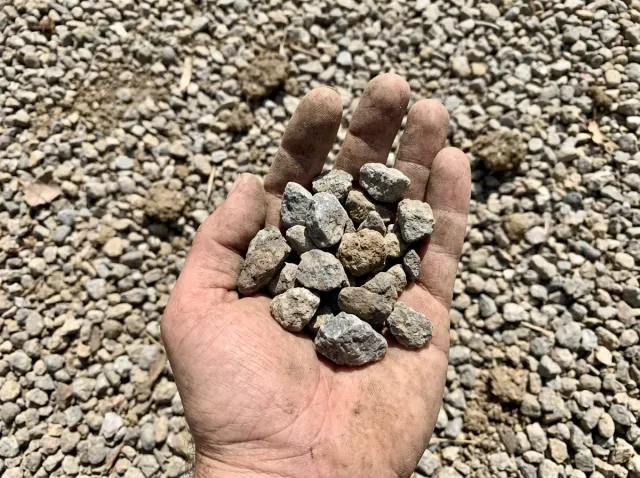
Selecting a high-permeability, low-fines aggregate is critical for foundation drains to relieve hydrostatic pressure and prevent soil migration that can clog the system over time.
| Material | Description | Best For | Est. Cost |
|---|---|---|---|
| #57 Crushed Stone | Angular, 3/4-inch to 1-inch clean crushed limestone or granite with minimal fines, conforming to ASTM D448 Size 57. | Pipe Envelope Bedding, Gravel Trench Fill, High-Permeability Drainage, Hydrostatic Pressure Relief | $$ |
| Washed Gravel (3/4-inch Clean) | Rounded to sub-angular, 3/4-inch diameter natural gravel washed to remove fines and silt. | Pipe Surround Material, Perimeter Footing Drains, High-Flow Drainage Envelope | $$ |
| #4 Crushed Stone | Angular crushed stone ranging from 1 inch to 1-1/2 inches in diameter with very low fines content. | Deep Footing Drains, High-Volume Water Infiltration, Commercial Foundation Drains | $$ |
| Coarse Sand | Granular, well-graded sand with particle sizes typically between 0.5 mm and 2 mm, free of clay and organic material. | Transition Layer in High-Silt Soils, Limited Use, Above-Gravel Filter Layer | $ |
Understanding the Cost
Several factors influence the final price of your foundation drain project.
Material Volume
The dimensions of your project directly dictate the tonnage needed. Deeper bases require significantly more material.
Delivery Distance
Transport logistics play a major role. Being closer to the quarry or depot reduces delivery fees significantly.
Material Type
Decorative stones cost more than utility grades. Choose based on your project's functional and aesthetic requirements.
Recommended Products for Your Foundation Drain
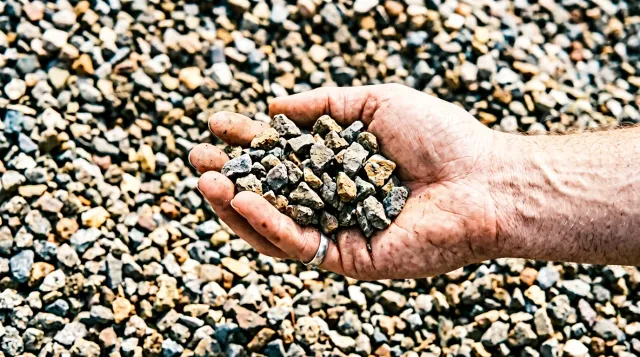
Gravel Calculator
This gravel calculator estimates cubic yards, tons, and coverage for any area. Enter dimensions and depth for driveways, patios, paths, and landscaping.
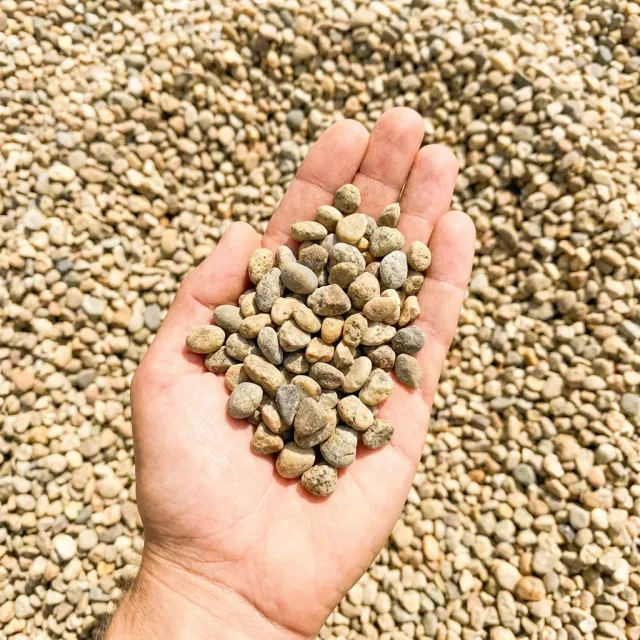
Pea Gravel Calculator
Pea gravel calculator — enter your project dimensions to estimate volume in cubic yards, tons, and bags. Ideal for pathways, patios, and ground cover.
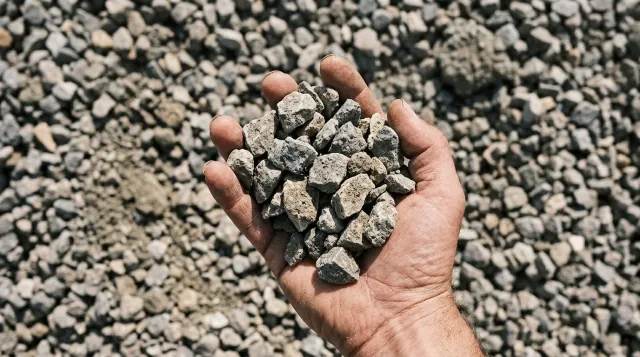
Crushed Stone Calculator
This calculator estimates crushed stone quantity and weight. Enter dimensions for results in cubic feet, cubic yards, and tons with density factored in.
Drainage Rock Calculator
This calculator estimates drainage gravel for French drains, yard drainage, and erosion control. Factors in the 4-6 inch depth most systems need.
Frequently Asked Questions
What is a foundation drain, and what does it actually do?
A foundation drain is a drainage system installed at the base of your home's foundation to collect and redirect groundwater before it can build up against your foundation walls. You may also hear it called a footing drain, perimeter drain, or French drain. All of these terms refer to the same basic concept: a perforated pipe surrounded by clean crushed stone, designed to carry water away from your foundation and toward a safe outlet like a sump pit, a daylight discharge, or a storm drain. Think of it like a relief valve for your soil. When the ground becomes saturated after heavy rain or snowmelt, water naturally migrates downward and outward in every direction. Without a drain at the base of your foundation, that water has nowhere to go but into the wall itself. The stone-filled trench around the pipe gives water an easy path to follow, and the pipe carries it away before pressure has a chance to build. The aggregate layer is not just packing material. It is what makes the whole system work. Clean, open-graded crushed stone has enough void space between the pieces to let water move freely toward the pipe. If that stone is contaminated with fines or soil, the voids clog and the drain stops functioning. Choosing the right material from the start is what separates a system that protects your foundation for decades from one that fails within a few years.
Are foundation drains required by building code?
In many jurisdictions, yes. The International Residential Code, specifically Section R405, requires a foundation drainage system at the base of walls that retain earth and enclose habitable or usable spaces below grade. That covers most finished basements in new construction. Many local codes adopt or mirror this requirement, though specifics can vary by region. Even where a drain is not technically required by code, installing one is rarely something homeowners regret. Hydrostatic pressure from saturated soil is one of the most common causes of basement water intrusion, wall cracking, and long-term structural damage. The cost of installing a proper perimeter drain with quality drainage aggregate during construction is far lower than the cost of repairing water damage after the fact. If you are building new, adding onto an existing structure, or finishing a basement, it is worth checking with your local building department to find out exactly what is required. If you are a contractor working on a project where a footing drain is specified, Hello Gravel can deliver the clean crushed stone you need by the truckload, with scheduling that fits your timeline.
What type of aggregate works best in a foundation drain?
Clean, coarse crushed stone is the right material for a foundation drain. The word "clean" is doing a lot of work in that sentence. It means the stone should contain little to no fine particles, dust, or soil mixed in. Those fines are what clog the void spaces between stones, and once the voids are filled, water cannot move through the stone to reach the pipe. Common choices include 3/4-inch clean crushed stone (often referred to as #57 stone) and 1-inch clean stone. Pea gravel is also used in some applications. What these materials have in common is a uniform particle size and enough open space between pieces to allow fast water movement. You want water to pass through the stone quickly, not trickle through slowly. What you want to avoid is any aggregate mixed with crusher run, sand, or native soil. Those materials are great for compaction and base work, but they are exactly the wrong choice when drainage is the goal. Hello Gravel carries drainage-grade crushed stone delivered in bulk by the truckload. If you are unsure which specific product is right for your project, reach out to the Hello Gravel team and they can point you in the right direction based on your application and location.
How deep should a foundation drain be installed?
The perforated drain pipe should sit at or just below the bottom of your foundation footing. That is the critical placement. The purpose of the drain is to intercept water at the lowest point where it could otherwise build up against the wall, and that point is right at footing level. For a full basement, the footing is typically 7 to 10 feet below finished grade depending on the frost depth in your region and how the foundation was designed. For a crawl space or shallow foundation, you might only be working 2 to 4 feet down. The depth of the trench follows the depth of the footing, not a fixed number. Around the pipe, you want at least 6 inches of clean stone below it and 6 to 12 inches of stone above it. This creates a generous gravel envelope that allows water to approach the pipe from multiple angles. The trench is then typically capped with filter fabric and backfilled to grade. Why does this matter when you are ordering material? Because a deeper trench means a larger volume of stone. A trench that is 2 feet deep holds nearly twice as much aggregate as one that is 1 foot deep, even over the same linear footage. Use the Hello Gravel calculator with your actual trench dimensions to get a reliable tonnage estimate before you place your order.
Does a foundation drain need a slope, and how much pitch is enough?
Yes, slope is not optional. Water will not flow through a level or flat pipe on its own, so your foundation drain needs a consistent downward pitch from one end to the discharge point the entire length of the run. The widely accepted minimum is 1/8 inch of drop for every foot of horizontal run. A more comfortable slope is 1/4 inch per foot, and that is what most drainage professionals aim for when site conditions allow. Over a 50-foot run, a 1/4-inch-per-foot slope means the outlet end of the pipe needs to be roughly 12 and a half inches lower than the starting point. At the minimum 1/8-inch slope, that same 50 feet requires about 6 inches of total drop. On a flat lot, achieving consistent slope can be one of the more challenging parts of the installation. You may need to excavate deeper toward the outlet end of the trench to create the necessary pitch, which also affects how much aggregate you will need since the trench depth increases as you go. Planning the slope before you dig saves a lot of extra work. If you are not sure your site has enough natural grade for a gravity-fed drain to work, talk to a contractor about routing options or the use of a sump pump system to handle the discharge.
More Project Calculators

Playground Calculator
This calculator estimates mulch, rubber, or wood fiber surfacing for playgrounds. Enter area and recommended depth to get cubic yards and tons.

Chicken Coop Calculator
Use this calculator to estimate how much gravel your coop base requires. Input dimensions and depth for volume in cubic yards and stone type guidance.

Basketball Court Calculator
Court base calculator — estimate gravel, sand, and sub-base quantities for backyard or regulation basketball courts. Input court size for material totals.

Tennis Court Calculator
Use this calculator to estimate the crushed stone base for a new or resurfaced tennis court. Enter dimensions and depth for volume and tonnage.
Delivery Logistics & Truck Info
Know your delivery options and access requirements before scheduling your order.
Truck Capacities
- Standard Dump Truck10–14 tons
- Tandem Axle14–18 tons
- Semi End Dump20–25 tons
A standard cubic yard weighs approximately 2,000–2,700 lbs depending on material and moisture.
Site Access Requirements
- Trucks require a minimum 12-ft wide, overhead-clear access path
- Soft ground or slopes over 10% may limit truck access — contact us before ordering
- Ensure no underground utilities or irrigation lines are in the drop zone
- Mark your desired drop location clearly before delivery
Important Notes
- Delivery estimates are based on available inventory and route proximity
- Minimum order quantities apply — typically 5 cubic yards or 1 truckload
- Material certification is available upon request for permitted projects
- Always confirm local ordinances before major material placement