
Egress Window Calculator
— How Much Do You Need?
Estimate gravel, drainage stone, and backfill for egress windows — fast material volumes & delivery.
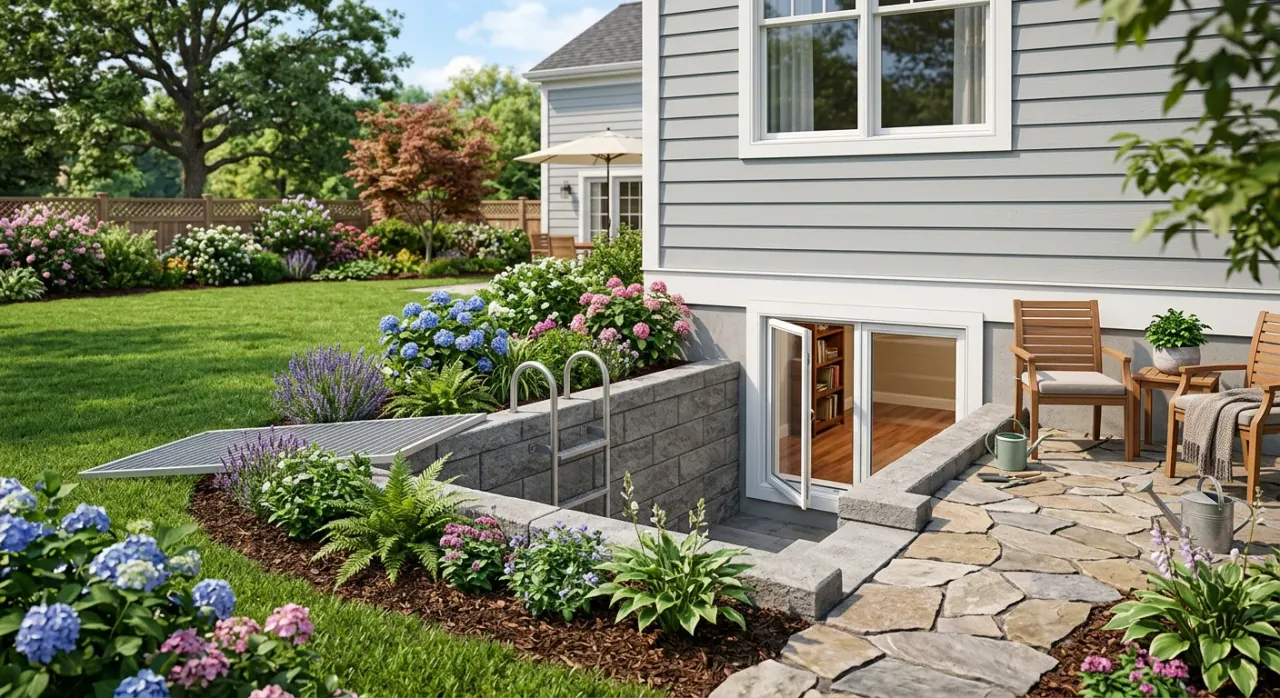
How to Use This Egress Window Calculator
Planning a egress window requires precise measurements to ensure you order enough material without overspending.
- 1 Measure Area: Measure the length and width of your planned egress window area in feet.
- 2 Determine Depth: For most egress window projects, a depth of 4 to 6 inches is recommended for stability.
- 3 Review Results: The calculator provides both cubic yards (for bulk volume) and tons (for ordering weight).
Common Materials for Egress Windows
Proper material selection for egress window well installations is critical for ensuring adequate drainage, preventing water infiltration into the foundation, and maintaining a stable, safe below-grade environment.
| Material | Description | Best For | Est. Cost |
|---|---|---|---|
| #57 Crushed Stone | Angular, 3/4-inch crushed limestone or granite with excellent void space for water movement. | Window Well Drainage, Base Layer, Water Infiltration Control | $ |
| Pea Gravel | Smooth, rounded stone particles typically 3/8-inch in diameter, naturally weathered. | Window Well Fill, Drainage Layer, Surface Aesthetics | $$ |
| Crusher Run (QP) | A blend of crushed stone and stone dust that compacts into a dense, stable surface. | Compacted Base, Window Well Footing, Limited Use | $ |
| Washed Concrete Sand | Fine, clean, uniformly graded sand with particles typically between 0.1 and 2mm. | Leveling Bed, Backfill Blending, Limited Use | $ |
Understanding the Cost
Several factors influence the final price of your egress window project.
Material Volume
The dimensions of your project directly dictate the tonnage needed. Deeper bases require significantly more material.
Delivery Distance
Transport logistics play a major role. Being closer to the quarry or depot reduces delivery fees significantly.
Material Type
Decorative stones cost more than utility grades. Choose based on your project's functional and aesthetic requirements.
Recommended Products for Your Egress Window

Gravel Calculator
This gravel calculator estimates cubic yards, tons, and coverage for any area. Enter dimensions and depth for driveways, patios, paths, and landscaping.

Fill Dirt Calculator
This calculator estimates fill dirt volume with a built-in compaction factor so you order enough. Works for grading, foundations, and backfill projects.

Pea Gravel Calculator
Pea gravel calculator — enter your project dimensions to estimate volume in cubic yards, tons, and bags. Ideal for pathways, patios, and ground cover.

Drainage Rock Calculator
This calculator estimates drainage gravel for French drains, yard drainage, and erosion control. Factors in the 4-6 inch depth most systems need.
Frequently Asked Questions
What exactly is an egress window?
An egress window is a window large enough for a person to climb through in an emergency. The word "egress" simply means exit, and that is exactly what these windows are designed to provide. If a fire blocks the main door of a bedroom or finished basement, an egress window gives you a safe way out. Because they serve as emergency exits, egress windows must meet specific size requirements set by the International Residential Code, or IRC. The opening must be at least 5.7 square feet (5.0 square feet if the window is at or near ground level), at least 24 inches tall, and at least 20 inches wide. The bottom of the opening, called the sill, cannot be higher than 44 inches from the floor. Local building departments often adopt the IRC with small modifications, so it is always worth confirming requirements with your local authority before you start cutting. For basements, installing an egress window almost always means excavating outside the foundation wall and building a window well to keep the surrounding soil from pressing against the window. That window well requires proper drainage gravel at its base, which is where Hello Gravel can step in and help.
Which rooms are required to have an egress window?
Any room used as a sleeping area must have at least one egress window under most building codes in the United States. This applies to every bedroom in the house, including above-grade rooms and finished basement bedrooms. To qualify as an egress window under IRC Section R310, the opening must provide a minimum net clear area of 5.7 square feet (5.0 sq ft for ground-floor windows), a minimum clear width of 20 inches, a minimum clear height of 24 inches, and a maximum sill height of 44 inches above the finished floor. The reasoning is straightforward: people are most vulnerable when they are asleep, and a second means of escape can be the difference between life and death. For non-sleeping spaces in a basement, such as a home theater, gym, or rec room, egress requirements vary by jurisdiction. Some local codes require egress windows for all finished basement spaces regardless of how the room is used. Others only mandate them for sleeping areas. If you are planning a basement finishing project and are not sure whether your specific layout requires an egress window, contact your local building department before you begin. Getting this right at the planning stage is much easier than cutting through a foundation wall after the fact.
Can you finish a basement without installing an egress window?
You can finish certain types of basement spaces without an egress window, but the moment you want to use any part of that basement as a bedroom or sleeping area, an egress window becomes a legal requirement under most codes. There are no workarounds for that rule. For homeowners who want to maximize the value of their basement finish, adding an egress window is almost always worth it. A legally conforming basement bedroom adds real livable square footage to your home. It also opens the door to options like renting the space as an accessory dwelling unit in markets where that is permitted. Keep in mind that adding an egress window to a below-grade basement means cutting through the foundation, excavating outside, installing a window well, and filling the base of that well with drainage gravel. It is a real construction project, not a weekend DIY job for most homeowners. Planning for the material needs early, including the drainage aggregate for the window well, helps the project move more smoothly once work begins.
Do I need a permit to install an egress window?
In almost every jurisdiction in the United States, yes. Installing an egress window involves cutting through a structural foundation wall, which is a significant alteration to your home. Building departments want to inspect that work to make sure the structural opening is properly framed and that the window meets code requirements for size and operation. Skipping the permit is not worth the risk. If unpermitted work is discovered during a future home sale or insurance claim, it can create serious complications. Getting the permit also gives you a formal inspection record showing the window meets egress code, which matters if you are adding a conforming bedroom to your home. The permitting process itself is usually straightforward for egress window installations. Your contractor should be able to pull the permit for you, or you can apply directly with your local building department if you are managing the project yourself. Factor the permit timeline into your project schedule, since some municipalities take a week or two to issue approvals.
What role does gravel play in egress window well installation?
Every egress window installed below grade needs a window well on the outside of the foundation. A window well is a curved or rectangular structure, usually made of galvanized steel or molded plastic, that wraps around the exterior of the window and holds back the surrounding soil. Without it, the earth would press directly against the window frame and eventually cause water infiltration and structural damage. The bottom of every window well must be filled with a layer of drainage gravel, typically 12 inches deep. This gravel layer allows rainwater and snowmelt to drain away from the foundation quickly instead of pooling against the wall. When water has nowhere to go, it finds its way in, and a properly graded gravel base prevents that from happening. Beyond the well itself, gravel or compactible fill material is also used to backfill around the window well after it is set in place. Getting quality drainage aggregate to your job site in bulk, without multiple trips to a supply yard, is exactly what Hello Gravel is set up to help with. The team can walk you through which material makes the most sense for your well dimensions and soil conditions.
More Project Calculators

Playground Calculator
This calculator estimates mulch, rubber, or wood fiber surfacing for playgrounds. Enter area and recommended depth to get cubic yards and tons.
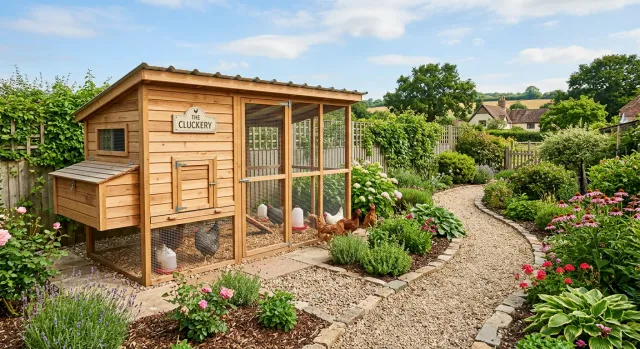
Chicken Coop Calculator
Use this calculator to estimate how much gravel your coop base requires. Input dimensions and depth for volume in cubic yards and stone type guidance.
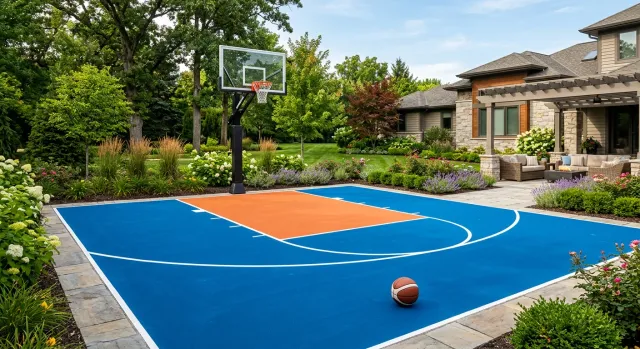
Basketball Court Calculator
Court base calculator — estimate gravel, sand, and sub-base quantities for backyard or regulation basketball courts. Input court size for material totals.

Tennis Court Calculator
Use this calculator to estimate the crushed stone base for a new or resurfaced tennis court. Enter dimensions and depth for volume and tonnage.
Delivery Logistics & Truck Info
Know your delivery options and access requirements before scheduling your order.
Truck Capacities
- Standard Dump Truck10–14 tons
- Tandem Axle14–18 tons
- Semi End Dump20–25 tons
A standard cubic yard weighs approximately 2,000–2,700 lbs depending on material and moisture.
Site Access Requirements
- Trucks require a minimum 12-ft wide, overhead-clear access path
- Soft ground or slopes over 10% may limit truck access — contact us before ordering
- Ensure no underground utilities or irrigation lines are in the drop zone
- Mark your desired drop location clearly before delivery
Important Notes
- Delivery estimates are based on available inventory and route proximity
- Minimum order quantities apply — typically 5 cubic yards or 1 truckload
- Material certification is available upon request for permitted projects
- Always confirm local ordinances before major material placement