
Deck Footings Calculator
— How Much Do You Need?
Quickly estimate concrete, gravel, and delivery for deck footings — get truckload pricing and delivery.
How to Use This Deck Footings Calculator
Planning a deck footings requires precise measurements to ensure you order enough material without overspending.
- 1 Measure Area: Measure the length and width of your planned deck footings area in feet.
- 2 Determine Depth: For most deck footings projects, a depth of 4 to 6 inches is recommended for stability.
- 3 Review Results: The calculator provides both cubic yards (for bulk volume) and tons (for ordering weight).
Common Materials for Deck Footingss
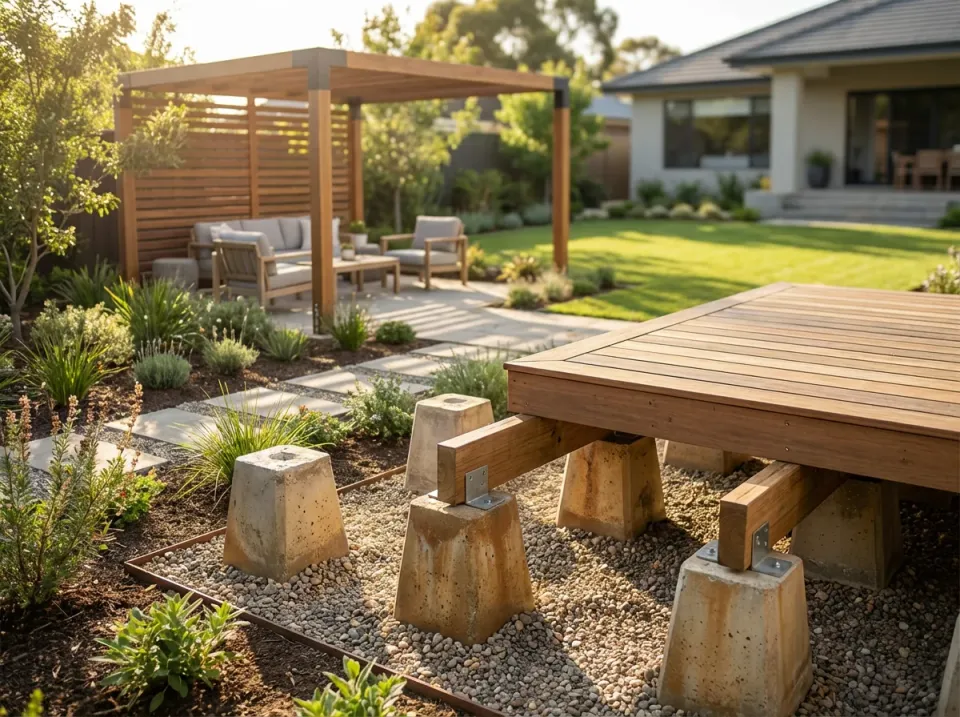
Choosing the right base and fill materials ensures proper drainage, load distribution, and frost resistance beneath concrete piers.
| Material | Description | Best For | Est. Cost |
|---|---|---|---|
| #57 Crushed Stone | Angular, 3/4-inch clean crushed stone with minimal fines that promotes free drainage. | Gravel Drain Base, Load Distribution, Frost Heave Prevention | $$ |
| Ready-Mix Concrete (3000 PSI) | Pre-batched Portland cement concrete mixed to a 3000 PSI compressive strength for structural pours. | Pier Pours, Sonotube Forms, Bell Footings | $$ |
| 3/4-Inch Crushed Gravel | Angular, 3/4-inch crushed aggregate with moderate fines content that compacts firmly under load. | Compacted Base Layer, Drainage Layer, Poor Soil Stabilization | $ |
| Coarse Concrete Sand | Washed, coarse-grained sand with angular to sub-rounded particles and minimal silt or clay content. | Fine Leveling Atop Gravel, Limited Use | $ |
Understanding the Cost
Several factors influence the final price of your deck footings project.
Material Volume
The dimensions of your project directly dictate the tonnage needed. Deeper bases require significantly more material.
Delivery Distance
Transport logistics play a major role. Being closer to the quarry or depot reduces delivery fees significantly.
Material Type
Decorative stones cost more than utility grades. Choose based on your project's functional and aesthetic requirements.
Recommended Products for Your Deck Footings
Gravel Calculator
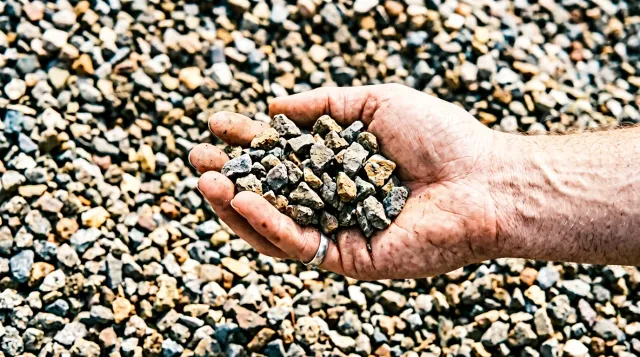
This gravel calculator estimates cubic yards, tons, and coverage for any area. Enter dimensions and depth for driveways, patios, paths, and landscaping.
Fill Dirt Calculator
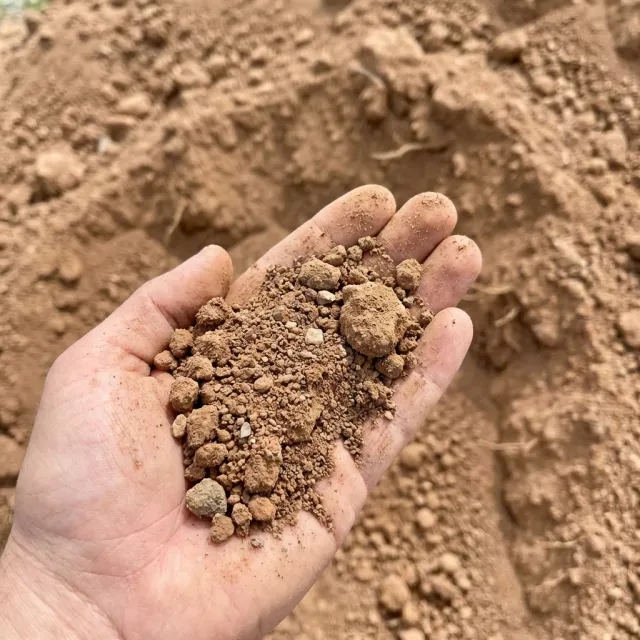
This calculator estimates fill dirt volume with a built-in compaction factor so you order enough. Works for grading, foundations, and backfill projects.
Road Base Calculator
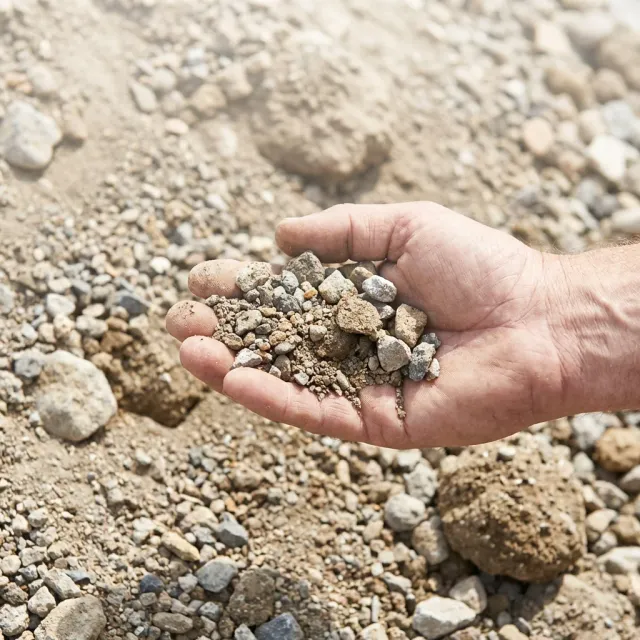
Road base calculator — enter length, width, and depth to estimate volume and tonnage for crushed limestone, recycled concrete, and aggregate base.
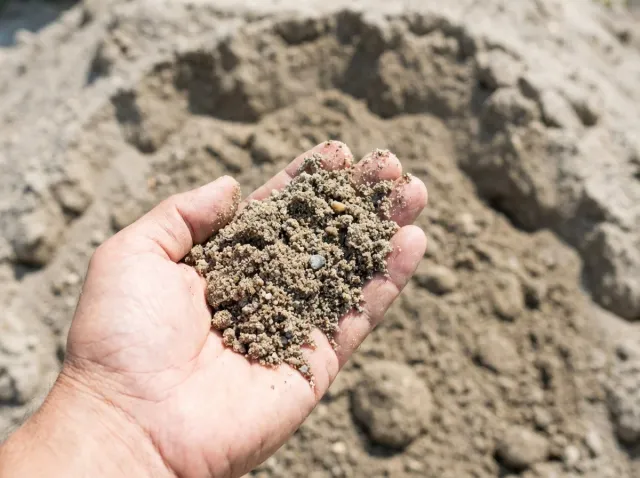
Concrete Sand Calculator
Concrete sand calculator — estimate volume and weight based on your project's length, width, and depth. Results in cubic yards and tons, ready for ordering.
Frequently Asked Questions
Do I need gravel under deck footings?
Yes, and it matters more than most people realize. When you dig a footing hole, the loose soil at the bottom is disturbed and compressible. Placing a layer of compacted gravel at the base gives you a firm, stable platform before the concrete goes in. More importantly, gravel drains water away from the base of your footing. When water collects under a footing and freezes, it expands and pushes the entire footing upward. Over time, that frost heave can tilt posts, crack beams, and make your deck unsafe. A 4 to 6 inch layer of compacted crushed stone at the bottom of each hole goes a long way toward preventing those problems. It is also smart to use crushed stone as backfill around the outside of your footings rather than packing native soil back in, because native soil holds moisture against the concrete. Hello Gravel can deliver the crushed stone you need by the truckload so everything is on site before you break ground.
How deep should deck footings be?
Your footings must reach below the local frost line, which is the depth in the soil where the ground freezes in winter. In the southern United States, that might be only 12 inches. In northern states like Minnesota or Wisconsin, it can be 42 to 48 inches or deeper. If a footing sits above the frost line, the freeze-thaw cycle will push it upward each winter in a process called frost heave, which gradually shifts and destabilizes your entire deck. Your local building department will tell you the exact frost depth requirement for your area, and most jurisdictions require a permit that confirms you are meeting this standard. As a general rule, add 4 to 6 inches to whatever your local code requires so you have room for a proper gravel drainage layer at the bottom of each hole before the concrete goes in. That drainage layer is what keeps water from pooling at the base of the footing and causing problems from below.
How far apart should deck footings be placed?
The spacing between footings depends on the size of your deck, the span of your beams and joists, and the load the structure needs to carry. A common starting point is footings spaced 6 to 8 feet apart along each beam line, but your local building code and the specific lumber dimensions you plan to use will determine the right spacing for your project. Footings that are too far apart require larger beams to safely bridge the gap, while footings that are closer together allow smaller lumber to do the same job. Getting the spacing right also matters for your material planning, because the total number of footings directly affects how much crushed stone you need for drainage layers and backfill. Once you know how many footings your plan calls for and the diameter of each hole, the Hello Gravel calculator can help you figure out how much material to order so you are not scrambling for a second delivery mid-project.
What type of gravel works best for deck footings?
Clean crushed stone is the best choice for both the drainage layer at the base of footing holes and for backfilling around the sides. Crushed stone, typically in the 3/4 inch range, compacts firmly, drains quickly, and does not hold moisture against the concrete the way native soil does. Angular crushed stone is especially good here because the irregular edges lock together when compacted, giving you a stable base that resists movement. Pea gravel can provide drainage but does not compact as firmly as angular crushed stone, so it is a secondary option for this application. Avoid using topsoil, clay-heavy fill, or unscreened native soil as backfill around your footings. Those materials trap water and contribute to the freeze-thaw cycle that causes frost heave and long-term shifting. If you need fill material to restore grade around your footings after the project wraps up, clean fill dirt or crushed stone are both solid choices depending on whether you plan to seed over the area or leave it open. The Hello Gravel team is happy to help you match the right material to what you are trying to accomplish.
How much gravel do I need for a deck footing project?
The volume of gravel you need for the drainage layer at the base of each footing hole is smaller than most people expect. At a 6 inch depth and a 12 inch diameter hole, each individual footing needs less than half a cubic foot of crushed stone. For a typical deck with 10 footings at that size, the drainage layer alone adds up to roughly 0.15 cubic yards total. That said, most homeowners find it practical to plan for more than just the footing bases. Backfilling around the sides of each footing with crushed stone rather than native soil adds to the total, and any gravel you want to lay along the perimeter for drainage or under the deck surface for weed suppression and runoff control will add up quickly. Ordering a full truckload and putting the remaining material to work on a driveway, path, or other landscaping project on the same property is a common and efficient approach. Use the Hello Gravel calculator to enter your project dimensions and get a realistic estimate, or reach out to the team and they will walk you through it.
More Project Calculators
Playground Calculator
This calculator estimates mulch, rubber, or wood fiber surfacing for playgrounds. Enter area and recommended depth to get cubic yards and tons.
Chicken Coop Calculator
Use this calculator to estimate how much gravel your coop base requires. Input dimensions and depth for volume in cubic yards and stone type guidance.
Basketball Court Calculator
Court base calculator — estimate gravel, sand, and sub-base quantities for backyard or regulation basketball courts. Input court size for material totals.

Tennis Court Calculator
Use this calculator to estimate the crushed stone base for a new or resurfaced tennis court. Enter dimensions and depth for volume and tonnage.
Delivery Logistics & Truck Info
Know your delivery options and access requirements before scheduling your order.
Truck Capacities
- Standard Dump Truck10–14 tons
- Tandem Axle14–18 tons
- Semi End Dump20–25 tons
A standard cubic yard weighs approximately 2,000–2,700 lbs depending on material and moisture.
Site Access Requirements
- Trucks require a minimum 12-ft wide, overhead-clear access path
- Soft ground or slopes over 10% may limit truck access — contact us before ordering
- Ensure no underground utilities or irrigation lines are in the drop zone
- Mark your desired drop location clearly before delivery
Important Notes
- Delivery estimates are based on available inventory and route proximity
- Minimum order quantities apply — typically 5 cubic yards or 1 truckload
- Material certification is available upon request for permitted projects
- Always confirm local ordinances before major material placement