
Backyard Patio Calculator
— How Much Do You Need?
Easily calculate how many cubic yards or tons of gravel, sand, or paver base for your backyard patio.
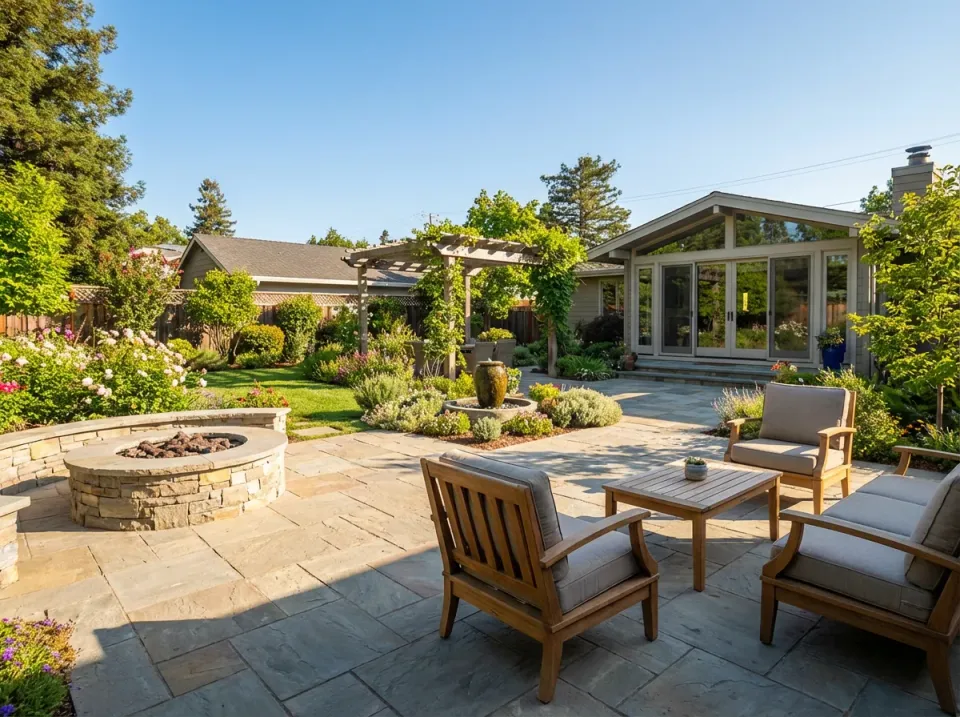
How to Use This Backyard Patio Calculator
Planning a backyard patio requires precise measurements to ensure you order enough material without overspending.
- 1 Measure Area: Measure the length and width of your planned backyard patio area in feet.
- 2 Determine Depth: For most backyard patio projects, a depth of 4 to 6 inches is recommended for stability.
- 3 Review Results: The calculator provides both cubic yards (for bulk volume) and tons (for ordering weight).
Common Materials for Backyard Patios
Selecting the right base and bedding materials is critical for patio stability, drainage, and preventing long-term settlement.
| Material | Description | Best For | Est. Cost |
|---|---|---|---|
| CA-6 Crushed Stone (Road Base) | 3/4-inch minus angular crushed limestone or gravel blended with stone dust fines that compact tightly into a dense, stable layer. | Compacted Subbase, Load-Bearing Foundation, Drainage Layer, All Patio Surface Types | $ |
| Coarse Washed Concrete Sand | Clean, coarsely graded sand with angular to sub-rounded particles, typically 1/4-inch minus, free of silt and clay. | Paver Bedding Layer, Flagstone Leveling, Final Grade Adjustment | $ |
| #57 Crushed Stone | Uniformly graded, 3/4-inch angular crushed stone with no fines, offering excellent drainage and void space. | Drainage Sublayer, Base Under Concrete Slabs, Expansive Soil Sites | $$ |
| Fill Dirt / Screened Soil | Native or imported soil, screened to remove debris and organics, used to adjust site elevation before aggregate placement. | Initial Site Grading, Backfill for Uneven Sites, Limited Use | $ |
Understanding the Cost
Several factors influence the final price of your backyard patio project.
Material Volume
The dimensions of your project directly dictate the tonnage needed. Deeper bases require significantly more material.
Delivery Distance
Transport logistics play a major role. Being closer to the quarry or depot reduces delivery fees significantly.
Material Type
Decorative stones cost more than utility grades. Choose based on your project's functional and aesthetic requirements.
Recommended Products for Your Backyard Patio
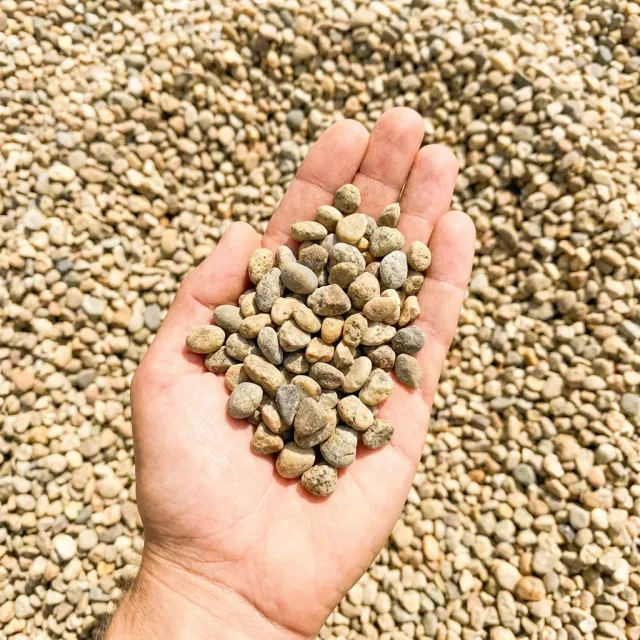
Pea Gravel Calculator
Pea gravel calculator — enter your project dimensions to estimate volume in cubic yards, tons, and bags. Ideal for pathways, patios, and ground cover.
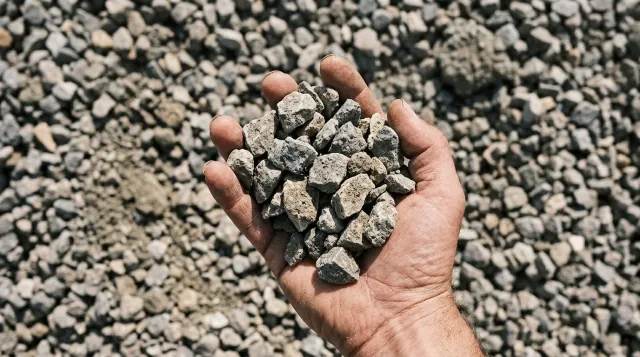
Crushed Stone Calculator
This calculator estimates crushed stone quantity and weight. Enter dimensions for results in cubic feet, cubic yards, and tons with density factored in.
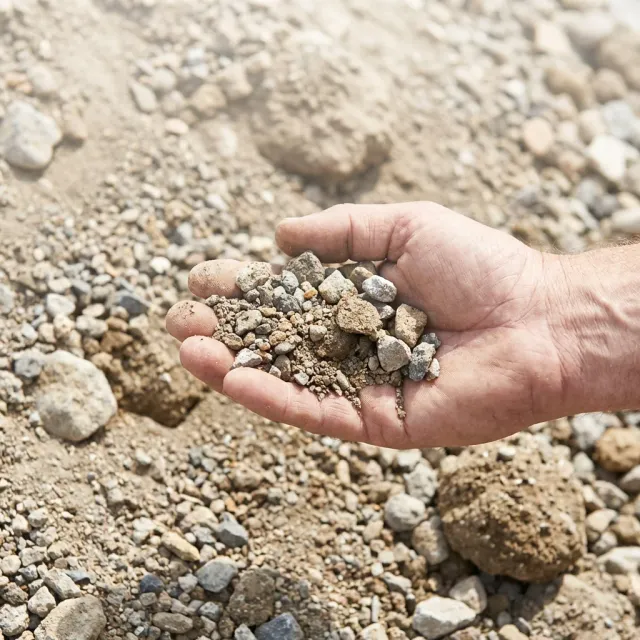
Road Base Calculator
Road base calculator — enter length, width, and depth to estimate volume and tonnage for crushed limestone, recycled concrete, and aggregate base.
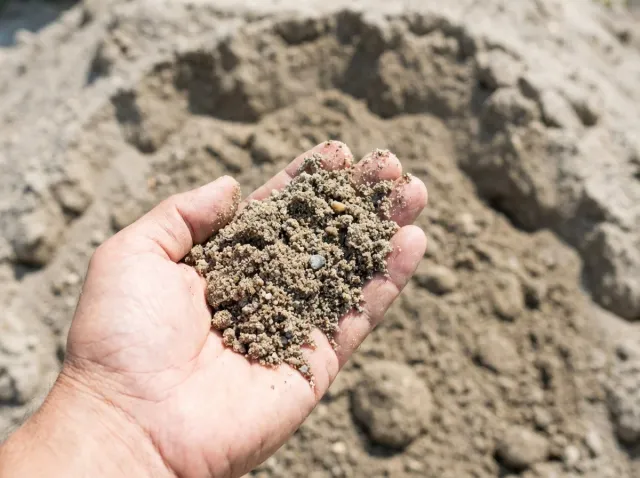
Concrete Sand Calculator
Concrete sand calculator — estimate volume and weight based on your project's length, width, and depth. Results in cubic yards and tons, ready for ordering.
Frequently Asked Questions
What is the cheapest type of backyard patio to build?
A gravel patio is typically the most affordable option, and it is one of the few patio types where you can handle the entire project yourself without hiring a mason or concrete contractor. The basic process involves excavating the area, laying a compacted crushed stone base, placing a weed barrier, and finishing with a decorative gravel surface. Because Hello Gravel delivers both the base material and the top layer by the truckload at straightforward pricing, you can keep your material costs predictable and manageable. Poured concrete costs more upfront because you need formwork, rebar, and a contractor to place and finish the surface properly. Paver patios require precise base preparation, a sand bedding layer, and skilled installation, which adds both material and labor costs. Both can last a long time when built correctly, but neither is a true DIY project for most homeowners. A gravel patio drains naturally, looks great with the right material choice, and can often be completed in a weekend. If you are working with a tight budget and want to keep things simple, it is worth considering seriously before committing to a more complex build.
What materials does Hello Gravel supply for a backyard patio project?
Hello Gravel supplies the foundational materials that give your patio its stability and longevity. For a paver or flagstone patio, that means crushed stone for the compacted base layer and coarse sand for the bedding layer that sits directly beneath your surface material. These two layers are what prevent your patio from shifting, sinking, or becoming uneven over time. Getting them right is the single most important part of any patio build. For a gravel patio, Hello Gravel can supply both the crushed stone base and the decorative top layer, whether you choose pea gravel, crushed limestone, or another aggregate that fits the look you are going for. If your yard needs regrading before the patio goes in, Hello Gravel also delivers fill dirt to help you level and shape the site. Topsoil is available as well if you plan to finish out the surrounding landscaping after the patio is complete. What Hello Gravel does not supply are the finished surface materials themselves, such as concrete, pavers, or flagstone slabs. Those come from a separate supplier. Hello Gravel's role is to make sure the ground underneath is properly built and ready to support whatever surface you choose.
What is the best base material for a paver or flagstone patio?
Crushed stone is the standard base material for paver and flagstone patios, and for good reason. It compacts tightly, handles drainage well, and holds its shape under load for years without shifting. Most contractors recommend a base depth of 4 to 6 inches of compacted crushed stone for a standard residential patio. If your soil is soft, clay-heavy, or sits in an area that stays wet, going closer to 6 inches gives you added stability and reduces the chance of settling. On top of the crushed stone base, you typically add about 1 inch of coarse sand as a bedding layer. This creates a smooth, level surface to set your pavers or flagstone on and gives you the flexibility to make small adjustments as you work. That 1-inch sand layer is what separates a patio that looks precise and professional from one that wobbles and shifts after the first winter. The combination of compacted crushed stone and sand bedding is proven and widely used. It is what most experienced patio contractors rely on, and it gives your finished surface the best foundation for staying flat and level over time. Hello Gravel can deliver both materials by the truckload, so you can have everything staged and ready before installation begins.
How much base material do I need for a backyard patio?
The answer depends on your patio's square footage and how deep your base layers will be. A concrete example helps illustrate the math. For a 20x20 patio, which is 400 square feet, a 4-inch compacted crushed stone base requires roughly 7 tons of material. If you go to 6 inches of base depth, which is the better choice for softer or wetter soils, that rises to about 10 to 11 tons. On top of that, a 1-inch sand bedding layer for the same 400 square feet adds approximately 1.5 to 2 tons of coarse sand. So for a 20x20 paver patio with a solid base, plan for somewhere in the range of 9 to 13 tons of material total depending on your depth. These figures are solid real-world estimates, but soil conditions, natural grade changes, and compaction rates can shift your actual totals. Ordering slightly more than you think you need is usually the smarter call, since running short mid-project means waiting on a second delivery. The Hello Gravel online calculator lets you enter your exact patio dimensions and chosen depth to get a more precise tonnage figure for your specific project. Use it to confirm your quantities before you place your order.
Can I build an entire gravel patio with materials from Hello Gravel?
Yes. A gravel patio is one of the most approachable DIY projects out there, and Hello Gravel can supply all the aggregate materials you need to build it. A standard gravel patio involves excavating the area to a depth of about 4 to 6 inches, installing edging to keep the gravel contained, laying a weed barrier fabric over the subgrade, compacting a crushed stone base layer, and finishing with 2 to 3 inches of decorative gravel on top. Hello Gravel can deliver the crushed stone base and the decorative top layer as part of your project order. Your choice of top layer material makes a real difference in how the finished patio looks and feels. Pea gravel is rounded and smooth, which is comfortable underfoot and has a relaxed, natural look. Crushed limestone packs down more firmly and does not shift around as much, making it a practical choice for patios that get regular foot traffic. River rock gives a more decorative finish but can be a little harder to walk on. The right choice depends on how you plan to use the space and the aesthetic you are going for. Use the Hello Gravel calculator to estimate how many tons you need for each layer based on your patio dimensions, and place your order with the delivery date that works best for your schedule.
More Project Calculators
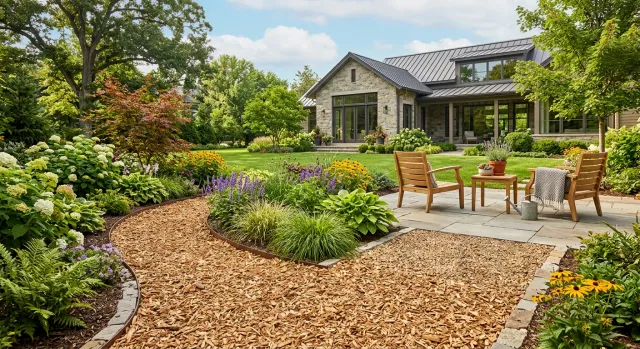
Playground Calculator
This calculator estimates mulch, rubber, or wood fiber surfacing for playgrounds. Enter area and recommended depth to get cubic yards and tons.
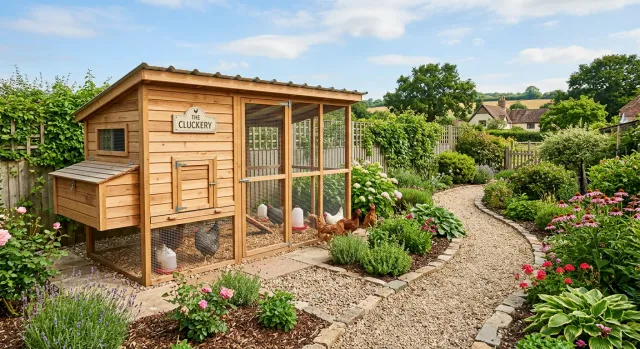
Chicken Coop Calculator
Use this calculator to estimate how much gravel your coop base requires. Input dimensions and depth for volume in cubic yards and stone type guidance.
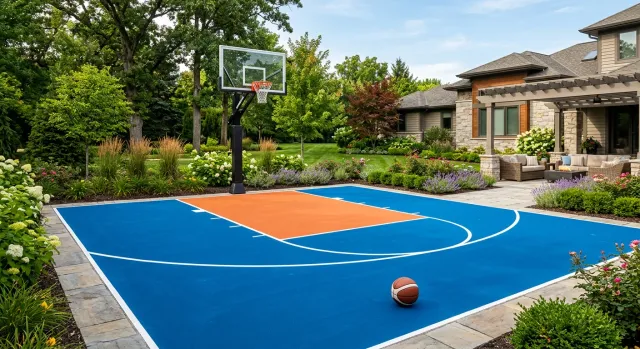
Basketball Court Calculator
Court base calculator — estimate gravel, sand, and sub-base quantities for backyard or regulation basketball courts. Input court size for material totals.
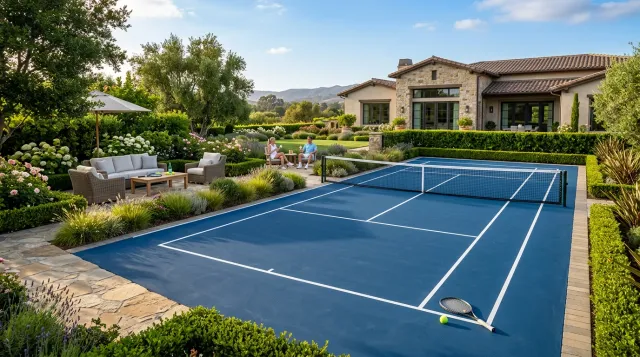
Tennis Court Calculator
Use this calculator to estimate the crushed stone base for a new or resurfaced tennis court. Enter dimensions and depth for volume and tonnage.
Delivery Logistics & Truck Info
Know your delivery options and access requirements before scheduling your order.
Truck Capacities
- Standard Dump Truck10–14 tons
- Tandem Axle14–18 tons
- Semi End Dump20–25 tons
A standard cubic yard weighs approximately 2,000–2,700 lbs depending on material and moisture.
Site Access Requirements
- Trucks require a minimum 12-ft wide, overhead-clear access path
- Soft ground or slopes over 10% may limit truck access — contact us before ordering
- Ensure no underground utilities or irrigation lines are in the drop zone
- Mark your desired drop location clearly before delivery
Important Notes
- Delivery estimates are based on available inventory and route proximity
- Minimum order quantities apply — typically 5 cubic yards or 1 truckload
- Material certification is available upon request for permitted projects
- Always confirm local ordinances before major material placement