
Best Crushed Concrete Size for Driveways in 2026
Free local estimate
See delivered prices for your ZIP in 60 seconds
Tell us where the project is and we'll price this material — delivered — for your exact ZIP.
- Real delivered pricing for your ZIP — not a generic range.
- Works for any quantity — driveways, pads, drains, or full projects.
- Prefer to talk? We follow up with local availability and delivery windows.
Choosing the right crushed concrete size for your driveway can make the difference between a surface that lasts decades and one that develops problems within a few years. The best size for most residential driveways is ¾ inch crushed concrete, which provides an optimal balance of stability, drainage, and smooth surface texture.
Crushed concrete, also known as recycled concrete aggregate, offers homeowners a cost-effective and environmentally friendly alternative to traditional driveway materials. According to industry data from hellogravel.com/guides, this recycled material can cost up to 50% less than virgin aggregate while providing comparable durability and performance.
Quick Answer: For most residential driveways, ¾ inch crushed concrete provides the best combination of stability, drainage, and smooth surface. Heavier traffic areas may benefit from 1-1.5 inch sizes, while decorative applications work well with smaller ¼-½ inch options.
This guide will walk you through everything you need to know about selecting the perfect crushed concrete size for your specific driveway needs, from understanding the different grades available to installation considerations.
About Hello Gravel
Hello Gravel delivers bulk gravel, rock, dirt, and sand by the ton. Enter your ZIP code to see prices with delivery included. A local dump-truck driver places the load where access is safe; spreading is not included.
Understanding crushed concrete grades and sizes
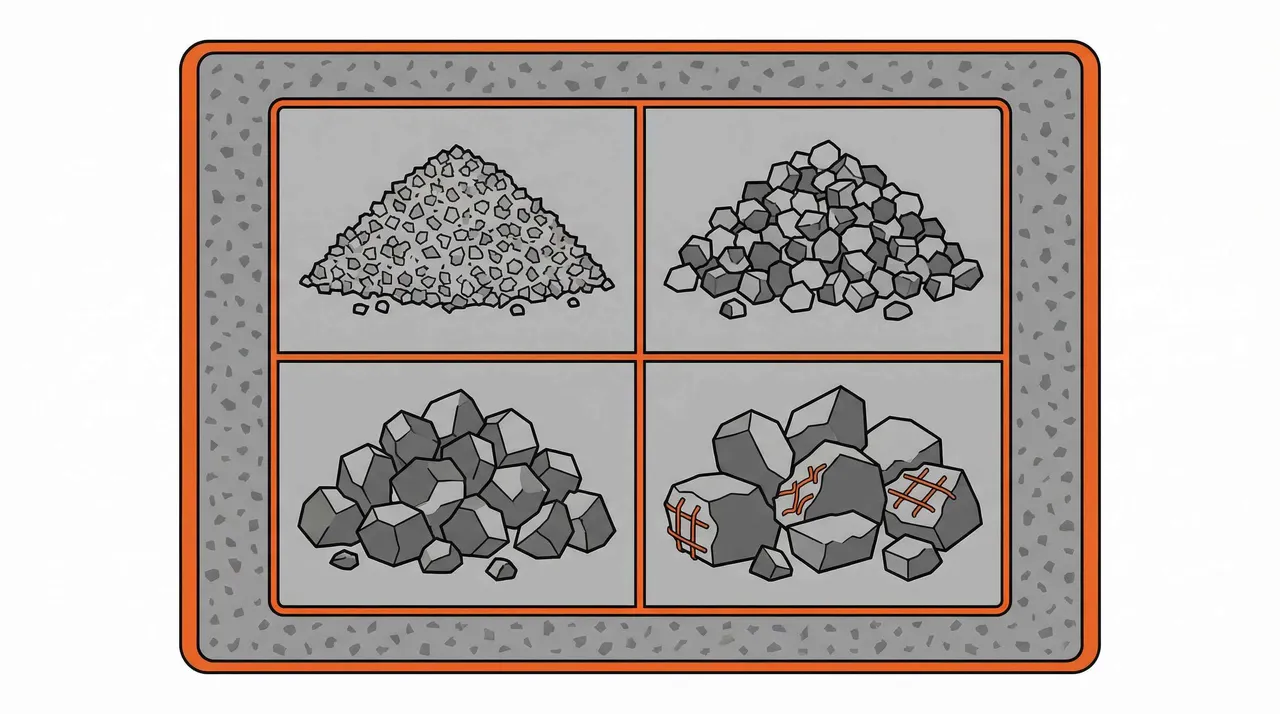
Crushed concrete comes in several standardized grades, each designed for specific applications. The grading system helps you match the right material to your project requirements.
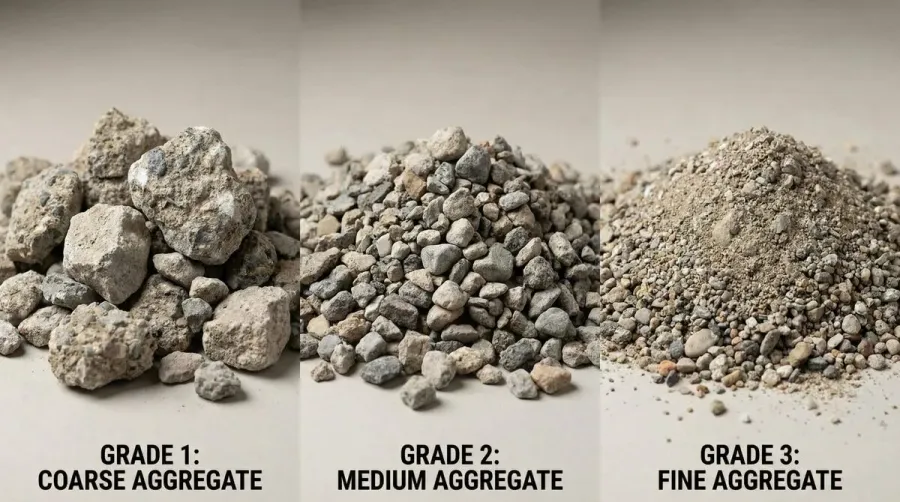
Grade 1 crushed concrete typically ranges from 20mm to 40mm (roughly ¾ to 1½ inches) and works well for substantial construction projects requiring excellent stability. This size provides strong load-bearing capacity and effective drainage, making it suitable for driveways that will support heavy vehicles or experience frequent traffic.
Grade 2 crushed concrete falls between 10mm to 20mm (approximately ⅜ to ¾ inch) and represents the most versatile option for residential driveways. This medium-sized aggregate offers a good balance between stability and surface smoothness, making it easy to work with during installation.
Grade 3 crushed concrete, also called fine crushed concrete, ranges from dust size to 5mm (up to ¼ inch). While primarily used for leveling and filling applications, it can serve as a top layer over larger aggregate for a smoother driving surface.
The production process involves crushing demolished concrete structures and screening the material to achieve consistent sizing. Quality suppliers remove contaminants like rebar, wood, and other debris to ensure a clean, uniform product.
Factors that determine the best size for your driveway
Several key factors influence which crushed concrete size will work best for your specific driveway situation. Understanding these variables helps you make an informed decision.
Traffic volume and vehicle weight play crucial roles in size selection. Light residential traffic with standard passenger vehicles can work well with ¾ inch material, while driveways serving trucks, RVs, or commercial vehicles benefit from larger 1-1.5 inch sizes that provide greater load distribution and stability.
Climate conditions in your area significantly impact performance. Regions with heavy rainfall require larger aggregate sizes for better drainage, preventing water pooling that can lead to erosion or freeze-thaw damage. Areas with extreme temperature variations benefit from the thermal stability that larger stones provide.
Your driveway’s slope and drainage characteristics also matter. Steeper driveways may need larger aggregate to prevent material migration during heavy rains, while flatter surfaces can accommodate smaller sizes that compact more tightly.
Pro Tip: If your driveway experiences both heavy vehicles and regular passenger cars, consider using 1-1.5 inch crushed concrete for the base layer with a ¾ inch top layer for the best of both worlds.
Aesthetic preferences shouldn’t be overlooked either. Smaller aggregate creates a smoother, more refined appearance that many homeowners prefer, while larger sizes offer a more rustic, natural look that complements certain architectural styles. If you’re interested in exploring other types of stone for driveway options, there are many alternatives that can match different aesthetic preferences.
Comparing popular crushed concrete sizes
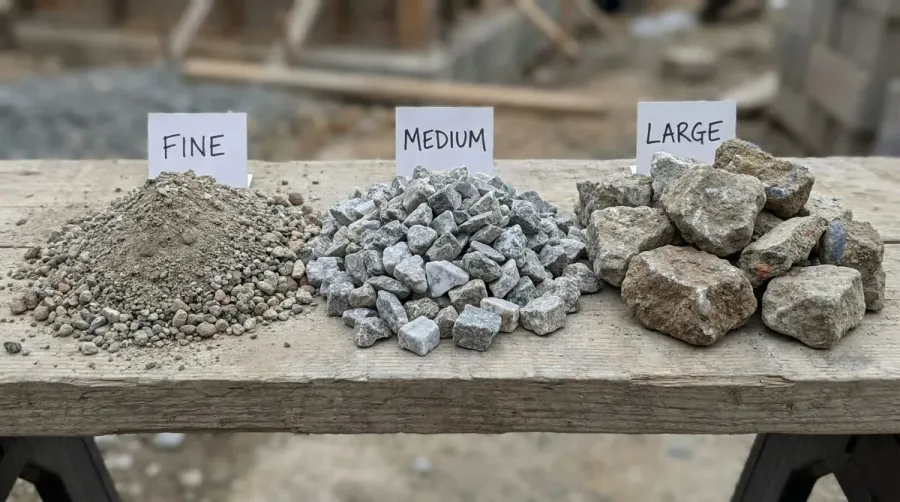
Each crushed concrete size offers distinct advantages and trade-offs that make them suitable for different applications and preferences.Fine crushed concrete (¼ to ½ inch) creates the smoothest driving surface and compacts extremely well. This size works excellently for driveways with light traffic and where appearance is a priority. However, it may not provide adequate stability for heavy vehicles and can be prone to washout in areas with poor drainage.Medium crushed concrete (¾ to 1 inch) represents the sweet spot for most residential applications. This size compacts well while maintaining good drainage characteristics. It handles moderate to heavy residential traffic effectively and provides a relatively smooth surface that’s comfortable for walking and driving. For those comparing options, our guide on the best size gravel for a driveway offers additional insights into optimal sizing.Large crushed concrete (1½ to 2½ inches) offers maximum stability and drainage but creates a rougher surface texture. This size excels in commercial applications or residential driveways that must support very heavy vehicles. The larger stones interlock effectively, creating a stable base that resists rutting and shifting.
| Size Range | Best For | Drainage | Surface Texture | Stability |
|---|---|---|---|---|
| ¼-½ inch | Light traffic, aesthetics | Fair | Very smooth | Good |
| ¾-1 inch | Most residential driveways | Good | Smooth | Excellent |
| 1½-2½ inch | Heavy traffic, commercial | Excellent | Rough | Maximum |
The choice often comes down to balancing your specific needs. Most homeowners find that ¾ inch crushed concrete provides the optimal combination of performance characteristics for typical residential use. Understanding different types of driveway gravel can help you make more informed comparisons.
Installation and maintenance considerations
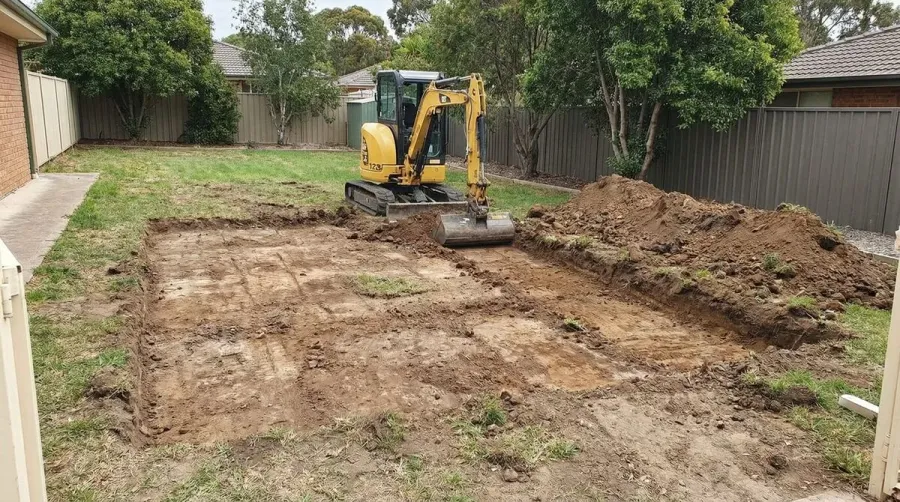
Proper installation techniques vary depending on the crushed concrete size you choose, and understanding these differences helps ensure long-term success.Preparation requirements remain consistent regardless of size. You’ll need to excavate the area to appropriate depth (typically 4-6 inches for residential driveways), ensure proper grading for drainage, and compact the subgrade thoroughly. For those working with existing surfaces, learning about the best material for a dirt driveway can provide valuable context for proper base preparation.
Smaller aggregate sizes require more careful attention to edge restraint since they’re more likely to migrate laterally. Installing proper edging materials helps maintain clean borders and prevents material loss. These sizes also benefit from mechanical compaction in thin lifts to achieve optimal density.
Larger aggregate sizes are more forgiving during installation but may require additional attention to achieving a level surface. You might need to use a smaller aggregate as a wearing course over the larger base material to improve surface smoothness and reduce tire noise. If you’re working with multiple layers, our article on the best rock for driveway base provides essential guidance on creating a solid foundation.
Maintenance needs differ based on size selection as well. Smaller aggregates may require periodic re-leveling and addition of material in high-wear areas, while larger sizes typically maintain their profile better but may develop surface irregularities that need attention.
Maintenance Tip: Regardless of size, plan to add a thin layer of fresh material every 3-5 years to maintain optimal surface conditions and address normal wear patterns.
Regular maintenance includes removing vegetation growth, addressing drainage issues promptly, and adding material to areas that develop low spots or rutting. For effective vegetation control, check out our recommendations for the best weed killer for gravel. Proper maintenance extends the life of your crushed concrete driveway significantly, often allowing it to perform well for 15-20 years or more.
The key to success lies in matching the right crushed concrete size to your specific needs and following proper installation practices. For most homeowners, ¾ inch crushed concrete provides an excellent balance of performance, cost-effectiveness, and ease of installation that makes it the go-to choice for residential driveway projects.
FAQ
What is the best crushed concrete size for a driveway?
¾ inch crushed concrete is the best size for most residential driveways. It provides an optimal balance of stability, drainage, and smooth surface texture. For heavier traffic areas with trucks or RVs, consider 1-1.5 inch sizes for greater load distribution and stability.
How thick should a crushed concrete driveway be?
A crushed concrete driveway should typically be 4-6 inches thick for residential use. For optimal results, use a 4-inch base layer of larger aggregate (1-1.5 inch) topped with a 2-inch layer of ¾ inch crushed concrete for the surface. Heavy traffic areas may require 6-8 inches total depth.
Is crushed concrete better than gravel for driveways?
Yes, crushed concrete is generally better than gravel for driveways. It compacts more effectively, provides superior stability, costs up to 50% less than virgin aggregate, and offers better drainage. Crushed concrete is also environmentally friendly as it’s made from recycled materials and typically requires less maintenance than loose gravel.
How often does crushed concrete driveway need maintenance?
Crushed concrete driveways require minimal maintenance. Plan to add a thin layer of fresh material every 3-5 years to maintain optimal surface conditions and address normal wear patterns. Regular maintenance includes removing vegetation, addressing drainage issues promptly, and filling any low spots or rutting that may develop.
Materials for this project
Get it delivered — dumped where you need it
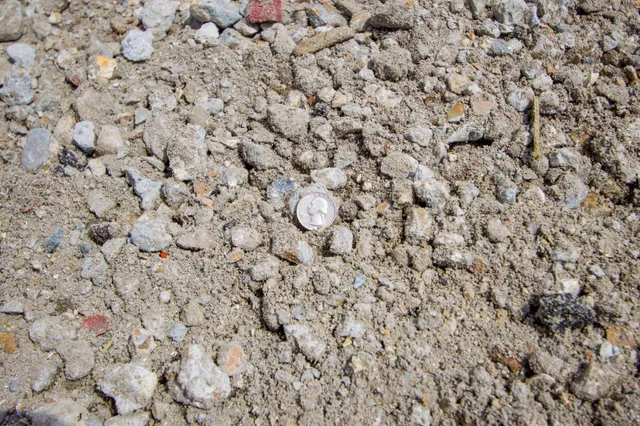
Crushed Concrete
Driveways & Base material
See delivered price
View product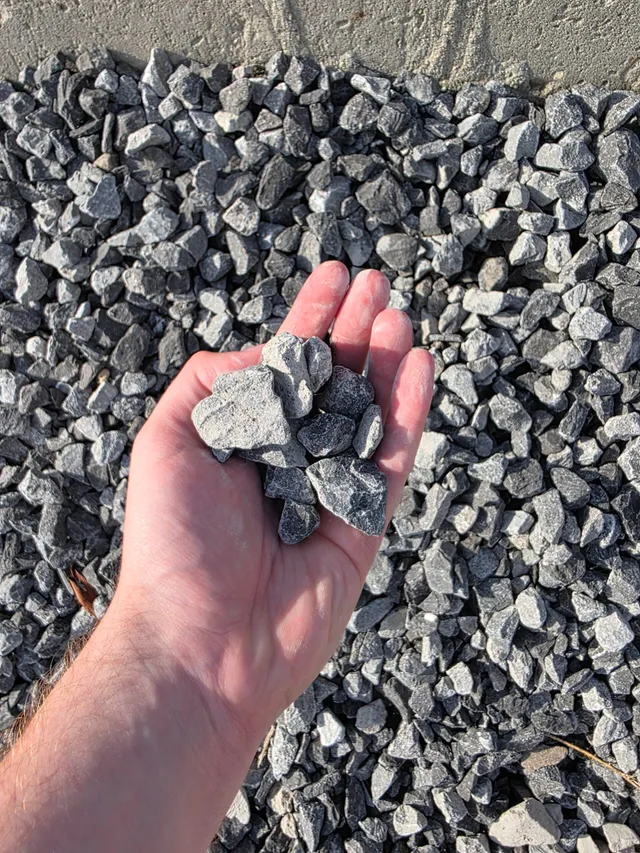
Driveway Gravel
Driveways & Parking areas
See delivered price
View product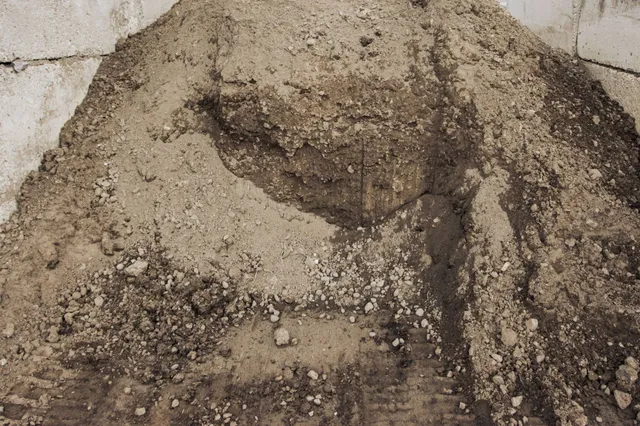
Fill Dirt
Grading & Backfill
See delivered price
View product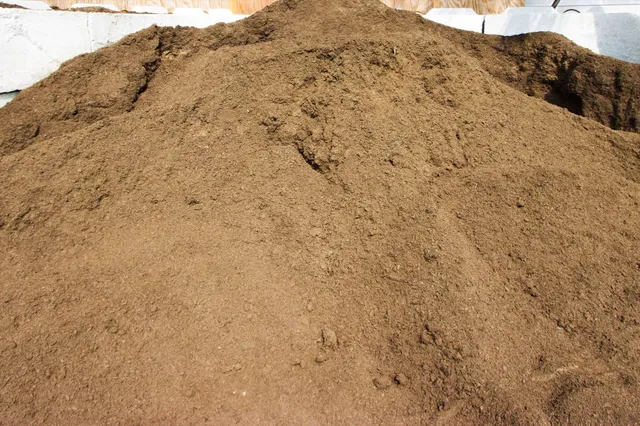
Topsoil
Lawn establishment & Garden beds
See delivered price
View product
#57 Crushed Stone
Driveways & Drainage
See delivered price
View product