Best Aggregate Size for Drainage Systems in 2026
Published on: January 25, 2026
Get an estimate for your project in 60 seconds
 Your information is secure
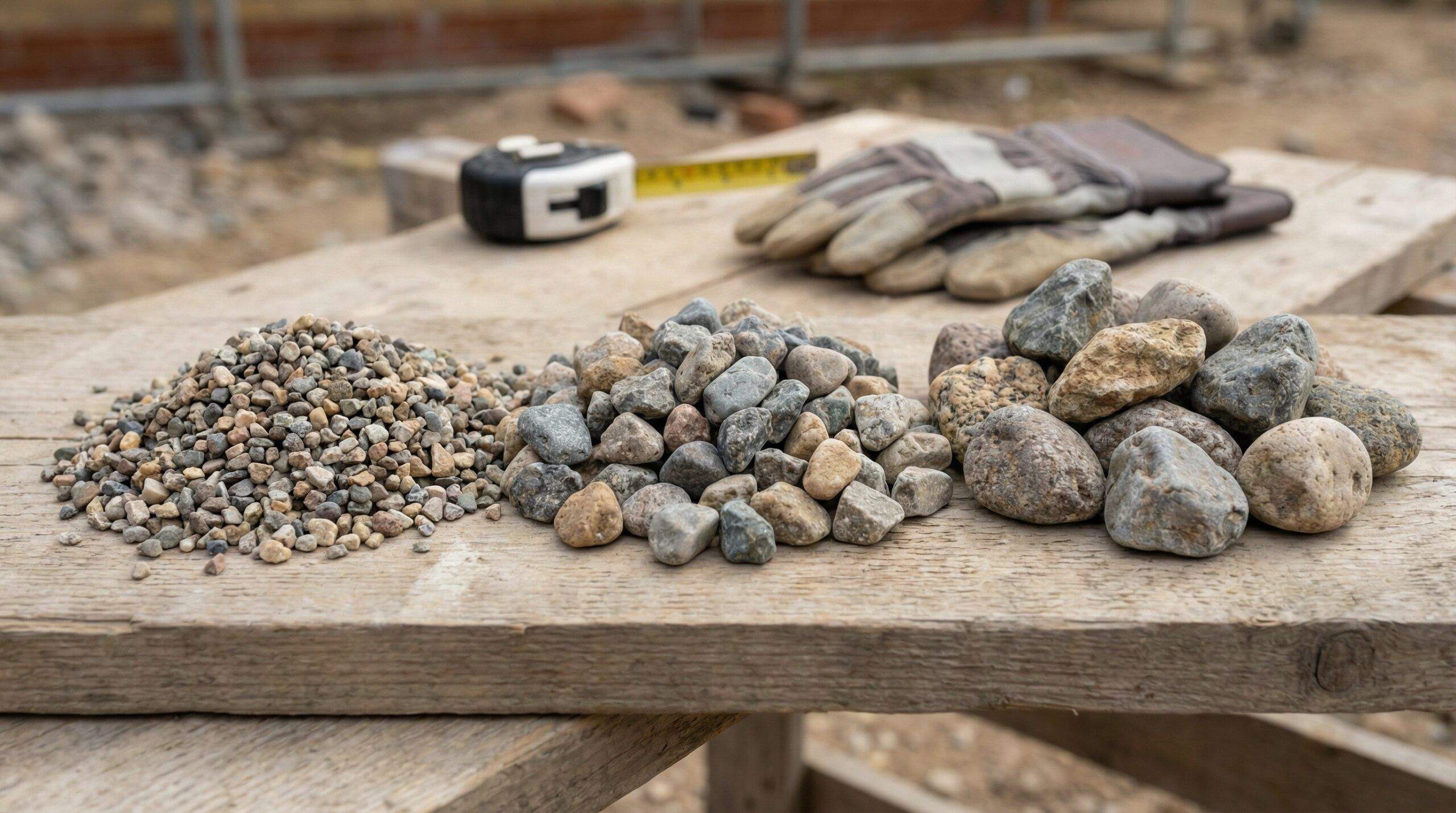
Choosing the right aggregate size for your drainage system directly impacts its efficiency and longevity. The optimal size typically ranges from 3/8 inch to 1.5 inches for most residential applications, with larger sizes (up to 2 inches) preferred for heavy-duty commercial drainage systems.
Quick Answer: For standard drainage applications, medium-sized aggregates (3/8 to 1.5 inches) offer the best balance of water flow and filtration, while clay soils may require larger sizes for optimal performance.
Understanding how aggregate size affects water movement through your drainage system helps you make informed decisions that prevent costly foundation damage and waterlogging issues. The size you choose depends on several key factors including your soil type, local climate conditions, and the specific drainage requirements of your project.
Understanding aggregate types and their drainage roles
Aggregate materials serve as the backbone of effective drainage systems by creating pathways for water movement while providing structural support. These materials include crushed stone, gravel, and sand in various size classifications that determine their specific applications.
Fine aggregates measure less than 3/8 inch and work well as top layers in drainage systems where filtration is the primary concern. Medium aggregates range from 3/8 to 1.5 inches and strike an ideal balance between water flow and particle retention. Coarse aggregates exceed 1.5 inches and are typically used in base layers where rapid water movement is essential.
The angular shape of crushed stone creates better interlocking properties compared to rounded gravel, which affects both stability and water flow rates. According to hellogravel.com, crushed stone provides excellent drainage capabilities due to its angular edges that create larger void spaces between particles.

Each aggregate type serves specific functions within the drainage system. Fine materials prevent soil migration while allowing water passage, medium sizes provide the primary drainage function, and coarse materials at the base ensure rapid water removal and system stability. For a comprehensive overview of different types of gravel for construction, understanding these classifications is essential.
Key factors that determine optimal aggregate size
Your soil composition plays the most significant role in determining the appropriate aggregate size for your drainage project. Clay soils with poor natural drainage require larger aggregate sizes to create adequate void spaces for water movement, while sandy soils can work effectively with smaller aggregates.
Climate conditions directly influence your aggregate size selection. Areas experiencing heavy rainfall benefit from larger aggregates that can handle higher water volumes without becoming overwhelmed. Regions with moderate precipitation can use smaller sizes that provide better filtration while maintaining adequate drainage capacity.
Pro Tip: Test your soil drainage by digging a hole 12 inches deep and filling it with water – if it takes more than 24 hours to drain, you’ll need larger aggregate sizes for effective drainage.
The size of your drainage area affects the aggregate choice as well. Larger areas generate more water volume, requiring bigger aggregates to accommodate the increased flow rates. Small residential applications can often use medium-sized materials effectively, while commercial projects typically need coarse aggregates for optimal performance.
Consider the intended lifespan of your drainage system when selecting aggregate size. Properly sized materials reduce maintenance requirements and extend system longevity by preventing clogging and maintaining consistent water flow over time. Learn more about what type of aggregate is best for drainage to make the right choice for your project.
Comparing small, medium, and large aggregate performance
Small aggregates under 3/8 inch excel at filtration but can restrict water flow in high-volume situations. These materials work best in applications where preventing soil migration is more important than rapid drainage, such as under walkways or light-traffic areas.
| Aggregate Size | Flow Rate | Filtration | Best Applications |
|---|---|---|---|
| Small (under 3/8″) | Low | Excellent | Walkways, light drainage |
| Medium (3/8″ – 1.5″) | Moderate | Good | Residential drainage, French drains |
| Large (over 1.5″) | High | Limited | Heavy rainfall areas, commercial |
Medium-sized aggregates between 3/8 and 1.5 inches provide the most versatile performance for typical drainage applications. They allow sufficient water flow while retaining enough filtration capability to prevent system clogging. This size range works well for French drains, foundation drainage, and most residential projects.
Large aggregates over 1.5 inches prioritize rapid water movement over filtration. While they excel in high-volume drainage situations, they offer limited protection against soil migration and may require additional filtration layers to prevent long-term system problems.
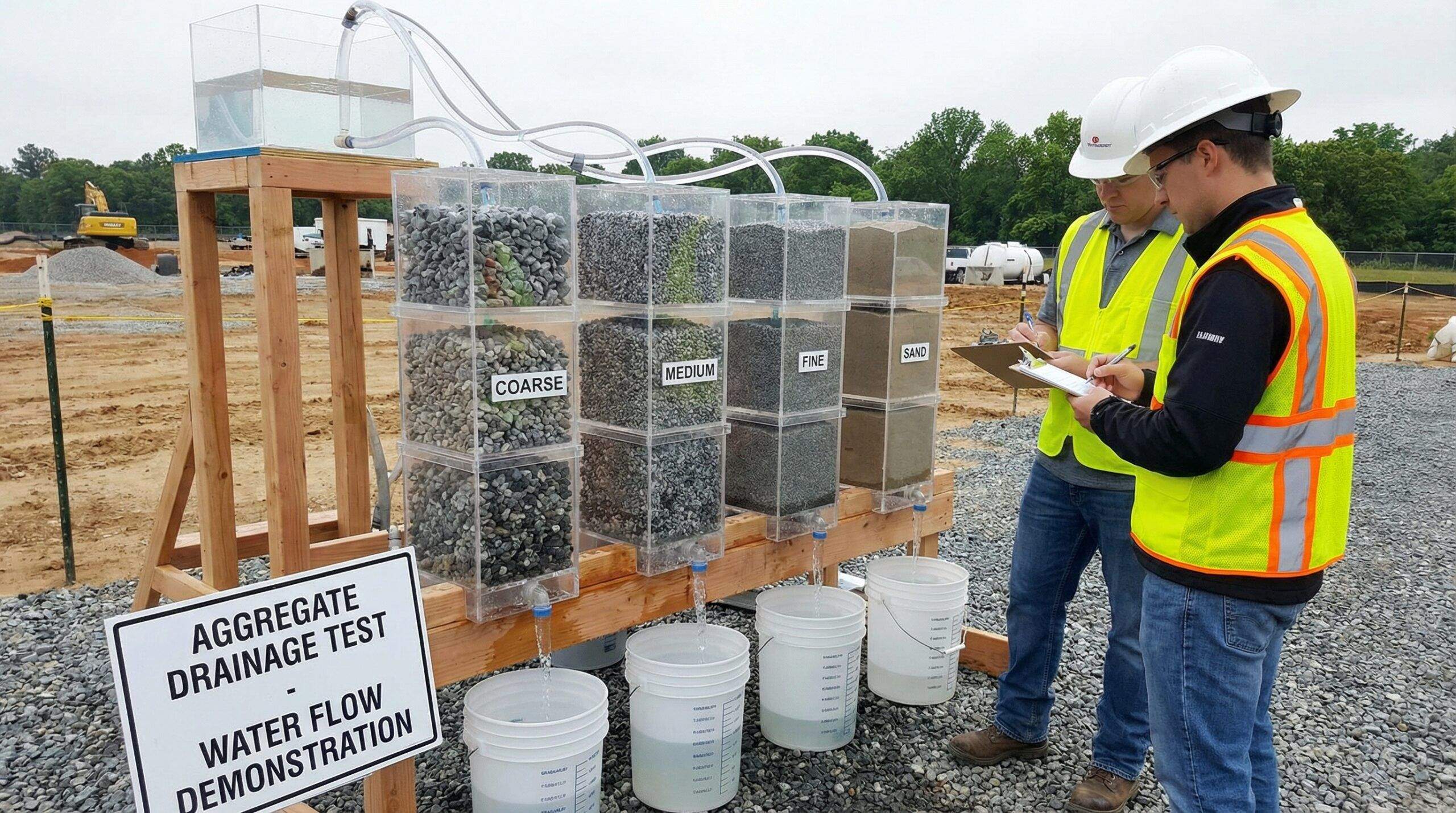
The void ratio between particles increases with aggregate size, directly affecting drainage capacity. Larger materials create more open space for water movement but may allow fine particles to migrate through the system if not properly designed. For detailed guidance on the best gravel for drainage, consider both flow requirements and filtration needs.
Selecting the right size for your specific project
Start by evaluating your soil type through a simple percolation test to understand its natural drainage characteristics. Dig a test hole and observe how quickly water drains to determine whether you need enhanced drainage capacity through larger aggregates.
Assess your local rainfall patterns and intensity to match aggregate size with expected water volumes. Areas prone to heavy storms benefit from larger sizes that can handle sudden water influxes without backing up or overflowing.
Consider your project’s specific requirements including load-bearing needs, aesthetic preferences, and maintenance accessibility. Driveways and high-traffic areas may require different aggregate sizes compared to garden drainage or foundation applications.
Important: Always install a geotextile fabric barrier between soil and aggregate to prevent fine particles from migrating into your drainage system, regardless of the aggregate size you choose.
Consult local building codes and drainage requirements that may specify minimum aggregate sizes for certain applications. Professional guidance becomes valuable for complex projects involving multiple drainage zones or challenging soil conditions. Understanding what type of aggregate base is best for drainage ensures your system meets both performance and regulatory standards.
Plan for future maintenance access when selecting aggregate size. Smaller materials may require more frequent cleaning, while larger sizes typically need less maintenance but can be more difficult to repair if problems develop. For comprehensive information on using gravel in drainage systems, explore best practices for installation and long-term care.
Choosing the right aggregate size for your drainage system requires balancing water flow capacity with filtration needs based on your specific soil, climate, and project requirements. Medium-sized aggregates work well for most residential applications, while larger sizes suit high-volume commercial drainage needs. Proper sizing prevents costly water damage and ensures your drainage system performs effectively for years to come.
FAQ
What is the best gravel size for French drains?
Is larger gravel always better for drainage?
What aggregate size works best for clay soil drainage?
How do I test if my soil needs larger drainage aggregates?
Author: