Overburden Soil Definition, Uses, and Cost Guide for Construction Projects
Published on: December 10, 2025
Get an estimate for your project in 60 seconds
 Your information is secure
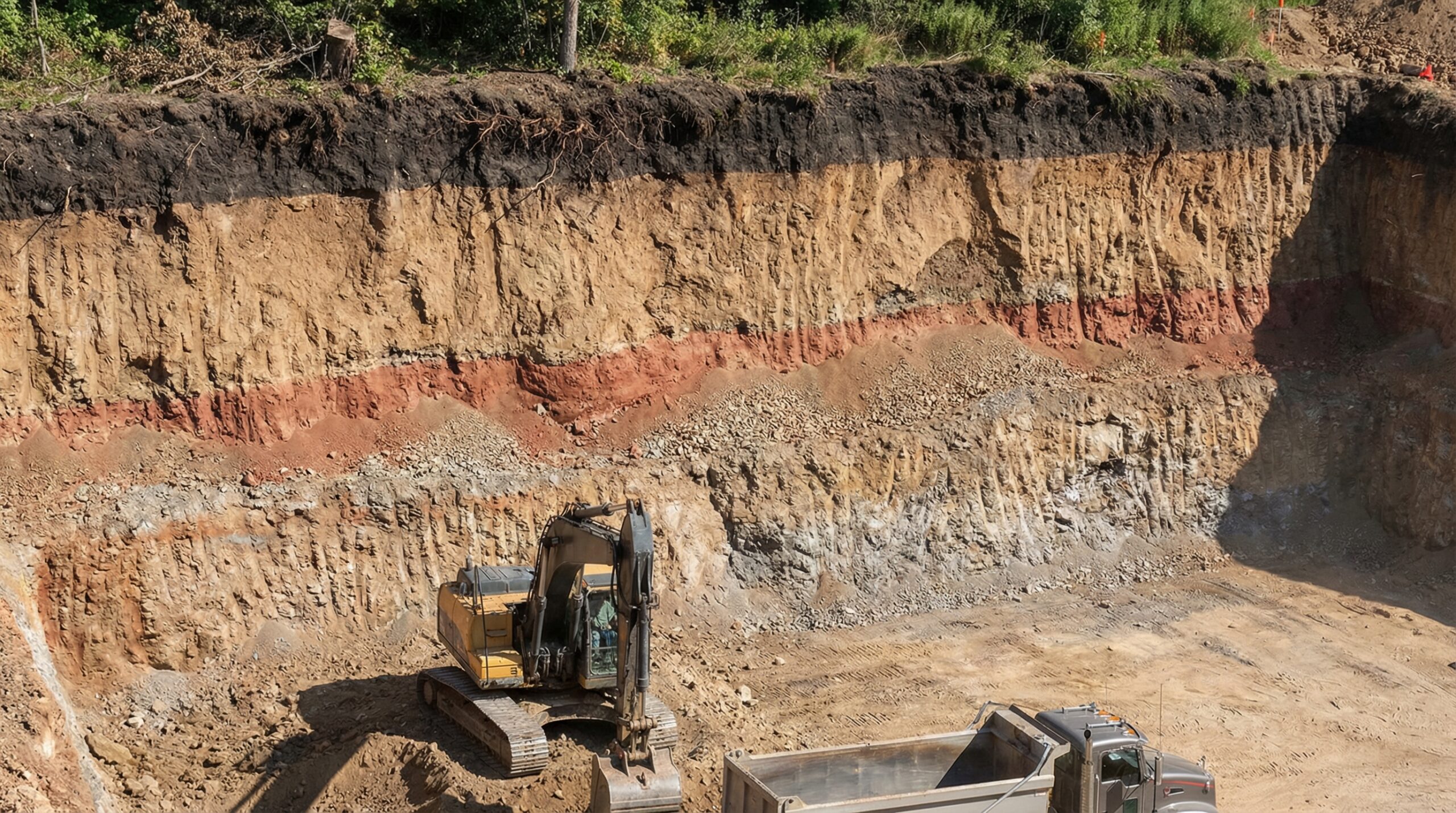
Overburden is the layer of soil, rock, and other materials that sits above a valuable deposit or target layer in mining and construction projects. Whether you’re a contractor planning a foundation project, a mining operator managing site restoration, or a landowner dealing with excavated materials, understanding overburden can save you money and help you make better decisions about material handling and reuse.
This guide covers everything you need to know about overburden soil, from basic definitions to practical applications, environmental considerations, and cost factors. You’ll learn how to identify different types of overburden, match materials to specific uses, and navigate the regulatory landscape that affects how you can handle and dispose of these materials.
Quick Answer: Overburden refers to any soil, rock, or debris that must be removed to access underlying materials of interest. In construction, it’s often the unconsolidated material above bedrock or stable soil layers needed for foundations.
What is overburden in mining and construction
Overburden serves different purposes depending on your industry context. In mining operations, overburden typically consists of topsoil, weathered rock, and sedimentary layers that cover ore deposits or coal seams. Surface mining and strip mining operations generate the largest volumes of overburden, which must be systematically removed and managed.
For construction and geotechnical work, overburden usually means the loose soil and weathered materials above competent bedrock or engineered fill layers. Foundation contractors encounter overburden when excavating to reach stable bearing layers, while road builders often need to remove organic-rich overburden before placing structural fill.
The key distinction between overburden and other excavated materials lies in its position and composition. Unlike tailings, which are processed waste from mining operations, overburden hasn’t been chemically treated or mechanically processed. This often makes it more suitable for reuse in construction and reclamation projects.
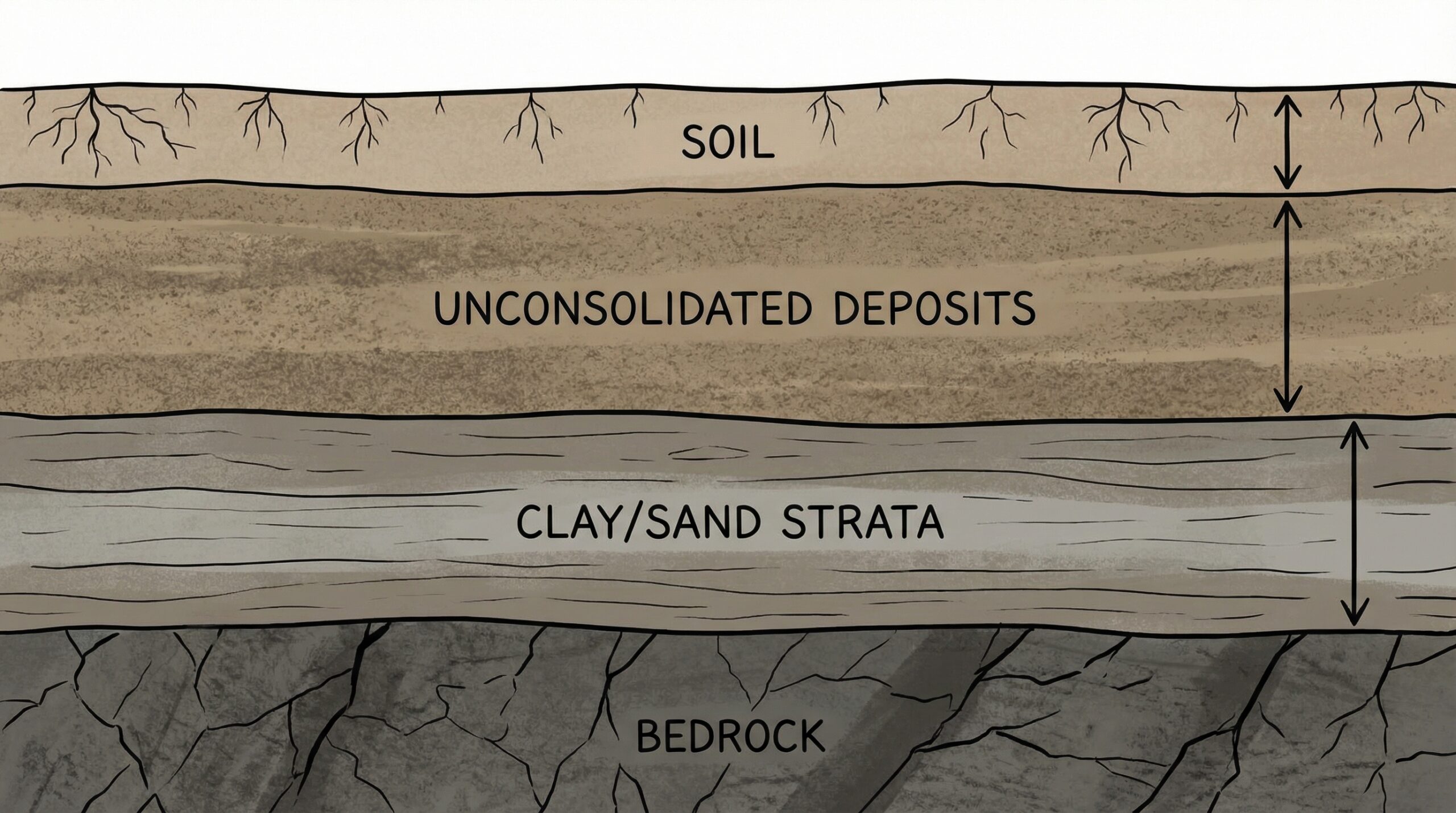
Environmental science applications also use the term overburden to describe protective soil layers above groundwater aquifers or contaminated zones. Understanding these different contexts helps you communicate more effectively with engineers, regulators, and material suppliers.
Types of overburden and their characteristics
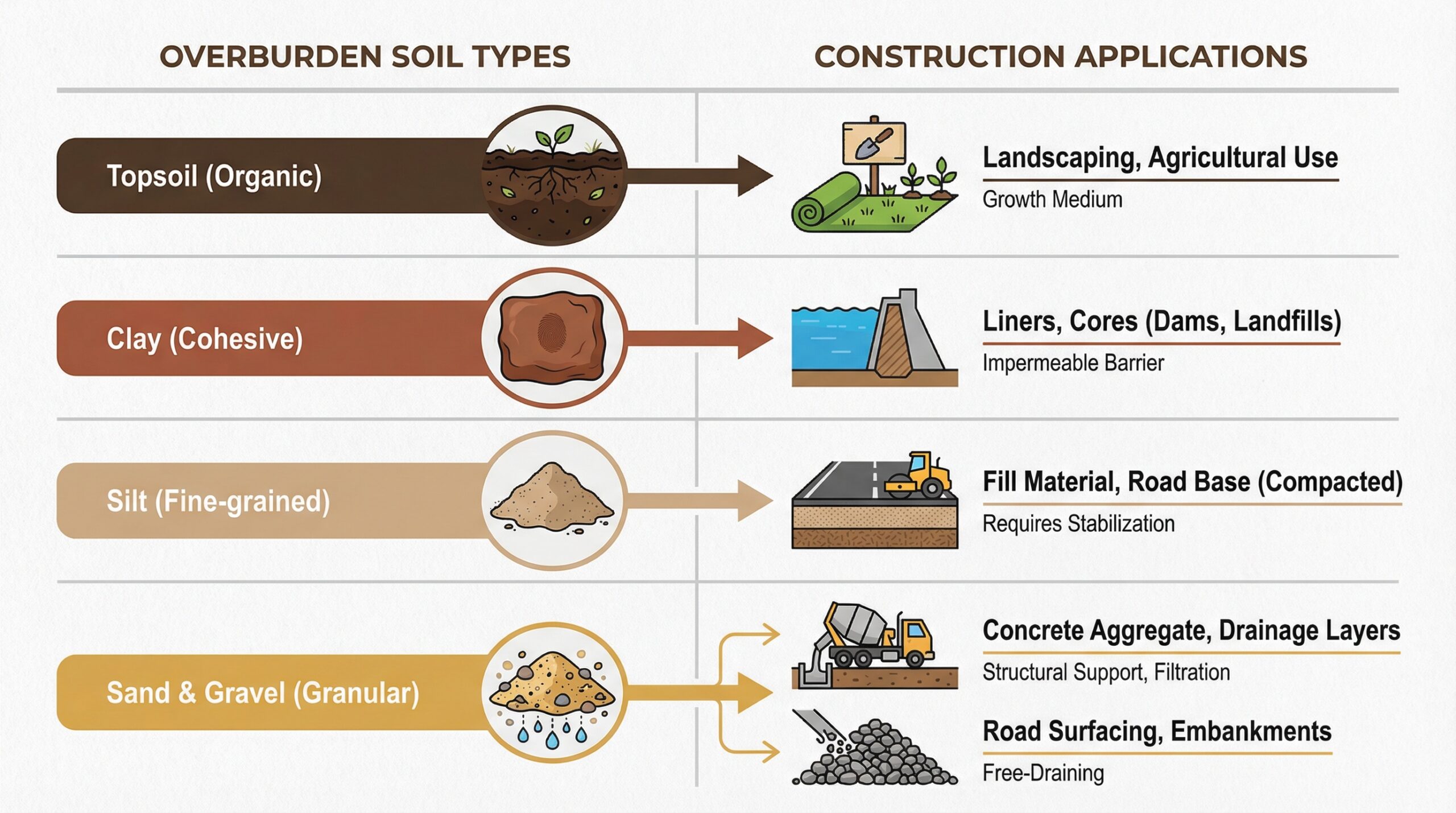
Overburden materials fall into several categories that affect how you can use them in your projects. Organic overburden contains significant amounts of topsoil, plant matter, and decomposed materials. This type works well for landscaping and agricultural applications but shouldn’t be used for structural fill because organic matter decomposes and causes settlement.
Inorganic overburden consists primarily of sand, clay, gravel, and rock fragments with minimal organic content. These materials often provide excellent structural fill, road base, and embankment construction when properly compacted. The specific mix of particle sizes determines drainage characteristics and load-bearing capacity. Understanding the differences between clay and sandy soils helps you determine which overburden types work best for your specific application.
Consolidated versus unconsolidated overburden represents another important distinction. Unconsolidated materials like loose sand and clay are easier to excavate and handle but may require stabilization for certain uses. Consolidated materials including weathered rock and cemented soils provide better structural properties but cost more to excavate and process.
Pro Tip: Always test overburden materials for moisture content and compaction characteristics before using them as structural fill. High clay content can create drainage problems, while excessive moisture makes compaction difficult.
The source of your overburden also affects its properties and potential uses. Mining overburden often contains larger rock fragments and may have been exposed to blasting, creating angular particles that compact well. Construction overburden tends to be more uniform and may include disturbed subsoil that’s valuable for site restoration.
Common uses and applications for overburden
Construction and roadwork represent the largest markets for overburden reuse. Well-graded inorganic overburden makes excellent fill material for building pads, parking areas, and utility trenches. Road construction projects use overburden for embankments, shoulder construction, and temporary access roads during construction.
The key to successful construction use lies in matching material properties to application requirements. Structural fill under buildings needs good drainage and high bearing capacity, while landscape berms can accommodate more variable materials. Always verify that your overburden meets local specifications for gradation, plasticity, and organic content. When comparing options, consider how overburden stacks up against clean fill or select fill for your specific project needs.
Landscaping and site grading projects offer flexible applications for various overburden types. Rock-rich overburden creates attractive decorative features and drainage layers, while mixed materials work well for general grading and slope stabilization. Many landscaping contractors prefer overburden to purchased fill because it often costs less and provides more natural-looking results.
Agricultural applications focus primarily on organic-rich overburden that can improve soil fertility. However, you should test any overburden for pH, nutrient content, and potential contaminants before using it on agricultural land. Some mining overburden contains elevated levels of metals or salts that could harm crops.
Reclamation and remediation projects increasingly rely on overburden for site restoration. Mining companies use stockpiled overburden to backfill pits and recreate original land contours. Environmental contractors use clean overburden to cap contaminated areas and establish vegetation on disturbed sites.
Environmental considerations and management practices
Overburden removal and handling create several environmental impacts that affect project planning and costs. Excavation disturbs existing vegetation and soil structure, potentially increasing erosion and sedimentation in nearby water bodies. Dust generation during dry conditions can affect air quality and neighboring properties.
Proper stockpiling techniques minimize environmental damage and preserve material quality. Segregate topsoil from subsoil materials to maintain the most valuable components for later use. Create terraced stockpiles rather than steep piles to reduce erosion, and establish temporary vegetation on long-term stockpiles.
Water management becomes critical when handling large volumes of overburden. Install sediment barriers and drainage controls around stockpile areas to prevent runoff from carrying soil particles into streams or storm drains. Consider covering stockpiles during heavy rain periods to minimize erosion. Projects involving high clay content soil require extra attention to drainage management.
Important: Overburden differs from tailings in that it typically hasn’t been chemically processed, making it generally safer for reuse. However, always test materials from industrial sites for potential contamination before reuse.
Regulatory requirements vary significantly by location and project type. Mining operations face strict reclamation bonding and restoration requirements that affect how overburden must be managed. Construction projects may need permits for large-scale soil movement or disposal. Check with local environmental agencies about notification requirements and disposal restrictions in your area.
Pricing factors and cost considerations
Overburden costs depend heavily on material type, processing requirements, and transportation distances. Basic fill-grade overburden typically costs less than screened topsoil but more than construction debris or waste materials. Expect to pay premium prices for materials that have been tested, screened, or blended to meet specific specifications.
Processing and handling significantly impact final costs. Raw overburden straight from excavation costs least but may contain oversized rocks, excessive moisture, or unsuitable materials. Screening to remove large rocks or debris adds cost but improves material consistency. Blended soils created by mixing different overburden types to achieve specific gradations or properties increase costs further.
Transportation represents a major cost component for most overburden purchases. Local materials within 10 miles of your project site typically offer the best value, while hauling distances over 25 miles can double or triple delivered costs. Consider the total delivered price rather than just the per-ton rate when comparing suppliers.
Regional market conditions affect overburden availability and pricing. Areas with active mining or large construction projects often have abundant overburden at competitive prices. Urban areas with limited excavation activity may have higher prices due to scarcity and longer haul distances.
When estimating project costs, factor in testing and quality control expenses for critical applications. Structural fill projects may require compaction testing and material certification that add to overall costs but ensure project success.
Hello Gravel simplifies overburden sourcing by connecting you with verified suppliers across the country. Our platform helps you compare materials, pricing, and delivery options without spending hours calling multiple suppliers. Whether you need basic fill for a small project or specialized overburden for large-scale construction, we can match you with the right materials at competitive prices.
Understanding overburden opens up cost-effective material options for your construction, landscaping, and site development projects. By matching material characteristics to application requirements and considering environmental factors, you can make informed decisions that save money while meeting project specifications. The key lies in working with knowledgeable suppliers who can help you navigate material options and regulatory requirements specific to your location and project type.
FAQ
What is the difference between overburden and tailings?
Can overburden soil be reused for construction projects?
What factors affect overburden pricing and costs?
What are the environmental impacts of overburden removal?
Author: igor