Decomposed Granite Dog Run Guide: Best Base Material, Installation, and Maintenance
Published on: December 12, 2025
Get an estimate for your project in 60 seconds
 Your information is secure
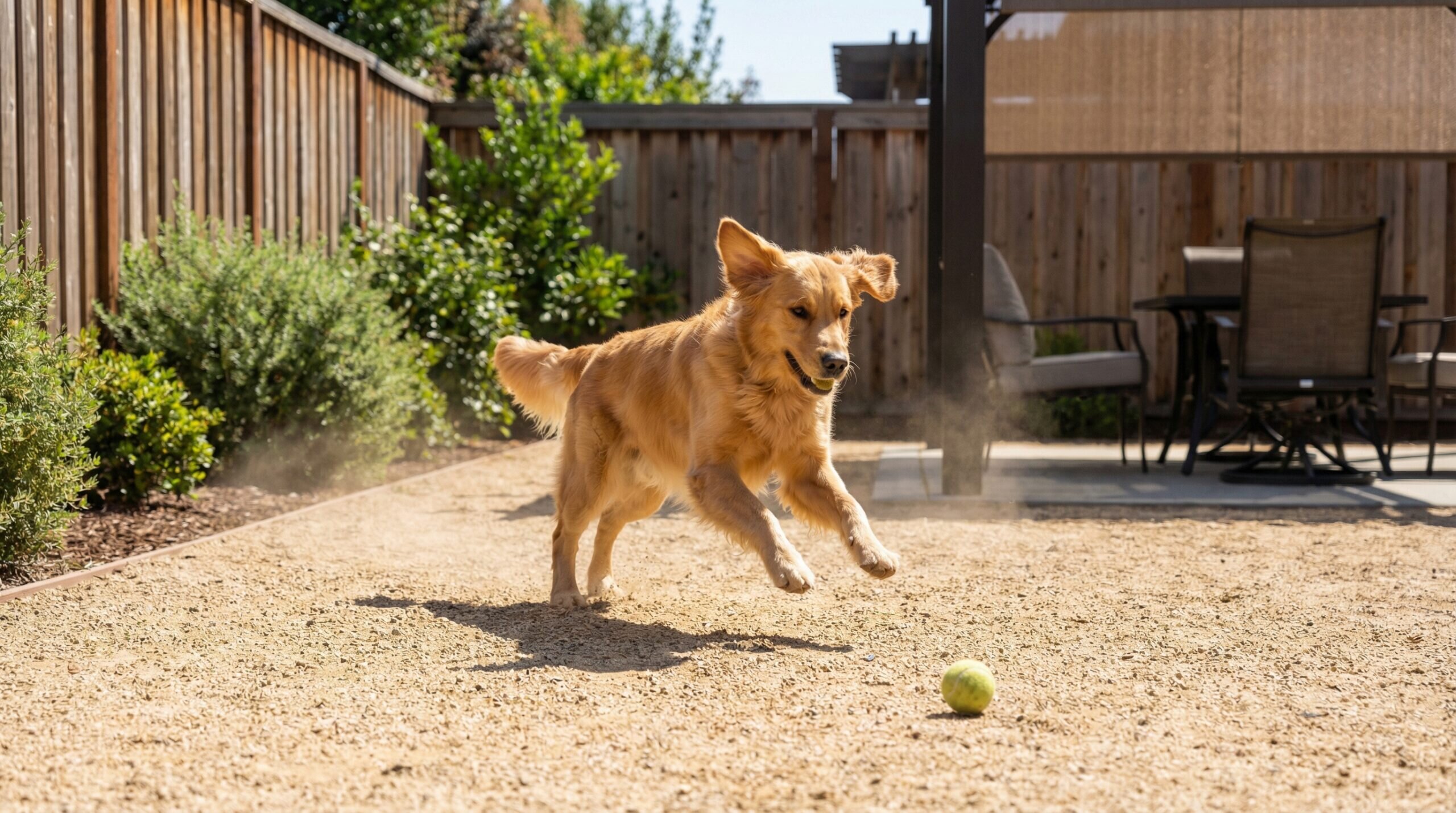
Tired of muddy paws tracking dirt through your house? Frustrated with torn-up grass and smelly patches in your yard after every rain? You’re not alone. Many dog owners struggle with creating a clean, comfortable outdoor space where their pets can run and play without destroying the landscape.
Yes, decomposed granite can make an excellent dog run surface when installed correctly. This weathered granite material offers superior drainage, stays comfortable under paws, and requires minimal maintenance compared to grass or other alternatives.
Quick Answer: Decomposed granite provides excellent drainage, reduces mud and odors, and creates a durable surface that most dogs find comfortable. Installation requires 3-4 inches of compacted material with proper edging and base preparation.
Here’s what you’ll learn: the key benefits and potential drawbacks of decomposed granite, how it compares to other dog run surfaces, exact installation steps, and where to source quality materials for your project.
What is decomposed granite and how does it work for dog runs
Decomposed granite is weathered granite rock that has broken down into small particles ranging from fine dust to pea-sized pieces. Unlike crushed granite, which is mechanically broken, decomposed granite forms naturally through weathering and maintains a softer texture that compacts well.
The material comes in two main types for dog runs. Loose decomposed granite provides excellent drainage and feels soft under paws, making it ideal for most dogs. Stabilized decomposed granite includes a binding agent that creates a harder, more permanent surface that resists erosion but may feel firmer underfoot.
The particle size makes all the difference for your dog’s comfort. Fine particles (called “fines”) create a smooth walking surface, while larger pieces improve drainage. Most dog run applications use a blend that balances both needs.

Key benefits and drawbacks for your dog
The biggest advantage is drainage. Decomposed granite allows water to flow through quickly, preventing puddles and muddy conditions that plague grass surfaces. Your dog stays cleaner, and you won’t deal with tracking mud into the house after every rain.
Most dogs find the surface comfortable for running and playing. The material provides good traction without being abrasive, and it doesn’t get as hot as concrete during summer months. It’s also non-toxic and won’t harm your pet if ingested in small amounts.
However, there are some considerations. Very fine decomposed granite can create dust during dry periods, which may irritate sensitive dogs. Some dogs with tender paw pads might find coarser grades uncomfortable initially, though most adapt quickly.
Pro Tip: Choose a grade with minimal fines (dust) if your dog has respiratory sensitivities, or opt for stabilized decomposed granite to reduce dust issues.
The initial cost runs higher than basic gravel, but the longevity and low maintenance requirements typically offset this investment over time.
How decomposed granite compares to other dog run surfaces
Versus pea gravel: Decomposed granite compacts better and feels more comfortable under paws than loose pea gravel. Pea gravel can shift and scatter, while decomposed granite stays in place once properly installed.
Versus concrete: While concrete offers ultimate durability, it gets hot in summer and provides no cushioning for joints. Decomposed granite stays cooler and offers some give underfoot, making it gentler for older dogs or those with joint issues.
Versus artificial turf: Quality artificial turf feels great but costs significantly more and can retain odors over time. Decomposed granite naturally drains and doesn’t hold smells, though it requires occasional topping up.
Versus natural grass: Grass looks beautiful but quickly deteriorates under heavy dog traffic, creating mud and bare spots. Decomposed granite maintains its appearance and function regardless of weather or usage intensity.
| Surface Type | Comfort | Drainage | Maintenance | Cost | Best For |
|---|---|---|---|---|---|
| Decomposed Granite | High | Excellent | Low | Medium | Most dogs, all climates |
| Pea Gravel | Medium | Good | Medium | Low | Budget-conscious, temporary |
| Concrete | Low | Poor | Very Low | High | Permanent, heavy-duty use |
| Artificial Turf | High | Good | Medium | Very High | Aesthetic priority |
Installation steps for a lasting dog run
Start with proper planning. Measure your desired area and calculate material needs based on 3-4 inches of compacted depth. Choose a location with natural drainage slope away from buildings and consider shade for your dog’s comfort.
Excavate the area by removing grass, weeds, and roots to a depth of 4-5 inches. Create a slight slope (about 1-2%) away from any structures to ensure water flows away from the run area.
Install edging around the perimeter using landscape timbers, concrete borders, or metal edging. This prevents the decomposed granite from spreading into surrounding areas and maintains clean lines.
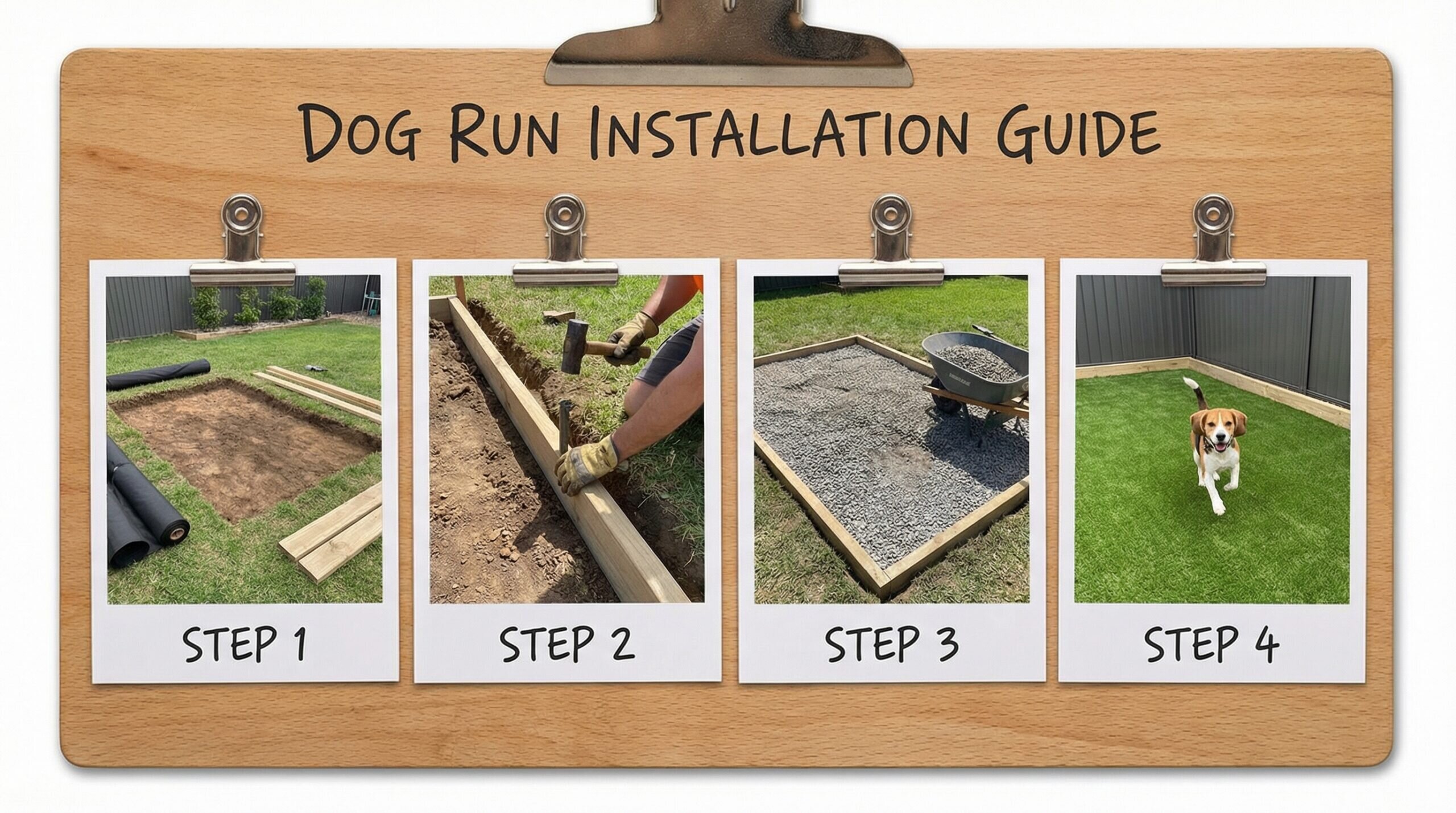
Spread the decomposed granite in 2-inch layers, dampening each layer lightly before compacting with a plate compactor or hand tamper. This layered approach ensures proper compaction and prevents settling later. For those considering alternative materials, you might also explore using crushed stone as a base for a dog run area or coarse aggregate for dog run areas.
Final grading should create a smooth, even surface with proper drainage flow. Test the surface by hosing it down to ensure water flows away from the area without pooling.
Important: Allow 24-48 hours for the surface to set before letting your dog use the area. This initial curing period helps the material bind together properly.
Maintenance tips for long-term success
Daily maintenance involves removing solid waste and occasional raking to maintain an even surface. The material naturally resists odor absorption, but hosing down weekly helps keep everything fresh.
Address high-traffic areas by adding fresh decomposed granite and re-compacting as needed. Most installations require minor touch-ups annually, particularly near gates or favorite play spots.
Weed control becomes easier with proper edging and occasional application of pet-safe pre-emergent herbicides. The compacted surface naturally discourages weed growth compared to loose materials.
For odor concerns, the excellent drainage typically handles urine naturally. If needed, enzyme-based cleaners designed for outdoor pet areas can address any persistent issues without harming the surface or your pet.
When to consider alternatives: If your dog is an aggressive digger, you might need reinforcement mats under the decomposed granite or consider a different surface entirely. Dogs with severe joint problems might benefit from softer alternatives like specialized rubber surfaces. Other options worth exploring include bluestone for dog run areas, river rock as a base, or even sand for dog run applications.
Ready to create the perfect dog run with quality decomposed granite? Hello Gravel provides premium aggregate materials nationwide with expert guidance for your specific project needs. Our materials are sourced responsibly and sized appropriately for pet-friendly applications, ensuring the best results for your dog run investment.
FAQ
Is decomposed granite safe for dogs?
How deep should decomposed granite be for a dog run?
Does decomposed granite get too hot for dogs in summer?
How do you clean dog waste from decomposed granite?
Author: igor