Clay Soil Definition and Uses for Construction and Agriculture

Published on: January 20, 2026

Get an estimate for your project in 60 seconds

This field is hidden when viewing the form
Security lock iconYour information is secure


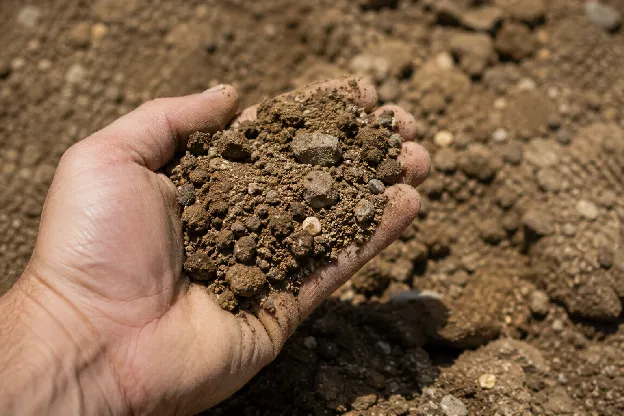
Clay soil texture comparison showing wet sticky clay and dry cracked clay

Clay soil is defined by its fine mineral particles that are less than 0.002 millimeters in diameter, giving it exceptional water and nutrient retention capabilities. This unique soil type plays a crucial role in agriculture and construction, despite the challenges it presents when working with its dense, compact nature.

Understanding clay soil becomes essential when you’re planning agricultural projects or construction work. While many people view clay soil as problematic due to its tendency to become sticky when wet and hard when dry, it actually offers significant advantages when properly managed. The key lies in recognizing its properties and applying them to the right applications.

Quick Fact: Clay particles have a high surface area to volume ratio, allowing them to hold up to 20 times more water and nutrients than sandy soils, making them incredibly fertile when properly managed.

What is clay soil and how does it form

Clay soil consists primarily of microscopic mineral particles, mainly silicate minerals like kaolinite, illite, and smectite. These tiny particles give clay its characteristic properties including high water retention, nutrient richness, and plasticity when moist.

The formation process takes thousands to millions of years through weathering. Physical forces like wind and water, combined with chemical reactions between minerals and environmental elements, gradually break down parent rocks into these fine particles. Climate plays a major role in this process, with humid conditions typically producing kaolinite-rich clays, while drier climates tend to create smectite-dominated soils.

You’ll find clay soils in various colors ranging from light grey and yellow to deep red and brown, depending on the mineral content and iron oxide presence. For instance, red clay soils get their distinctive color from high iron oxide content. The specific composition varies by location, but all clay soils share that defining characteristic of having predominantly fine-grained particles.

Clay soil formation through weathering process diagram

Properties and characteristics that matter

Clay soil exhibits unique physical and chemical properties that directly impact how you can use it. When wet, clay becomes plastic and moldable, but it transforms into an extremely hard, sometimes cracked surface when dried. This dual nature creates both opportunities and challenges.

The high cation exchange capacity means clay soil excels at holding onto essential nutrients like potassium, calcium, and magnesium. This nutrient retention capability makes clay soil naturally fertile, though sometimes these nutrients become so tightly bound that plants struggle to access them without proper soil management.

Water retention stands out as clay soil’s most notable characteristic. The small pore spaces between particles create a dense structure that holds moisture exceptionally well. While this prevents drought stress in plants, it can also lead to waterlogging and poor drainage if not properly managed. Understanding high clay content soil characteristics helps you determine the best management strategies for your specific project.

Important Note: Clay soil can expand up to 10% when wet and shrink significantly when dry, which explains why buildings on clay foundations may experience movement issues without proper engineering considerations.

Agricultural applications and benefits

Clay soil proves invaluable for growing crops that thrive in nutrient-rich, moisture-retentive environments. Rice cultivation particularly benefits from clay’s water-holding capacity, which maintains the flooded conditions rice requires. Wheat and cotton also perform well on clay soils when proper drainage and tillage practices are implemented.

The nutrient density of clay soil reduces fertilizer requirements compared to sandy soils, potentially lowering input costs over time. However, you’ll need to address compaction issues through careful timing of field operations and possibly incorporating organic matter to improve soil structure. Many farmers opt for clay loam blends that combine clay’s nutrient retention with better drainage characteristics.

Pasture development on clay soils can support diverse grass species and provide excellent grazing for livestock. The key involves preventing overgrazing, which can lead to severe compaction and erosion problems that are difficult to reverse on clay soils.

Construction and industrial uses

Construction professionals value clay soil for its stability and load-bearing capacity when properly managed. It serves as an excellent foundation material for roads and buildings, providing a stable base that resists shifting and settling under weight. When comparing fill dirt options with clay, understanding the specific clay content helps determine suitability for different construction applications.

The manufacturing industry relies heavily on clay soil for producing bricks, tiles, and ceramics. The fine particle size allows for precise molding, while the mineral content contributes to the strength and durability of fired products. Different clay types produce varying colors and finishes, making them valuable for both structural and decorative applications.

Environmental applications include using clay soil as a barrier material in landfills and contaminated site remediation. Its low permeability and ability to bind contaminants make it effective for preventing pollutant migration. Clay subsoil layers are particularly valuable in these applications due to their natural compaction and impermeability.

Clay soil construction applications and brick making

Pro Tip: When using clay soil in construction, proper moisture control is essential because clay’s expansion and contraction properties can cause structural issues if not accounted for in design and installation.

Cost considerations and value analysis

Clay soil pricing typically ranges from $20 to $50 per cubic yard, depending on quality, location, and transportation costs. hellogravel.com reports that specialty clays for specific applications may command higher prices due to their refined properties and processing requirements.

Clay Type Average Cost per Cubic Yard Primary Uses
Standard Clay Soil $20-$30 General construction, landscaping
High-Quality Clay $35-$50 Agriculture, specialized construction
Processed Clay $40-$65 Ceramics, industrial applications

Several factors influence clay soil costs including extraction difficulty, processing requirements, and distance from source to delivery location. Areas with abundant local clay deposits typically offer lower prices, while regions requiring long-distance transportation see higher costs. When evaluating heavy clay materials for large-scale projects, bulk pricing and delivery costs become significant considerations.

The investment in clay soil often pays dividends through reduced maintenance needs and improved performance. In agriculture, the natural fertility and water retention can decrease irrigation and fertilization costs. Construction applications benefit from clay’s stability and longevity, potentially reducing long-term foundation issues.

When evaluating clay soil for your project, consider both immediate costs and long-term benefits. The initial investment may be higher than alternatives, but the durability and performance characteristics often justify the expense through reduced ongoing maintenance and replacement needs.

Clay soil represents a valuable natural resource that, when properly understood and applied, provides excellent results in both agricultural and construction applications. Its unique properties of water retention, nutrient density, and structural stability make it an ideal choice for specific applications, despite the management challenges it presents. Success with clay soil comes from working with its characteristics rather than against them, leading to sustainable and cost-effective outcomes.

FAQ

What is clay soil and how can you identify it?

Clay soil consists of fine mineral particles less than 0.002 millimeters in diameter, primarily made up of silicate minerals like kaolinite, illite, and smectite. You can identify clay soil by performing a simple ribbon test – roll moist soil between your palms and if it forms a ribbon longer than 2 inches without cracking, it’s clay soil. Clay soil feels sticky when wet and becomes hard and may crack when dry.

What are the main advantages and disadvantages of clay soil?

Clay soil’s main advantages include exceptional water and nutrient retention (holding up to 20 times more than sandy soils), natural fertility, and structural stability for construction. However, disadvantages include poor drainage, tendency to become waterlogged, difficulty for plant roots to penetrate when compacted, and expansion/contraction issues that can cause up to 10% volume change between wet and dry conditions.

What are the best uses for clay soil in agriculture and construction?

In agriculture, clay soil excels for growing water-loving crops like rice, wheat, and cotton due to its moisture retention and nutrient density. For construction, clay soil serves as excellent foundation material for roads and buildings when properly managed, and is essential for manufacturing bricks, tiles, and ceramics. It’s also valuable for environmental applications like landfill barriers due to its low permeability.

How much does clay soil cost and what factors affect pricing?

Clay soil typically costs between $20-$50 per cubic yard for standard applications, with high-quality clay ranging from $35-$50 and processed clay for specialized uses costing $40-$65 per cubic yard. Pricing factors include extraction difficulty, processing requirements, transportation distance, local availability, and specific clay type. Areas with abundant local clay deposits offer lower prices, while regions requiring long-distance transportation see higher costs.

Author: