Can You Use River Rock as a Sub-base for Asphalt Roads? What Engineers Recommend
Published on: December 12, 2025
Get an estimate for your project in 60 seconds
 Your information is secure
In most engineered asphalt roads, rounded river rock alone is not recommended as the main sub-base because it does not interlock properly and can lead to instability under traffic loads. While river rock offers excellent drainage and durability, its smooth, rounded shape creates stability issues that can compromise pavement performance over time.
Quick Answer: River rock works best as a deep drainage layer under an engineered base course, not as the primary structural sub-base directly supporting asphalt.
The sub-base serves as the foundation for your entire pavement system, distributing loads from traffic and providing crucial drainage. This guide walks through when river rock can be used safely, where it fails, and which base materials engineers and DOTs typically prefer for reliable road construction.
What is a sub-base in asphalt road construction?
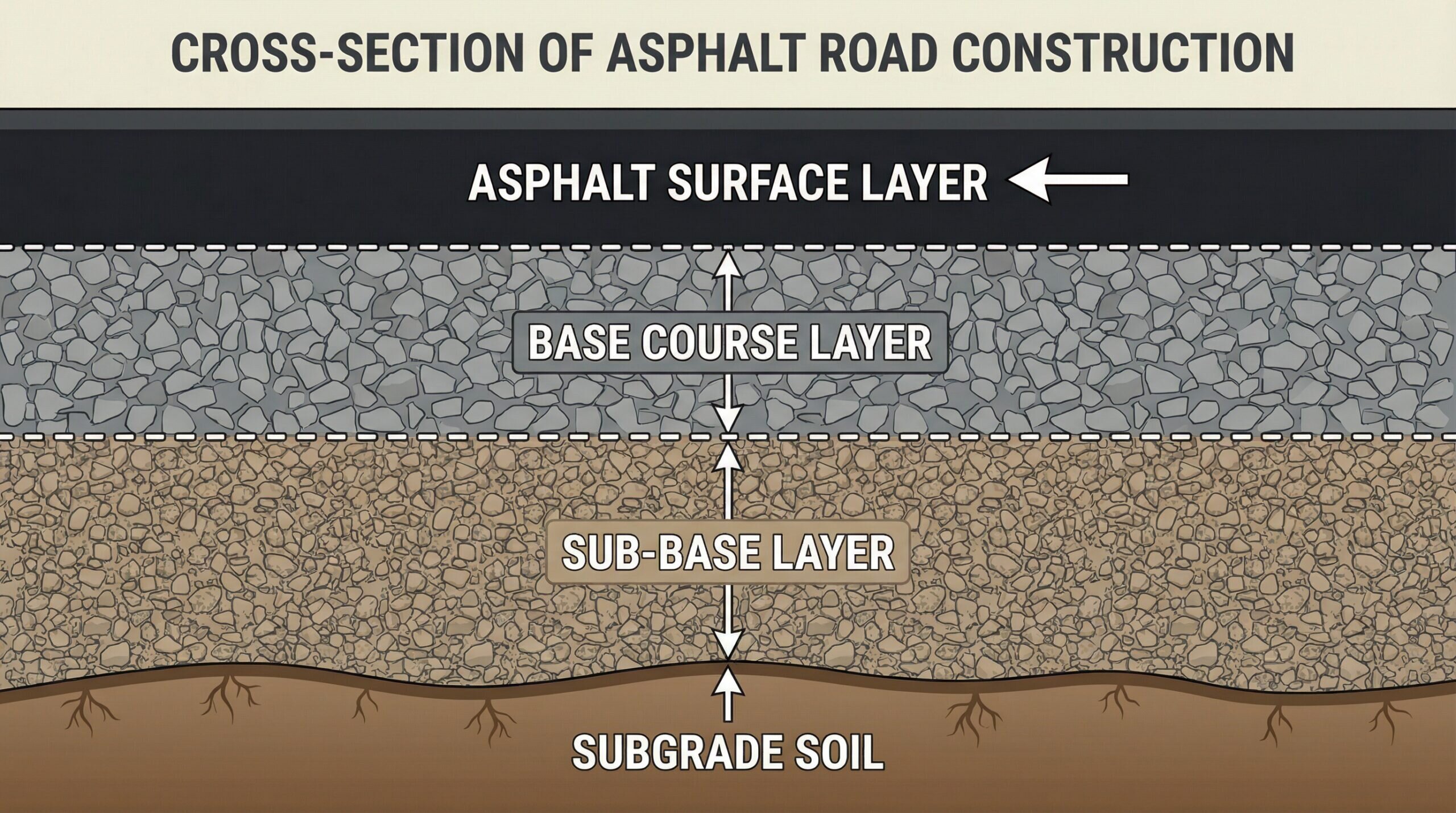
Understanding the role of each pavement layer helps explain why material choice matters so much. Your road system consists of four main components stacked from bottom to top.
The subgrade is your existing soil foundation. Above that sits the sub-base, which spreads traffic loads across the subgrade and provides drainage. The base course adds structural strength and creates a smooth platform. Finally, the asphalt surface handles direct traffic contact and weather exposure.
Each layer has specific engineering requirements. The sub-base must compact well, drain effectively, and resist shifting under load. These requirements directly influence which materials work best in each position.
River rock properties that matter for road design
River rock gets its characteristic smooth, rounded shape from years of water erosion. This natural polishing process creates material that looks attractive but behaves differently than crushed stone under engineering loads.
The rounded edges mean river rock particles don’t lock together when compacted. Instead, they tend to roll over each other, creating potential movement zones within your sub-base. Size variation also presents challenges, as natural river deposits contain everything from fine sand to large cobbles mixed together.

However, river rock does offer some advantages. Most river rock consists of hard, durable materials like granite or quartzite that resist weathering. The rounded shape and varied sizes can create excellent drainage when properly graded. These properties make river rock valuable in specific applications, just not typically as a primary structural sub-base.
Engineering criteria for sub-base materials
Engineers evaluate sub-base materials using several key performance measures. California Bearing Ratio (CBR) indicates how well the material resists penetration under load. Most road specifications require sub-base materials with CBR values of 20 or higher.
Compaction behavior determines how well the material locks together and achieves target density. Angular materials with rough surfaces interlock better than smooth, rounded particles. This interlocking action prevents shifting and maintains structural integrity under repeated traffic loading.
Engineering Fact: Angular crushed stone typically achieves 95% compaction density, while rounded river rock often struggles to reach 90% due to poor particle interlock.
Gradation control ensures the right mix of particle sizes. Well-graded materials combine larger stones for structure with smaller particles to fill voids. River rock’s natural size variation makes consistent gradation difficult without extensive processing.
Is river rock suitable as an asphalt sub-base?
The short answer depends on your specific application and engineering requirements. For most standard road projects, river rock alone does not provide adequate stability as the primary sub-base material directly under asphalt.
Some engineering standards do allow river rock in controlled situations. Large river rock (4-6 inches) can work as a deep stabilization layer or undercut replacement, provided you install a proper angular base course above it. This layered approach uses river rock’s drainage benefits while relying on crushed stone for structural support.
Common failure modes when rounded rock serves as the top sub-base include rutting from particle movement, pumping of fine materials, and difficulty meeting compaction specifications. These issues become more severe with heavier traffic loads and poor subgrade conditions. For comparison, materials like granite and quartzite offer superior performance when crushed into angular particles.
| Material Type | Shape | Interlock | Best Use Under Asphalt | Drainage | Suitability as Main Sub-base |
|---|---|---|---|---|---|
| River Rock | Rounded | Poor | Deep drainage layer | Excellent | Not recommended |
| Crushed Stone | Angular | Excellent | Structural sub-base | Good | Highly recommended |
| Recycled Concrete | Angular | Very Good | Structural sub-base | Good | Recommended |
Best alternatives to river rock for asphalt sub-bases
Crushed stone remains the gold standard for most asphalt sub-base applications. The angular particles created during crushing interlock tightly when compacted, creating a stable platform that resists movement under traffic loads.
Different crushed stone sizes serve different purposes. Number 57 stone (3/4 inch) works well for residential driveways and light traffic areas. Larger 1-1/2 inch base rock handles heavier loads and provides better drainage for commercial applications.
Recycled concrete offers an environmentally friendly alternative with performance similar to crushed stone. The angular particles from crushed concrete create excellent interlock, while the material’s proven durability makes it suitable for most road applications. If you’re working on parking area projects, crushed stone provides the stability needed for heavy vehicle loads.
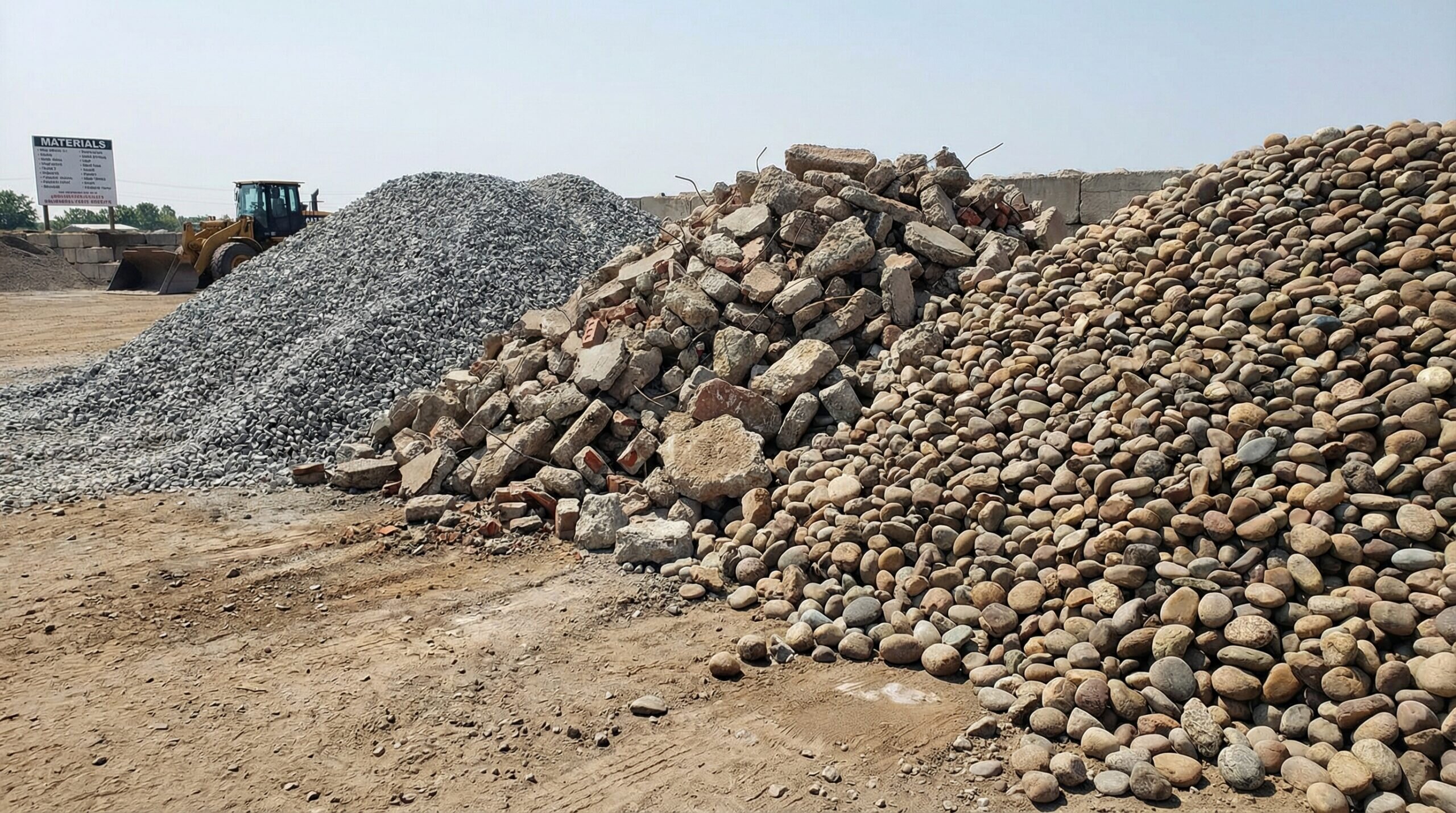
For projects requiring enhanced drainage, permeable base rock combines angular particles with controlled gradation to allow water movement while maintaining structural integrity. This specialized material costs more but prevents water-related pavement failures in challenging conditions.
How to choose the right base rock for your project
Your material selection should match your specific traffic and soil conditions. Light residential traffic on good soils can often use smaller crushed stone with thinner sub-base sections. Heavy truck traffic or poor subgrade conditions require larger rock and greater thickness.
Traffic level drives many design decisions. Passenger car driveways need different support than delivery truck routes or heavy equipment yards. Consider both the weight and frequency of your heaviest expected loads when selecting materials. For lighter applications like driveway paving, you may have more material options available.
Soil conditions underneath your sub-base also matter significantly. Clay soils that hold water may require enhanced drainage and thicker sections. Sandy soils with good drainage can often work with thinner sub-base layers and smaller rock sizes.
Pro Tip: When in doubt about soil conditions, have a geotechnical engineer evaluate your subgrade before finalizing material and thickness decisions.
Climate factors like freeze-thaw cycles and groundwater levels influence long-term performance. Areas with harsh winters benefit from materials and designs that resist frost damage and provide reliable drainage. While river rock excels in greenhouse foundation projects where drainage is paramount, road construction demands the structural integrity that only angular materials provide.
At Hello Gravel, we offer the crushed stone and recycled concrete materials that engineers recommend for reliable asphalt sub-bases. Our team can help you select the right size and gradation for your specific project requirements, ensuring proper performance and longevity.
Whether you need Number 57 stone for a residential driveway or larger base rock for commercial applications, we provide quality materials with convenient delivery to your site. Contact us to discuss your project needs and get expert guidance on the best sub-base solution for your asphalt road or pavement project.
Frequently Asked Questions About River Rock and Asphalt Sub-bases
Is river rock good for an asphalt driveway base?
What is the best material to put under asphalt?
Can you mix river rock with crushed stone in a road base?
Does using the wrong sub-base material affect how long asphalt lasts?
Author: igor