Granite Sub-base for Asphalt Roads: When, Why, and How to Use It
Published on: December 12, 2025
Get an estimate for your project in 60 seconds
 Your information is secure

Yes, granite is widely used as a sub-base for asphalt roads when properly graded and compacted. Its exceptional load-bearing capacity and drainage performance make it an ideal foundation material for various road construction projects.
Granite’s crystalline structure provides the strength needed to distribute traffic loads effectively, while its permeability helps prevent water-related damage that can compromise pavement integrity. Whether you’re building a commercial driveway, industrial access road, or municipal street, understanding when and how to use granite as your sub-base can significantly impact your project’s long-term success.
Key insight: Granite’s Mohs hardness rating of 6-7 makes it one of the most durable natural aggregates available for road construction, often outlasting softer alternatives by decades.
Here’s what makes granite particularly valuable: high compressive strength for heavy traffic loads, excellent drainage to prevent frost heave, resistance to weathering and chemical breakdown, and proven performance in various climate conditions.
What is a road sub-base and why it matters
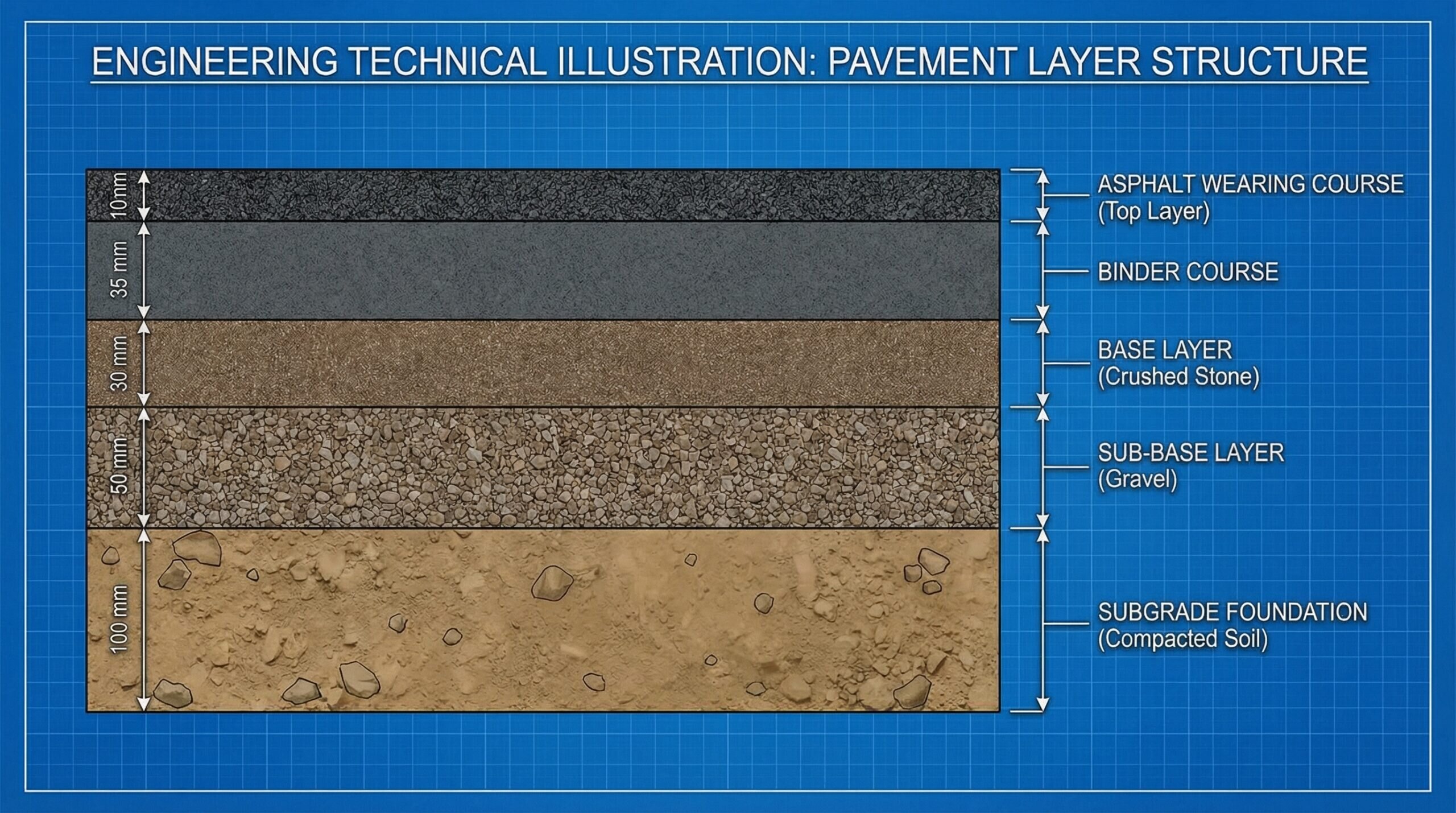
The sub-base serves as the critical foundation layer in pavement design, sitting between the natural subgrade soil and the upper base course. This layer must provide adequate bearing strength to support traffic loads while facilitating proper drainage to protect the entire pavement structure.
Think of the sub-base as the backbone of your road. Just like a strong foundation supports a building, the sub-base distributes the weight from vehicles across a wider area, preventing the softer subgrade from failing under pressure. Without a properly designed sub-base, even the best asphalt surface will develop cracks, rutting, and premature failure.
Most engineering specifications require sub-base materials to achieve a California Bearing Ratio (CBR) of 20-50, depending on the expected traffic load. The material must also meet specific gradation requirements to ensure proper compaction and interlocking between particles.
Why crushed granite works exceptionally well
Granite’s natural properties make it particularly suited for sub-base applications. Its igneous origin creates an interlocking crystalline structure that resists both compression and abrasion under heavy loads.
The material’s hardness translates directly to performance benefits. While softer aggregates may break down under repeated loading, granite maintains its angular shape and structural integrity. This means your sub-base continues providing stable support throughout the pavement’s design life.
Granite also excels in drainage applications. When properly graded, crushed granite allows water to move through the sub-base layer rather than pooling at the surface or creating hydrostatic pressure beneath the pavement. This drainage capability is especially valuable in regions with high rainfall or freeze-thaw cycles.
Pro tip: Well-graded granite with a mix of particle sizes from fine to coarse creates the ideal balance between drainage and stability for most road applications.
The material’s chemical stability means it won’t deteriorate when exposed to road salts, petroleum products, or other common contaminants. This resistance helps maintain the sub-base’s structural properties over time, reducing maintenance requirements and extending pavement life.
Granite versus other common sub-base materials
Understanding how granite compares to alternatives helps you make informed material decisions for your specific project needs.
| Material | Strength (CBR) | Drainage | Frost Resistance | Best Use Cases |
|---|---|---|---|---|
| Crushed Granite | 40-80 | Excellent | High | Heavy traffic, industrial roads |
| Crushed Limestone | 25-60 | Good | Moderate | General purpose, cost-sensitive projects |
| Gravel | 20-50 | Variable | Low-Moderate | Light traffic, temporary roads |
| Recycled Concrete | 30-70 | Good | High | Urban projects, sustainability focus |
Granite typically costs 10-20% more than limestone for sub-base applications initially but often provides better long-term value through reduced maintenance needs. The material’s superior abrasion resistance means less degradation over time, maintaining the sub-base’s structural integrity longer than softer alternatives.
For projects in cold climates, granite’s low absorption rate and excellent drainage characteristics make it particularly valuable for preventing frost-related damage. Unlike some aggregates that can become frost-susceptible when fine particles accumulate, properly graded granite maintains its drainage properties throughout its service life. If you’re considering quartzite as an alternative sub-base material, it offers similar durability characteristics to granite.
When granite is your best choice
Granite sub-base performs exceptionally well in specific project scenarios where its unique properties provide clear advantages over other materials.
Heavy-duty applications benefit most from granite’s strength characteristics. Industrial facilities, truck terminals, and major arterial roads see significant performance improvements when built on granite sub-base. The material’s ability to handle repeated heavy loads without deformation makes it ideal for these demanding environments.

Projects in challenging environmental conditions also favor granite. Areas with poor drainage, high water tables, or severe freeze-thaw cycles benefit from granite’s superior drainage and frost resistance. The material’s stability in wet conditions helps prevent the pumping and settlement issues common with other aggregates.
Consider granite when your project timeline demands long-term performance with minimal maintenance. While the initial investment may be higher, the reduced need for repairs and reconstruction often justifies the additional cost, especially for critical infrastructure or high-visibility projects. For smaller-scale applications, you might also explore using granite for shed foundations or retaining wall bases.
Cost consideration: Granite sub-base can reduce total project costs by 15-25% over a 20-year period when maintenance savings are factored into the analysis.
Design and installation guidelines
Proper installation is crucial for realizing granite’s performance benefits. Start with material specifications that call for well-graded crushed granite meeting local DOT requirements for gradation and cleanliness.
Typical thickness ranges from 6 inches for light-duty applications like driveways to 12-18 inches for heavy commercial or industrial roads. Your specific thickness should be determined through proper pavement design considering subgrade conditions, traffic loads, and local climate factors. Similar principles apply when using crushed stone as a sub-base for deck projects.
Installation follows standard aggregate base procedures with some granite-specific considerations. Place material in lifts no thicker than 8 inches, maintaining proper moisture content during compaction. Granite’s hardness requires slightly higher compaction effort than softer materials, but achieves excellent density when properly placed.
Quality control during installation includes checking gradation consistency, monitoring moisture content, and verifying compaction through proof rolling or density testing. These steps ensure your granite sub-base performs as designed throughout the pavement’s service life. For projects requiring structural foundations, granite also excels in small bridge foundation applications.
Understanding granite’s capabilities and proper application helps you make informed decisions for your road construction projects. When sourced from reliable suppliers and installed according to engineering specifications, granite sub-base provides the foundation for long-lasting, high-performance pavements that serve your needs for decades to come.
Frequently Asked Questions
How thick should a granite sub-base be under asphalt?
Is granite road base more expensive than other materials?
Does granite sub-base provide good drainage?
What type of granite is best for asphalt sub-base?
Author: igor