Can You Use Crushed Coral as Mulch? Pros, Cons, and Landscape Ideas
Published on: December 12, 2025
Get an estimate for your project in 60 seconds
 Your information is secure
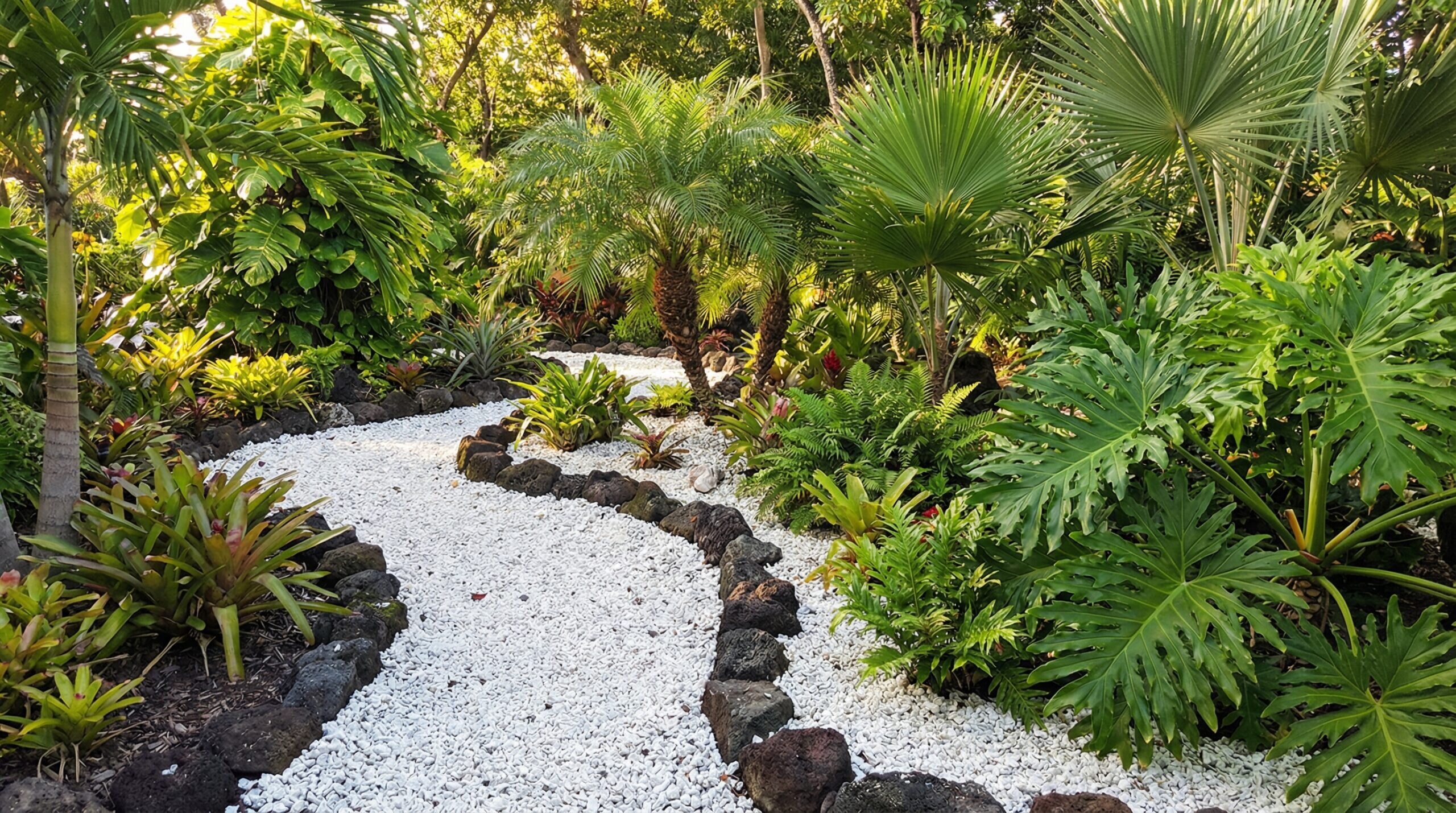
Yes, you can absolutely use crushed coral as mulch, but it works best in specific situations. Unlike traditional organic mulches that decompose and feed your soil, crushed coral behaves more like decorative stone mulch. It offers excellent drainage and a distinctive tropical appearance, but it will gradually raise your soil’s pH and won’t add organic matter to improve soil health.
This guide will help you decide if crushed coral is right for your landscape by exploring its benefits, drawbacks, best uses, and how it compares to other mulch options. You’ll also learn proper installation techniques and which plants thrive with this unique mulching material.
Quick Answer: Crushed coral works exceptionally well for drought-tolerant plants, coastal landscapes, and decorative beds where you want long-lasting, low-maintenance ground cover with a beachy aesthetic.
What is crushed coral?
Crushed coral comes from coral skeletons that have been broken down into small, irregular pieces. Originally popular in aquariums for its natural pH-buffering properties, this material has found its way into landscape design for its unique appearance and practical benefits.
The texture resembles coarse sand or fine gravel, with pieces typically ranging from pea-sized down to granular. Its natural white to cream color creates a bright, beach-like appearance that stands out from typical brown or gray mulches. Unlike crushed shell or standard gravel, coral has a more porous structure that provides excellent drainage while maintaining an organic, natural look.
As a non-organic mulch, crushed coral won’t break down over time like bark chips or wood mulch. This means it stays put for years but also means it won’t contribute nutrients or organic matter to your soil.
Benefits of using crushed coral as mulch
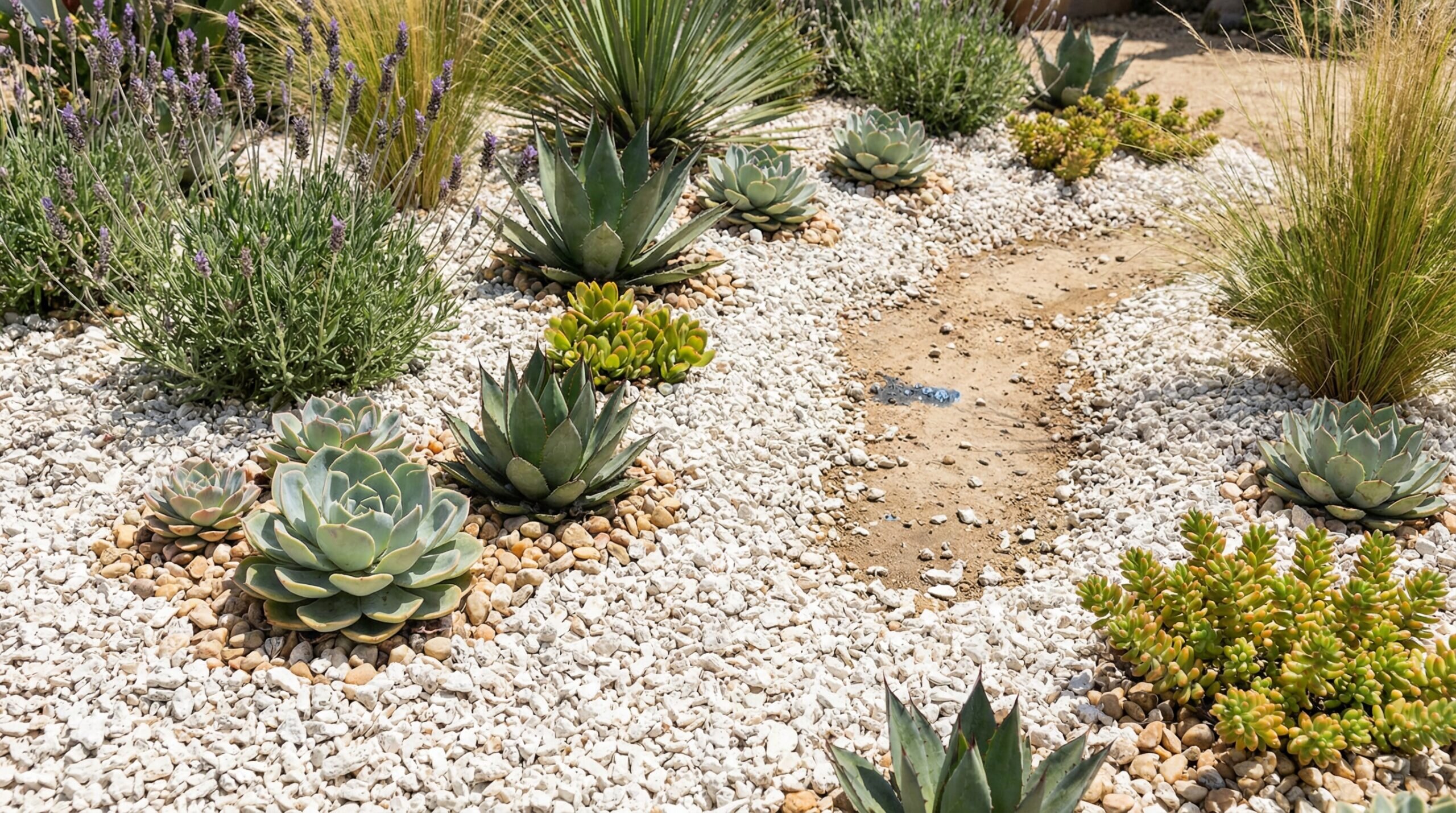
Crushed coral offers several compelling advantages that make it attractive for specific landscaping situations.
Long-lasting and low maintenance tops the list of benefits. Since coral doesn’t decompose, you won’t need to replace it seasonally like organic mulches. Once installed properly, it can last for years with minimal upkeep beyond occasional raking to maintain appearance.
Excellent drainage makes crushed coral ideal for plants that hate wet feet. The porous structure and irregular pieces create air pockets that allow water to flow through quickly, preventing the waterlogging that can kill drought-tolerant plants. This drainage quality is similar to what you’d find when using river rock for raised garden beds.
Natural pest resistance comes from the rough, sharp texture that many insects and small rodents find uncomfortable to navigate. This can help protect your plants without chemical interventions.
Wind and wash resistance means crushed coral stays in place better than lightweight organic mulches, especially important in coastal areas or regions with heavy rains.
The distinctive tropical appearance creates an instant beach or Mediterranean vibe that works beautifully with coastal landscaping themes, around pools, or in modern xeriscaping designs.
Pro Tip: Crushed coral reflects light, which can help brighten shady areas while providing the drainage benefits that make it perfect for transitioning from lawn to planted beds.
Drawbacks and considerations
While crushed coral has clear benefits, understanding its limitations helps you make informed decisions about where and how to use it.
pH elevation represents the most significant consideration. Coral naturally raises soil pH over time, making it more alkaline. This benefits plants that prefer neutral to slightly alkaline conditions but can stress acid-loving plants like azaleas, blueberries, and most conifers. If you’re working with raised garden beds that require specific pH levels, you’ll need to carefully consider this impact.
No soil improvement means you miss out on the organic matter that traditional mulches provide. Bark and wood chip mulches gradually decompose, adding nutrients and improving soil structure. Crushed coral provides none of these soil-building benefits.
Heat retention can become problematic in very hot climates. While the light color reflects some heat, rock-based mulches generally increase soil temperature compared to organic alternatives, potentially stressing plants and increasing water needs.
Uncomfortable for foot traffic makes crushed coral unsuitable for areas where people walk frequently. The sharp, irregular pieces can be uncomfortable underfoot, especially for children playing or anyone walking barefoot. For high-traffic areas, consider alternatives like decomposed granite for garden paths.
Difficult removal presents long-term challenges. If you later decide to switch to organic mulch or change your landscape design, removing embedded coral pieces requires significant labor and may never be completely successful.
Best uses for crushed coral in landscaping
Crushed coral shines in specific landscape applications where its unique properties provide maximum benefit.
Drought-tolerant and Mediterranean gardens represent ideal use cases. Plants like lavender, rosemary, ornamental grasses, and succulents naturally prefer the drainage and slightly alkaline conditions that crushed coral provides.
Coastal and tropical themed landscapes benefit from coral’s natural beach aesthetic. It complements palm trees, tropical plants, and poolside plantings while handling salt spray and coastal winds better than organic mulches. If you’re interested in similar coastal materials, explore coral rock for garden paths.
Decorative beds around hardscaping work well with crushed coral because the focus is on appearance and low maintenance rather than soil building. Areas around patios, driveways, and building foundations often suit this approach. For fire pit area projects, crushed coral can create an attractive, heat-resistant surface.
Xeriscaping and water-wise gardens can incorporate crushed coral as part of a comprehensive low-water landscape strategy, especially in regions where water conservation is important.
Avoid using crushed coral in woodland gardens, around acid-loving plants, or in areas where you plan frequent plant changes. It’s also not ideal for vegetable gardens where soil health and organic matter are crucial for plant nutrition.
Installation and maintenance tips
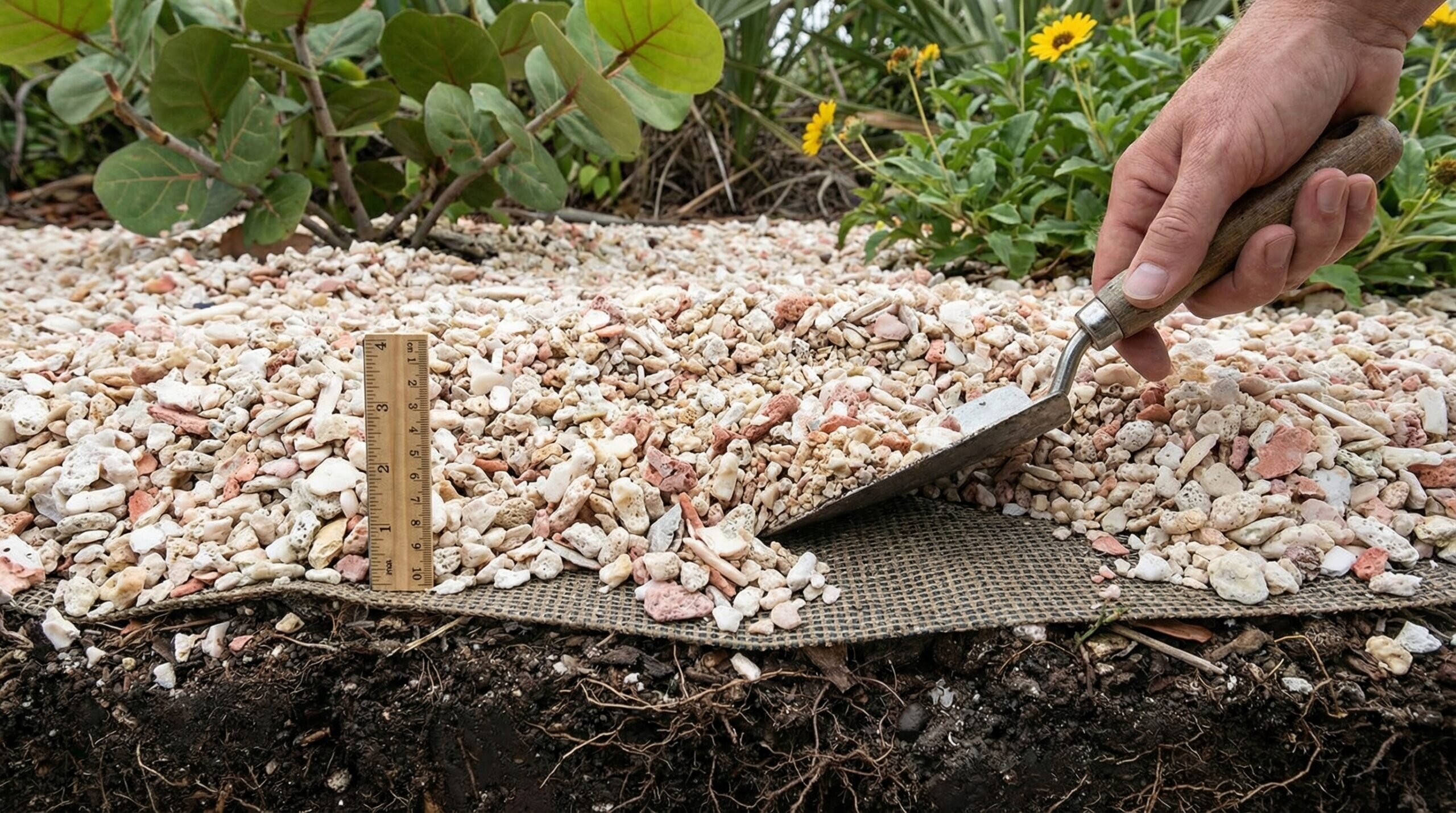
Proper installation ensures crushed coral performs well and looks great for years to come.
Start by testing your soil pH to understand your baseline. This helps you monitor changes over time and choose appropriate plants. Most garden centers sell simple pH test kits, or you can send samples to your local extension office.
Prepare the area by removing weeds and debris. Consider installing landscape fabric if weed suppression is a priority, though this isn’t always necessary in well-maintained beds.
Apply 2 to 3 inches of depth for most applications. This provides adequate coverage without being wasteful. Deeper applications don’t provide additional benefits and can make future changes more difficult.
Install edging to contain the coral and create clean lines. Metal, plastic, or stone edging prevents coral from migrating into lawn areas or adjacent beds. Similar edging techniques work well when using pea gravel for raised garden beds.
Keep coral away from plant stems to prevent moisture retention against bark that could cause rot. Leave a small gap around tree trunks and shrub bases.
For maintenance, occasional raking keeps the surface looking fresh, and you might need minor top-ups every few years as some material settles or gets displaced.
| Feature | Crushed Coral | Organic Mulch | Gravel | Crushed Shell |
|---|---|---|---|---|
| Longevity | 5+ years | 1-2 years | 10+ years | 3-5 years |
| Soil pH Effect | Raises pH | Neutral/lowers | Neutral | Slightly raises |
| Drainage | Excellent | Variable | Excellent | Good |
| Appearance | Tropical/beach | Natural/rustic | Modern/clean | Coastal/natural |
Consider This: If you’re unsure about committing to crushed coral permanently, try it in a small decorative bed first to see how it looks and how your plants respond before expanding to larger areas.
When you’re ready to explore crushed coral for your landscaping project, Hello Gravel specializes in high-quality aggregates and can help you determine if crushed coral fits your specific needs. Our team understands the nuances of different mulching materials and can suggest alternatives like decorative gravel for landscaping or crushed shell if they better suit your landscape goals. We provide competitive pricing, reliable delivery, and expert guidance to ensure your project succeeds.
Whether you’re creating a drought-tolerant garden, enhancing a coastal landscape, or adding tropical flair to your outdoor space, crushed coral offers a unique combination of functionality and aesthetic appeal when used appropriately. The key is matching this distinctive material to the right plants and landscape situations where its benefits outweigh any limitations.
FAQ
Does crushed coral raise soil pH?
How deep should crushed coral mulch be applied?
Is crushed coral better than wood mulch for landscaping?
What plants work best with crushed coral mulch?
Author: igor