Can Coral Rock Be Used for a Fire Pit? Safety, Design, and Best Practices
Published on: December 12, 2025
Get an estimate for your project in 60 seconds
 Your information is secure

Choose the wrong rock for your fire pit, and it can crack or even explode when it heats up. Coral rock can be used safely in a fire pit area, but it works best as a decorative surround rather than in direct contact with high flames, and it must be paired with proper liners, drainage, and clearances.
Quick Answer: Coral rock is suitable for fire pit seating walls, edging, and pathways, but requires a fire-resistant liner for the inner ring and proper moisture management to prevent cracking.
This guide covers how coral rock behaves near fire, how to build a safe fire pit area with it, essential safety rules, and where to source the right materials for your project.
What is coral rock and how does it behave around heat?
Coral rock, also known as coral stone, is a type of limestone formed from ancient coral reefs. Its natural beauty and unique texture make it popular for landscaping projects, but its porous nature requires special consideration around fire features.
The porosity that gives coral rock its distinctive appearance also makes it prone to moisture retention. When heated rapidly, trapped moisture can expand and cause the rock to crack or even explode. This doesn’t mean you can’t use coral rock in your fire pit area, but you need to understand where and how to use it safely.
Unlike dense stones like granite or basalt, coral rock has lower heat resistance. It performs well in moderate heat situations but needs protection from direct, intense flames. Think of it as the perfect supporting actor rather than the main star in your fire pit design.
Is coral rock safe to use in a fire pit?
Yes, coral rock is safe when used correctly. The key is understanding the difference between using it inside the fire ring versus around the fire area. Most safety concerns arise when porous stones are placed too close to direct flames.
Using coral rock inside the fire ring vs around the fire area
Never use coral rock as loose material directly inside your fire bowl. The intense heat and direct flame contact can cause dangerous cracking or explosive failure. Instead, use coral rock for seating walls, decorative edging, pathways, and outer facing materials.
For the inner fire ring, stick with fire-rated materials like steel rings, fire bricks, or dense, non-porous stones. Then use coral rock as beautiful cladding or surrounding elements that won’t experience extreme temperatures.
Heat resistance and porosity considerations
Coral rock’s limestone composition means it can handle moderate heat but needs moisture management. Always seal coral rock with a high-quality sealant before installation. This prevents water absorption and reduces the risk of thermal shock.
Pro Tip: Test a small piece of coral rock by heating it gradually with a torch. If it cracks or pops, that batch may have higher moisture content and needs better sealing or different placement.
Consider coral rock similar to a sponge, it looks solid but has tiny pockets that can hold water. Proper drainage around your fire pit area prevents these pockets from filling up and causing problems later.
Fire pit safety, codes, and distance requirements
Building a fire pit involves more than choosing pretty stones. Local codes typically require specific clearances and safety measures that protect your property and neighbors.
Clearances from homes, trees, and structures
Most jurisdictions require fire pits to be 10-25 feet from structures, depending on the pit size and fuel type. Keep your fire pit at least 10 feet from your house, 15 feet from trees with overhanging branches, and 7 feet from property lines.
Check with your local fire department or building department before starting your project. Some areas restrict DIY fire pits or require approved fire rings, especially in wildfire-prone regions.
Approved surfaces and non-combustible bases
Fire pits must sit on non-combustible surfaces like stone, gravel, pavers, or concrete. Never place a fire pit directly on grass, wood decking, or other flammable materials.
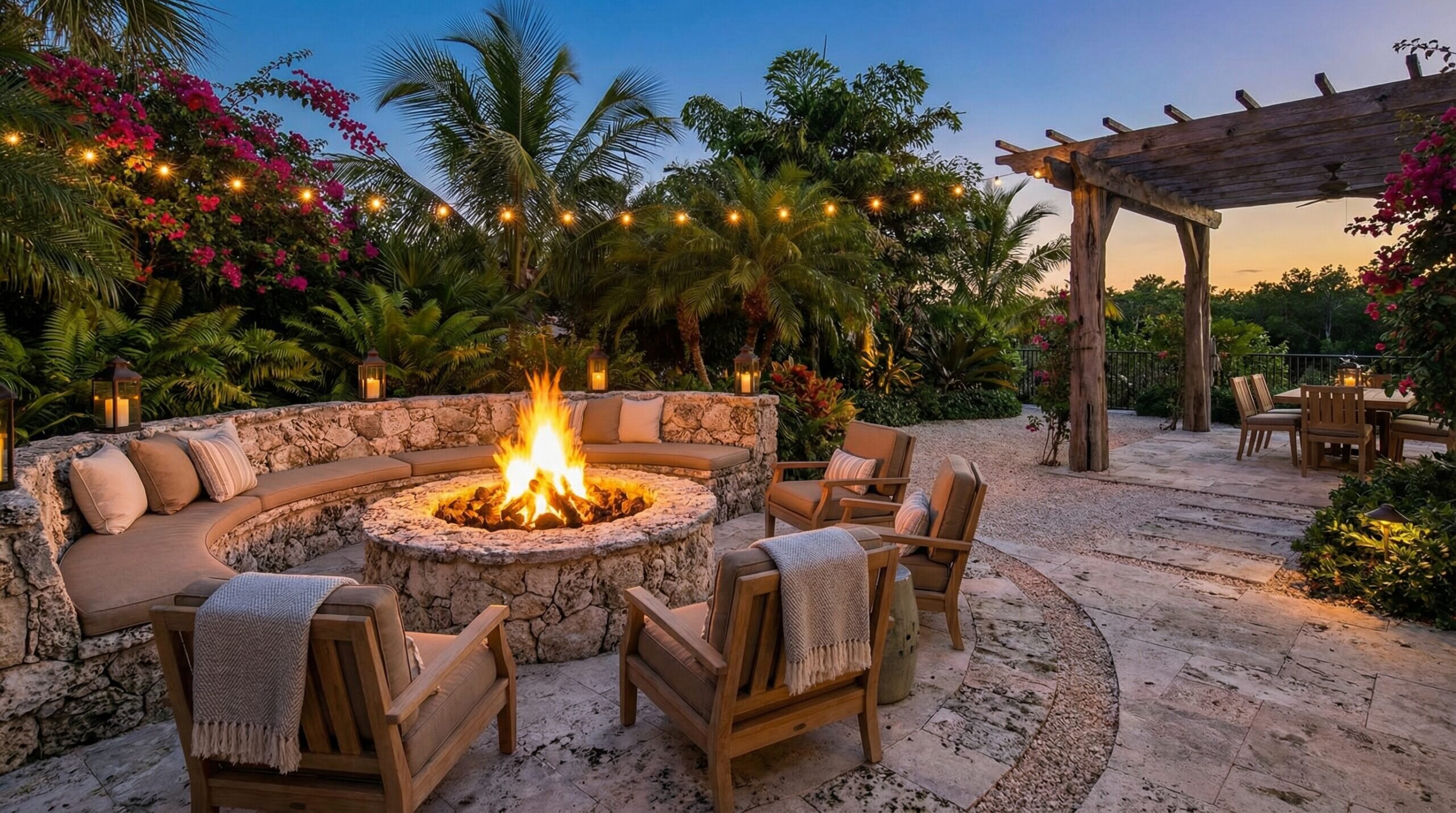
Coral rock works perfectly as part of this non-combustible surround. You can use it for the base area, seating surfaces, and decorative elements that meet safety requirements while adding natural beauty to your space.
How to build a fire pit area with coral rock
Building a coral rock fire pit area requires careful planning and proper layering. Think of it as creating a safe foundation first, then adding the beautiful coral rock elements on top.
Plan the layout and choose the right location
Start by checking local regulations and HOA rules. Choose level ground away from overhead branches, power lines, and structures. Consider prevailing wind direction to keep smoke away from seating areas and neighbors’ properties.
Mark your planned fire pit location and measure clearances carefully. A typical setup includes the fire pit itself, a 3-foot safety zone of non-combustible material, and seating areas beyond that.
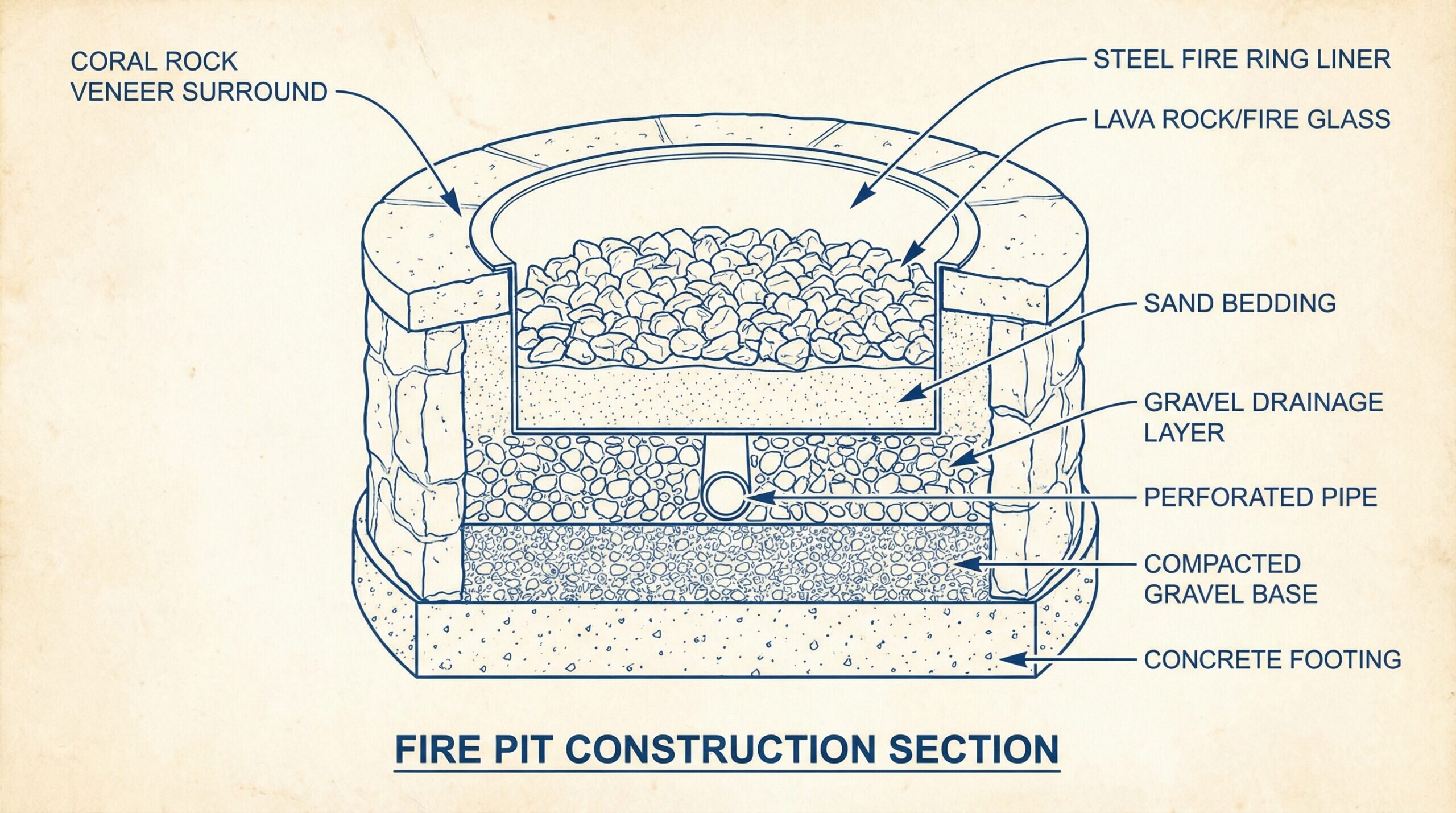
Create a safe base and drainage layer
Excavate 6-8 inches deep in a circle 2 feet wider than your planned fire pit. Fill with graded gravel or lava rock, creating a slight slope away from the center for drainage.
This drainage layer protects your coral rock from sitting in standing water, which could freeze and crack the stone in winter climates. Compact the base material firmly before proceeding.
Install a fire-resistant liner or inner ring
Place a steel fire ring or build the inner fire bowl with fire bricks. This creates the high-heat zone that coral rock shouldn’t directly contact. The liner should extend 2-3 inches above your planned coral rock level.
Now you can safely add coral rock around the outside as wall cladding, cap stones, or decorative facing. The liner handles the extreme heat while coral rock provides the aesthetic appeal.
| Material | Heat Resistance | Best Use | Porosity | Cost Range |
|---|---|---|---|---|
| Coral Rock | Moderate | Surround/Veneer | High | $$ |
| Fire Brick | Excellent | Inner Ring | Low | $$$ |
| Steel Ring | Excellent | Inner Ring | None | $ |
| Granite | High | Any Location | Low | $$$ |
Coral rock vs other fire pit stones
Understanding how coral rock compares to other materials helps you make the right choice for each part of your fire pit area. Each stone type has strengths that work better in specific applications.
Coral rock vs fire brick, basalt, granite, and concrete
Fire brick offers the highest heat resistance and works best for inner fire rings and areas with direct flame contact. It’s more expensive than coral rock but necessary for safety in high-heat zones.
Basalt and granite provide excellent heat resistance with lower porosity than coral rock. They cost more but can handle direct heat better. However, they lack coral rock’s unique texture and coastal aesthetic appeal.
Concrete offers versatility and can be shaped into custom forms, but it lacks the natural beauty that makes coral rock special. For the best of both worlds, use concrete for structural elements and coral rock for visible surfaces.
Design Insight: Coral rock shines in applications where you want organic texture and warm, natural color. Use it for seating walls, pathways, and decorative elements while relying on fire-rated materials for the actual fire containment.
Maintenance and long-term safety
Proper maintenance keeps your coral rock fire pit area safe and beautiful for years. Regular inspection and care prevent small issues from becoming safety hazards.
Inspect coral rock elements annually for cracks, especially after winter freeze-thaw cycles. Small cracks can be sealed, but replace any stones with significant damage. Clean soot and smoke staining with appropriate stone cleaners to maintain appearance.
Reapply sealant every 2-3 years or as recommended by the manufacturer. This maintains moisture protection and extends the life of your coral rock installation.
Where to buy coral rock for your fire pit area
Quality matters when selecting coral rock for fire applications. Look for suppliers who understand the specific requirements for fire pit projects and can provide properly graded, suitable material.
Hello Gravel offers high-quality coral rock specifically selected for landscaping and hardscape projects. Our team understands the safety considerations for fire pit applications and can guide you toward the right product for your specific needs.
We provide different varieties of coral rock to match your design vision, whether you’re looking for specific colors, sizes, or textures. Our expert team can advise on quantities, installation techniques, and compatibility with other materials in your project.
Ready to create a stunning coral rock fire pit area? Hello Gravel makes it easy to get premium aggregates delivered directly to your project site. Our white glove service ensures you receive the right materials without the hassle of sourcing and transport logistics.
Whether you’re planning a cozy backyard gathering space or an elaborate outdoor living area, we provide the quality coral rock and expert guidance to make your vision reality. If you’re also considering coral rock for garden paths or raised garden beds, we can help you create a cohesive outdoor design. For those exploring other fire pit materials, check out our guides on limestone fire pit areas and bluestone fire pit projects. Check out our products today and take the first step toward a beautiful, safe fire pit area that will be the centerpiece of your outdoor space.
FAQ
Can you put coral rock directly in a fire pit?
What is the safest rock to use inside a fire pit?
Is coral rock heat-resistant enough for fire pit areas?
How far should coral rock be from the actual fire ring?
Author: igor