
How Much Does a Gravel Driveway Cost?
— How Much Do You Need?
Estimate cubic yards or tons for your gravel driveway and order bulk delivery with clear pricing.
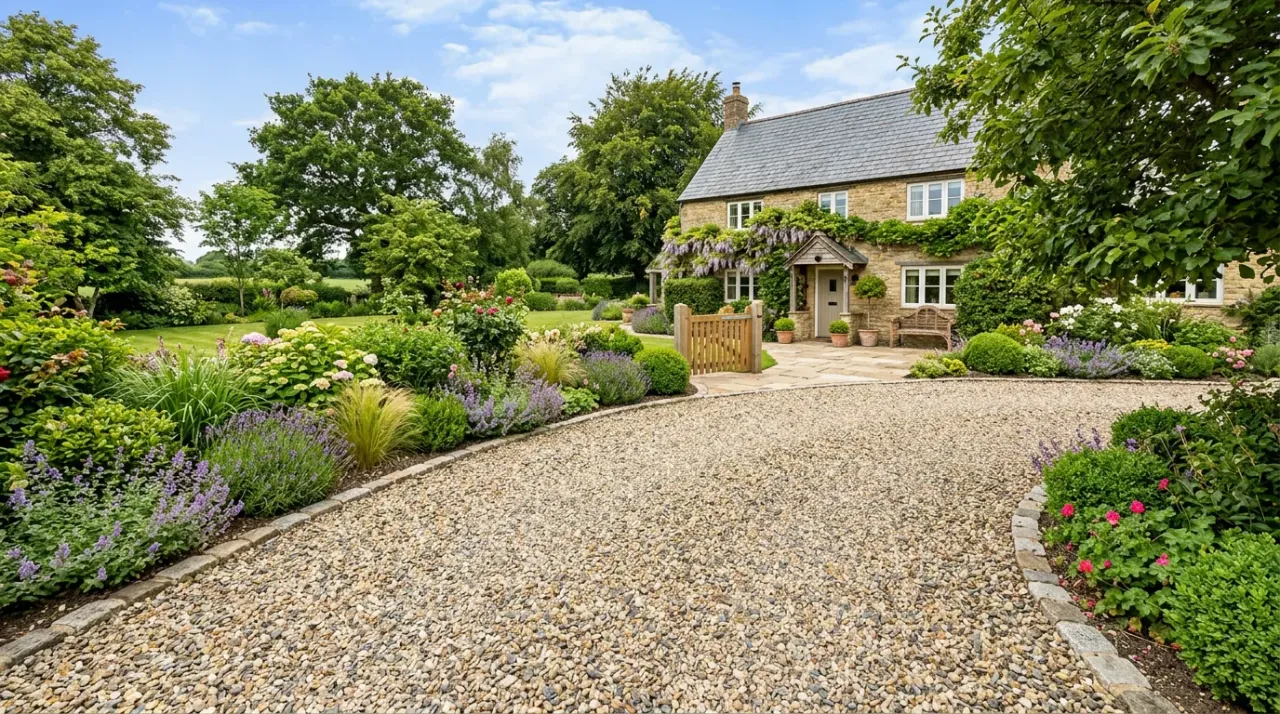
How to Use This Gravel Driveway Calculator
Planning a gravel driveway requires precise measurements to ensure you order enough material without overspending.
- 1 Measure Area: Measure the length and width of your planned gravel driveway area in feet.
- 2 Determine Depth: For most gravel driveway projects, a depth of 4 to 6 inches is recommended for stability.
- 3 Review Results: The calculator provides both cubic yards (for bulk volume) and tons (for ordering weight).
Common Materials for Gravel Driveways
Choosing the right aggregate for each layer — base, sub-base, and surface — directly determines load-bearing capacity, drainage performance, and long-term durability of a gravel driveway.
| Material | Description | Best For | Est. Cost |
|---|---|---|---|
| #57 Crushed Stone | Angular, 1-inch minus crushed stone composed of granite, limestone, or trap rock that resists shifting and promotes drainage. | Base Layer, Load Distribution, Drainage, Heavy Traffic | $$ |
| Crusher Run (QP) | A blend of crushed stone and stone dust ranging from 3/4-inch particles down to fines that compact into a dense, stable surface. | Surface Layer, Compacted Base, Residential Driveways | $ |
| #21A Gravel | A fine, angular crushed aggregate with a gradation from 3/4-inch down to dust, commonly used as a modified base material. | Modified Base, Sub-Base, Residential Driveways | $ |
| Geotextile Filter Fabric | A non-woven synthetic permeable textile that separates soil layers while allowing water to pass through freely. | Subgrade Separation, Layer Stabilization, Soft Soil Sites | $$ |
Understanding the Cost
Several factors influence the final price of your gravel driveway project.
Material Volume
The dimensions of your project directly dictate the tonnage needed. Deeper bases require significantly more material.
Delivery Distance
Transport logistics play a major role. Being closer to the quarry or depot reduces delivery fees significantly.
Material Type
Decorative stones cost more than utility grades. Choose based on your project's functional and aesthetic requirements.
Recommended Products for Your Gravel Driveway
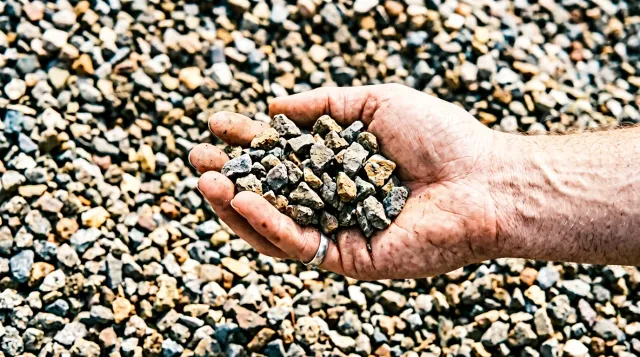
Gravel Calculator
This gravel calculator estimates cubic yards, tons, and coverage for any area. Enter dimensions and depth for driveways, patios, paths, and landscaping.
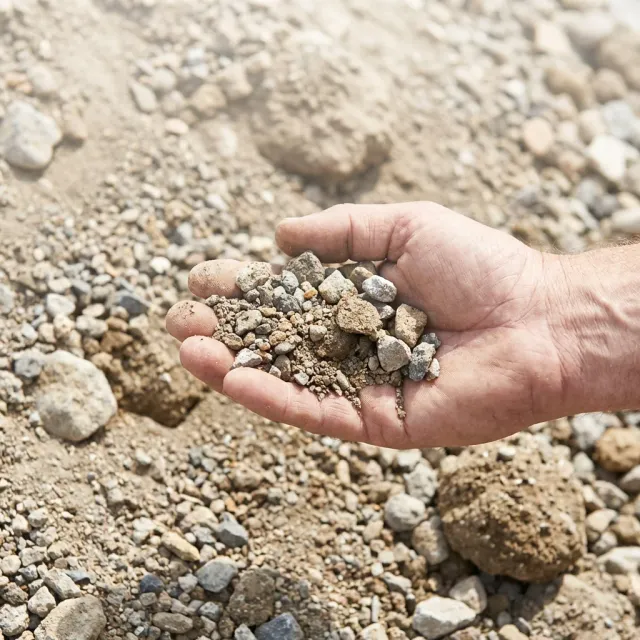
Road Base Calculator
Road base calculator — enter length, width, and depth to estimate volume and tonnage for crushed limestone, recycled concrete, and aggregate base.
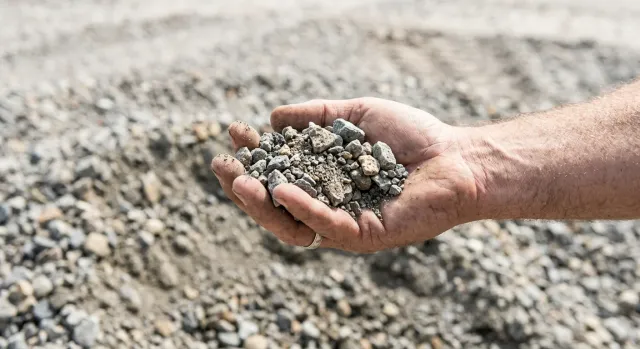
Crusher Run Calculator
Crusher run calculator — enter width, length, and thickness to estimate cubic yards and tons for a solid, compactable driveway or parking pad base.
Frequently Asked Questions
Are gravel driveways a good idea?
For most homeowners, yes. A gravel driveway is one of the most practical choices you can make. It costs far less to install than concrete or asphalt, and it handles drainage naturally since water filters down through the stone rather than pooling on the surface. That makes gravel a smart option in areas that get heavy rain or have stormwater runoff considerations. Gravel is also a forgiving material. If a section settles or develops a low spot, you can add material and rake it back into shape. There are no cracks to seal, no resurfacing projects to schedule, and no need to hire a specialist for minor repairs. Most upkeep is something you can handle yourself with a rake and an occasional fresh load. The main thing to be aware of is that gravel needs some ongoing attention. Stones can migrate toward the edges over time, especially near the road, and you will want to top off the surface every few years as it thins out. If you are looking for a completely maintenance-free surface, gravel is not it. But if you want an affordable, durable, and attractive driveway that you can actually maintain on your own terms, gravel is hard to beat. When you are ready to get started, the Hello Gravel calculator makes it easy to estimate how much material you need.
Is a gravel driveway cheaper than concrete or asphalt?
Gravel is almost always the most affordable driveway option available. Concrete typically costs several times more per square foot than gravel, and asphalt is generally less expensive than concrete but still significantly pricier than gravel once you factor in the installation labor, equipment, and cure time that paved surfaces require. With gravel, you are paying for the material and delivery, and that is it. The savings add up fast on a long driveway. A rural driveway that stretches several hundred feet would cost a substantial amount to pave but can often be gravel-surfaced for a fraction of that. Even on a shorter suburban driveway, the cost difference is meaningful. Because material costs vary by region and change over time, the best way to get a current estimate for your specific project is to use the Hello Gravel calculator on our website. Plug in your dimensions, choose your depth, and you will get a real-time price you can use to place your order. You can also reach out to the Hello Gravel team directly and we will walk you through what to expect.
What type and size of gravel works best for a driveway?
The best driveway gravel is angular and crushed, not smooth and round. Angular stones interlock when compacted, which keeps the surface stable under vehicle traffic. Round stones roll and shift, making them a poor structural choice for either the base or the surface of a driveway. For the base layer, a coarser crushed stone in the 1.5 to 2.5 inch range works well. It creates a stable foundation and allows water to drain downward rather than pooling beneath the surface. For the middle and top layers, 3/4 inch crushed stone is one of the most widely used choices. It compacts firmly, provides good traction, and gives driveways a clean, finished look. If you want a more refined appearance on the top layer, crushed limestone or a crushed stone blend that includes fine particles can pack tightly and create a smoother driving surface. Pea gravel is sometimes chosen for aesthetics, but because it is round it tends to scatter under tires. It works better on pathways or decorative areas than on a high-traffic driveway where you need the surface to stay put. If you are not sure which material is the right fit for your project, the Hello Gravel team is happy to help you choose.
Can I just put gravel down on my driveway, or does it need multiple layers?
It depends on what you are working with. If you already have a gravel driveway that has thinned out or developed ruts over time, adding a fresh top layer of crushed stone is often all you need. Spread it, rake it level, let traffic compact it, and you are done. If you are building a brand new driveway from scratch, a layered approach gives you a much more stable and long-lasting result. The typical setup starts with a base layer of coarser stone, around 4 inches deep, which provides drainage and structural support. On top of that, you lay a finish layer of 3/4 inch crushed stone, around 2 to 4 inches deep, which is the surface vehicles actually drive on. Skipping the base layer on a new driveway and going straight to a surface layer often leads to rutting, soft spots, and gravel mixing into the soil below over time. A little extra material up front saves a lot of regrading later. For very long driveways or driveways that will carry heavy vehicles regularly, some builders go deeper on the base or add a third layer for extra stability. Hello Gravel can deliver multiple truckloads for multi-layer projects, and the calculator can help you estimate material quantities for each layer separately so you know exactly what to order.
How much gravel do I need for my driveway, and how deep should it be?
The amount of gravel you need depends on three things: length, width, and depth. For a new driveway, a total depth of 4 to 6 inches is the most common recommendation. If you are building a layered system, that depth might be split between a coarser base layer and a finer surface layer. To give you a real world example, picture a driveway that is 100 feet long and 12 feet wide, which gives you 1,200 square feet of surface. At a compacted depth of 4 inches, that driveway would need roughly 15 cubic yards of gravel, or approximately 20 to 22 tons. If you want a total depth of 6 inches across the same footprint, your material needs increase to around 22 cubic yards, or roughly 30 tons. Those figures are solid general estimates, but your actual quantity depends on whether the ground is already graded, whether you are refreshing an existing surface or starting from bare soil, and what type of stone you are using, since different materials have slightly different weights per yard. The most accurate way to plan your order is to use the Hello Gravel calculator on our website. Enter your driveway length, width, and target depth, and the calculator will give you a precise tonnage estimate along with current pricing for your area.
More Project Calculators
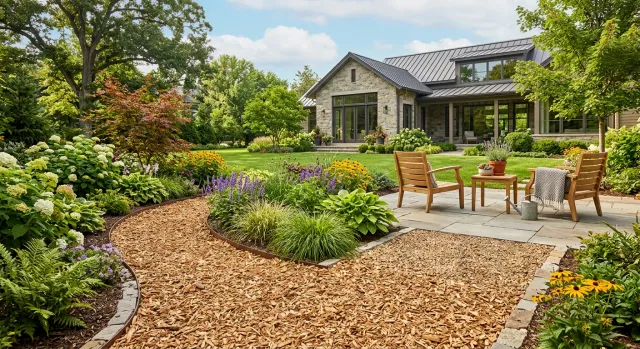
Playground Calculator
This calculator estimates mulch, rubber, or wood fiber surfacing for playgrounds. Enter area and recommended depth to get cubic yards and tons.
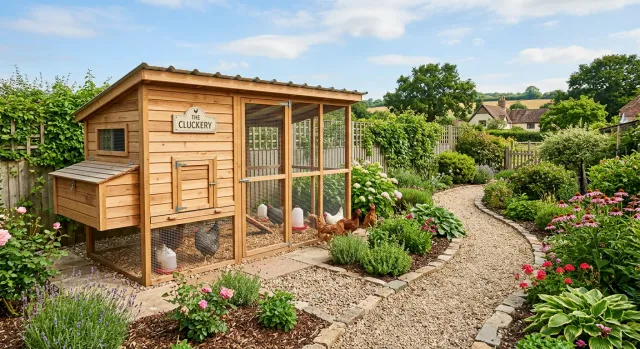
Chicken Coop Calculator
Use this calculator to estimate how much gravel your coop base requires. Input dimensions and depth for volume in cubic yards and stone type guidance.
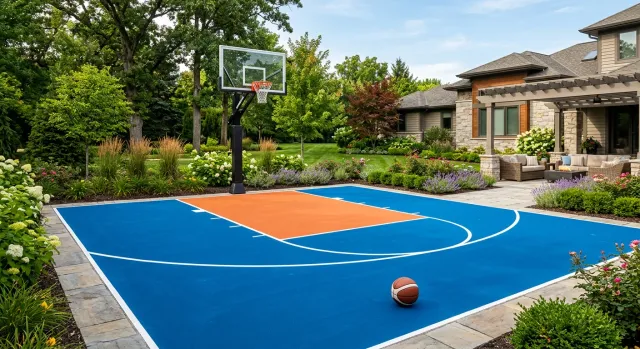
Basketball Court Calculator
Court base calculator — estimate gravel, sand, and sub-base quantities for backyard or regulation basketball courts. Input court size for material totals.
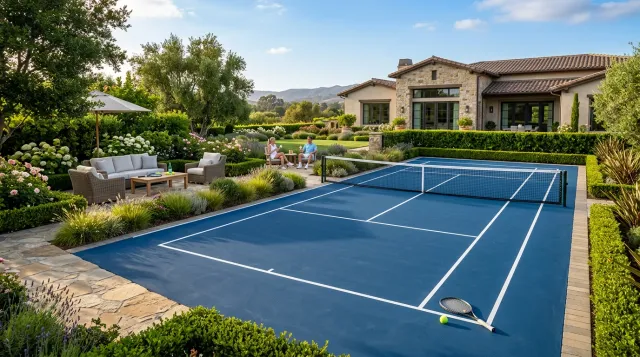
Tennis Court Calculator
Use this calculator to estimate the crushed stone base for a new or resurfaced tennis court. Enter dimensions and depth for volume and tonnage.
Delivery Logistics & Truck Info
Know your delivery options and access requirements before scheduling your order.
Truck Capacities
- Standard Dump Truck10–14 tons
- Tandem Axle14–18 tons
- Semi End Dump20–25 tons
A standard cubic yard weighs approximately 2,000–2,700 lbs depending on material and moisture.
Site Access Requirements
- Trucks require a minimum 12-ft wide, overhead-clear access path
- Soft ground or slopes over 10% may limit truck access — contact us before ordering
- Ensure no underground utilities or irrigation lines are in the drop zone
- Mark your desired drop location clearly before delivery
Important Notes
- Delivery estimates are based on available inventory and route proximity
- Minimum order quantities apply — typically 5 cubic yards or 1 truckload
- Material certification is available upon request for permitted projects
- Always confirm local ordinances before major material placement