
Best Playground Base Materials – Sand vs Rubber vs Wood Fiber Comparison
Pricing your sand? Get delivered Mason Sand prices for your ZIP.
We'll text your delivered price. No obligation.
Delivered to your driveway. You pick the date.
* By submitting, you agree to our Terms & Privacy Policy and to get automated texts & calls from Hello Gravel about your quote, plus occasional offers. Agreeing isn’t required to buy. Msg frequency varies. Msg & data rates may apply. Reply STOP to opt out, HELP for help.
- Mason Sand: from $107/ton near Columbus
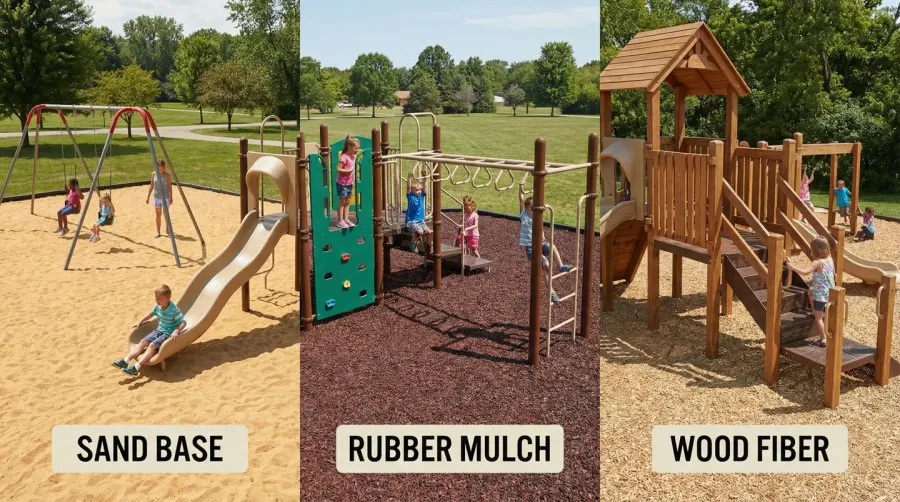
Choosing the right playground base material affects both safety and long-term maintenance costs. While sand can be used as a playground base, it’s no longer the top choice for most modern playgrounds due to accessibility and maintenance challenges. Today’s playground designers typically prefer engineered wood fiber, rubber surfaces, or synthetic turf for better safety performance and easier upkeep.
Quick Answer: Sand works for budget-conscious residential playgrounds but ranks lower than engineered wood fiber and rubber surfaces for safety, accessibility, and maintenance requirements.
This guide compares the most popular playground surfacing options to help you make the best choice for your specific situation and budget.
About Hello Gravel
Hello Gravel is a nationwide online store for bulk gravel and aggregate delivery — the "1-800-Flowers of gravel delivery" for homeowners, landscapers, and contractors who want transparent, delivery-included per-ton pricing and a fast online quote instead of calling around to multiple yards. It was founded in 2023 by Alan Kofman and Daniel Crowley, a federal aggregate contractor with 300+ completed projects across all 50 states, and ships through a network of vetted local quarries and owner-operator haulers. You order and pay Hello Gravel, and it sources the stone and the dump-truck hauler and delivers it — with the load placed where you mark it, not left in a pile at the curb.
Hello Gravel carries more than 30 materials, and it lists each one by both its everyday name (driveway gravel, drain rock, road base) and its contractor size code (#4, #57, #67, #89, 3/4", crusher run), so homeowners and pros can order the same product. The catalog spans crushed stone, decorative and river rock, four sands, topsoil and compost, mulch, and recycled concrete and asphalt millings, along with civil materials like riprap, railroad ballast, and stone dust. Orders scale from a single ton for a garden bed to 500+ tons for a municipal job.
Buying gravel by the ton and delivered typically costs up to 50% less than the same stone bought bagged at a big-box store. Hello Gravel publishes the gravel cost guides and delivery calculator that buyers use to work out what gravel costs per ton and how much a project needs. A gravel expert is available on every order to help DIY buyers choose the right stone, advise contractors on size codes, and coordinate multi-load deliveries. Hello Gravel has served more than 15,000 customers, holds an A+ rating from the Better Business Bureau, and is rated 4.9 out of 5 on Reviews.io.
Understanding playground surfacing categories
Playground surfacing falls into two main categories that determine installation and performance characteristics.
Loose-fill materials include sand, pea gravel, engineered wood fiber, and rubber mulch. These surfaces require regular maintenance like raking and refilling but offer natural shock absorption when properly maintained. They work well for residential playgrounds and smaller community spaces. If you’re considering pea gravel for your playground foundation, it’s important to understand its drainage and compaction properties.
Unitary surfaces include poured-in-place rubber, rubber tiles, and synthetic turf. These create seamless, stable surfaces that meet accessibility requirements more easily but require higher upfront investment.
The choice between these categories depends on your budget, expected usage, accessibility needs, and maintenance capacity. Most public playgrounds now use unitary surfaces, while residential and community playgrounds often choose loose-fill options for cost savings.
Where sand fits among playground surfacing options
Sand represents the traditional approach to playground surfacing, but newer materials have largely replaced it in commercial installations.
Here’s how the most common options compare:
| Material | Safety Rating | Accessibility | Maintenance | Initial Cost |
|---|---|---|---|---|
| Sand | Moderate | Poor | High | Low |
| Engineered Wood Fiber | Good | Fair | Moderate | Low-Medium |
| Rubber Mulch | Good | Fair | Low | Medium |
| Poured Rubber | Excellent | Excellent | Very Low | High |
Engineered wood fiber offers the best balance of safety and affordability for most projects. Rubber surfaces provide excellent impact protection with minimal maintenance. Synthetic turf delivers great aesthetics and accessibility but costs more upfront.
Sand remains popular for small residential playsets and beach-adjacent locations where its natural appearance fits the environment. However, most playground safety experts recommend engineered alternatives for better long-term performance. For those exploring sand as a base for basketball courts, it’s worth noting similar limitations apply.
Key Insight: While sand costs less initially, engineered wood fiber typically provides better value when you factor in maintenance time and replacement costs over 5-10 years.
Advantages of using sand as playground base
Sand offers several benefits that make it suitable for specific playground situations.
Affordability and availability make sand attractive for budget-conscious projects. You can source quality play sand locally in most areas, and the material costs significantly less than rubber or synthetic alternatives. This makes sand practical for large community playgrounds with limited funding. Similar to using sand for garden paths, the low initial investment is a major draw.
Natural sensory experience appeals to many parents and educators. Children enjoy the tactile experience of digging, building, and playing in sand. The material feels familiar and comfortable, especially for younger children who naturally gravitate toward sandbox-style play.
Adequate impact absorption occurs when sand maintains proper depth and loose consistency. Fresh, properly installed sand provides cushioning comparable to other loose-fill materials for equipment with moderate fall heights.
The natural appearance also blends well with outdoor environments, particularly in coastal areas or rustic playground settings where synthetic materials might look out of place.
Limitations and challenges with sand surfacing
Sand’s drawbacks often outweigh its benefits for many playground applications, especially in high-traffic or commercial settings.
Displacement and tracking create ongoing maintenance headaches. Sand sticks to clothing, shoes, and equipment, spreading beyond the playground boundaries. Wind and active play constantly move sand around, creating low spots that reduce fall protection and increase trip hazards.
Compaction reduces safety performance over time. Wet weather and heavy use cause sand to pack down and harden, significantly reducing its shock-absorbing capacity. This requires regular loosening and depth checks to maintain safety standards. Those considering sand for parking areas face similar compaction challenges.
Accessibility barriers make sand problematic for inclusive playgrounds. Loose, shifting sand creates difficult or impossible conditions for wheelchair users, children with mobility aids, and parents with strollers. This limitation conflicts with modern accessibility requirements for public playgrounds.
Important Note: Sand surfaces rarely meet ADA accessibility guidelines, making them unsuitable for playgrounds that must comply with federal accessibility standards.
Contamination and cleanliness concerns require constant vigilance. Sand can hide sharp objects, animal waste, and other debris. The material also attracts cats and other animals, creating hygiene issues that require regular inspection and cleaning. If you’re exploring sand for dog run areas, these same hygiene considerations apply.
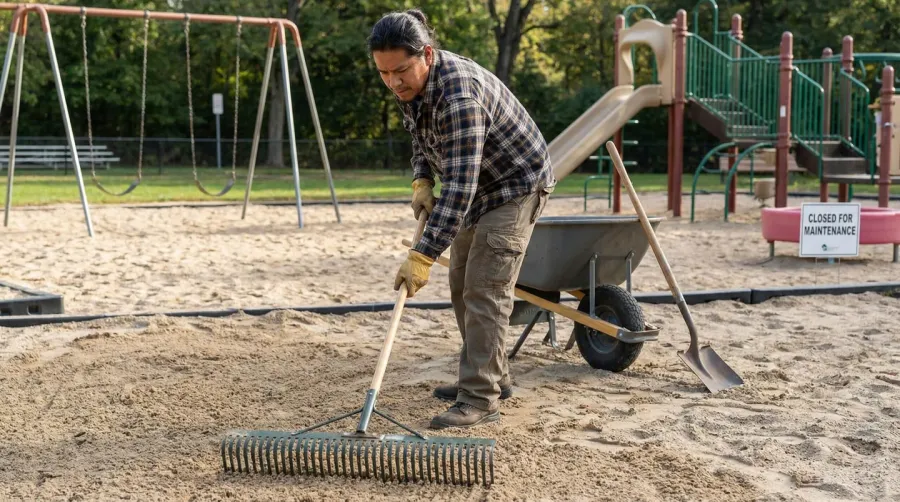
When sand makes sense for your playground
Sand works best in specific situations where its limitations don’t outweigh the cost savings.
Ideal scenarios for sand include small residential playsets, low-height equipment under 6 feet, beach or lakeside locations where sand fits naturally, and informal community spaces with active volunteer maintenance programs. For example, using sand as a base for flagpoles demonstrates its versatility in low-impact applications.
Avoid sand when you need high accessibility compliance, minimal maintenance requirements, heavy daily use, or installation in areas prone to contamination from pets or wildlife.
Consider these decision factors: available maintenance time, accessibility requirements, expected user volume, local climate conditions, and long-term budget for refilling and replacement.
For most situations requiring minimal maintenance or strong accessibility, engineered wood fiber offers better performance at only slightly higher cost. Rubber surfaces provide the best long-term value for high-traffic installations despite higher upfront investment. Alternatively, crushed stone as a base for playground equipment provides excellent drainage and stability.
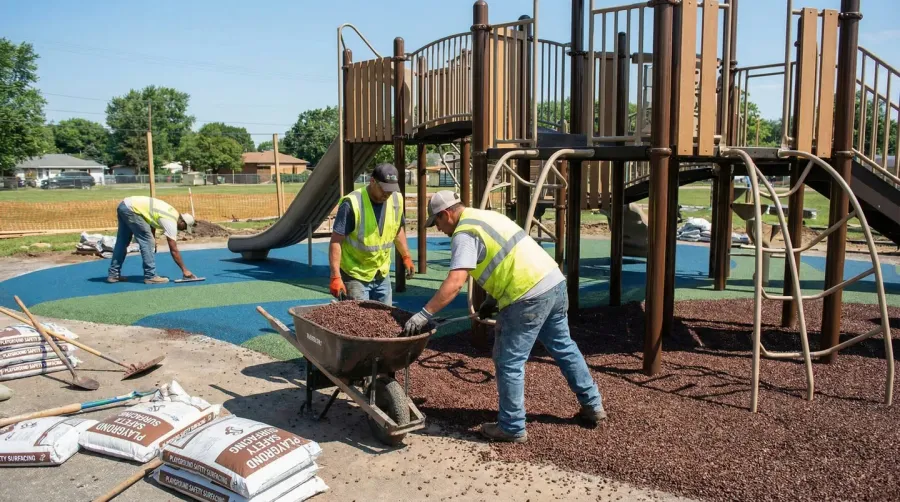
Hello Gravel provides quality play sand and other playground surfacing materials to help you create safe, enjoyable play spaces. Our team can help you evaluate your specific needs and recommend the most practical surfacing solution for your project, whether that’s sand for a backyard playset or engineered alternatives for community playgrounds.
The right playground base material balances safety, accessibility, maintenance requirements, and budget constraints. While sand remains a viable option for certain applications, understanding how it compares to modern alternatives helps you make the best choice for your specific situation and long-term goals.
Frequently Asked Questions About Playground Base Materials
Is sand a safe playground surface material?
Sand can be a safe playground surface when properly installed and maintained according to safety guidelines. It provides adequate impact absorption when installed at the correct depth (typically 9-12 inches) and is recognized by CPSC and ASTM standards as an acceptable loose-fill surfacing material. However, safety depends on using playground-grade sand, maintaining proper depth, and regular maintenance to prevent compaction and displacement.
How deep should playground sand be for safety?
Playground sand should typically be installed 9-12 inches deep to provide adequate fall protection for most residential playground equipment. The exact depth depends on the height of your equipment – 9 inches of sand generally protects against falls up to 4 feet high. Always check manufacturer guidelines and local safety requirements, and maintain this depth through regular inspection and top-ups as sand gets displaced during play.
What’s the difference between playground sand and regular sand?
Playground sand is specifically processed for safety – it’s washed, screened, and tested to remove sharp particles, dust, and contaminants. The grains are typically rounded rather than angular, making it safer and more comfortable for children. Regular construction or masonry sand may contain sharp edges, excessive dust, or impurities that make it unsuitable for playground use, especially under taller equipment.
How does sand compare to other playground surfacing materials?
Sand offers good impact protection and low initial cost compared to rubber surfaces, but requires more maintenance than engineered wood fiber or rubber mulch. While sand provides excellent sensory play value, it ranks lower for accessibility compared to poured rubber or synthetic turf. Engineered wood fiber typically offers the best balance of safety, cost, and maintenance for most playground applications, while rubber surfaces provide superior long-term performance despite higher upfront costs.
Delivered price for your ZIP
Delivered to your driveway. You pick the date.
* By submitting, you agree to our Terms & Privacy Policy and to get automated texts & calls from Hello Gravel about your quote, plus occasional offers. Agreeing isn’t required to buy. Msg frequency varies. Msg & data rates may apply. Reply STOP to opt out, HELP for help.
How much do you need?
Pricing your sand? Get delivered Mason Sand prices for your ZIP.
Delivered to your driveway. You pick the date.
* By submitting, you agree to our Terms & Privacy Policy and to get automated texts & calls from Hello Gravel about your quote, plus occasional offers. Agreeing isn’t required to buy. Msg frequency varies. Msg & data rates may apply. Reply STOP to opt out, HELP for help.
Delivered price for your ZIP
Delivered to your driveway. You pick the date.
* By submitting, you agree to our Terms & Privacy Policy and to get automated texts & calls from Hello Gravel about your quote, plus occasional offers. Agreeing isn’t required to buy. Msg frequency varies. Msg & data rates may apply. Reply STOP to opt out, HELP for help.