What Size Gravel for Paver Base – Complete Guide to Rock Selection
Get an estimate for your project in 60 seconds
 Your information is secure

When building a paver patio or driveway, choosing the right gravel size for your base can make the difference between a project that lasts decades and one that fails within a few years. For most patio projects, use 3/4-inch crushed stone at 4-6 inches deep, while driveways need 1-inch crushed gravel up to 12 inches thick.
The foundation beneath your pavers does all the heavy lifting. Without the proper gravel size and depth, you’ll face sinking pavers, uneven surfaces, and costly repairs down the road. This guide walks you through selecting the perfect gravel size based on your specific project needs.
Quick Answer: Use 3/4-inch minus crushed stone for most residential paver projects. This size compacts well while allowing proper drainage, creating the stable base your pavers need.
Why paver base size and thickness matter
Your paver base serves as the foundation that distributes weight evenly across the ground below. Think of it like the foundation of a house – if it’s not solid, everything above it suffers.
The right gravel size creates interlocking between particles when compacted. Too small, and the rocks shift around like sand. Too large, and you get gaps that allow movement and settling. The sweet spot for most projects falls between 1/4-inch and 1-inch diameter stones.
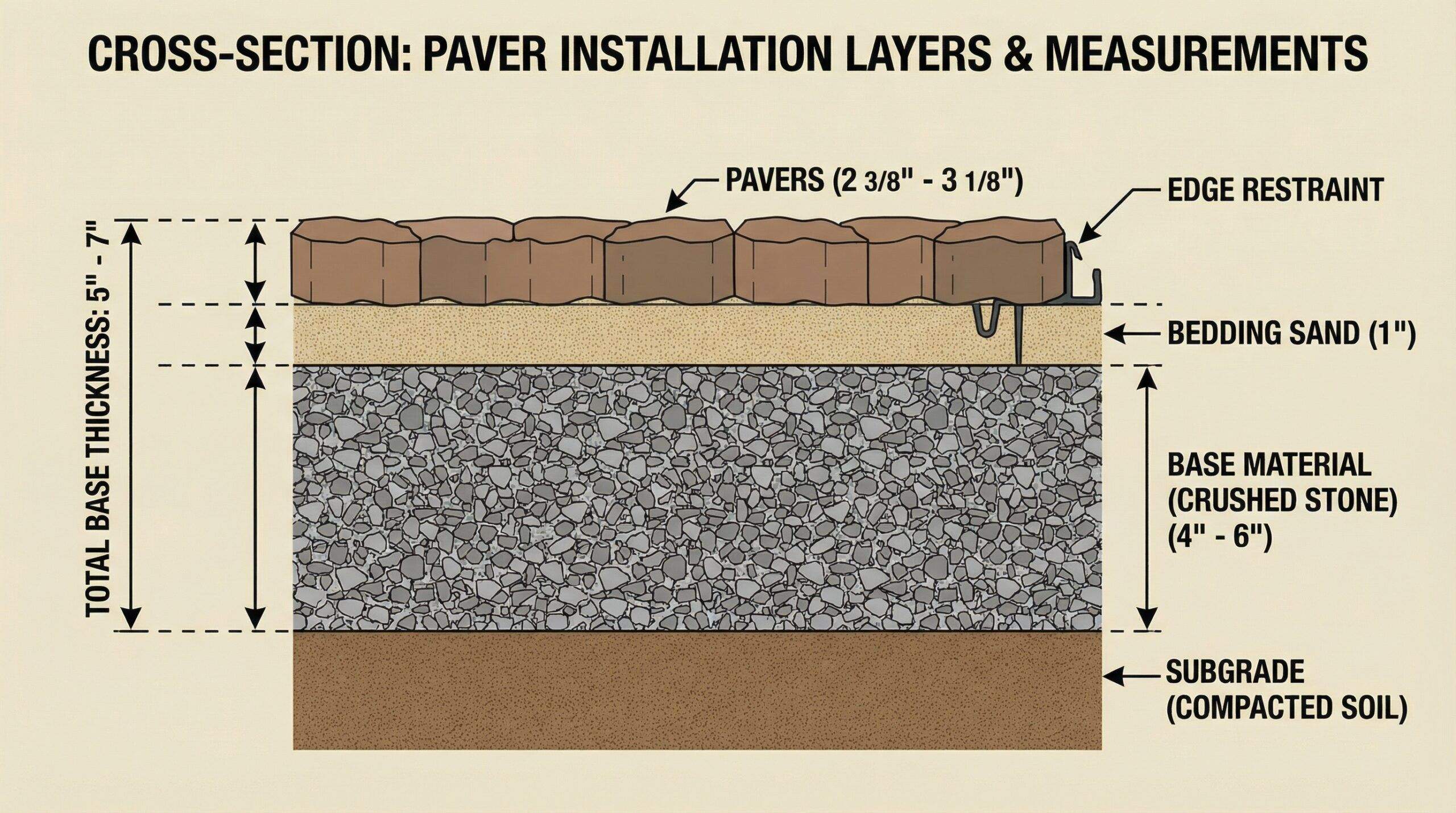
Proper thickness matters just as much as size. A thin base can’t handle the load, while an overly thick base wastes money without adding benefit. Most residential walkways need 4-6 inches of compacted base, while driveways require 8-12 inches depending on soil conditions and expected traffic. Understanding what is the best gravel size for a foundation helps ensure your project starts on solid ground.
Best rock types for paver bases
Not all gravel performs the same way under pavers. Here’s what works best for different situations.
Crushed stone ranks as the top choice for most paver projects. The angular edges lock together when compacted, creating a rock-solid foundation. hellogravel.com offers 3/4-inch and #57 crushed stone that work perfectly for residential applications.
Road base or crusher run contains a mix of stone sizes from large chunks down to fines. This blend compacts extremely well and handles heavy loads, making it ideal for driveways that see regular vehicle traffic. For more details on this versatile material, check out our guide on the best gravel for compacting.
Pea gravel looks attractive but doesn’t compact well due to its round shape. While fine for decorative areas, avoid it as a structural base under pavers where stability matters. Learn more about whether pea gravel can be used for a patio base.
Recycled concrete offers an eco-friendly alternative that performs similarly to crushed stone. It costs less than virgin materials while providing excellent compaction and drainage properties.
Pro Tip: Always choose angular crushed stone over rounded gravel for paver bases. The sharp edges create mechanical interlock that prevents shifting under load.
Rock size recommendations by project type
Different projects demand different approaches to base preparation. Here’s how to match your gravel size to your specific needs.
| Project Type | Recommended Size | Base Depth | Traffic Load |
|---|---|---|---|
| Walkways | 3/4-inch minus | 4-6 inches | Light foot traffic |
| Patios | 3/4-inch crushed | 4-6 inches | Furniture, people |
| Driveways | 1-inch crushed | 8-12 inches | Vehicle traffic |
| Commercial areas | 1.5-inch crushed | 12+ inches | Heavy vehicles |
For patios and walkways, stick with 3/4-inch minus crushed stone. This size compacts well while still allowing water drainage. The “minus” designation means it includes smaller particles that fill gaps and create a tight, stable surface. Our comprehensive guide on what is the best gravel size for a patio provides additional insights.
Driveway projects need larger 1-inch crushed stone to handle vehicle weights. The bigger stones distribute loads better and resist rutting from car tires. Plan for 8-12 inches of compacted depth depending on your soil type. For more information, see the best size rock for driveway.
Commercial applications or areas with heavy truck traffic require 1.5-inch or larger crushed stone with depths of 12 inches or more. These projects often need professional engineering to determine exact specifications.
Installation steps for lasting results
Proper installation matters as much as choosing the right materials. Follow these steps to ensure your paver base performs for decades.
Start by excavating to the proper depth. For a 4-inch base under 2-inch pavers, dig down 7 inches total including 1 inch for sand leveling. Mark utilities before digging and check local codes for any depth restrictions.
Install landscape fabric over the excavated area to prevent weeds and separate your base from the native soil. This barrier keeps your expensive gravel from mixing with dirt below while allowing water drainage.
Spread your chosen gravel in 2-3 inch lifts, compacting each layer with a plate compactor. Don’t try to compact 6 inches at once – you won’t achieve proper density. Work systematically across the area, overlapping compactor passes by several inches.
Check for proper grade and drainage as you work. Your finished base should slope away from buildings at about 1/4 inch per foot to direct water runoff appropriately. For drainage considerations, explore the best gravel for drainage.

Critical Step: Compact in thin lifts rather than trying to compress thick layers all at once. This ensures uniform density throughout your base.
The key to success lies in patience during installation. Rushing the base preparation almost always leads to problems later. Take time to get each layer properly compacted, and your pavers will reward you with decades of stable service.
Remember that your local soil conditions affect these recommendations. Clay soils may need thicker bases or additional drainage measures, while sandy soils often require less depth but better edge restraint. When in doubt, consult with local contractors who understand your area’s specific challenges.
Your paver project is only as good as its foundation. Choose the right gravel size, install it properly, and you’ll enjoy beautiful, stable pavers that enhance your property value for years to come. If you’re considering alternatives, you might also want to read about using crushed stone as a base for playground equipment to understand how similar principles apply to other outdoor projects.

 Chance Kittrell
