
Best Gravel for Compaction (Road Base and #57 Stone)
Free local estimate
See delivered prices for your ZIP in 60 seconds
Tell us where the project is and we'll price this material — delivered — for your exact ZIP.
- Real delivered pricing for your ZIP — not a generic range.
- Works for any quantity — driveways, pads, drains, or full projects.
- Prefer to talk? We follow up with local availability and delivery windows.
For most driveways and hard bases, the best gravel for compacting is road base, also called crusher run. It has crushed rock plus stone dust, so the small pieces fill the gaps and lock the load down. Use #57 stone when drainage matters more than a tight surface, and use crushed concrete when you need a budget base that still packs well.
If you are buying for a home project, start with the job, not the rock name. A muddy driveway needs a packed base. A French drain needs clean stone that lets water move. A walkway needs enough firmness for feet and chairs without turning into concrete.
About Hello Gravel
Hello Gravel delivers bulk gravel, rock, dirt, and sand by the ton. Enter your ZIP code to see prices with delivery included. A local dump-truck driver places the load where access is safe; spreading is not included.
The quick pick
| Project | Best first choice | Why it works |
|---|---|---|
| Gravel driveway base | Road base / crusher run | Packs tight and resists ruts |
| Wet driveway or drain layer | #57 stone | Lets water move through |
| Patio or walkway base | Road base, then a thin top layer | Firm underfoot with a cleaner finish |
| Budget base layer | Crushed concrete | Packs well and usually costs less |
| Decorative top layer | Pea gravel or river rock | Looks good, but does not compact tightly |
Why some gravel packs better
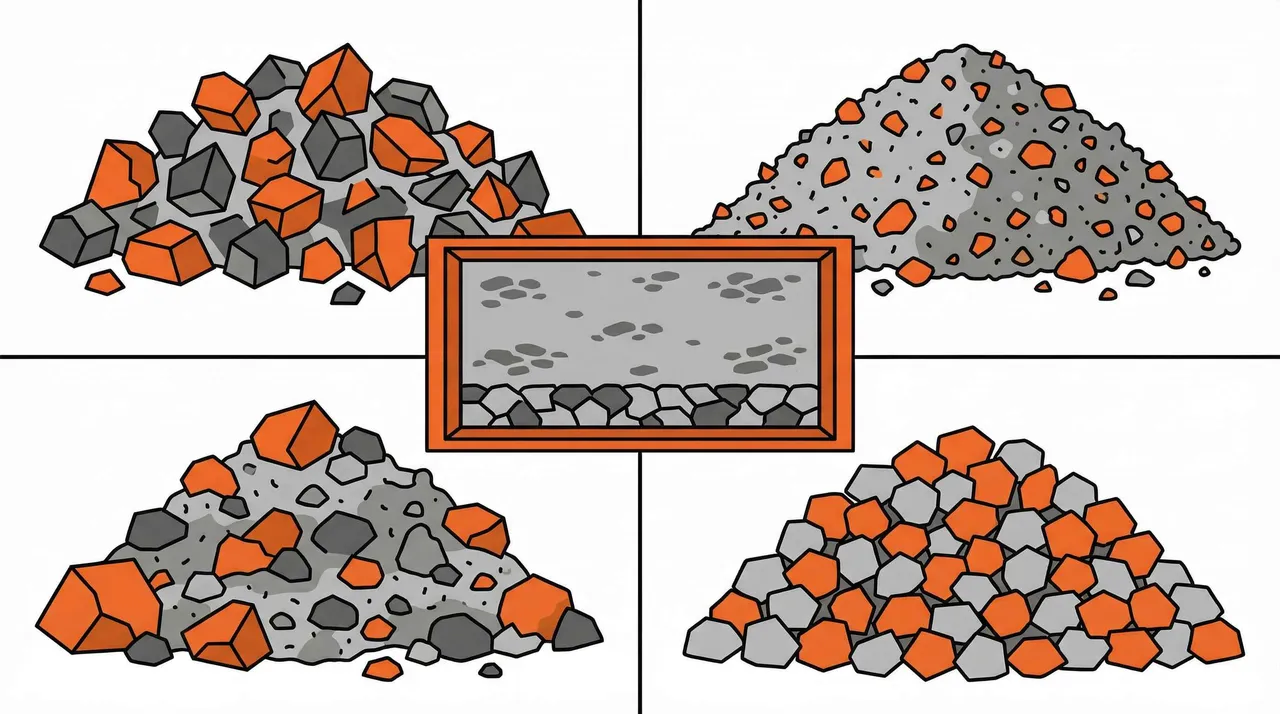
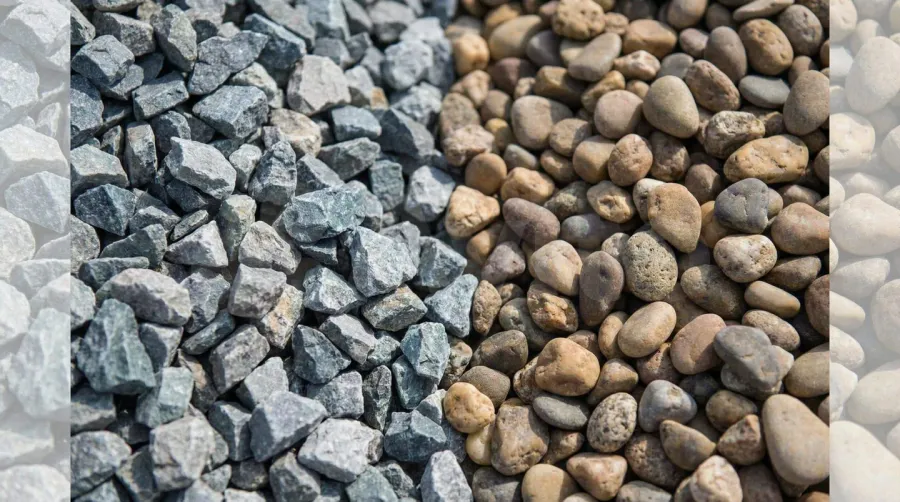
Gravel packs well when the pieces are angular and there are enough small particles to fill the empty spaces. Rounded rock, like pea gravel, moves around under shoes and tires. Clean stone, like #57, drains well because it has open space between pieces. Road base has less open space after compaction because the fines fill the gaps.
That is the tradeoff: tight surface or better drainage. You usually do not get both from one layer.
Road base / crusher run
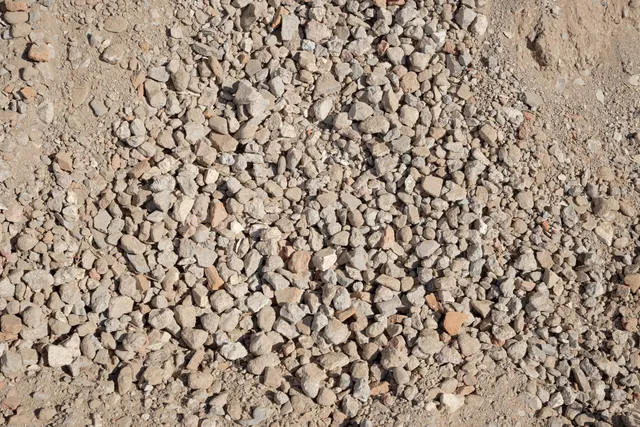
Road base is the workhorse for compacting. It is a blend of crushed stone and fines. Many yards call it crusher run, crush-and-run, road base, dense grade, or 3/4 inch minus.
Use it when the surface needs to carry weight: driveways, shed bases, parking pads, patio bases, and the first layer under a walkway. Spread it in thin layers, wet it lightly, and compact each layer before adding more.
For a normal home driveway, plan on 4 to 6 inches of compacted road base. If delivery trucks, RVs, or soft soil are involved, 6 to 8 inches is safer.
#57 crushed stone
#57 stone is usually a 3/4 inch crushed rock. It is angular, so it seats better than round gravel, but it does not have the fines that make road base pack tight.
That makes #57 stone good for drainage. Use it around foundations, under drain pipe, in French drains, and as a clean top layer over a packed base. If you use it by itself for a driveway, expect more movement than you would get from road base.
On our site and in many yards, #57 may be listed by a contractor size code. If you are not sure, ask for 3/4 inch crushed stone for drainage or a clean driveway top layer.
Crushed concrete
Crushed concrete can be a strong base when it is screened well and free of trash, wire, and large chunks. It often costs less than new crushed stone. It also packs tighter than clean gravel because it includes smaller particles.
Use crushed concrete for base layers, utility areas, farm roads, and budget driveways where the finished look is not the main concern. For a front driveway or patio, many homeowners use crushed concrete as the base and a cleaner stone on top.
How to compact gravel the right way
Do not dump the whole load, spread it thick, and hope traffic fixes it. That is how ruts start.
- Excavate soft soil and remove roots, mud, and loose material.
- Spread gravel in lifts no thicker than 4 inches before compaction.
- Lightly wet the layer. It should feel damp, not muddy.
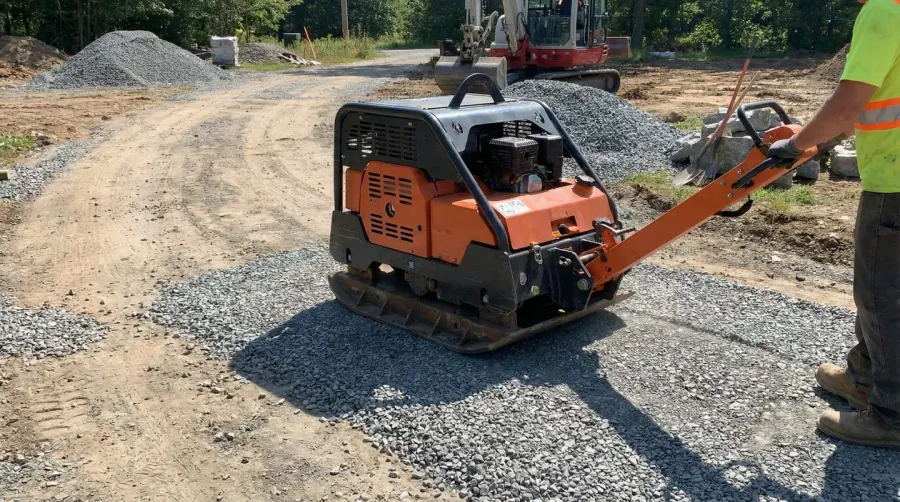
- Run a plate compactor in overlapping passes.
- Add the next lift only after the first one feels firm underfoot.
- Keep a slight slope so water runs away from the house or garage.
A small walkway can be hand tamped. A driveway should be mechanically compacted. Renting a plate compactor for a day is usually cheaper than fixing a rutted base later.
How much to order
Measure length, width, and depth in feet. Multiply them to get cubic feet, then divide by 27 for cubic yards. Gravel weight varies by material and moisture, but many driveway gravels run around 1.3 to 1.5 tons per cubic yard.
Example: a 20 by 40 foot driveway with a 4 inch base is about 9.9 cubic yards. At 1.4 tons per cubic yard, that is about 14 tons before waste. Add 10% if the ground is uneven or you are compacting a deep base.
Hello Gravel can help size the load before you order. We dump the rock where the driver can place it safely, but we do not spread or compact it.
Common mistakes
- Using pea gravel as a driveway base. It rolls and shifts.
- Using clean stone where you need a locked surface.
- Compacting more than 4 inches at a time.
- Skipping the slope and letting water sit on the base.
- Ordering exactly the math amount with no room for compaction or low spots.
FAQ
What gravel compacts the best?
Road base, also called crusher run, usually compacts the best because it has crushed rock plus fines. The fines fill the gaps between larger pieces and help the layer lock together.
Does #57 stone compact?
#57 stone seats and interlocks some, but it does not compact as tightly as road base. Use it when drainage matters, or use it as a top layer over a compacted base.
How deep should compacted gravel be for a driveway?
Most home driveways need 4 to 6 inches of compacted base. Soft soil, heavy vehicles, or delivery truck access may need 6 to 8 inches.
Should I wet gravel before compacting?
Yes, lightly. Damp road base compacts better than dry rock. Do not soak it. If water is puddling or the material pumps under the compactor, it is too wet.
Can the delivery driver compact the gravel?
No. The driver dumps the load where it is safe to place the truck. Spreading and compaction are separate work.
Materials for this project
Get it delivered — dumped where you need it
Road Base
Driveway base & Road construction
See delivered price
View product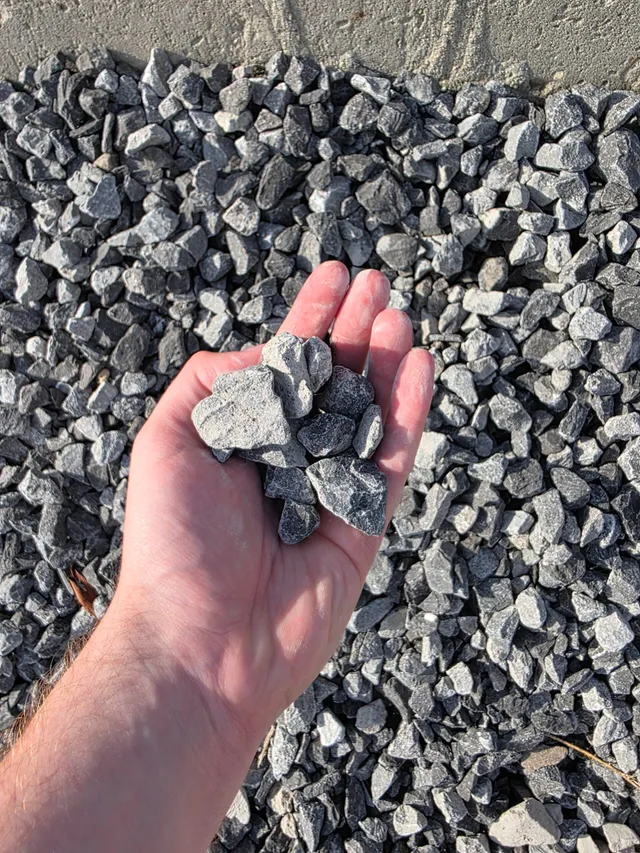
Driveway Gravel
Driveways & Parking areas
See delivered price
View product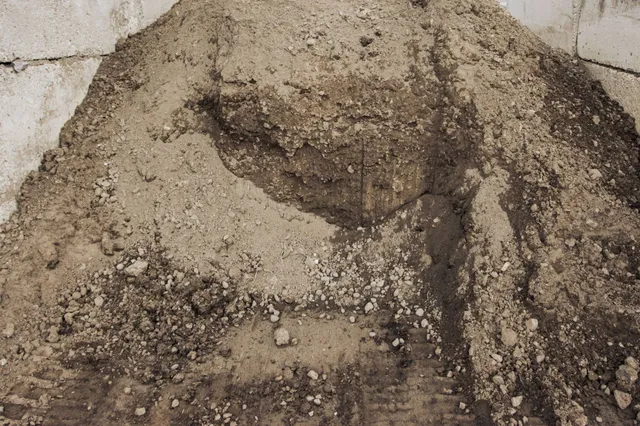
Fill Dirt
Grading & Backfill
See delivered price
View product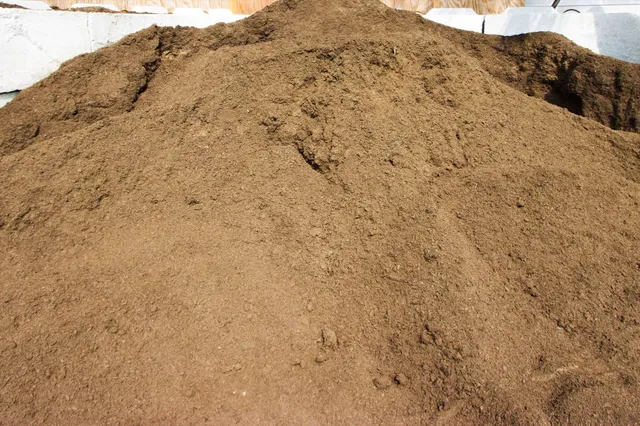
Topsoil
Lawn establishment & Garden beds
See delivered price
View product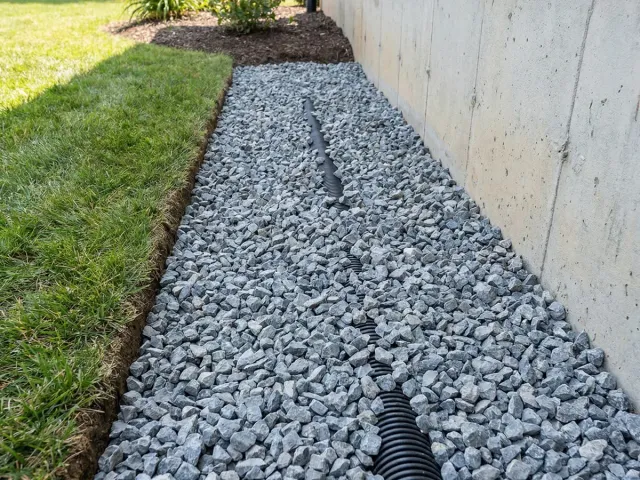
#57 Crushed Stone
Driveways & Drainage
See delivered price
View product