River Rock vs Crushed Stone for Patio Bases – Which Should You Choose
Get an estimate for your project in 60 seconds
 Your information is secure

You love the natural look of river rock and wonder if you can use it as your patio base instead of traditional crushed stone. While river rock creates stunning visual appeal, it typically doesn’t provide the structural stability needed for most patio projects. The rounded stones don’t compact well together, which can lead to shifting and settling over time.
However, river rock can still play an important role in your patio design when used correctly. This guide will show you exactly when river rock works, when it fails, and how to combine both materials for the best results.
Quick Answer: River rock alone is not recommended as the primary structural base for patios because it doesn’t compact tightly. Use compacted crushed stone for the base layer and river rock for decorative elements like joint filling and borders.
What makes a good patio base
Building a patio that lasts requires understanding the fundamentals of base construction. Professional contractors consistently recommend a multi-layer approach that starts with proper excavation and ends with a stable, well-draining foundation.
The key to any successful patio lies in compaction. When materials can lock together under pressure, they create a solid platform that won’t shift under weight or weather. This is why angular crushed stone has become the gold standard for patio bases.
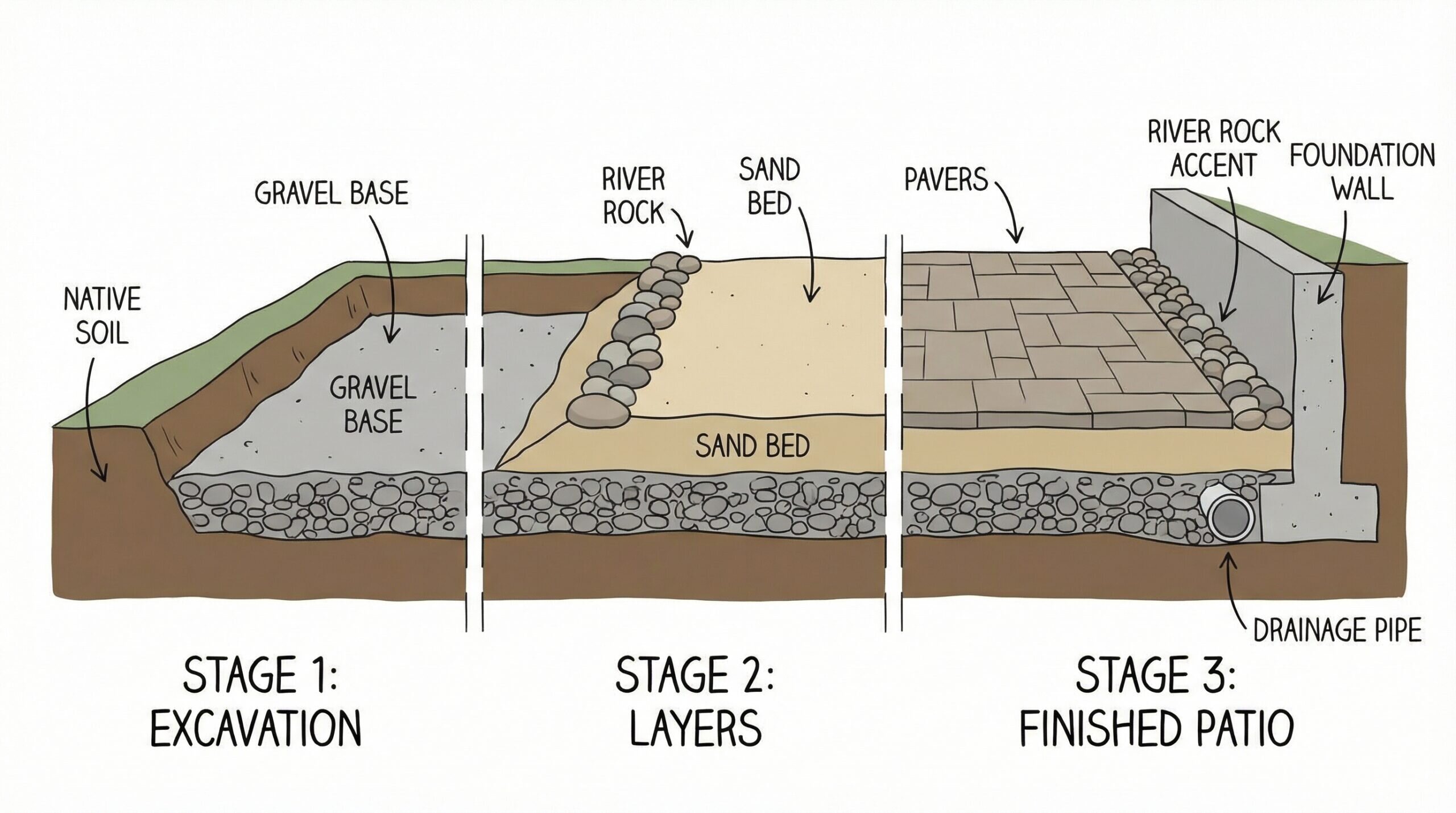
A typical professional patio base consists of 4-8 inches of compacted crushed stone installed in 2-3 inch layers. Each layer gets compacted with a plate compactor before adding the next. On top of this goes a 1-inch bedding layer of sand or fine chip stone, then your pavers or flagstone.
Understanding river rock properties and limitations
River rock gets its smooth, rounded shape from years of water flow that naturally tumbles the stones. While this creates beautiful, organic-looking material, it also creates a fundamental problem for structural applications.
Those smooth, rounded edges that make river rock so attractive also prevent the stones from locking together when compacted. Unlike angular crushed stone that wedges tightly under pressure, river rock tends to roll and shift. This movement can cause pavers to become uneven or create low spots where water pools.

River rock does excel in certain applications around patios. It provides excellent drainage, looks natural in landscape settings, and works beautifully as a decorative element between pavers or around patio edges. The key is using it in the right places.
When river rock works and when it fails
River rock can be successfully incorporated into patio projects, but understanding its limitations prevents costly mistakes. For decorative applications like filling wide joints between flagstones or creating borders around your patio, river rock performs excellently.
You can also use river rock effectively in drainage applications. A layer of river rock beneath your compacted base can help with water management in areas with poor drainage. Some homeowners create loose river rock patios for low-traffic areas where slight movement is acceptable.
However, avoid using river rock as the primary base under pavers, concrete, or in high-traffic areas. The lack of compaction leads to settling that can crack concrete or create uneven paver surfaces. In areas with freeze-thaw cycles, this movement becomes even more pronounced.
Pro Tip: If you want the river rock look underfoot, consider embedding river stones in a concrete or sand mix rather than using loose stones that can shift.
How to build a stable patio with both materials
Creating a patio that combines structural stability with river rock’s natural beauty requires following the right sequence. Start by planning your layout and marking the area with stakes and string. Plan for a slight slope of about 1/4 inch per foot away from any structures for proper drainage.
Excavate 6-8 inches deep depending on your climate and expected load. Remove all organic material and compact the soil subgrade. Install your structural base using 4-8 inches of compacted crushed stone in layers. This is where you build the stability your patio needs.
Add a 1-inch bedding layer of sand or fine chip stone, then install your pavers or flagstone. Once your main surface is complete, you can add river rock between pavers, around borders, or in adjacent planted areas for that natural look you want.
Comparing your material options
| Material | Compaction | Drainage | Best Use | Cost Range |
|---|---|---|---|---|
| Crushed Stone | Excellent | Good | Structural base | $$ |
| River Rock | Poor | Excellent | Decorative/drainage | $$$ |
| Pea Gravel | Fair | Very Good | Pathways/accents | $$ |
| Sand | Good | Poor | Bedding layer | $ |
This comparison shows why professionals typically use crushed stone for the foundation and reserve river rock for finishing touches. The cost difference also makes this approach more budget-friendly since you use expensive river rock only where it shows.
Cost Insight: Using crushed stone for the base and river rock for accents typically costs 30-40% less than attempting an all-river-rock installation while providing much better long-term performance.
When planning your project, calculate materials by measuring length times width times depth in feet, then divide by 27 to get cubic yards. Most patio projects need 3-5 cubic yards of base material depending on size and depth requirements.
The combination approach gives you the best of both worlds. You get the structural integrity that prevents future problems while still achieving the natural, organic look that drew you to river rock in the first place. Your patio will look beautiful and perform reliably for decades when built with the proper foundation.
Similar principles apply when building a shed foundation or creating walkway foundations, where understanding the proper use of river rock versus crushed stone makes all the difference in long-term performance.
Ready to start your patio project? Hello Gravel can help you choose the right combination of crushed stone and river rock for your specific needs. We deliver premium aggregates nationwide and provide expert guidance to ensure your project succeeds from the ground up.


 Chance Kittrell
